Design Monograms with Style
A course by GM Meave, Designer, Illustrator, Calligrapher, and Typographer

Joined February 2016
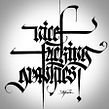
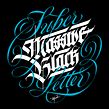

Learn to use calligraphy and lettering to create dynamic and clever monograms

Graphic designer, illustrator, typographer, and calligrapher Gabriel Meave teaches you how to design a monogram based on the key letters of a graphic identity using calligraphy, lettering, and typesetting techniques.
Letters are so much more than just lines. They are powerful ingredients that can be mixed, twisted, interwoven, and composed into unique identities. Discover the secrets of monograms, the laws of symmetry and asymmetry of written signs, as well as the styles that will enrich your typographic choices. This course takes you beyond simple corporate identity to get the most out of the alphabet.
What will you learn in this online course?
28 lessons & 28 downloads


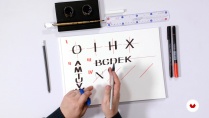
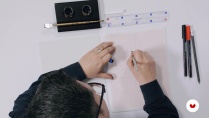
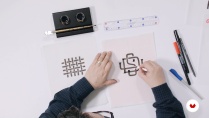
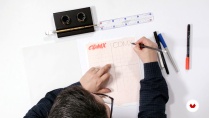
What's included in this course?
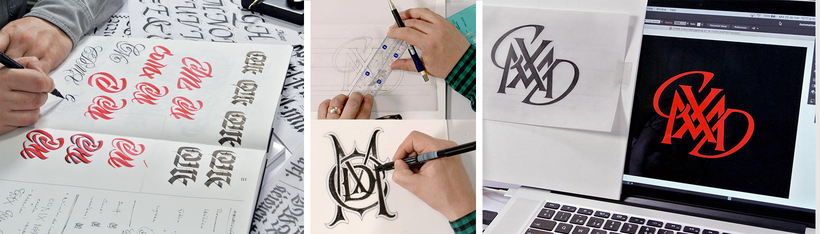
Begin by learning about the work of Gabriel Meave, including his publications and sketchbooks. Also discover some of his influences and get a brief introduction to monograms, the role letters play in a logo, and the differences between typography and calligraphy.
Next, Gabriel talks about the key letters in a graphic identity, their anatomy, and the most important aspects of composition, symmetry, layout, and reading direction. Once you're familiar with the more technical aspects of the letters, learn to put them into practice by sketching your first geometric monogram.
Delve into the field of calligraphy and typography seeing different styles of monograms based on Gothic, Italic, English calligraphy, and paint brush lettering, Along with the use of typographic languages such as serif, san serif, and incised.
Gabriel Meave guides you through how to define the volumetrics, outlines, and filleting of the letters, before looking at accessories and details such as envelopes and coats of arms to achieve a perfect finish.
Now you have your monogram designed, learn to digitize and vectorize it until you're happy with the final artwork.
- 100% positive reviews (233)
- 4,306 students
- 28 lessons (5h 15m)
- 28 additional resources (26 files)
- Online and at your own pace
- Available on the app
- Audio: Spanish, English
- Spanish · English · Portuguese · German · French · Italian · Polish · Dutch · Turkish
- Level: Beginner
- Unlimited access forever
Recommended software & tools for this course
 Adobe Illustrator
 Adobe Photoshop
What is this course's project?
Design a monogram based on the key letters of a graphic identity.

Projects by course students


Who is this online course for?
Designers, illustrators, calligraphers, typographers, and lovers of creativity in general who want to delve into the world of monograms, logos, and emblems.
Requirements and materials
For materials, you need paper and a pencil, as well as a computer installed with Illustrator and Photoshop and a scanner.

Reviews

GM Meave
A course by GM Meave
Gabriel Meave is a graphic and typographic designer, illustrator, and calligrapher, born and based in Mexico City. His work spans editorial and book design, corporate identity, logos, graphic work, calligraphy, and font design and typeface families.
He has illustrated narrative, fantasy and fiction books for authors such as Gabriel García Márquez, Juan Villoro, and Cornelia Funke, and designed special typefaces for companies such as Telcel, the financial newspaper El Economista, Jumex, and El Palacio de Hierro stores, as well as the institutional font of the federal government of Mexico.
His original Arcana and Organic typefaces are distributed internationally by Adobe Systems, and he has carried out design and branding projects for Mexicana de Aviación, Corona, P&G, McMillan, Pearson Education, Fondo de Cultura Económica, Ogilvy & Mather, and various agencies, publishers, and design firms.
Throughout his career, he's received five awards from the Type Directors Club of New York and three from the Association Typographique Internationale and several of his photographs have been selected for the Tipos Latinos biennials in 2006, 2008, 2010, and 2012.
His calligraphic and illustrative work has been exhibited in various forums and spaces, including the solo show "La mano que mece la pluma" at the Diego Rivera Mural Museum in the historic center of Mexico City. In addition, his work has been published in the main international design magazines, such as Communication Arts, Novum, Ètapes, Typo, and How. Phaidon Books, in their book Area_2, published in 2009, listed Meave as one of the hundred most important emerging designers in the world today.
Content
-
U1
Introduction
-
Presentation of my work, publications and sketchbooks
-
Influences, references and a bit of history
-
What is a monogram? What role do letters play in a logo? What differentiates the typography of calligraphy?
-
-
U2
Key words, anatomy and geometry
-
Abbreviations, acronyms and key letters of a graphic identity
-
Not all the letters are the same: typographic anatomy
-
Axes of composition, symmetry, layout and reading direction
-
Axes of composition, symmetry, layout and reading direction 2
-
Sketch and draw a geometric monogram
-
-
U3
Style and Calligraphy
-
Calligraphy styles: principles, history and bases
-
Logos and monograms based on italic calligraphy
-
Logos and monograms based on italic calligraphy 2
-
Logos and monograms based on Gothic calligraphy
-
Logos and monograms based on Gothic calligraphy 2
-
Logos and monograms based on the English calligraphy
-
Logos and monograms based on paint brush lettering
-
-
U4
Style and Typography
-
Typographic languages
-
Sans serif types applied to monograms and logos
-
Serif types applied to monograms and logos
-
Monograms and logos based on incised forms
-
-
U5
Combinations and accessories
-
Levels of information and composition
-
How to mix typography with calligraphy
-
Volumetry, profiling, filleting and various finishes
-
Graphic accessories: envelopes and blazons
-
-
U6
Original and vectors
-
Preparing and refining a final original
-
Preparing and refining a final original 2
-
Notions of digitization, vectorization of monograms and applications
-
Notions of digitization, vectorization of monograms and applications 2
-
Notions of digitization, vectorization of monograms and applications 3
-
-
FP
Final project
-
Stylish monogram design
-
What to expect from a Domestika course
-
Learn at your own pace
Enjoy learning from home without a set schedule and with an easy-to-follow method. You set your own pace.
-
Learn from the best professionals
Learn valuable methods and techniques explained by top experts in the creative sector.
-
Meet expert teachers
Each expert teaches what they do best, with clear guidelines, true passion, and professional insight in every lesson.
-
Certificates
PlusIf you're a Plus member, get a custom certificate signed by your teacher for every course. Share it on your portfolio, social media, or wherever you like.
-
Get front-row seats
Videos of the highest quality, so you don't miss a single detail. With unlimited access, you can watch them as many times as you need to perfect your technique.
-
Share knowledge and ideas
Ask questions, request feedback, or offer solutions. Share your learning experience with other students in the community who are as passionate about creativity as you are.
-
Connect with a global creative community
The community is home to millions of people from around the world who are curious and passionate about exploring and expressing their creativity.
-
Watch professionally produced courses
Domestika curates its teacher roster and produces every course in-house to ensure a high-quality online learning experience.
FAQs
You’ll learn to craft original monograms by blending calligraphy, typography, and illustration—from hand sketching to digital finishing. You’ll study historical styles, symmetry, letter anatomy, and refinement techniques to create unique logos and graphic compositions.
This course is geared toward those with intermediate skills in graphic design or typography. It’s perfect if you have some basic sketching or illustration experience and want to dive deeper into advanced monogram and custom logo creation.
You’ll need drawing supplies like pencils, tracing paper, a ruler, markers, plus access to graphic editing software such as Adobe Illustrator to digitize your designs. Some prior drawing skills and basic digital tool knowledge are recommended.
Calligraphy is artistic handwriting, typography is designing alphabets, and lettering is drawing custom letters. This course explores how to combine these disciplines to create unique, expressive monograms and logos.
You’ll be able to design covers, logos, emblems, and distinctive graphic elements for books, brands, or products—using visual synthesis, typographic composition, and ornamentation to strengthen visual identity.
Yes, the course covers historical styles including Gothic calligraphy, heraldry, and Mayan glyphs, showing how to adapt their elements and decorations for modern monogram design.
Yes, the course teaches techniques to scan, clean up, and vectorize your monograms, ensuring quality and precision when moving from hand-drawn to digital using tools like Adobe Illustrator.
 Adobe Illustrator
 Adobe Photoshop
Excelente profesor, comparte todo tipo de conocimiento
Muy buen contenido, buen profe :)
Gostei muito mesmo deste curso e consegui desenvolver uma base este tema. Recomendo sim o curso!
Es impresionante todo lo que aprendí en este curso. DEMASIADO completo. Lo recomiendo muchísimo!
Increíble curso. No solo aprendes a realizar un monograma, sino a entender la morfología de las letras, las formas y contraformas y como la composición puede afectar la lectura y la percepción.
¡Recomendado sin importar tu nivel de conocimiento!