Introduction to Kintsugi: Repair Your Pottery with Gold
A course by Clara GraziolinoCeramic Artist and Kintsugi Expert
A course by Clara Graziolino, Ceramic Artist and Kintsugi Expert

Learn to embrace the beauty of imperfections by restoring your ceramics through the ancient Japanese art of kintsugi
The ancient art of Kintsugi has its roots in the wabi-sabi Japanese aesthetic, which embraces imperfection, impermanence, and simplicity. Ceramic artist and kintsugi expert Clara Graziolino describes the Japanese restoring method as an active meditation and has helped her reconnect with the origin of her inspiration in difficult times.
Discover the history and philosophy of kintsugi to repair ceramics using gold dust, and patience as Clara guides you through every step of the way. Learn how to create two restoration projects using the gold relief technique and the gold flush technique.
What will you learn in this online course?
15 lessons & 22 downloads
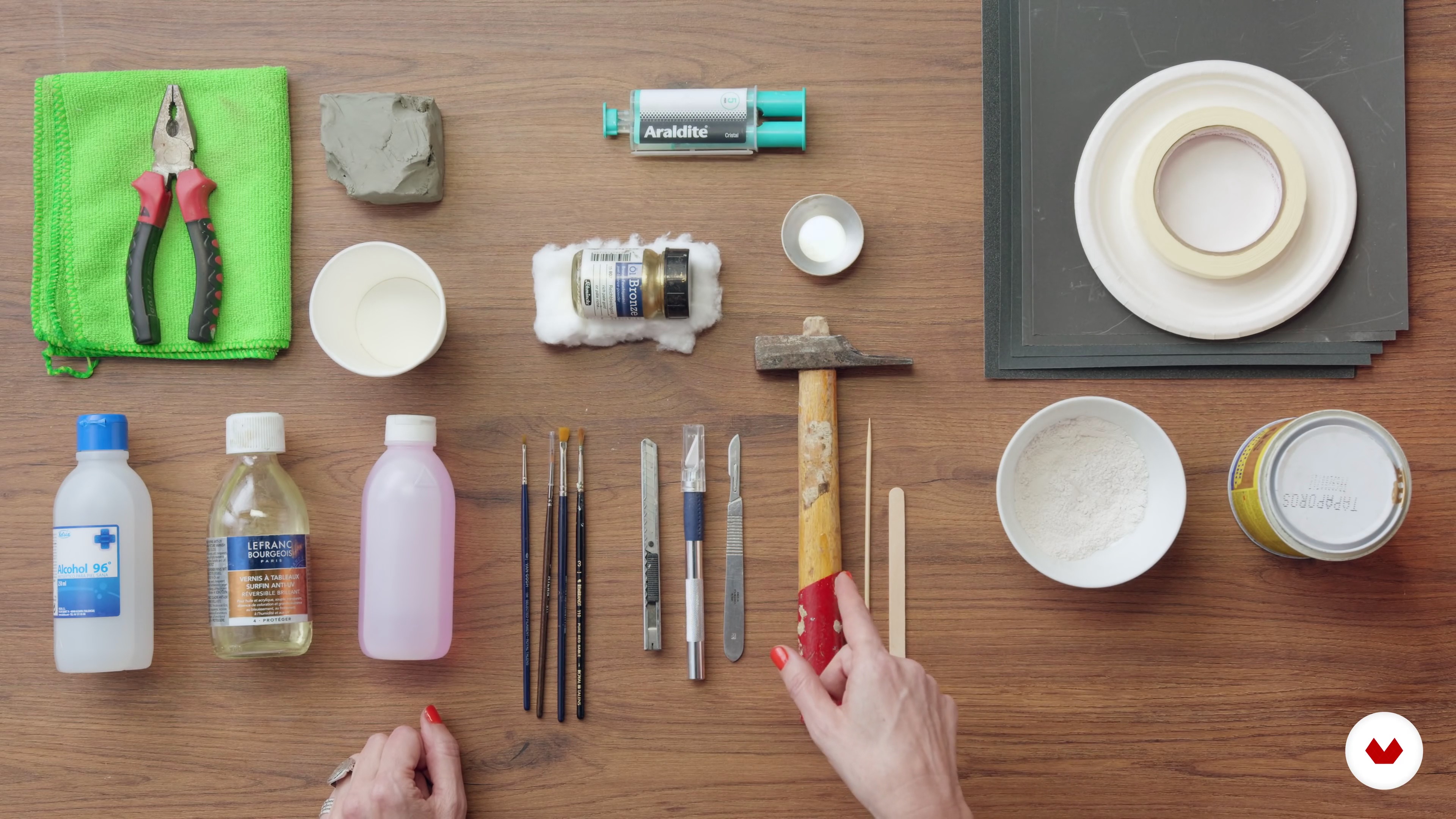
Knowing the Materials
5 minutes, 0 seconds
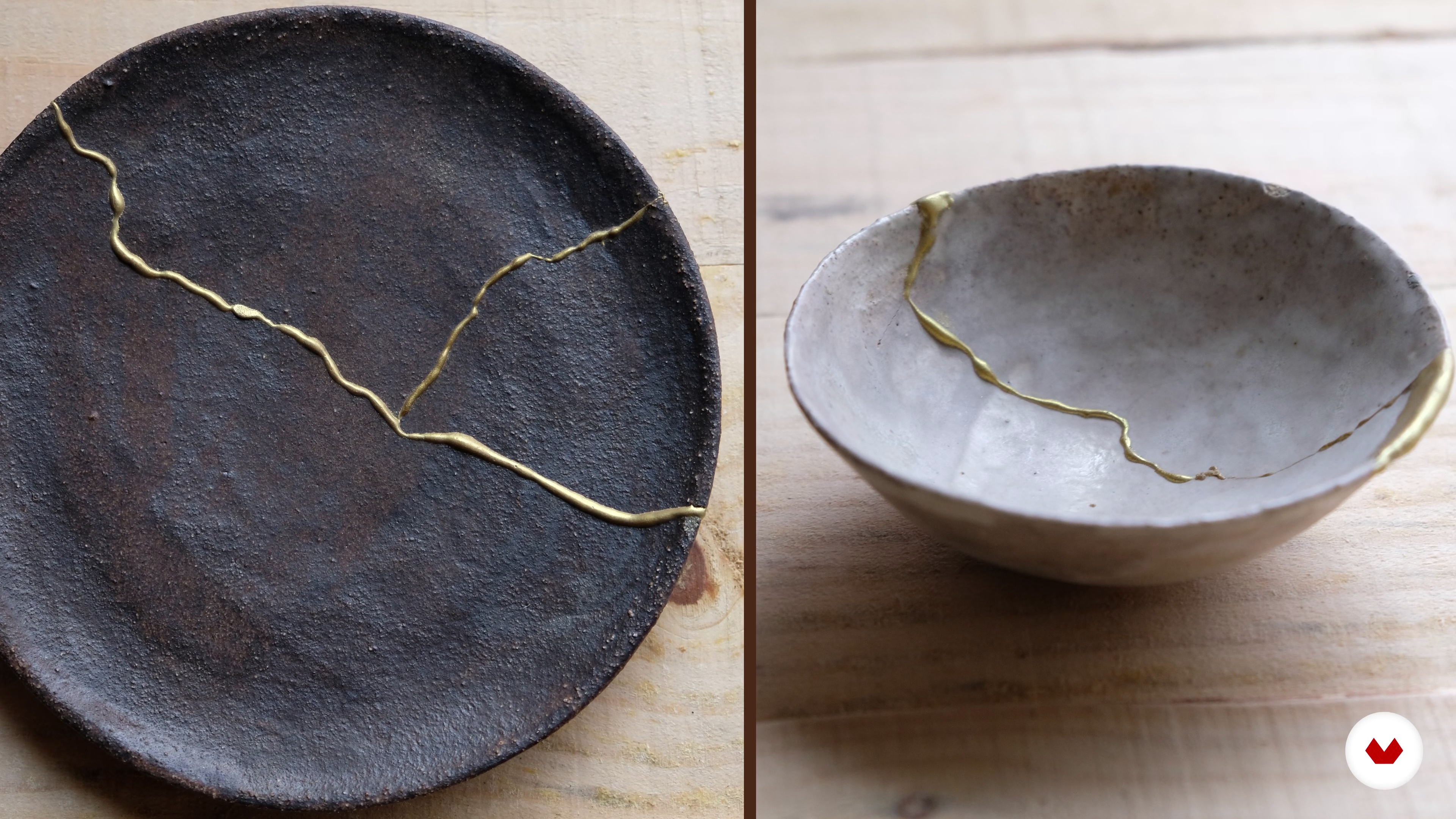
How to Choose the Bowls for Your Kintsugi Project
5 minutes, 38 seconds
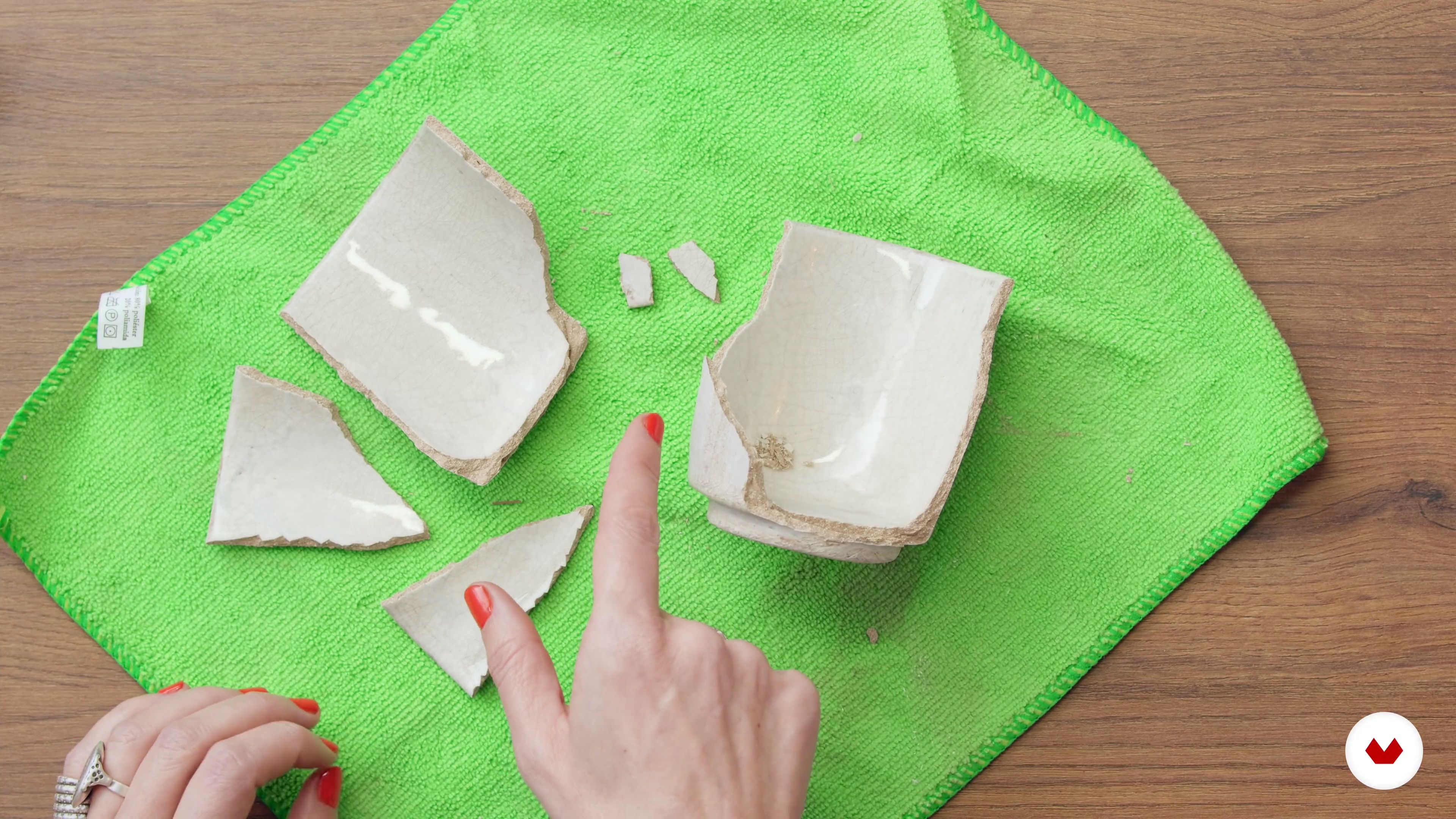
How to Break the Bowls
7 minutes, 38 seconds
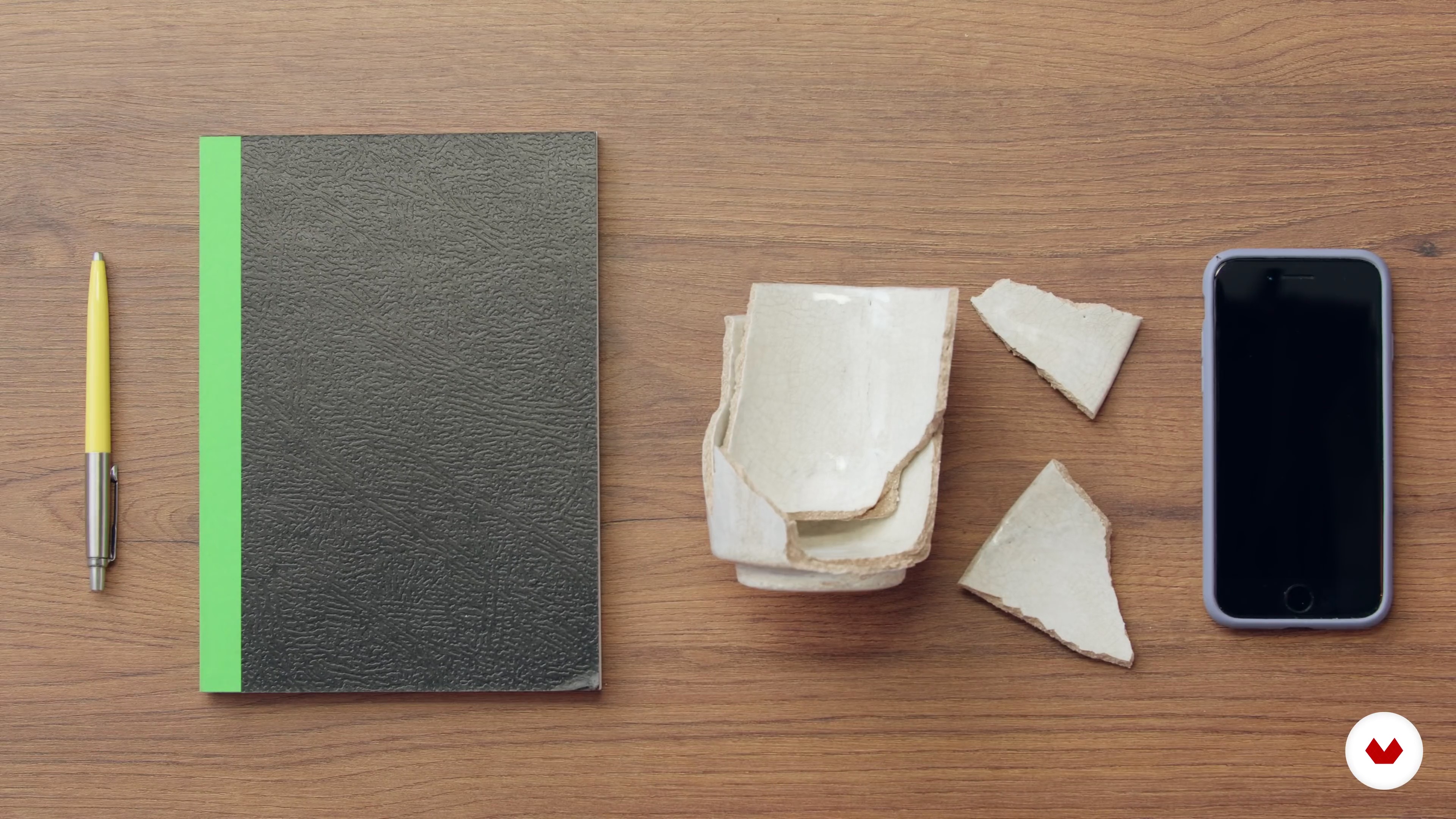
The Kintsugi Diary
3 minutes, 8 seconds
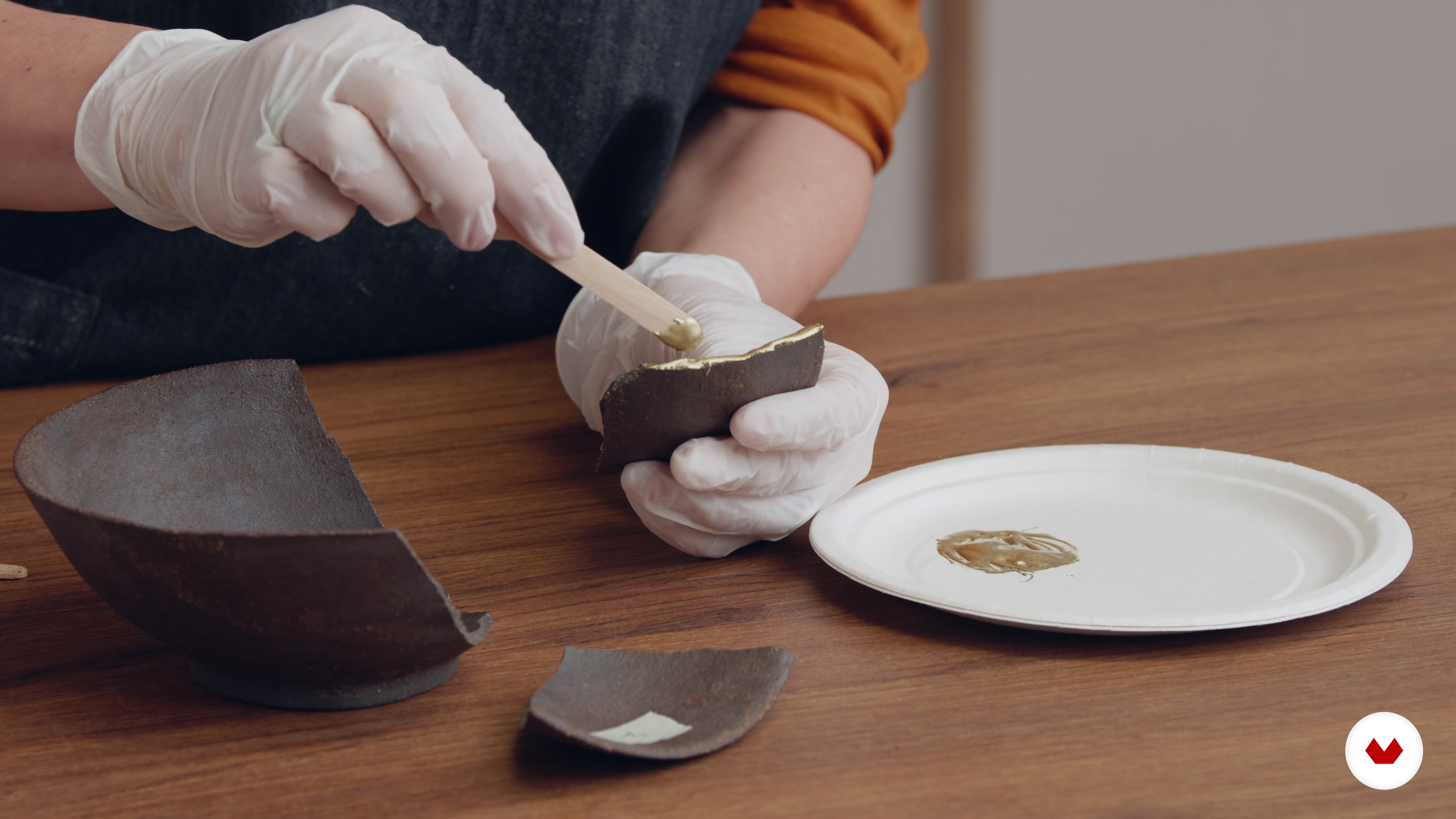
Joining the Broken Pieces
15 minutes, 46 seconds
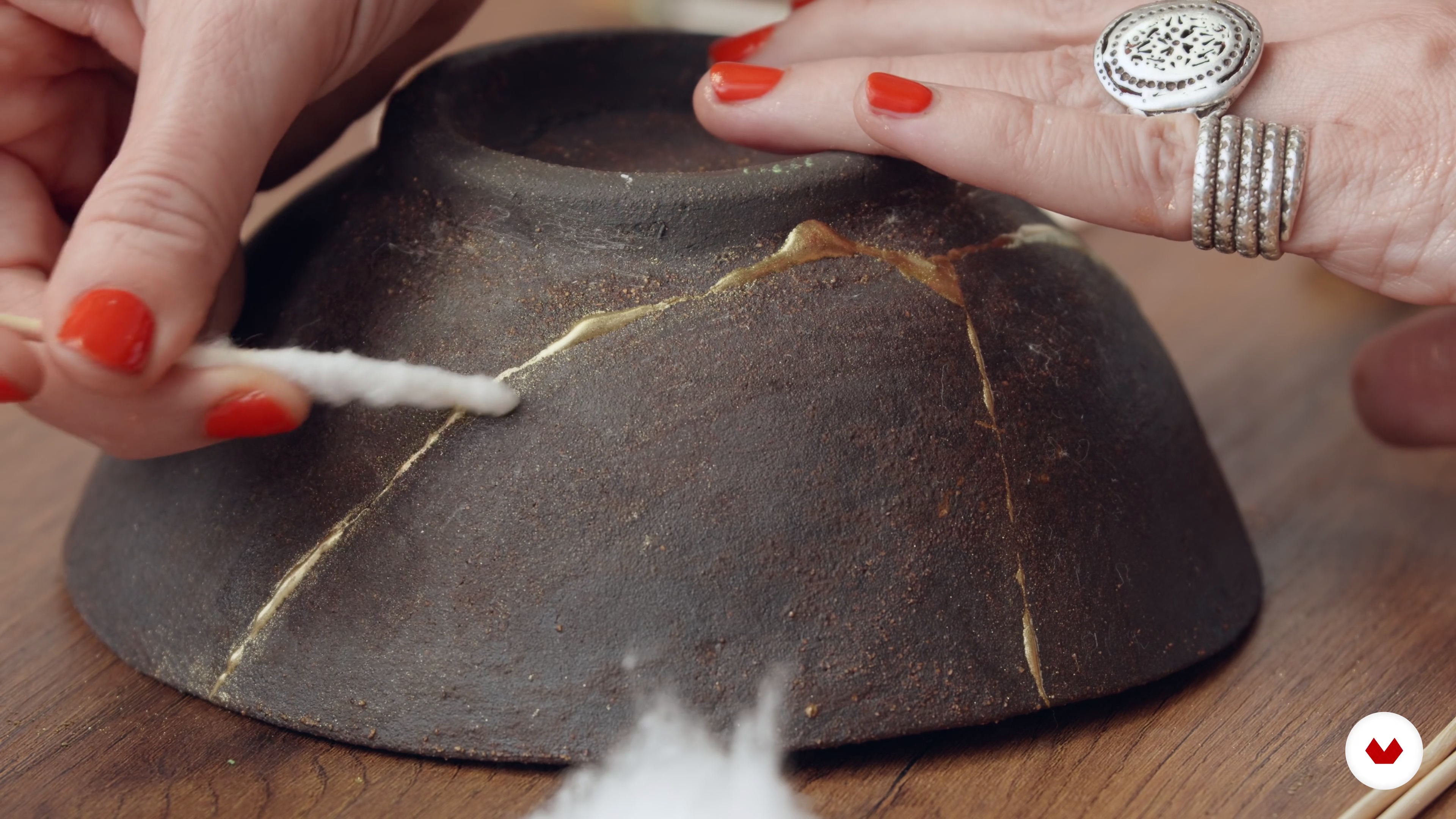
Final Touches
6 minutes, 36 seconds
What's included in this course?
Meet Clara Graziolino, learn about her journey as a ceramic artist and kintsugi expert, before exploring her sources of inspiration. See what Clara has prepared for you in the course and learn about the two final projects you’ll create.
Delve into the history and philosophy of kintsugi, learn about the materials you need for your projects, and where to find them. Start your restoration project by seeing how to break your two bowls into three or four pieces.
Learn how to keep a kintsugi diary to document your work before you start restoring your first ceramic bowl with the gold relief technique. See how to make your bowl shine with Clara’s tips on adding the final touches.
Discover a more complex restoration method known as the gold flush technique. Go through each step of the process with Clara, see how to paint the fracture lines with gold, and how to clean your equipment as you finish.
Get Clara’s professional advice on how to care for your creations and how to use your kintsugi pieces for decoration. Wrap up the course by learning how to package your ceramic items for shipping.
What is this course's project?
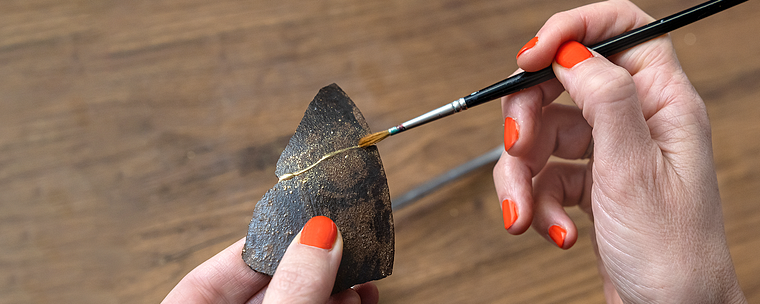
Learn how to restore two ceramic bowls with the ancient art of kintsugi; one using the gold relief technique, and the other with the gold flush technique.
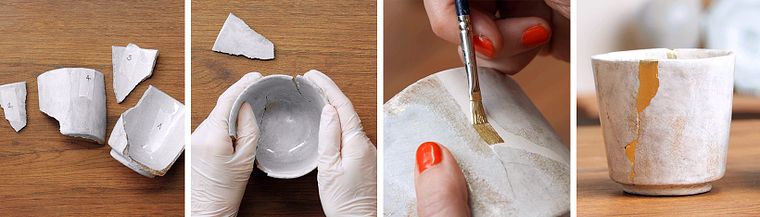
Projects by course students


Who is this online course for?
This course is for anyone interested in discovering the art of kintsugi.
Requirements and materials
No previous experience is required to take the course, all you need is the curiosity to learn this ancient art.
As for materials, you will need two porcelain or stoneware bowls, epoxy glue, latex gloves, gold dust, paintbrushes, wooden spatulas, a craft knife, plaster powder, alcohol, and nail polish remover.
Reviews
- 20 days ago
I recently completely Clara Graziolino's Kintsugi course. I found it informative and easy to follow along. Two different methods were discussed, with varying degrees of difficulty and control. I have some already broken porcelain items - a small plate and a very delicate cup. I think they would be perfect to try as my project pieces. I also intend to visit some charity shops to see if I can find any stoneware items, so I have variety and can also practice intentionally breaking my kintsugi item
- 1 month ago
Der Kurs informiert gut über die Geschichte und Techniken des Kintsugi. Die Anleitungen sind verständlich und bieten alles um zu lernen, zerbrochenen Tonwaren ein zweites (schöneres) Leben zu geben. Ich kann den Kurs allen empfehlen, die sich für Kintsugi interessieren und gerne reparieren oder damit beginnen wollen.
- 3 months ago
A técnica é bem explicada no passo a passo que é dividido o curso. Muito fácil de entender o processo todo.
- 5 months ago
Corso molto bello, spiegato nei minimi dettagli con grande accuratezza.
- 6 months ago
Interesante, que el Kintsugi resalte la belleza de la imperfección es resaltar la vida misma, dejando de lado la belleza superflua y postiza a la que la cultura occidental nos lleva. Bienvenido el arte de admirar la simplicidad y la profundidad de la naturaleza y su permanente cambio.

In 2003, she moved to Madrid to deepen her knowledge of ceramic sculptures. She eventually started making her own sculpture artwork, and in 2016 she was awarded first prize at Magrama International Ceramics contest. Alongside a Japanese restoration teacher, she learned the traditional techniques of kintsugi and has since collaborated in advertisements and events with brands such as Shiseido and Acciona. She currently works with international galleries and interior designers creating sculptures, murals, and installations.
Content
- U1
Introduction
- About Me
- Influences
- U2
The History of Kintsugi and Materials for This Course
- What Is Kintsugi?
- Knowing the Materials
- How to Choose the Bowls for Your Kintsugi Project
- How to Break the Bowls
- U3
The Gold Relief Technique
- The Kintsugi Diary
- Joining the Broken Pieces
- Final Touches
- U4
The Gold Flush Technique
- Joining the Broken Pieces with Glue Flush
- Rebuilding the Gaps
- Sanding the Rebuilt Parts
- The Gold Paint
- U5
Uses and Packaging of Kintsugi Pieces
- Conservation and Possible Uses of Your Kintsugi Pieces
- How to Pack Your Kintsugi Ceramics
- FP
Final project
- Introduction to Kintsugi: Repair Your Pottery with Gold
What to expect from a Domestika course
Learn at your own pace
Enjoy learning from home without a set schedule and with an easy-to-follow method. You set your own pace.
Learn from the best professionals
Learn valuable methods and techniques explained by top experts in the creative sector.
Meet expert teachers
Each expert teaches what they do best, with clear guidelines, true passion, and professional insight in every lesson.
Certificates
PLUSIf you're a Plus member, get a custom certificate signed by your teacher for every course. Share it on your portfolio, social media, or wherever you like.
Get front-row seats
Videos of the highest quality, so you don't miss a single detail. With unlimited access, you can watch them as many times as you need to perfect your technique.
Share knowledge and ideas
Ask questions, request feedback, or offer solutions. Share your learning experience with other students in the community who are as passionate about creativity as you are.
Connect with a global creative community
The community is home to millions of people from around the world who are curious and passionate about exploring and expressing their creativity.
Watch professionally produced courses
Domestika curates its teacher roster and produces every course in-house to ensure a high-quality online learning experience.
FAQs
Kintsugi is a Japanese technique for repairing broken pottery using gold, silver, or platinum mixed with lacquer or epoxy. This method highlights cracks and transforms them into beautiful, unique features, embracing imperfection as part of the object's history.
Yes, the course is designed for beginners and covers all basics of kintsugi restoration, including material selection, safety, and step-by-step repair techniques. No prior experience in ceramics or restoration is required.
You’ll need ceramic bowls, epoxy glue, gold dust or gold powder, brushes, masking tape, acetone, plaster of Paris, sandpaper, and basic safety equipment. The course explains how to choose and use each material for best results.
You’ll learn kintsugi philosophy, traditional and modern restoration techniques, safe handling of ceramics, gold application methods, and how to document your process. The course also covers material selection and finishing for both functional and decorative pieces.
The course teaches controlled breaking techniques, including wrapping ceramics and using a hammer to avoid injury and achieve desirable fracture lines. Safety measures and preparation steps are emphasized to ensure a safe restoration process.
Yes, the course covers both traditional urushi lacquer and modern epoxy glue methods. Epoxy is easier and safer for beginners and provides durable, beautiful results when combined with gold dust or powder.
Gold relief creates raised gold lines along fractures, while gold flush results in smooth, seamless gold lines. The course demonstrates both methods and explains how to choose the right technique for your project.