Graphite Drawing Techniques for Planar Portraiture
A course by Dan ThompsonArtist and Teacher
A course by Dan Thompson, Artist and Teacher

Learn how to use structural forms with multiple planes to create experimental pencil portraits from observation of the human figure
Drawing people and portraits is an opportunity to tap into a centuries-old tradition and continue the legacy of the talented creatives before us. Artist and teacher Dan Thompson aims to uncover the mysteries of the human form through his portraiture. His work can be found in both public and private collections around the world, and he teaches at the New York Academy of Art, among others.
In this online course, Dan shows you how to use structural forms and planar modules to interpret an experimental portrait drawing from life. Learn how to use graphite to draw the body as an aesthetic blend of construction, plane, and morphology. Are you ready to create perceptual portraits from scratch?
What will you learn in this online course?
26 lessons & 17 downloads
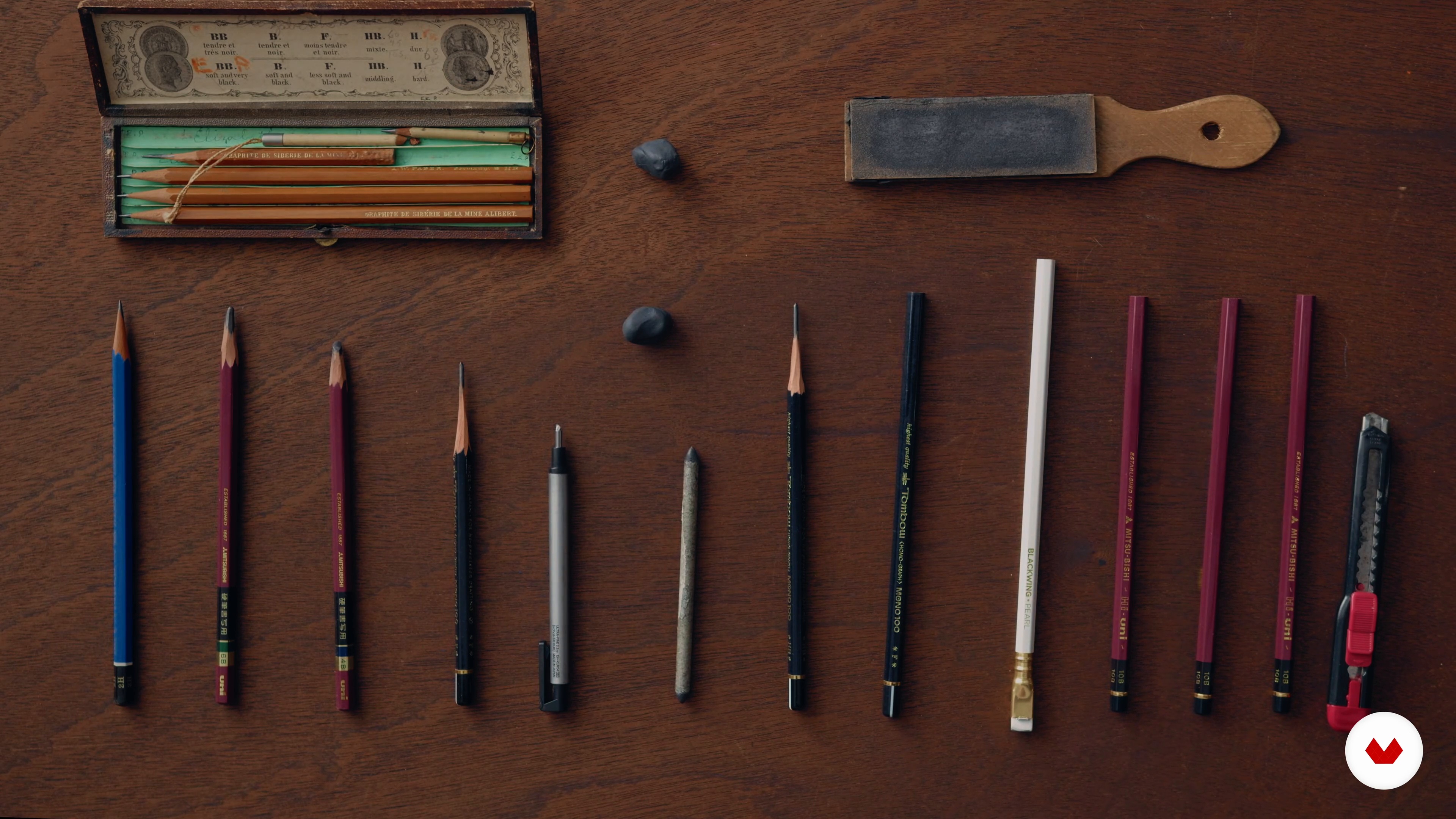
Materials and Tools
12 minutes, 38 seconds
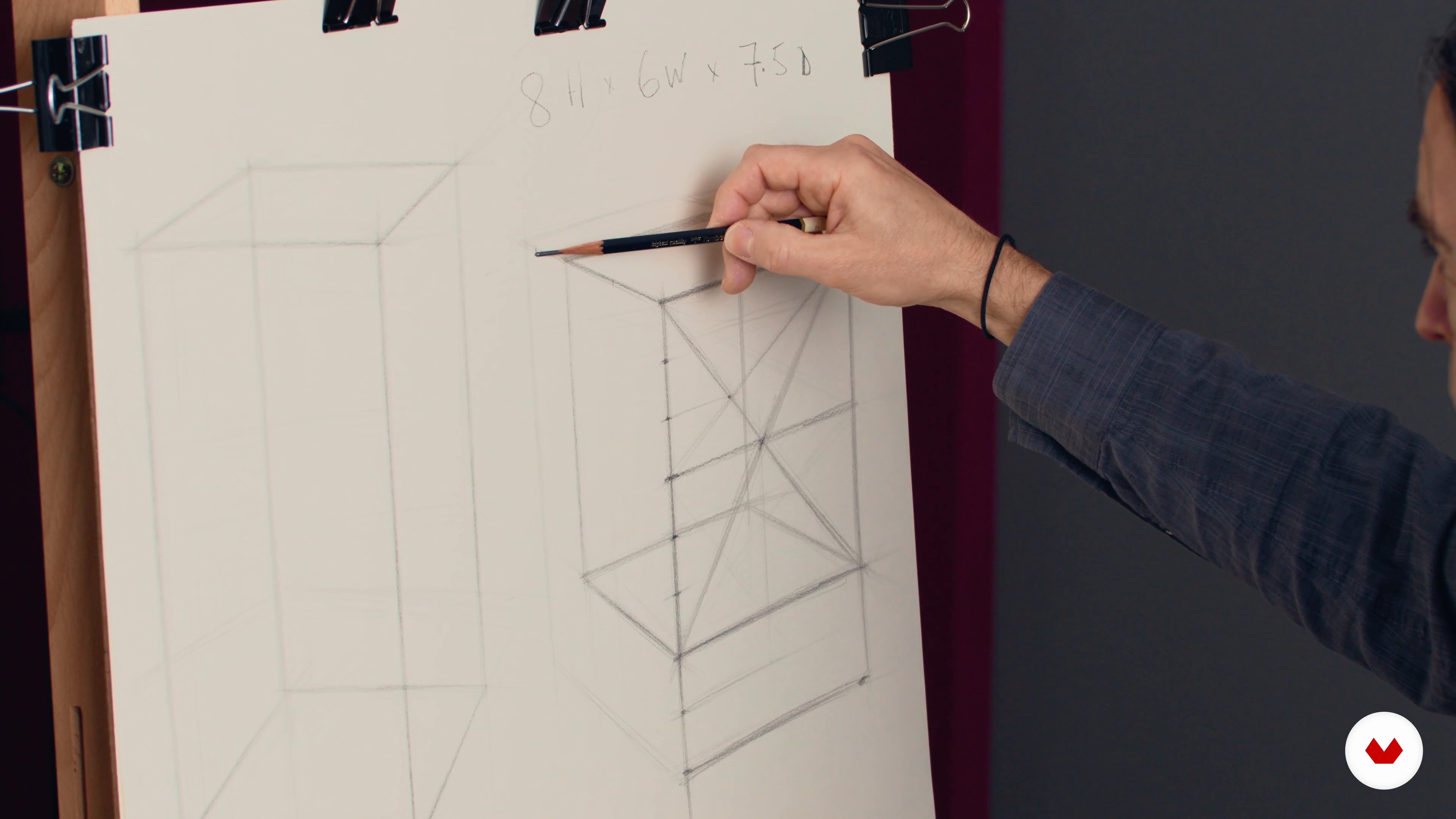
Drawing the Head Block
11 minutes, 2 seconds
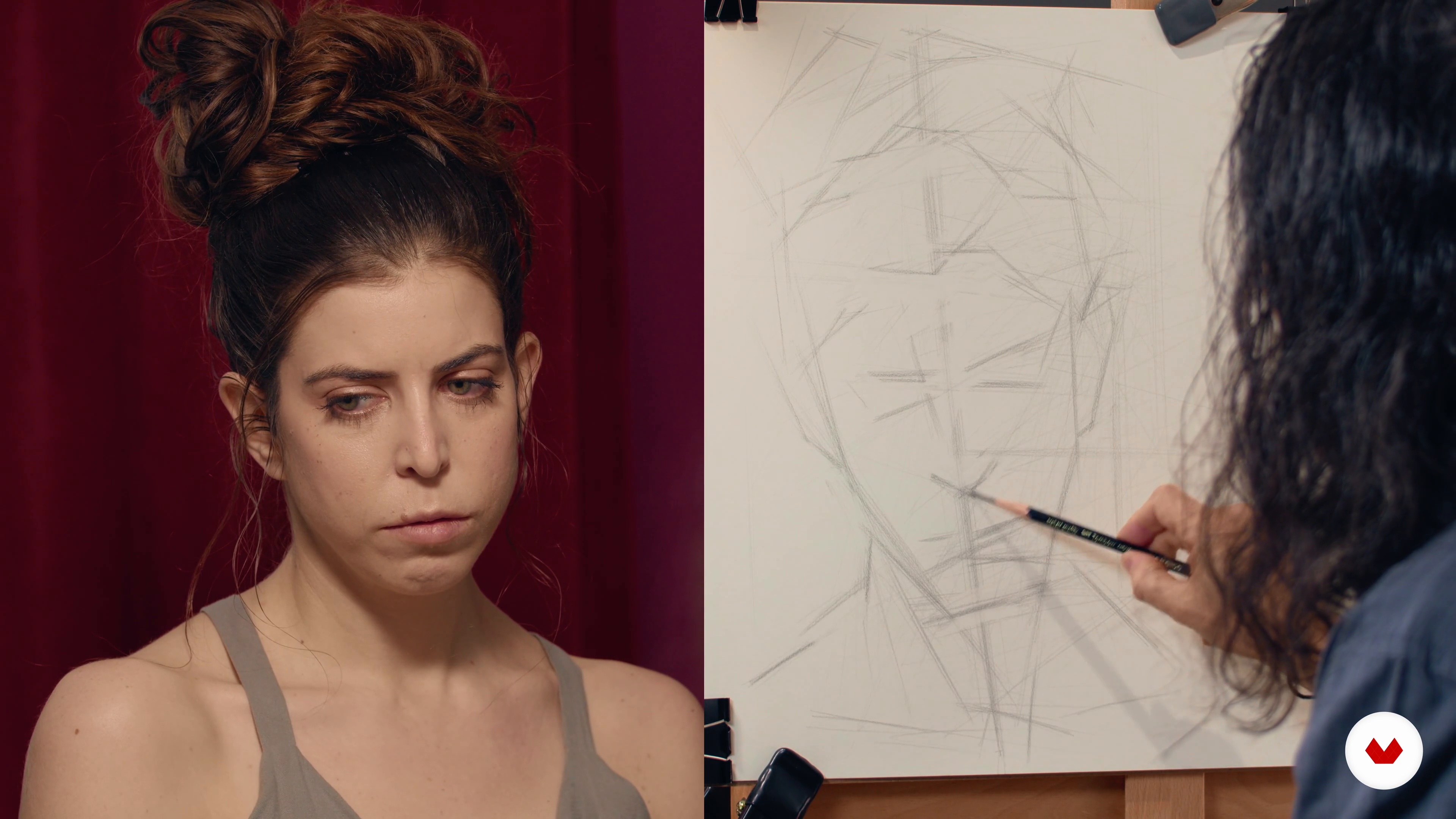
Optical Information 1
18 minutes, 28 seconds
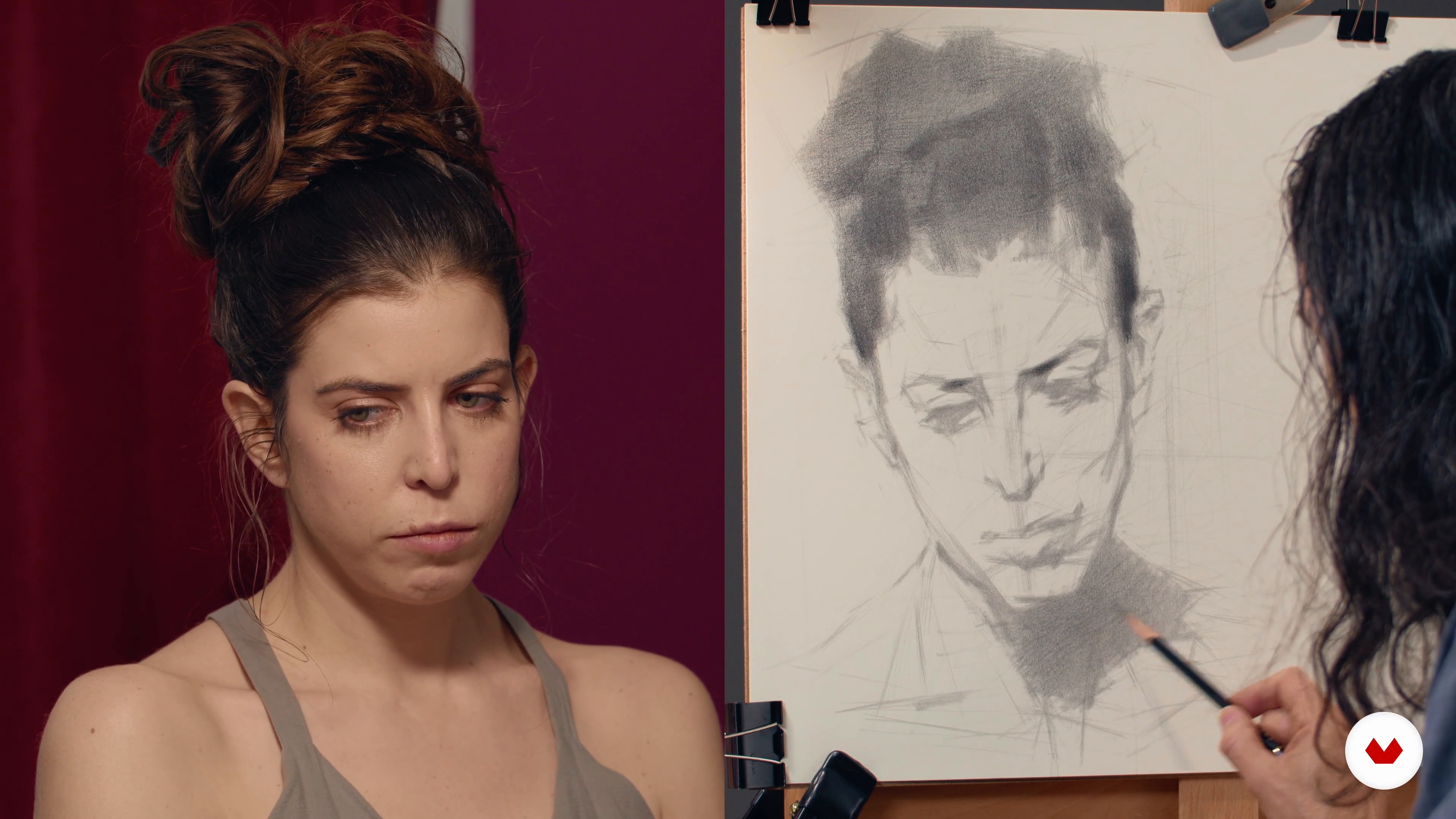
Tonal Information 1
19 minutes, 55 seconds
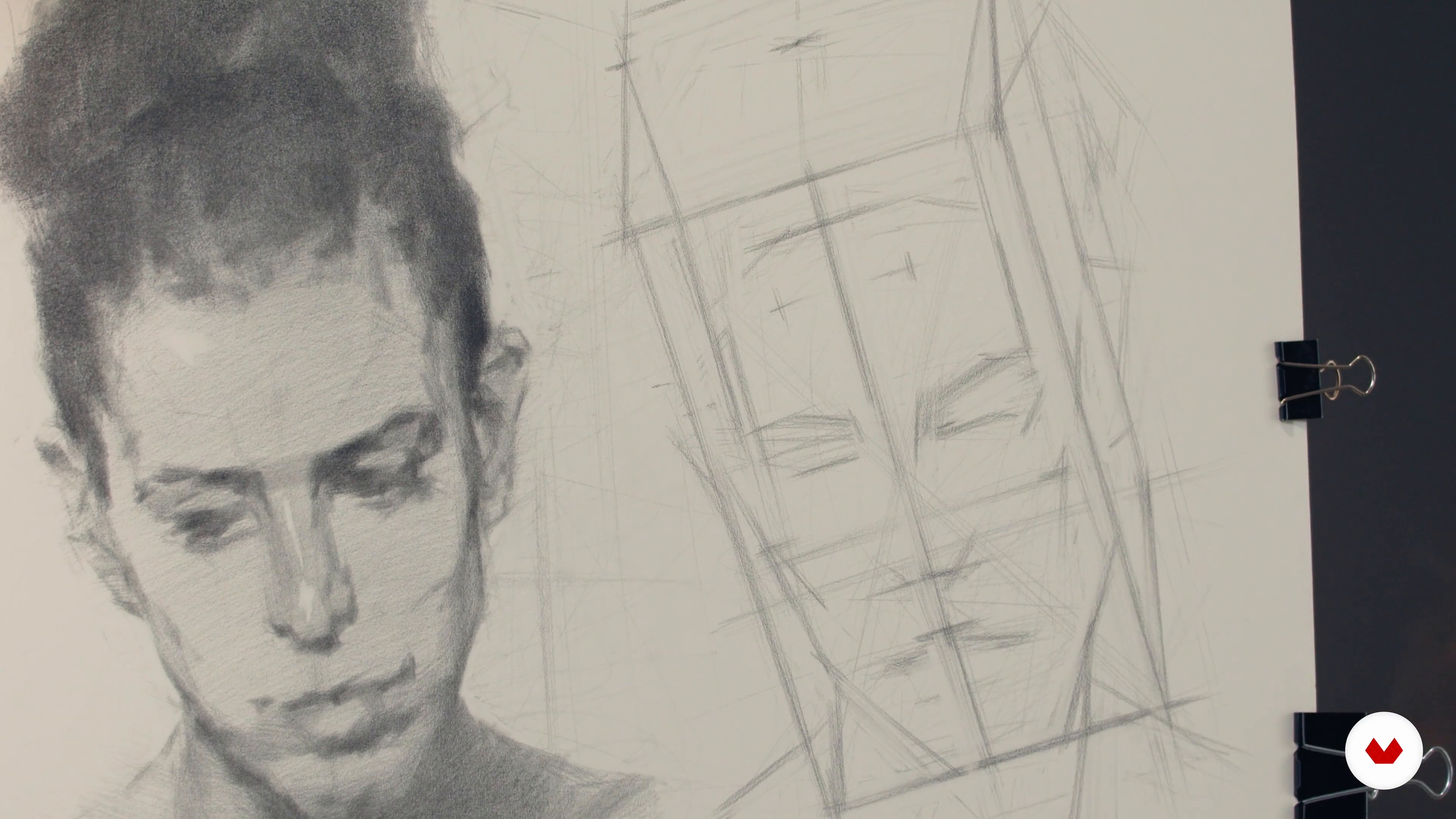
The Schematic Drawing 1
20 minutes, 17 seconds
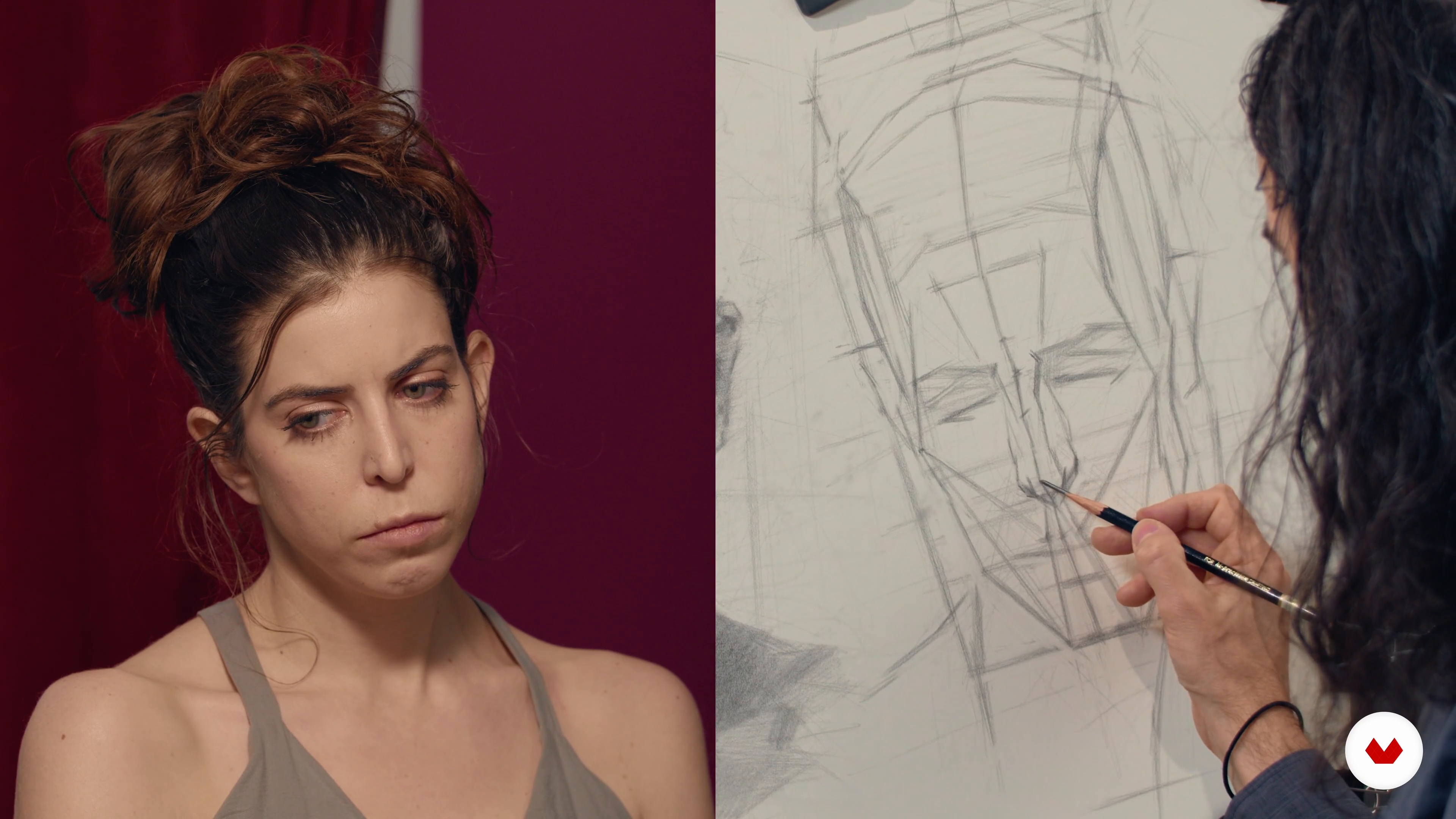
Experimenting within the Head 1
13 minutes, 19 seconds
What's included in this course?
Begin the course by getting to know artist and teacher Dan Thompson. Discover the creative career that led him to found two art schools, along with the influences that inspire the work he creates.
Dive into the tools and materials needed for the course, from textured paper to different pencils. Dan shows you how to sharpen and sculpt your pencils for a professional finish and talks through the myths of using graphite. Gain a deeper understanding of what planar portraits are in preparation for your piece.
Explore fundamental drawing exercises needed to create your finished drawing. Start by sketching a simple block and setting up the form of a head. Then apply proportions before practicing the final warm-up exercise, which is designed to teach you how to mix organic form with analytical drawing.
Time to start working on your portraits! Dan guides you through how to organize visual information to create an abstract, perceptual drawing. Then learn to add tone to your work, starting with the darkest shadows before incorporating the finer details. Move on to your second, more structural drawing and develop it using a planar archetype inspired by an artist famous for his figure drawing.
To finish the course, Dan shows you how to enhance both of your drawings by going back and forth between them. Develop the schematic portrait by subdividing its major forms, and take your figure drawing to the next level, exploring your subject's particularities to make it unique.
What is this course's project?
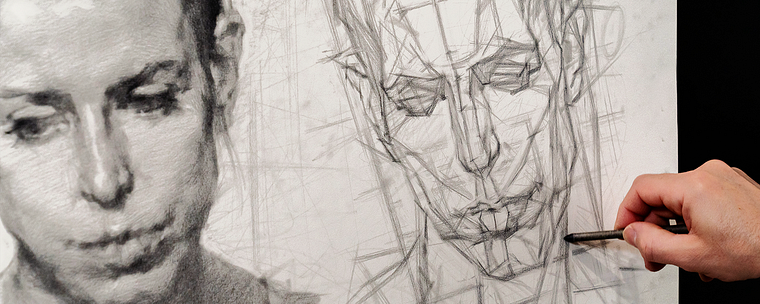
Create two drawings: an abstract portrait from direct observation, and another which is a structural, linear study of the original.
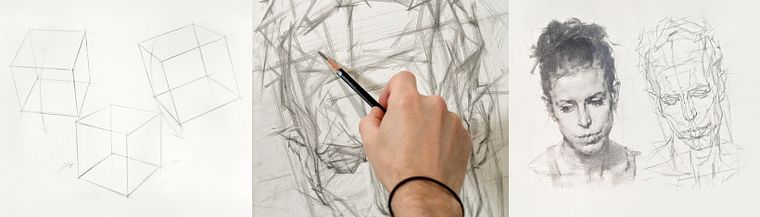
Projects by course students


Who is this online course for?
This course is for anyone with an interest in improving their portrait drawing with graphite pencils and who wants to explore experimental portraiture.
Requirements and materials
Previous drawing experience would be beneficial but is not essential.
In terms of materials, you will need paper with a medium texture, graphite pencils of varying hardness, a razor or penknife, sandpaper, and a kneaded eraser.
Reviews
- 27 days ago
Curso muy bien organizado y de excelente calidad
- 1 month ago
Really good
- 2 months ago
Buenisímo, el profesor a toda madre, super recomendado
- 3 months ago
Excelente
- 4 months ago
Excelente curso, bien llevado, explicado, abre un panorama de aprendizaje extenso.

Dan currently serves as dean of fine arts at Studio Incamminati, as well as the faculty chair of the one-year certificate of fine arts program at the New York Academy of Art. He has been awarded two grants from the Elizabeth Greenshields Foundation and received the Ethel Lorraine Bernstein Memorial Award for Excellence in Painting on multiple occasions. In 2001, he also won Best of Show in the American Society of Portrait Artist’s International Portrait Competition at the Metropolitan Museum of Art. His work can be found in both public and private collections throughout the United States, Canada, Europe, and the Middle East.
Content
- U1
Introduction
- About Me
- Influences
- U2
What You Will Need for the Course
- Materials and Tools
- What Is a Planar Portrait?
- U3
Warming Up
- Drawing a Simple Block: A Lesson in Structure
- Drawing the Head Block
- Drawing the Trapezoid: A Lesson in Taper
- U4
Portraits of the Head: Naturalistic versus Schematic
- Optical Information 1
- Optical Information 2
- Optical Information 3
- Optical Information 4
- Tonal Information 1
- Tonal Information 2
- Tonal Information 3
- Tonal Information 4
- The Schematic Drawing 1
- The Schematic Drawing 2
- The Schematic Drawing 3
- Interpretive Values 1
- Interpretive Values 2
- U5
Experimentation
- Experimenting within the Head 1
- Experimenting within the Head 2
- Experimenting within the Head 3
- Experimenting within the Head 4
- Experimenting within the Head 5
- Experimenting within the Head 6
- FP
Final project
- Graphite Drawing Techniques for Planar Portraiture
What to expect from a Domestika course
Learn at your own pace
Enjoy learning from home without a set schedule and with an easy-to-follow method. You set your own pace.
Learn from the best professionals
Learn valuable methods and techniques explained by top experts in the creative sector.
Meet expert teachers
Each expert teaches what they do best, with clear guidelines, true passion, and professional insight in every lesson.
Certificates
PLUSIf you're a Plus member, get a custom certificate signed by your teacher for every course. Share it on your portfolio, social media, or wherever you like.
Get front-row seats
Videos of the highest quality, so you don't miss a single detail. With unlimited access, you can watch them as many times as you need to perfect your technique.
Share knowledge and ideas
Ask questions, request feedback, or offer solutions. Share your learning experience with other students in the community who are as passionate about creativity as you are.
Connect with a global creative community
The community is home to millions of people from around the world who are curious and passionate about exploring and expressing their creativity.
Watch professionally produced courses
Domestika curates its teacher roster and produces every course in-house to ensure a high-quality online learning experience.
FAQs
Yes, this course is designed for intermediate artists who want to deepen their understanding of figure drawing, anatomy, and structural techniques for more accurate and expressive artwork.
Some basic drawing experience is recommended, but you don’t need advanced skills. The course builds on foundational knowledge and introduces more complex structural and anatomical concepts.
You’ll need graphite pencils (including Tombow Mono 100), a blending stump, Strathmore 400 paper, a pen knife or sandpaper for sharpening, and a ruler or plumb line for measurement exercises.
You’ll learn structural drawing techniques, life drawing from observation, anatomy study, block construction, planar portrait concepts, light and shadow rendering, and how to use specialized tools for academic drawing.
Yes, the course focuses on drawing the human figure and head using block and planar construction, anatomical landmarks, and measurement techniques for accurate proportions.
Absolutely. The course teaches you to break down complex anatomical forms into simpler blocks and planes, enhancing your ability to render convincing figures and portraits.
Yes, classical techniques such as Notan for composition and grisaille for value studies are covered to help you master light, shadow, and tonal relationships in your drawings.