Guided Course: Watercolor on Wood
A course by Katherine Dossman Casallas (k2man*)Painter and Illustrator
A course by Katherine Dossman Casallas (k2man*), Painter and Illustrator

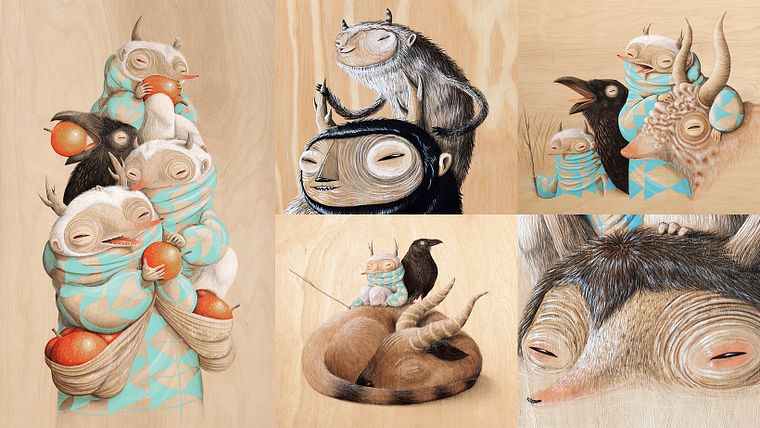
Learn watercolor on wood with scraping, sanding, and varnishing techniques to create unique and original works.
Dive into the fascinating world of watercolor on wood, exploring innovative techniques that will transform your artistic skills. Learn to combine watercolor and acrylic in a harmonious way, creating unique effects in your works. Discover how to apply and merge these materials to achieve surprising textures and contrasts. Through a practical approach, you will develop the skills to handle the necessary tools and obtain the best results in your creative projects.
Learn scraping and sanding methods that add depth and character to your pieces, while shading and varnishing provide a professional finish. Evaluate your final piece, perfecting every detail to reflect your artistic vision. This guided project is an opportunity to expand your creative horizons, playing with the versatility of watercolor on wood. Upon completion, you will have a work that not only demonstrates your talent, but also your growth as an artist.
What will you learn in this online course?
7 lessons & 24 downloads

Watercolor and Acrylic Areas I
8 minutes, 45 seconds
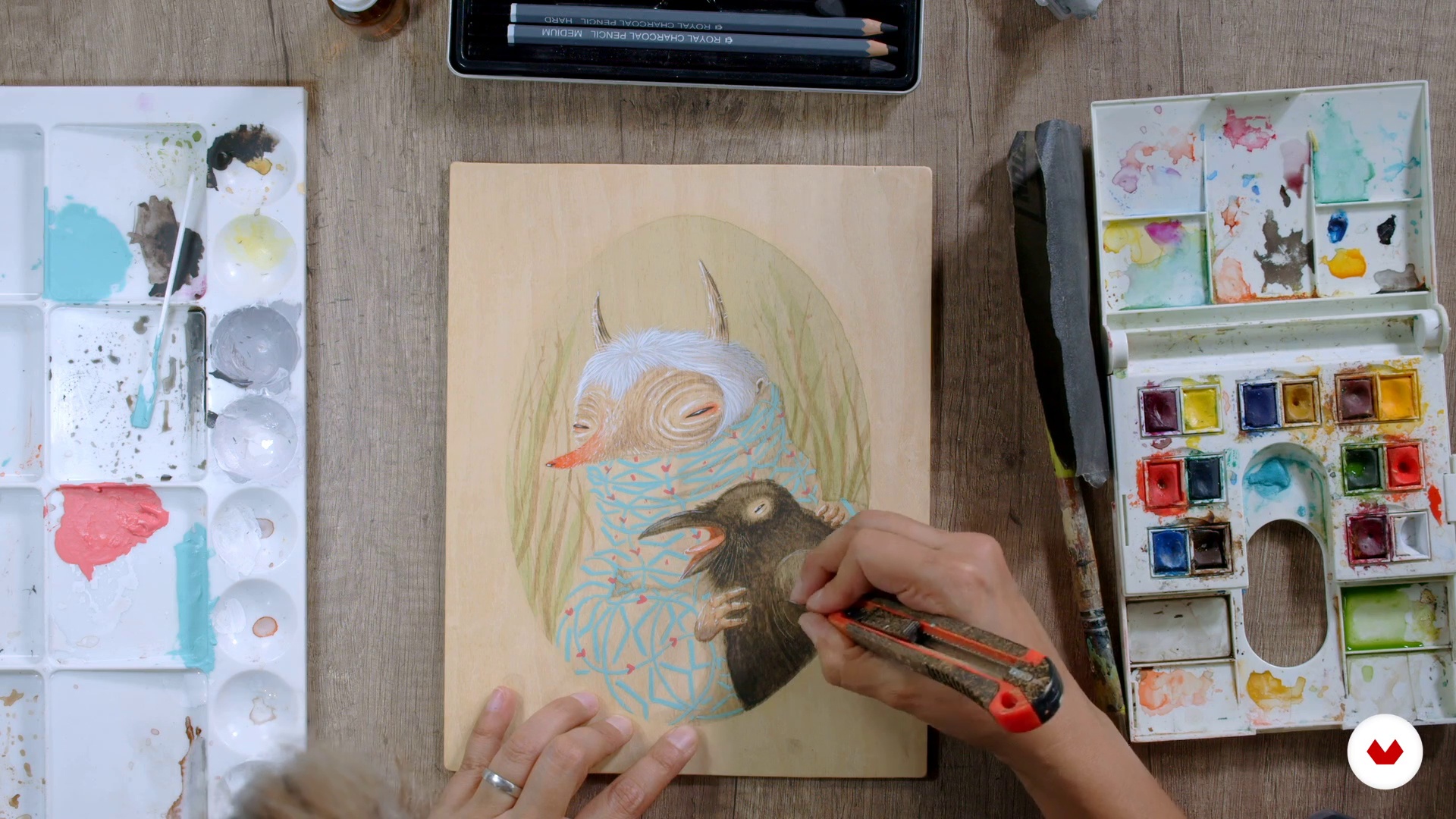
Scraping and Sanding
9 minutes, 29 seconds
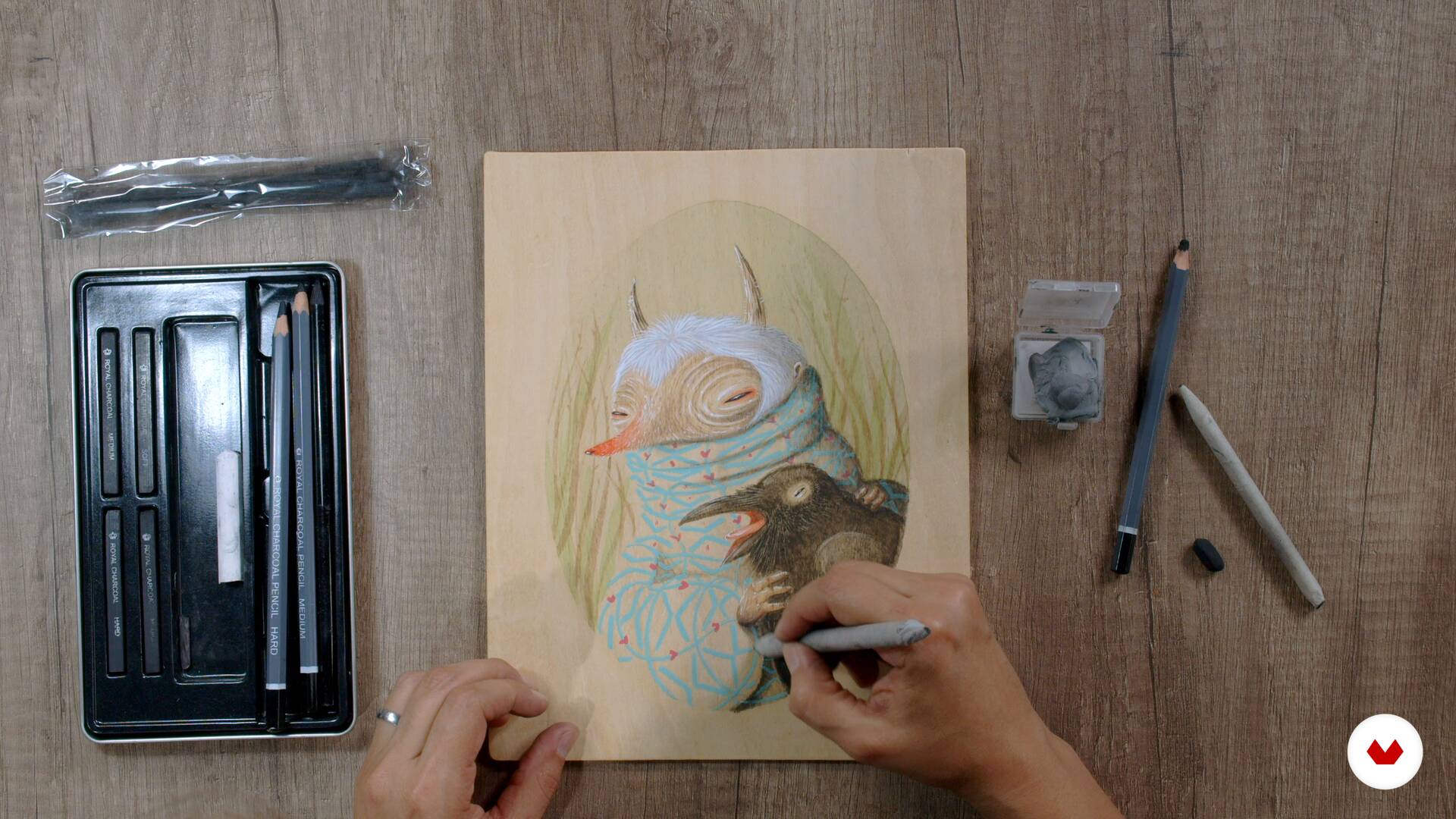
Shadows and Varnish
11 minutes, 17 seconds
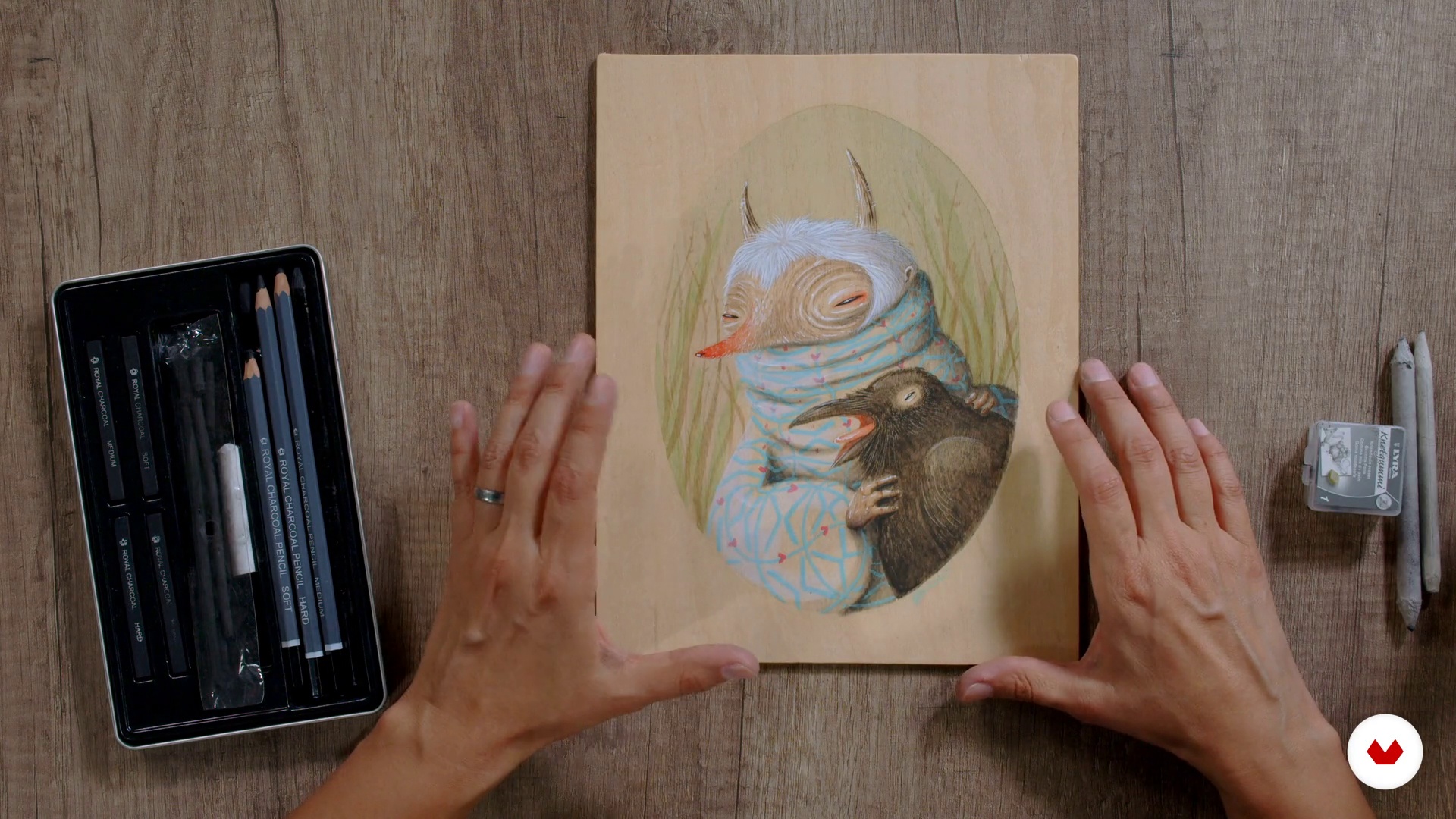
Evaluation of the Final Piece
3 minutes, 32 seconds
Podcast: Evolution of Watercolor
5 minutes, 52 seconds
What's included in this course?
Discover how to transform your watercolor skills by applying them to a wooden board. You will learn to combine watercolor and acrylic techniques, exploring different textures and visual effects. The process begins with the careful application of the technique, understanding how the materials interact with the surface of the wood. You will progress through specific areas where watercolor and acrylic complement each other, allowing you to create unique contrasts and vibrant details.
The development of your pieces includes scraping and sanding techniques, providing a professional and refined finish. The addition of shading and varnish adds depth and protection to your work, ensuring its durability. You will conclude with an evaluation of the finished piece, identifying areas for improvement and celebrating your artistic achievements. This journey will give you the tools to expand your creative horizons and take your watercolor projects to the next level on unconventional surfaces.
What is this course's project?
You will learn how to apply watercolor on wood, combining acrylic techniques to create unique textures. You will explore areas of color, scraping, sanding, and the application of shading and varnish, culminating in a detailed evaluation of your final piece.
Who is this online course for?
Ideal for artists looking to experiment with watercolor on unconventional surfaces, art hobbyists looking to expand their skills, and creators interested in combining painting techniques on wood. Perfect for those who enjoy exploring new avenues of artistic expression.
Requirements and materials
No extensive prior knowledge is required, but it is necessary to have brushes, watercolours, acrylics, sandpaper and varnish, as well as a wooden board to work on. It is recommended to have a suitable and protected space where to carry out the techniques.
Reviews
- 1 year ago
Excellent instructor and class. I learned a lot of watercolor tips.
- 1 year ago
Lots of information. I took this course to get tips on how to paint my wood burning project with watercolors. I learned a great deal to move forward with.
In 2006, she traveled to Buenos Aires, Argentina to study animation, where she continued to work as an art director until she decided to become a full-time artist in 2010, freelancing for clients in Argentina, Brazil, Colombia, Spain, and the United States. With her passion for painting fantasy-like characters, she has created pieces that can be found in galleries and art stores all over these countries.
Content
Guided Course: Watercolor on Wood
- How to Apply the Technique
- Watercolor and Acrylic Areas I
- Watercolor and Acrylic Areas I
- Scraping and Sanding
- Shadows and Varnish
- Evaluation of the Final Piece
- Podcast: Evolution of Watercolor
- Final project
What to expect from a Domestika course
Learn at your own pace
Enjoy learning from home without a set schedule and with an easy-to-follow method. You set your own pace.
Learn from the best professionals
Learn valuable methods and techniques explained by top experts in the creative sector.
Meet expert teachers
Each expert teaches what they do best, with clear guidelines, true passion, and professional insight in every lesson.
Certificates
PLUSIf you're a Plus member, get a custom certificate signed by your teacher for every course. Share it on your portfolio, social media, or wherever you like.
Get front-row seats
Videos of the highest quality, so you don't miss a single detail. With unlimited access, you can watch them as many times as you need to perfect your technique.
Share knowledge and ideas
Ask questions, request feedback, or offer solutions. Share your learning experience with other students in the community who are as passionate about creativity as you are.
Connect with a global creative community
The community is home to millions of people from around the world who are curious and passionate about exploring and expressing their creativity.
Watch professionally produced courses
Domestika curates its teacher roster and produces every course in-house to ensure a high-quality online learning experience.
FAQs
You’ll learn how to apply watercolor, acrylic, and pastel on wood, manage water and pigment, create reserved areas, gradients, textures, and details, fix mistakes, and protect your artwork with varnish, combining theory and step-by-step practice.
The course is aimed at people with basic painting knowledge, ideal for intermediate level. You don’t need to be an expert, but some experience with watercolor or acrylic is recommended.
You’ll need fine wooden panels, watercolors, acrylics, a variety of brushes, masking fluid, varnish, blending stumps, chalks, eraser, sandpaper, craft knife, palette, and water containers. Using mid-quality materials is recommended for better results.
The surface should be gently sanded and cleaned to remove dust. Sometimes a light base coat of sealer or clear varnish is recommended before starting with watercolor to control absorption.
You’ll learn to create gradients by controlling water and pigment load, use the wood grain to your advantage, blend colors, and merge lines to achieve smooth transitions and depth effects.
Masking fluid is applied over areas you want to protect; it acts as a barrier against watercolor and is carefully removed once the paint is dry, leaving clean spots for highlights or details.
Yes, you’ll learn how to fix stains using erasers, sanding, or scraping techniques and how to turn mistakes into creative opportunities in your work.