Specialization

Voice Mastery & Recording

Develop voice-over and dubbing skills, master advanced vocal techniques, and transform your voice into a powerful tool

Specialization · 6 modules

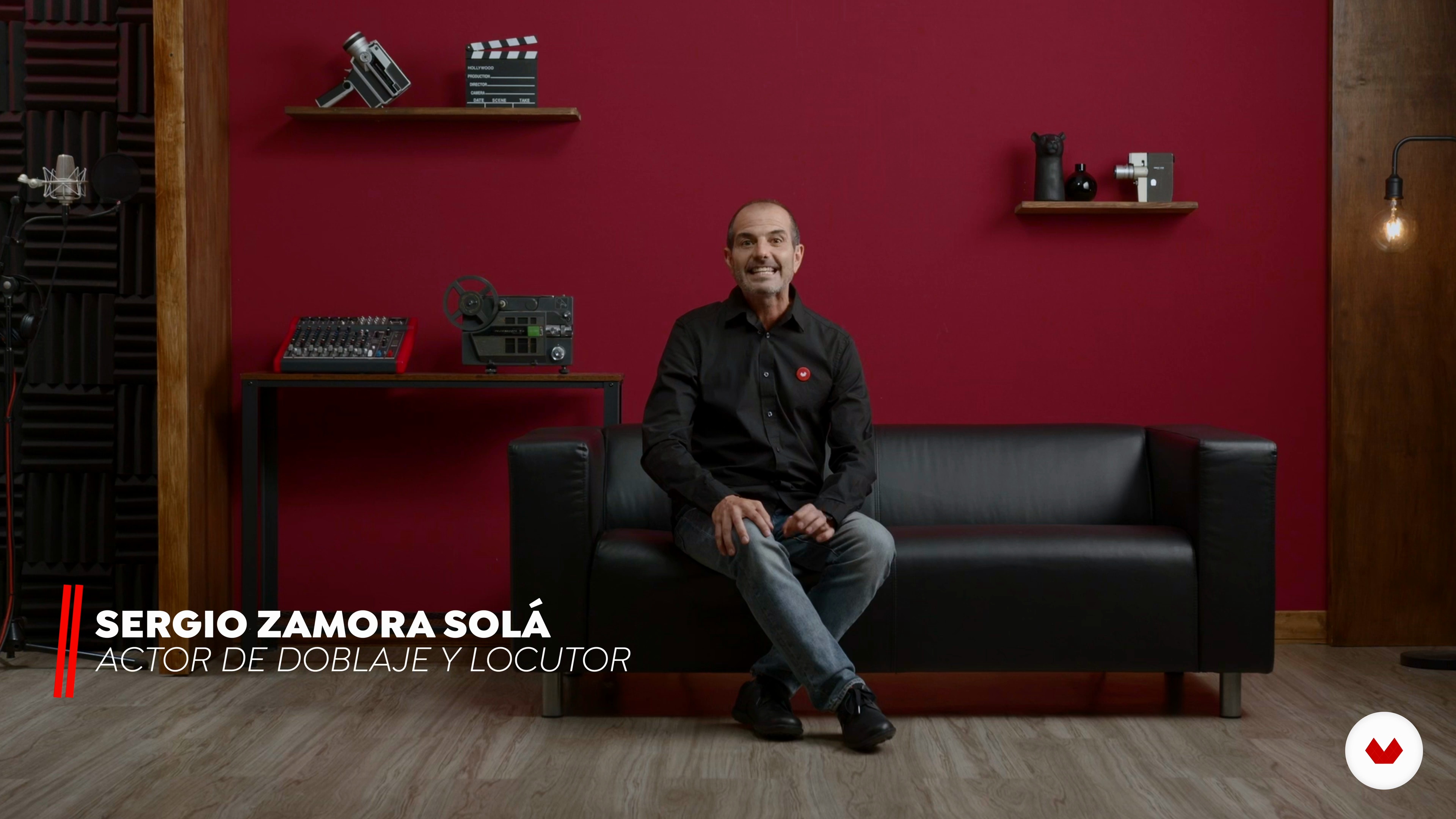
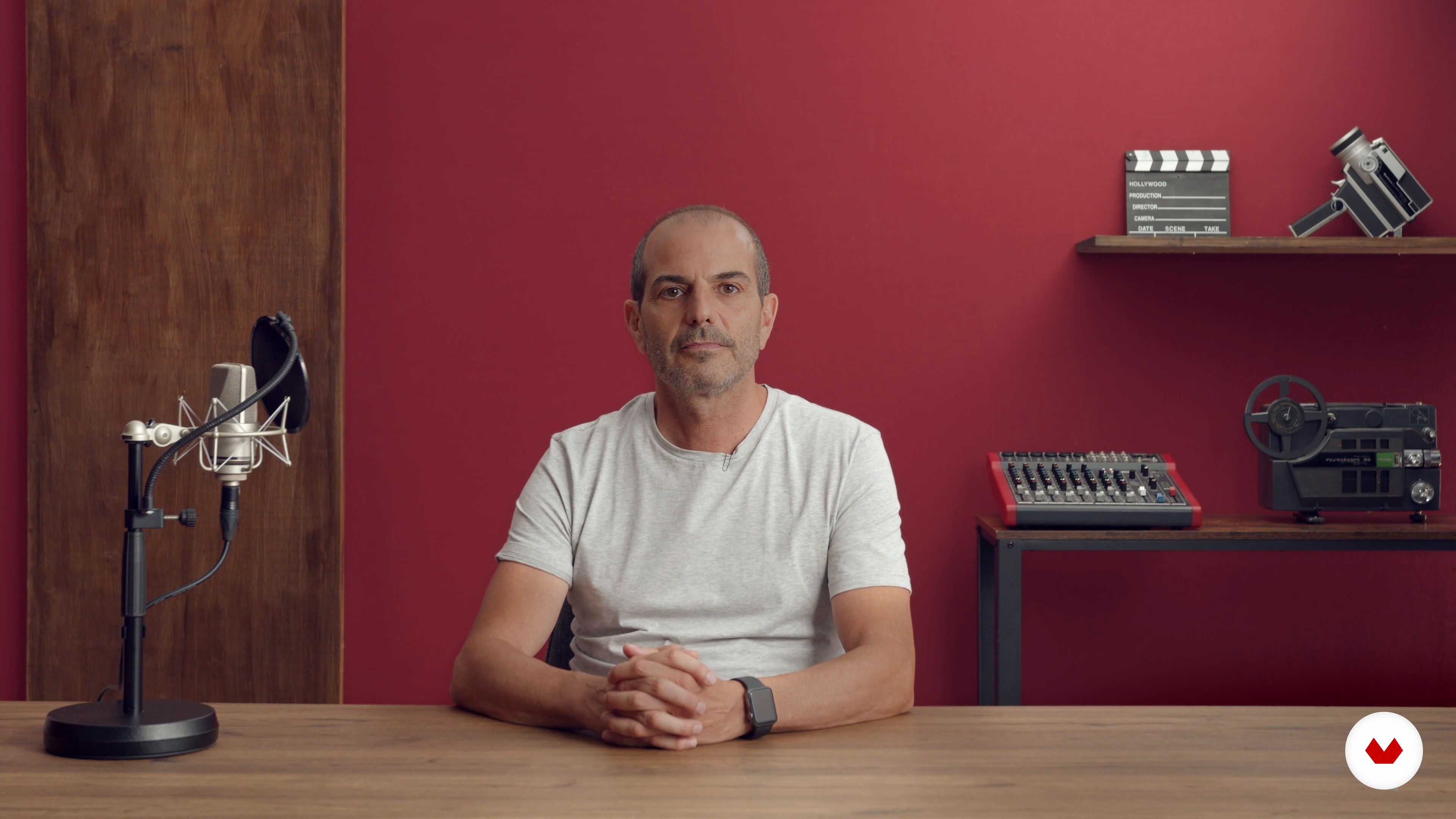
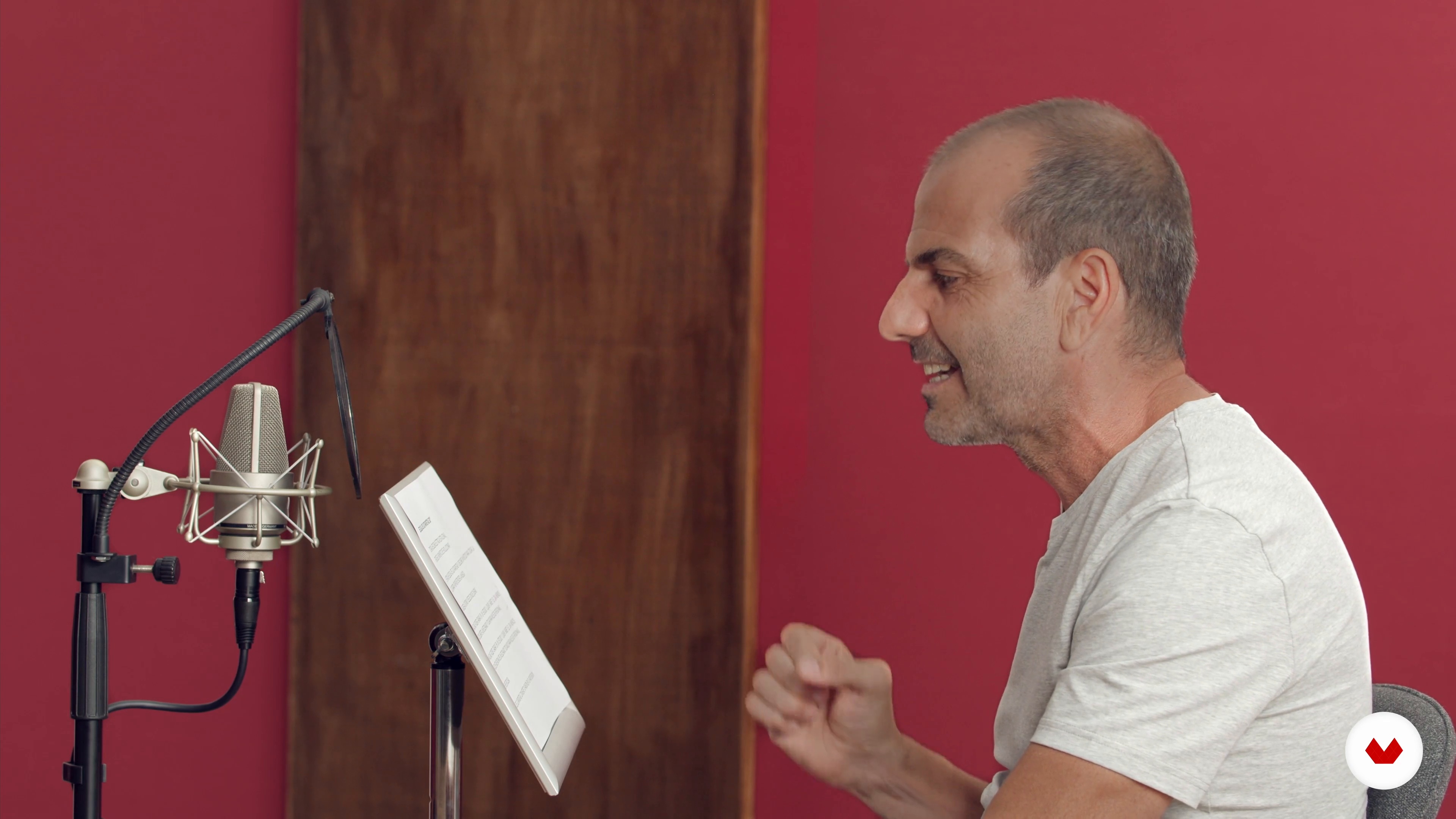
Discover the fascinating world of voice acting and dubbing with a comprehensive approach that will enhance your vocal skills. Learn to develop a unique vocal identity with fundamental acting techniques that will transform every word into a memorable experience. From the technical foundations of voice acting to advanced dubbing techniques for animation, you will explore diverse areas that will enrich your professional profile. The specialization covers everything from commercial voice acting to the creation of animated characters, guided by industry experts such as Jani Dueñas, Sergio Zamora Solá, Isabel Martiñón, Sebastián Llapur, and Joël Mulachs Escolano.

Throughout this course, you'll master diction, breathing, and lip-syncing—essential skills for any voice actor or narrator. Consistent practice and self-awareness will allow you to unlock the full potential of your voice, transforming it into your most powerful tool. By the end, you'll have a professional demo reel showcasing your versatility and technique, ready to impress agencies and clients. Join this creative journey toward voice mastery and discover how every word can come alive with authenticity and emotion.

Read more ↓

What will you learn in this specialization?

A total of 6 modules and 58 lessons
A total of 7h 41m of vídeo lessons
Taught by 5 selected expert teachers
image
3
What is the voice?
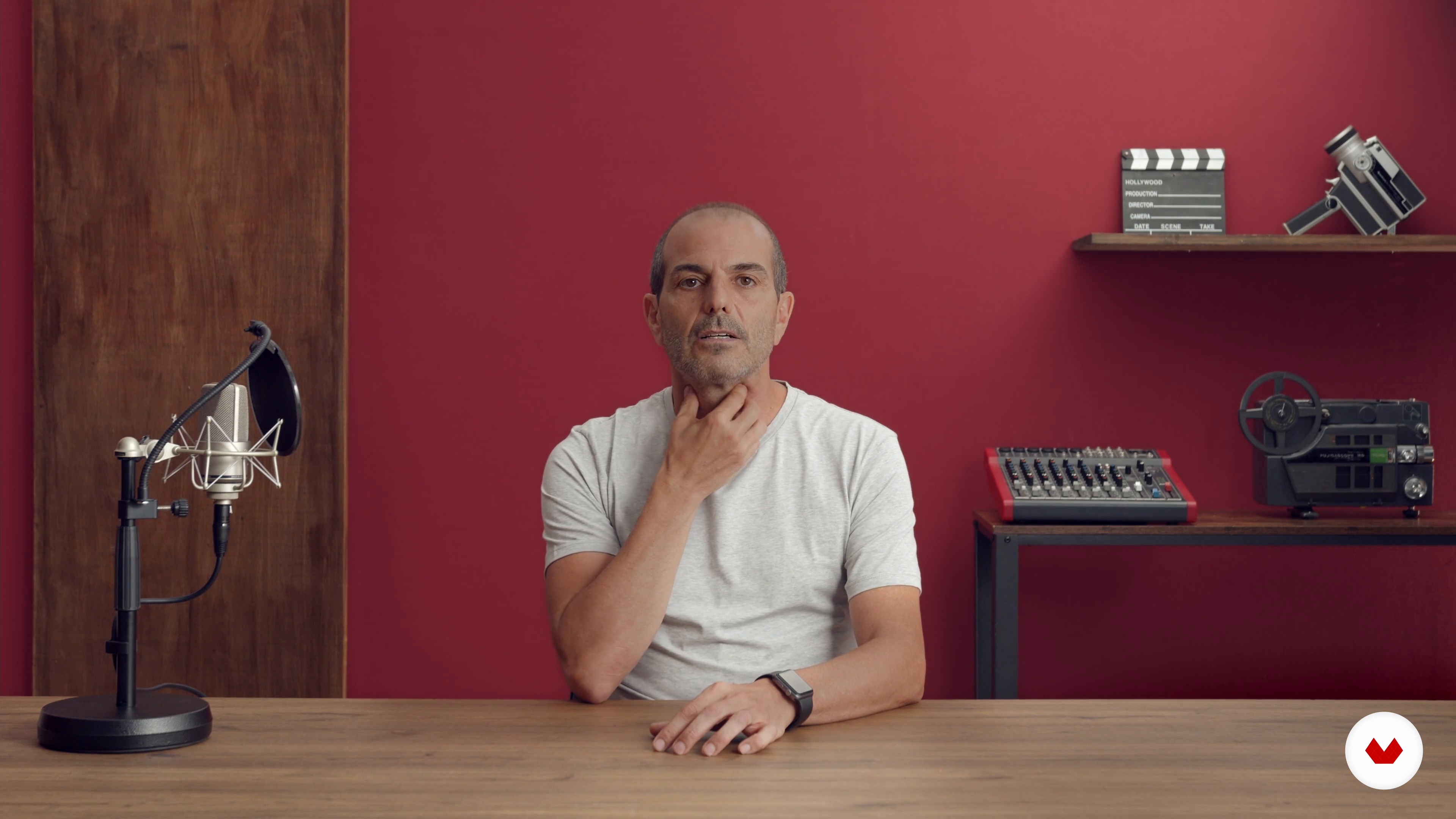
The voice is one of the main physical characteristics, our sound is unique and unrepeatable. But how to know what our voice really is.
4m
image
4
How is the voice produced?
In this lesson you will learn about the speech apparatus. I will also explain in detail the main factors and forces that influence the production of our sound.
2m
image
5
Exercises
To conclude, you will get to work. During this lesson, you will learn what exercises you can do to relax as well as to exercise your breathing and sound.
16m
image
6
Before working with a text
Before facing a text or even reading it aloud, there are certain things you should know and practice. Let's go see them.
8m
image
7
Types of text and their characteristics
In this lesson you will see some examples of texts with different intonation and meaning characteristics, in order to distinguish the differences in their vocal interpretation.
10m
image
8
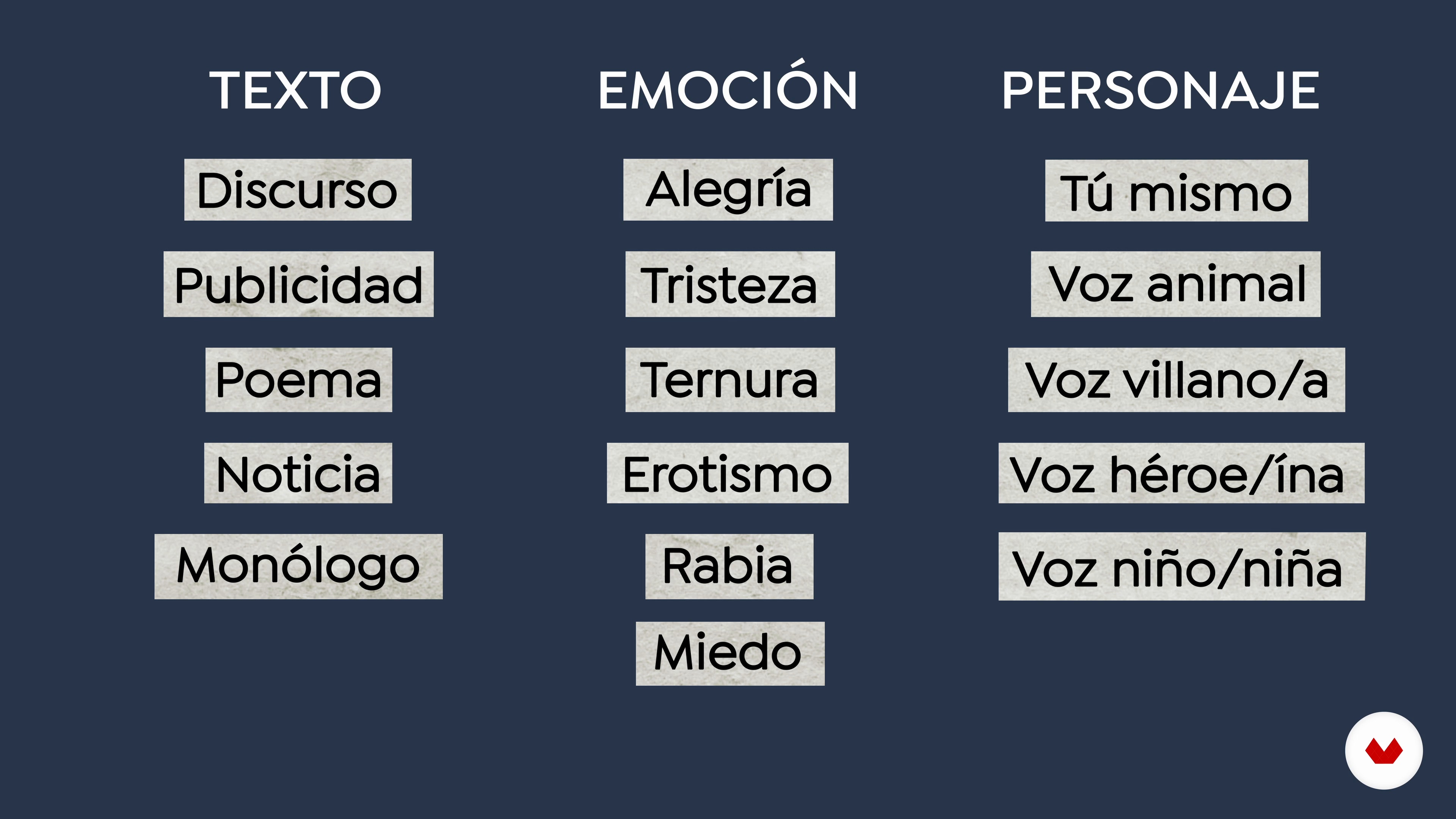
The importance of emotions
You can interpret what you want to say, just with your voice, through breathing and working with your emotions. In this lesson you will learn how to breathe with each of them and how to apply that technically to the word.
11m
image
9
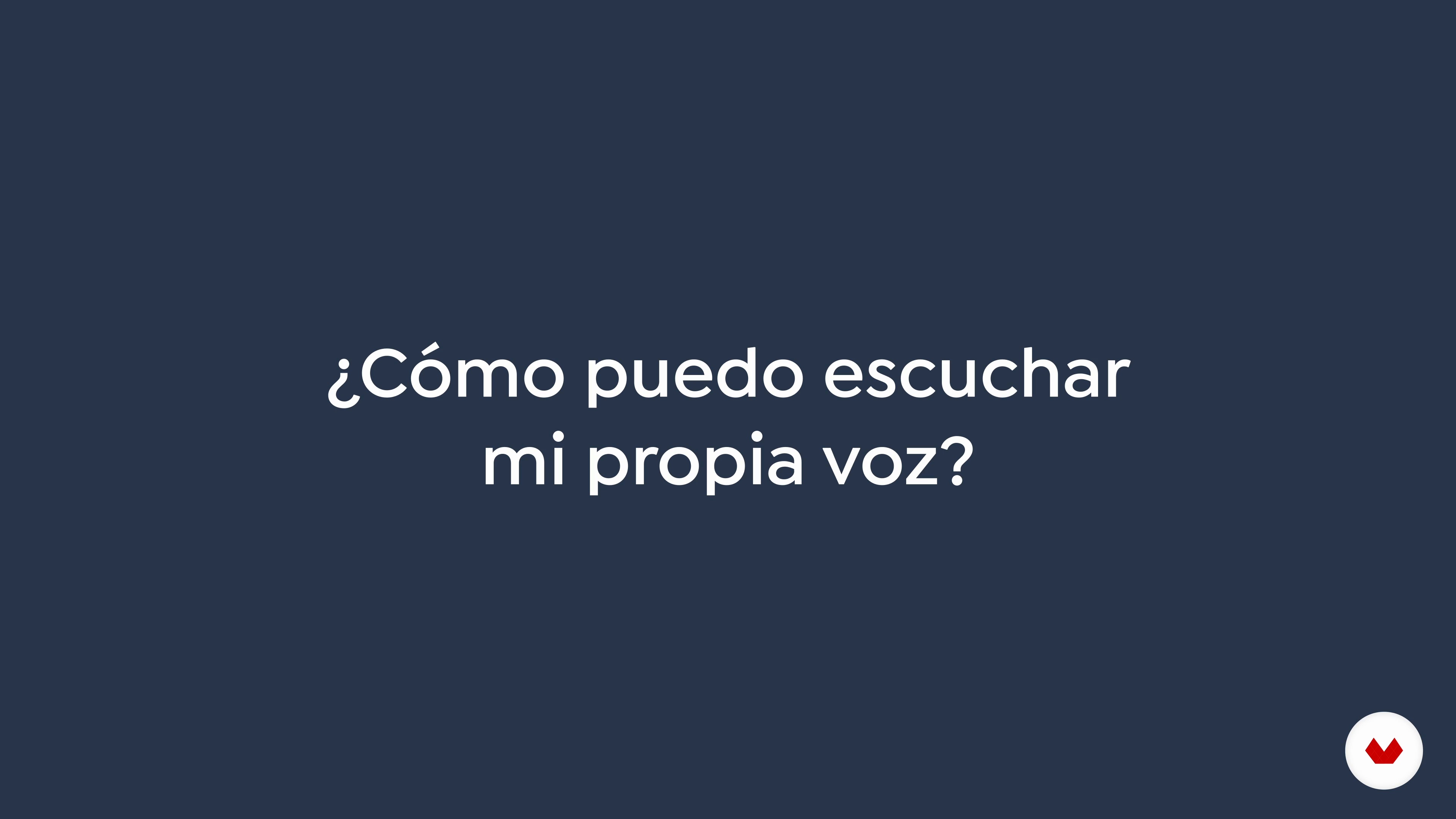
Find your own voice
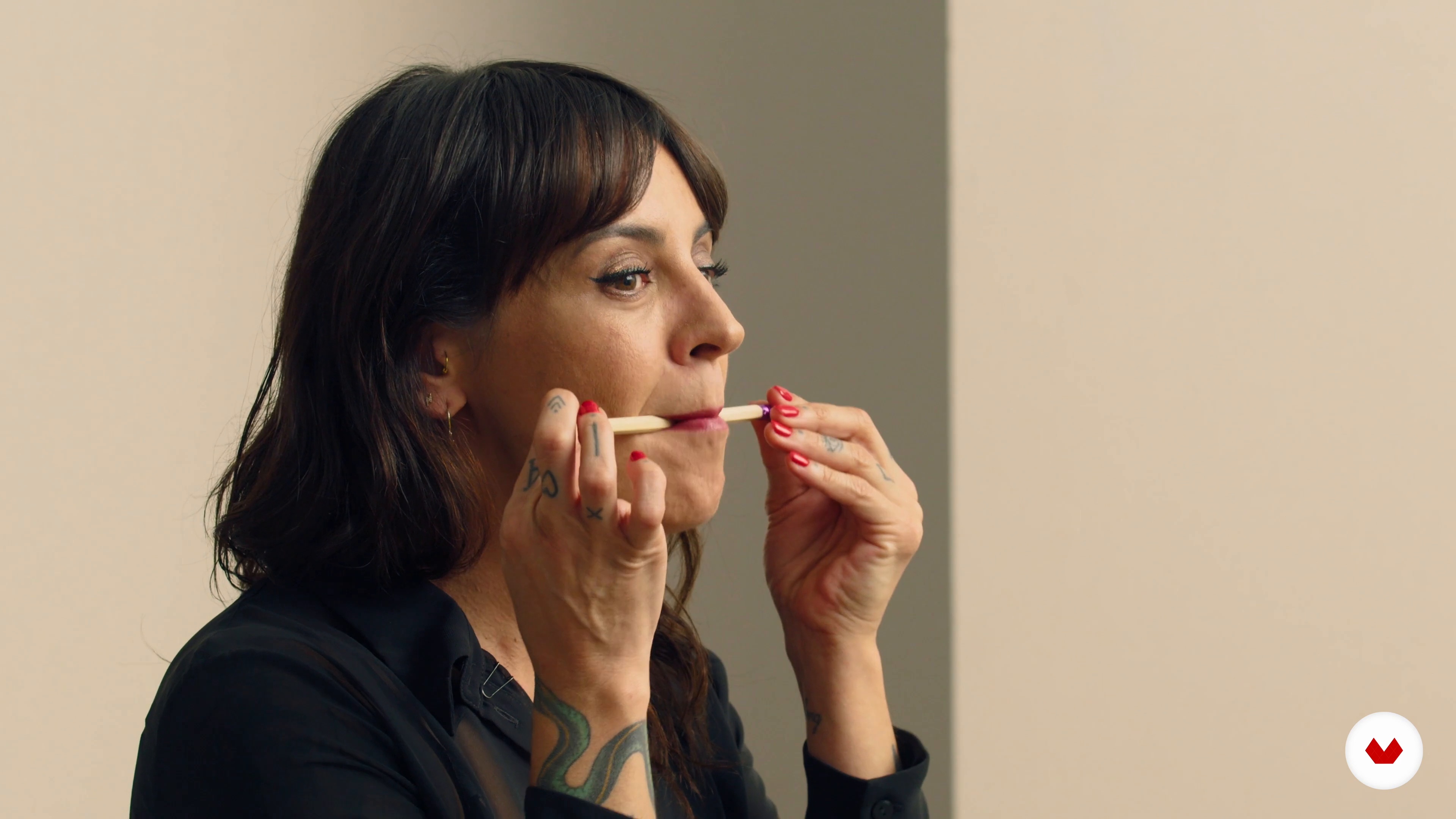
I will talk to you about the importance of listening to your own voice and being able to identify its unique sound. For that, you will learn some tricks to find it.
4m
image
10
Play using your voice
To begin, you will see how to explore your vocal creativity using the contents of the previous lessons. Get ready to play, ring in unpredictable ways and not think!
4m
image
11
Integrate learning into everyday life
In this lesson you will see how to draw conclusions and integrate everything you have learned so you can use it in your life.
2m
image
3
External tools and materials
In this lesson we are going to see the basic tools to carry out the course and its extended format for its subsequent application. We will review the different elements of the equipment and their characteristics.
4m
image
4
The speech apparatus
Now we are going to talk about our best tool: our speech apparatus. We will see some basic notions about what parts it has and how each one works.
7m
image
5
Communicating in different areas
In this lesson we will see that a good locution can serve us in countless everyday situations applied or not to our profession.
7m
image
6
Types of speech
Next, we will see different types of speech and examples related to areas such as dubbing, advertising or video games.
11m
image
7
Body movement and paralinguistics
Finally, I am going to show you how non-verbal elements, the body movements that will enhance the effectiveness of your communication, can help you in your interpretation.
20m
image
8
Sight reading exercise
In this lesson you will practice understanding a text in three phases: rapid eye reading, first sight reading aloud, and reading with intonation, volume and speed.
9m
image
9
Descriptive narrative locution
Now we are going to practice descriptive narrative reading. We will try to clarify the speed and tones very well without varying the volume.
8m
image
10
Advertising locution
Finally, we are going to practice on advertising texts, perhaps one of the most complicated to speak due to its complexity and variety. Here the speed of speech will be very important.
10m
image
11
Using our voice in the day to day
In this lesson we will see how to apply everything learned in the previous lessons on a day-to-day basis. The possibilities that a correct use of the voice gives are endless.
5m
image
12
How to take care of our voice and final tips
Finally, we will review some tips to keep your voice and your speech apparatus in tip-top shape. The voice is our work tool and we need to always have it in the best possible conditions.
5m
image
3
Dubbing and Its Terms
First of all, you will learn several fundamental definitions that are used in the area of dubbing and that will help you in future applications.
15m
image
4
What Makes a Good Dubbing?
Now I will teach you the necessary tools to be able to identify and achieve quality dubbing, starting from rhythm, synchrony and interpretation.
5m
image
5
Anime and Cartoon
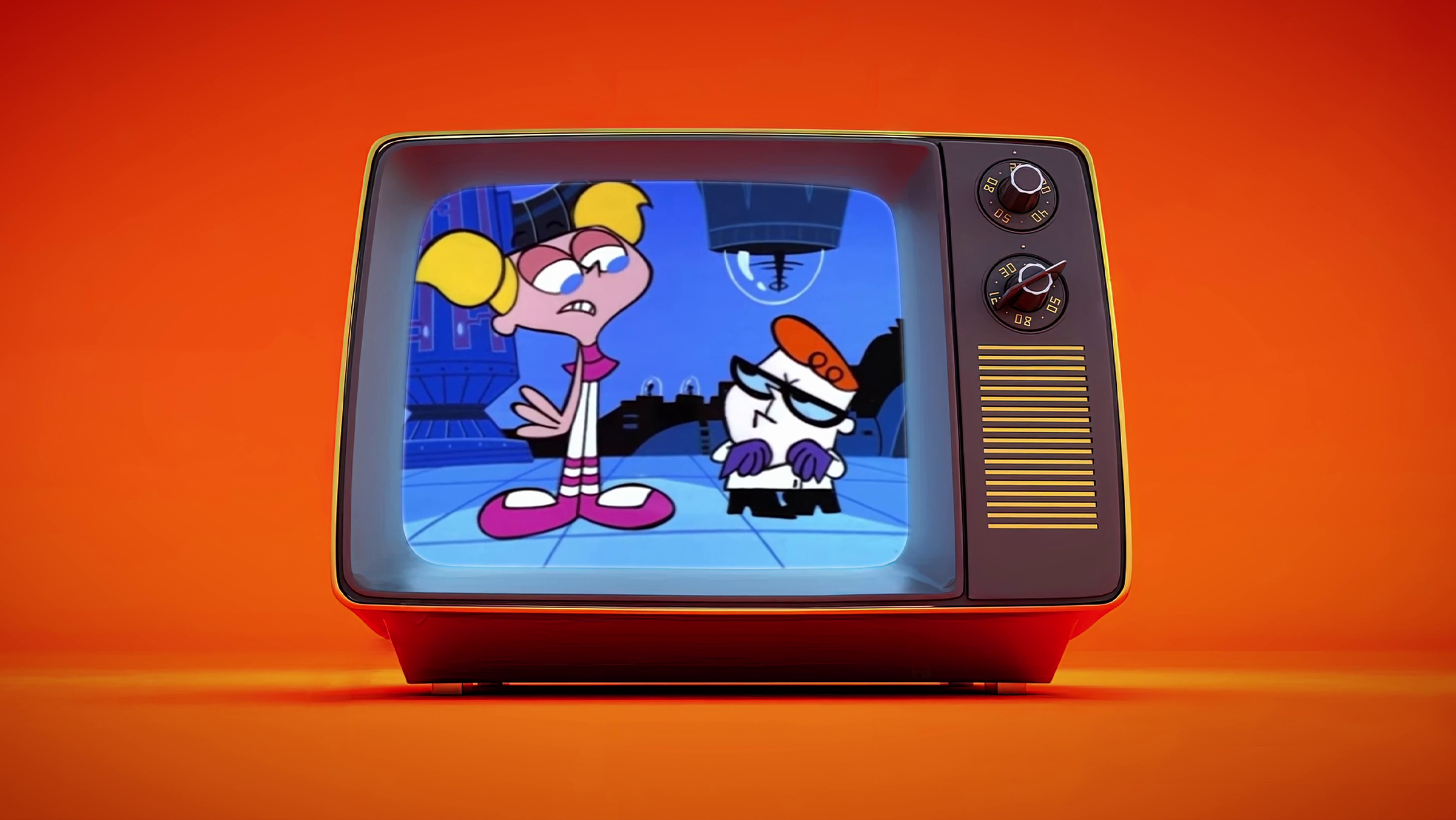
In this lesson, I will tell you about the differences and levels that exist between a cartoon and an anime. Despite their similarity, these two cartoon styles have special features that make them unique and distinctive.
2m
image
6
Reading and Diction Exercises
Developing your phonetic and linguistic ability is very important. Therefore, in this lesson I will teach you a series of practices that will help you achieve it.
16m
image
7
Feelings and Emotions
It is time to learn to express some phrases with intonation to make sense of the scene. In this lesson, I'll show you how you can take your performance to another level.
8m
image
8
The Psychology of the Characters
Now you will put your analysis and deduction to the test. I'll help you thoroughly analyze the characters and how we'll give them a voice.
3m
image
9
Practicing Dubbing
We have reached the part where you are going to discover the art of synchronizing a phrase with rhythm and interpretation. This way you can carry out a correct dubbing.
5m
image
10
Characterizations
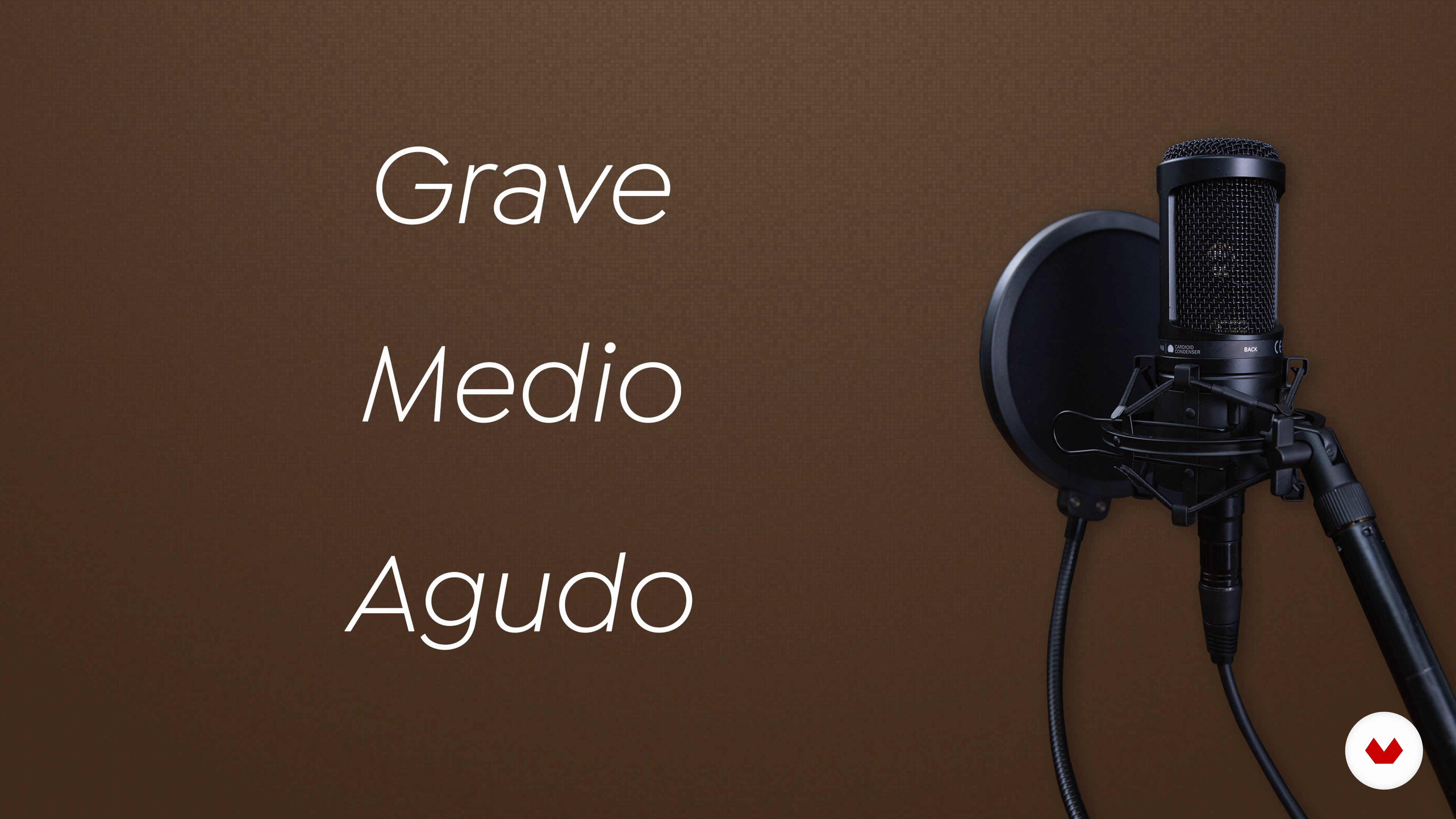
Next, I will explain how to modulate your voice with high, medium and low tones, in such a way that you will build specific and unique attributes in a cartoon character.
7m
image
11
Work a Character
In this lesson, you will learn a little more about what it takes to develop a character through its analysis. To illustrate this, I will tell you about my experience with some characters and the phases of work that led me to achieve a great result.
17m
image
12
Voice Care Tips
Next, I will propose some techniques to protect and preserve your main tool when it comes to voice dubbing, applying them in your daily life.
5m
image
13
Last Tips
Here I will give you a list of suggestions that will be very useful to strengthen your speech and oral skills.
4m
image
3
What Is the Locution?
Let's start with the basics! Being able to understand what the object of study is is essential. For this reason, I will explain to you my own conception of what locution is and I will talk to you about why I believe that oral expression, along with textual expression, form a fundamental part of human communication.
6m
image
4
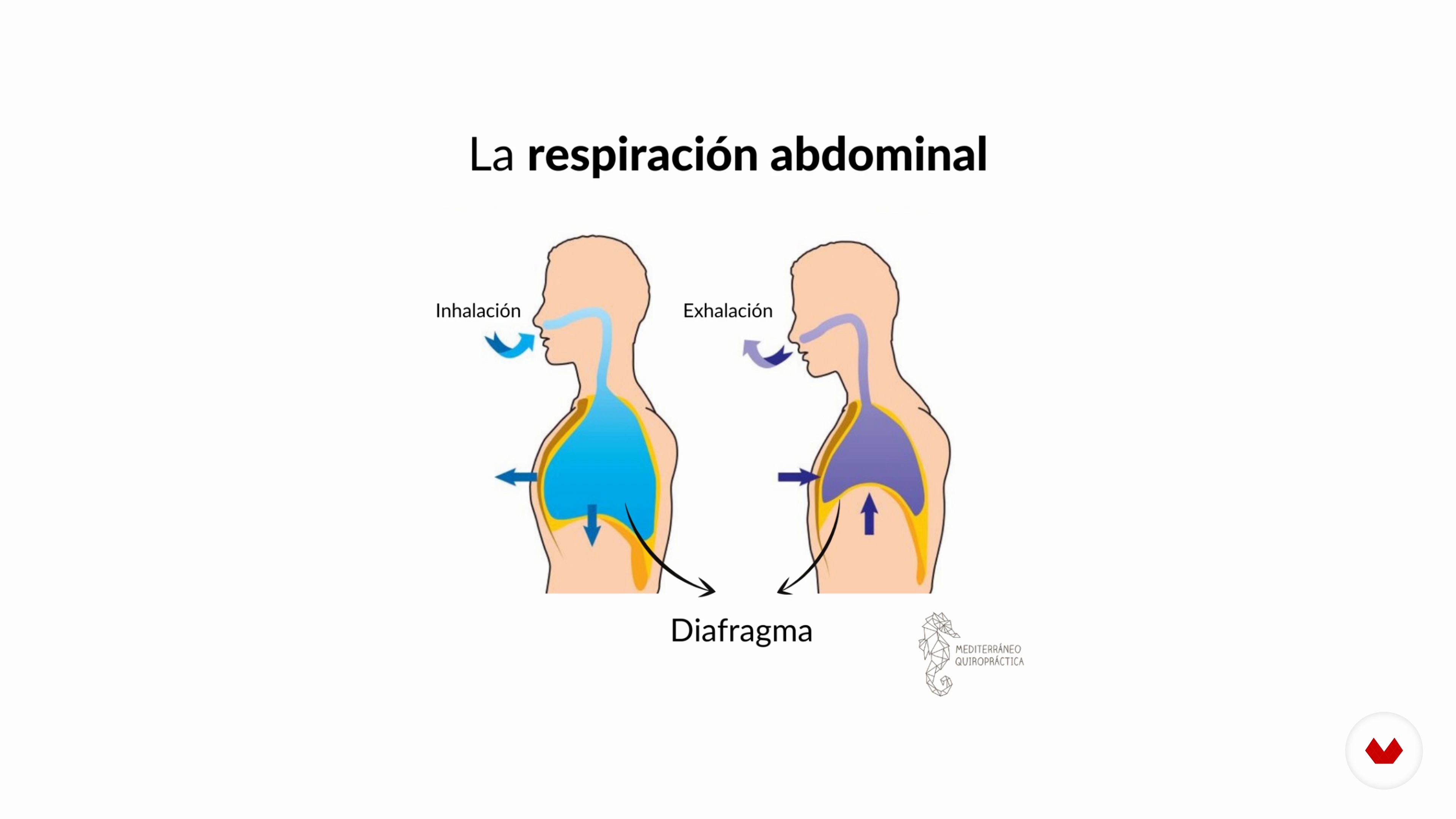
The Breathing
Now I will delve into a fundamental concept for phonation: breathing. I will also talk to you about different types and respiratory modes and the most convenient for the locution.
6m
image
5
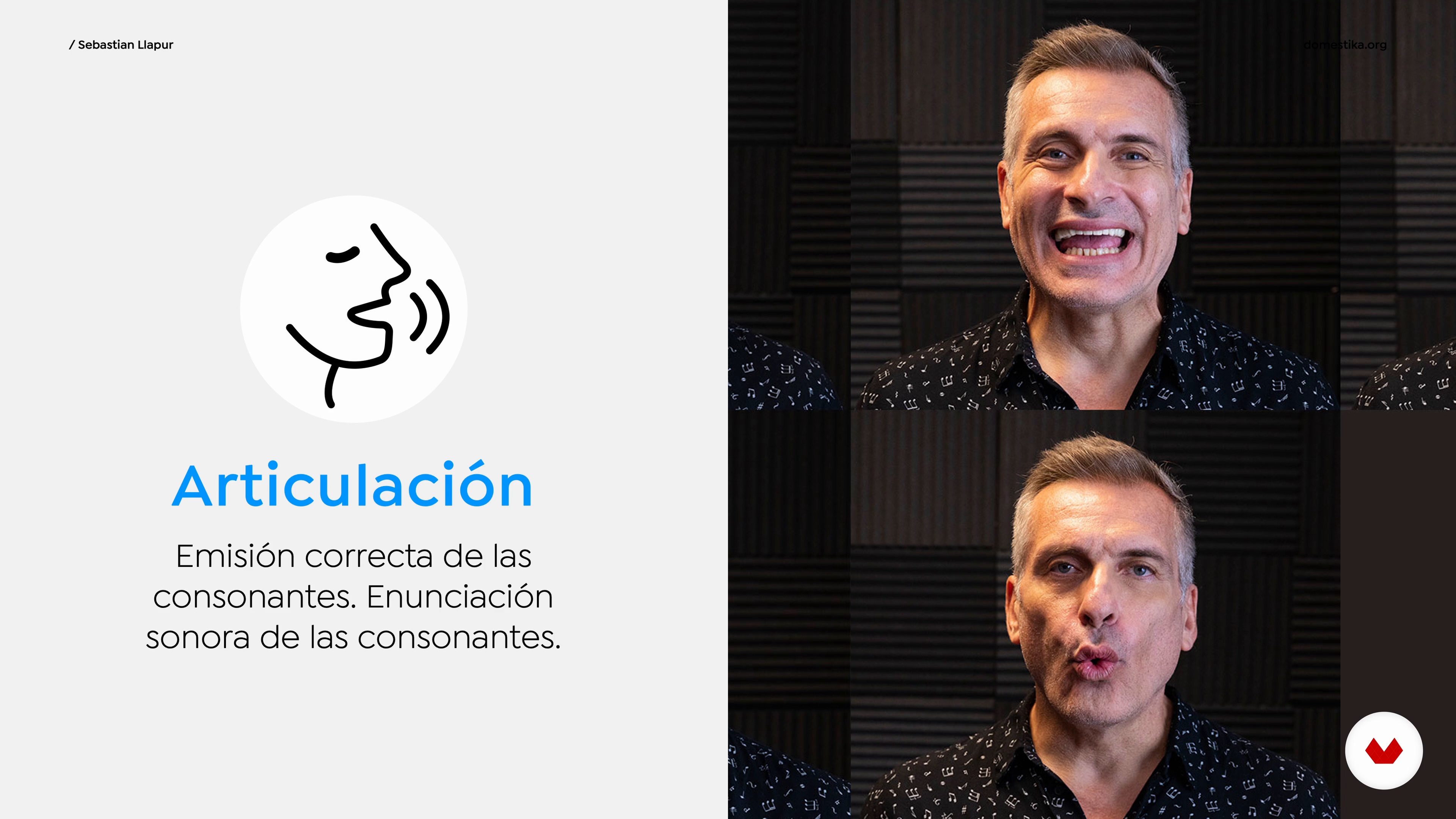
Technical Elements of Phonation
Now that you know what the locution is and you are more aware of your breathing, it is time to see the technical aspects of the phonation. In this lesson, I will take as a base the concepts of: vocalization, articulation and pronunciation.
9m
image
6
Diction
Now that you know what vocalization, articulation, and pronunciation are, it's time to move on to another fundamental concept: diction. In this lesson, I will talk to you about what we say when we say words. I will also explain to you about the different ways of reading or interpreting and you will be able to observe that they correspond to a syntactic, semantic and grammatical order.
6m
image
7
Types of Tone
Do you want to learn more concepts? Of course! In this lesson, I will talk to you about another very important concept: tone. I will teach you how to handle tones so that you can use them as a resource when saying something. I will also explain the different tones and explore the most convenient registers for each text.
6m
image
8
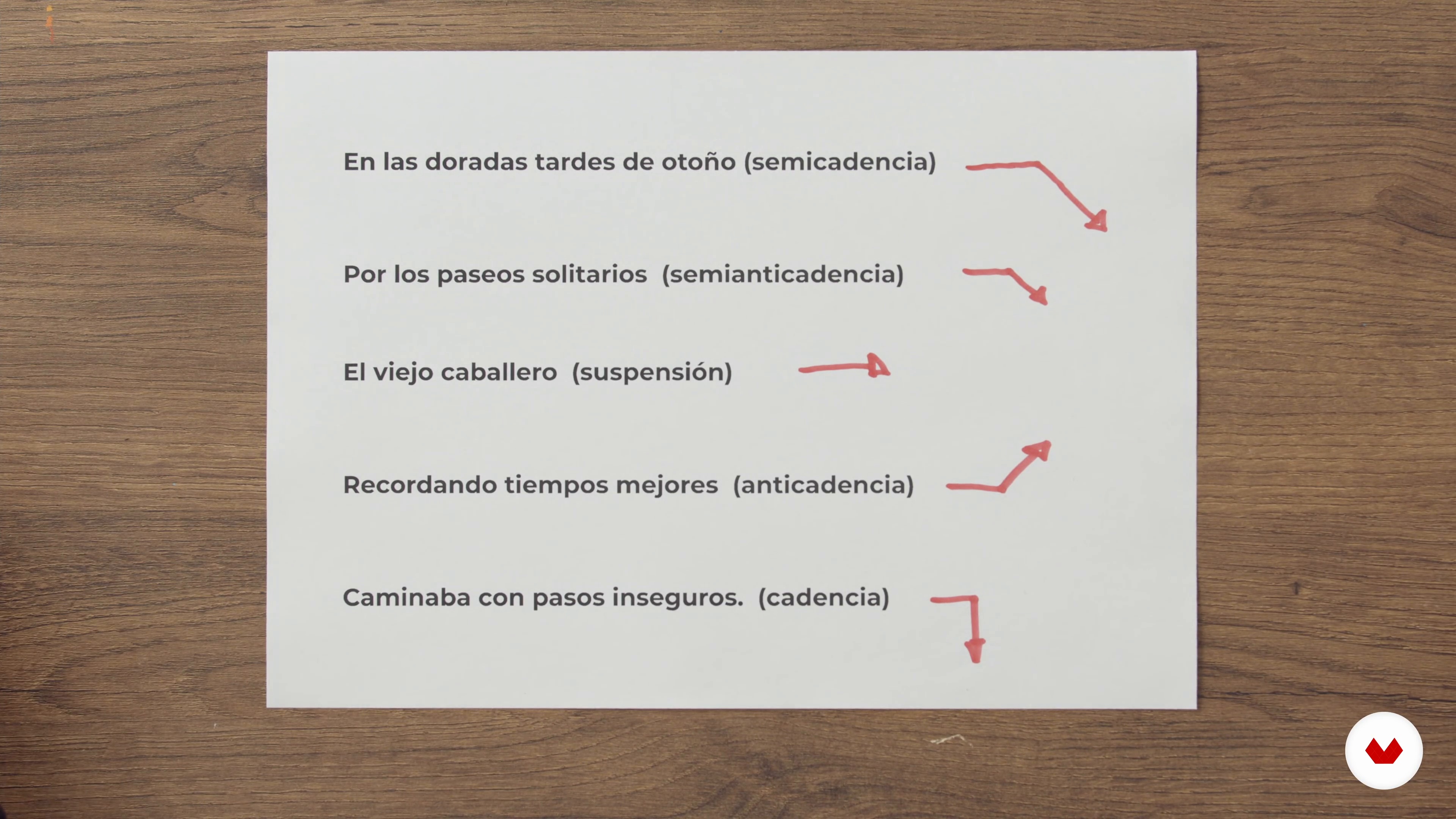
Rhythms, Intonations and Modulations
In this lesson, you will hear how the interpretation of the same text changes according to different rhythms, intonations and modulations. I will exercise varied readings of the text so that you can notice the effects generated by the modulations and the melodic lines.
9m
image
9
Comprehensive Reading
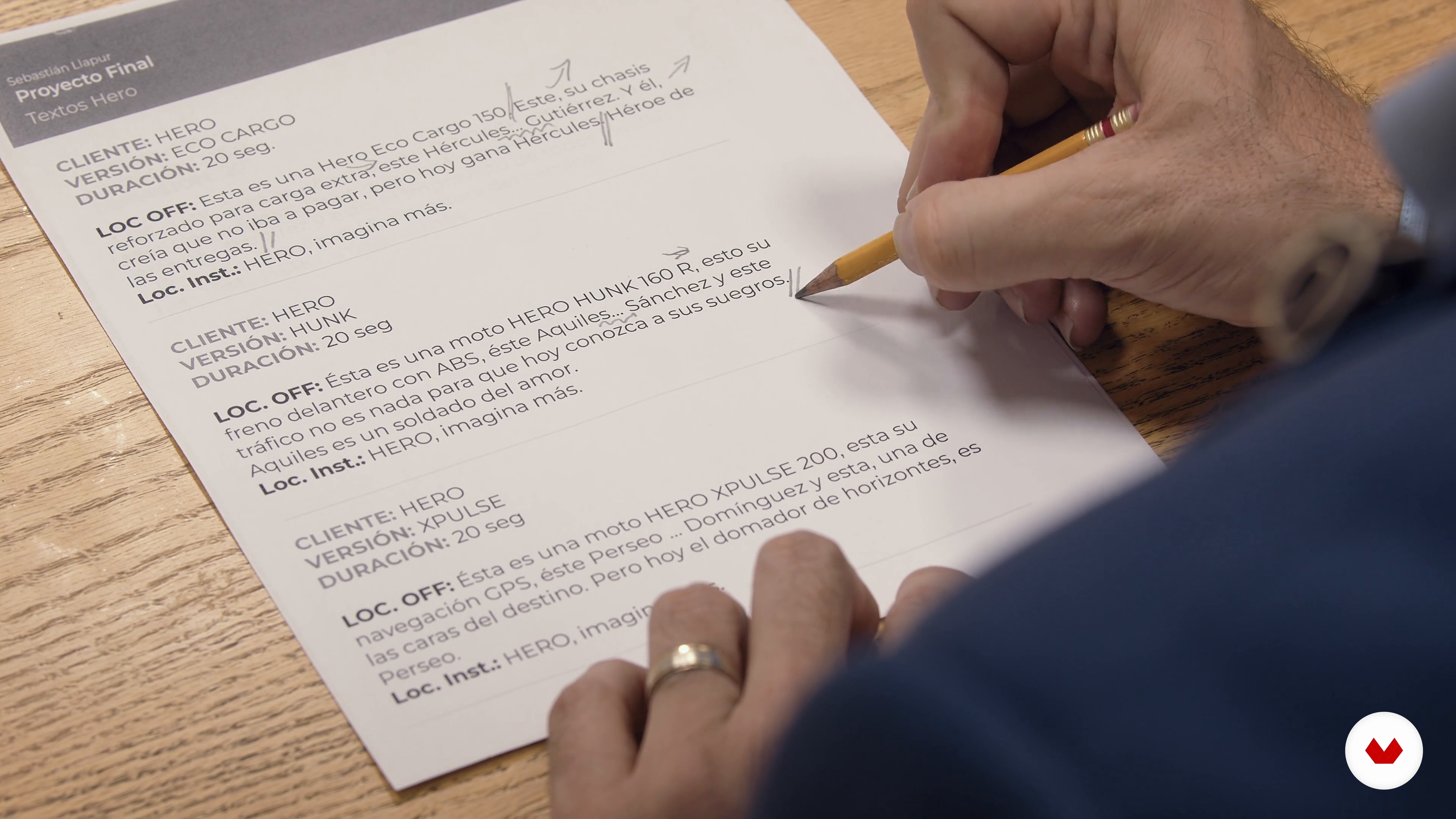
It is time to get fully into the text that we will develop for the project of this course. The first fundamental step will be to make a comprehensive reading, which will consist of reading, understanding and saying what the text expresses. Then, we will take into account the client's indications that are very important when interpreting a text.
9m
image
10
Practicing the Text with Different Intentions
Once you have already read your text mentally, you have already understood it and you know what you are going to say and how you are going to do it to convince your interlocutor, you are ready to practice before recording. This practice will be the proof that you are ready!
10m
image
11
Recording Process
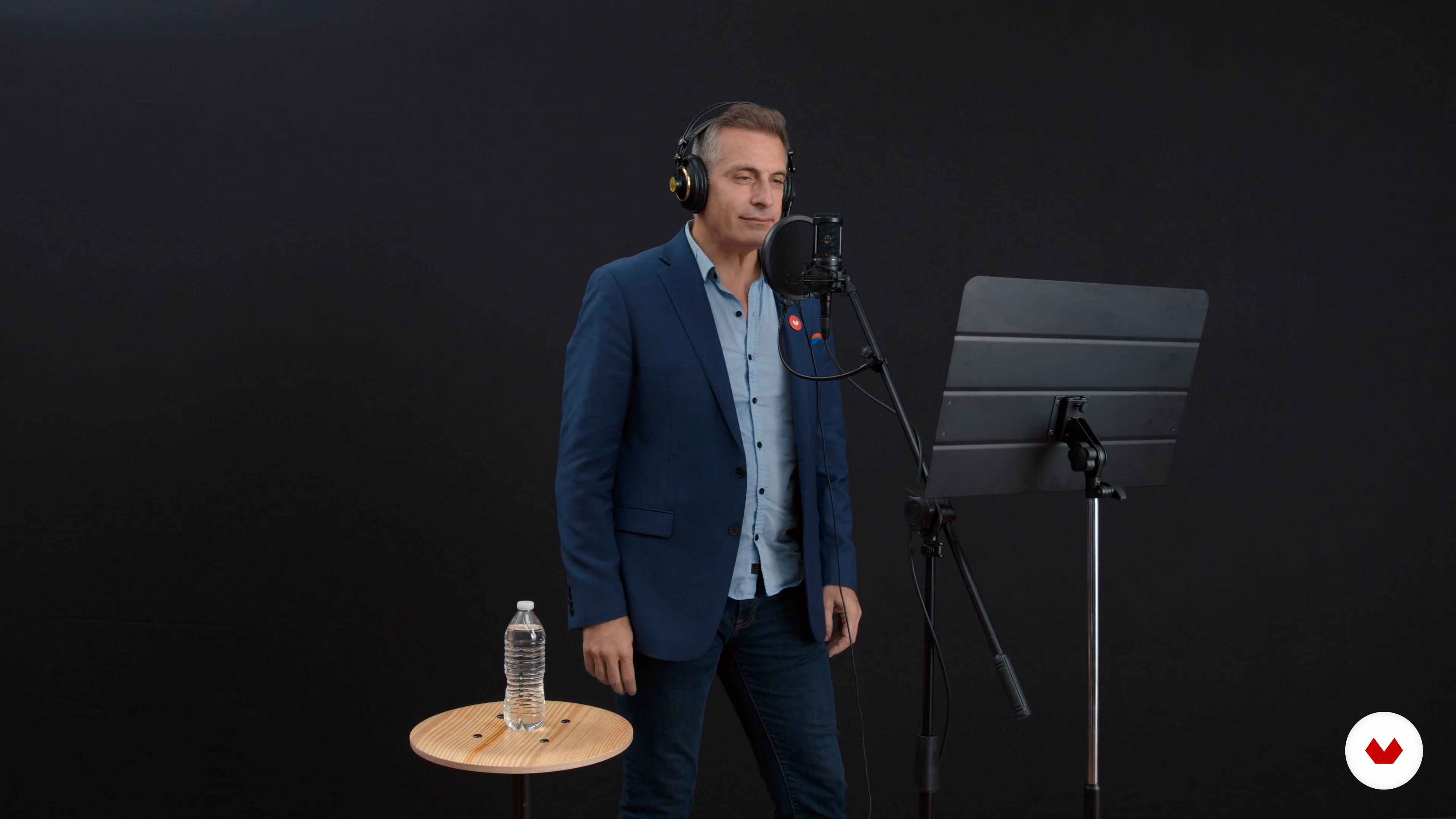
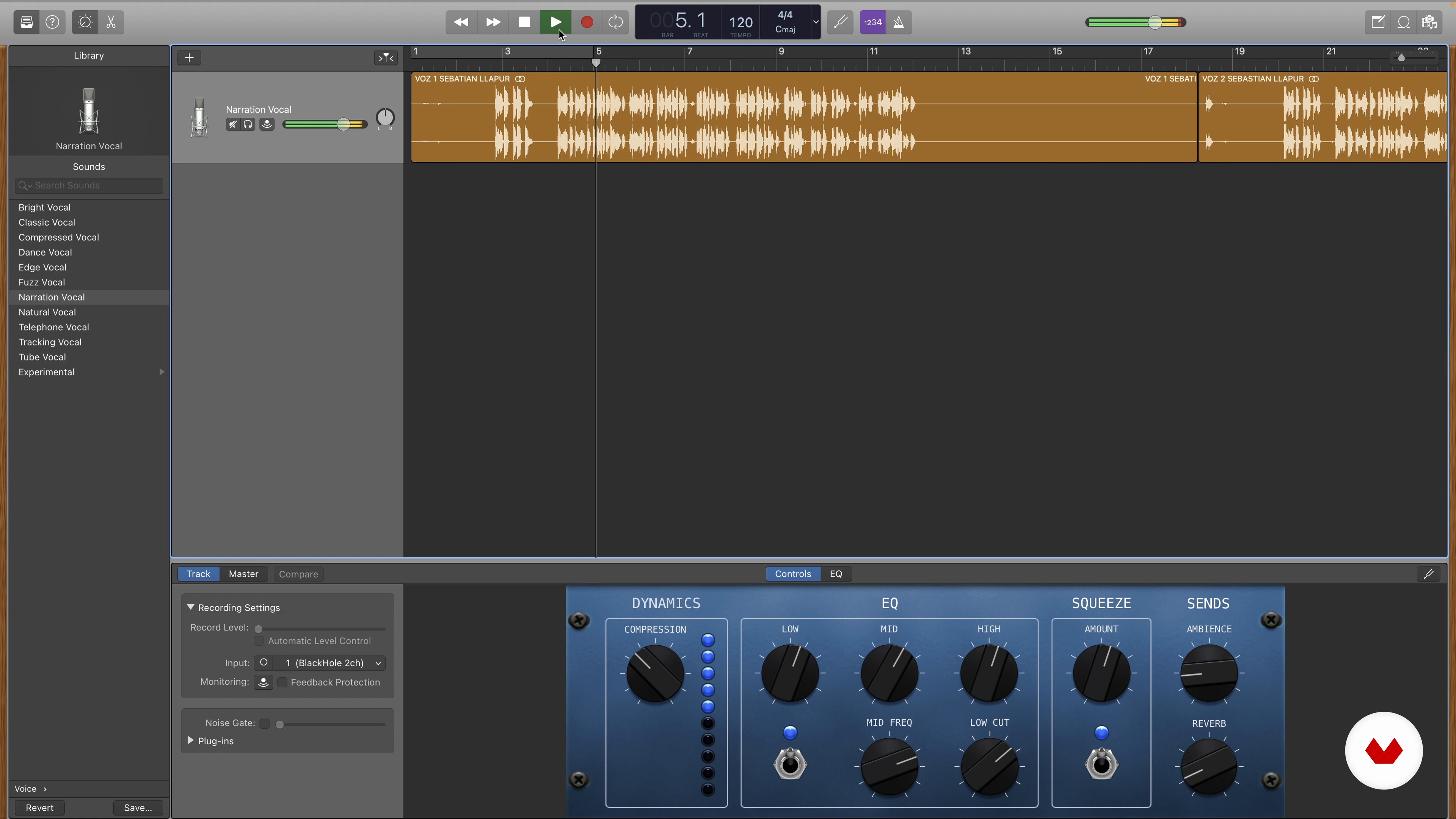
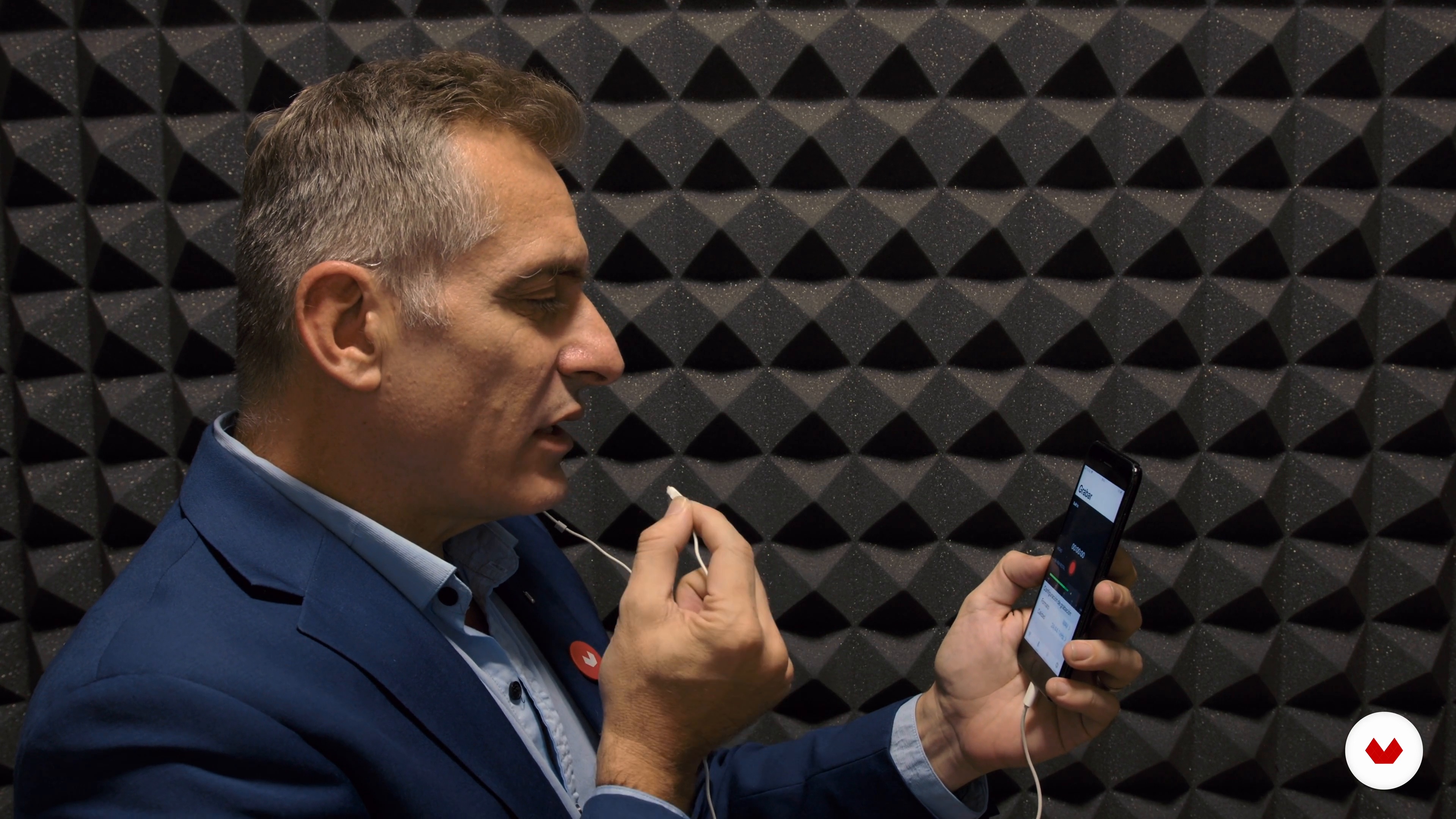
Now yes, we are already in front of the microphone, ready to record! In this lesson, I'll teach you some basic shooting techniques for commercials. First, you will learn about some important elements to take into account such as the environment, external noises and the time of day to record. Also, I will teach you technical elements that you should be familiar with: the microphone, the headphones and the digital support.
14m
image
12
Choosing the Best Shots
We have already recorded all the necessary takes! In this lesson, I will explain what criteria you should have when choosing a shot. I'll also explain why, even if there are mistakes in a shot, you shouldn't dismiss it. Then, I will take the selected ones and dump them in the same file to later upload them to a platform.
10m
image
13
The Announcer as a Director
In this lesson, I will talk to you about how the continuous training of communicators is fundamental, first, so as not to stay in time and, second, because it feeds the cultural baggage that is essential for personal growth and that of those close to you.
6m
image
14
How to Create an Attractive Demo?
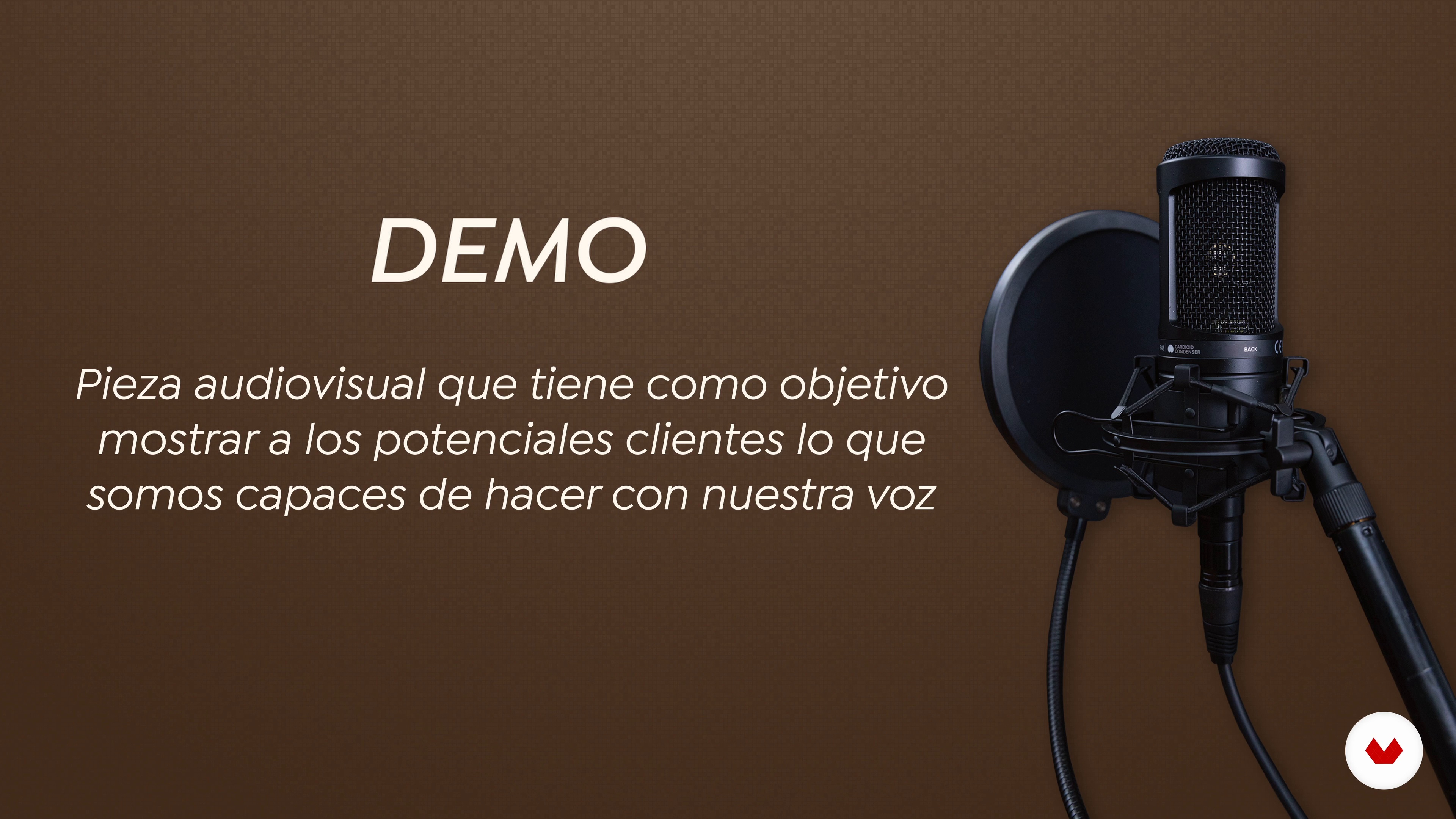
Now I will explain what a demo is and what its purpose is. I will also talk to you about what are the elements on which you should base your demo and how you can identify what your virtues are in the commercial voiceover.
7m
image
3
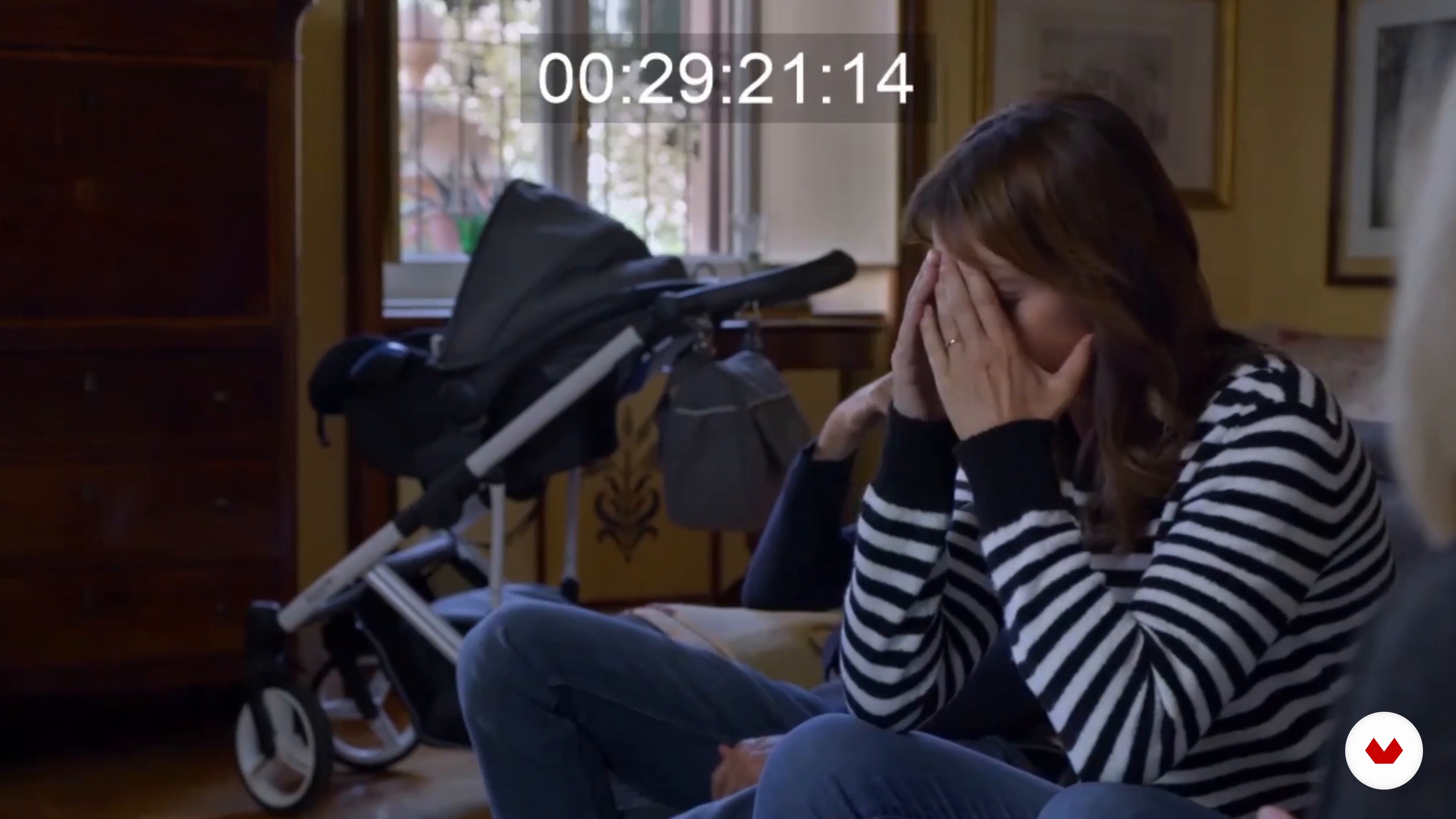
The take and its reason for being
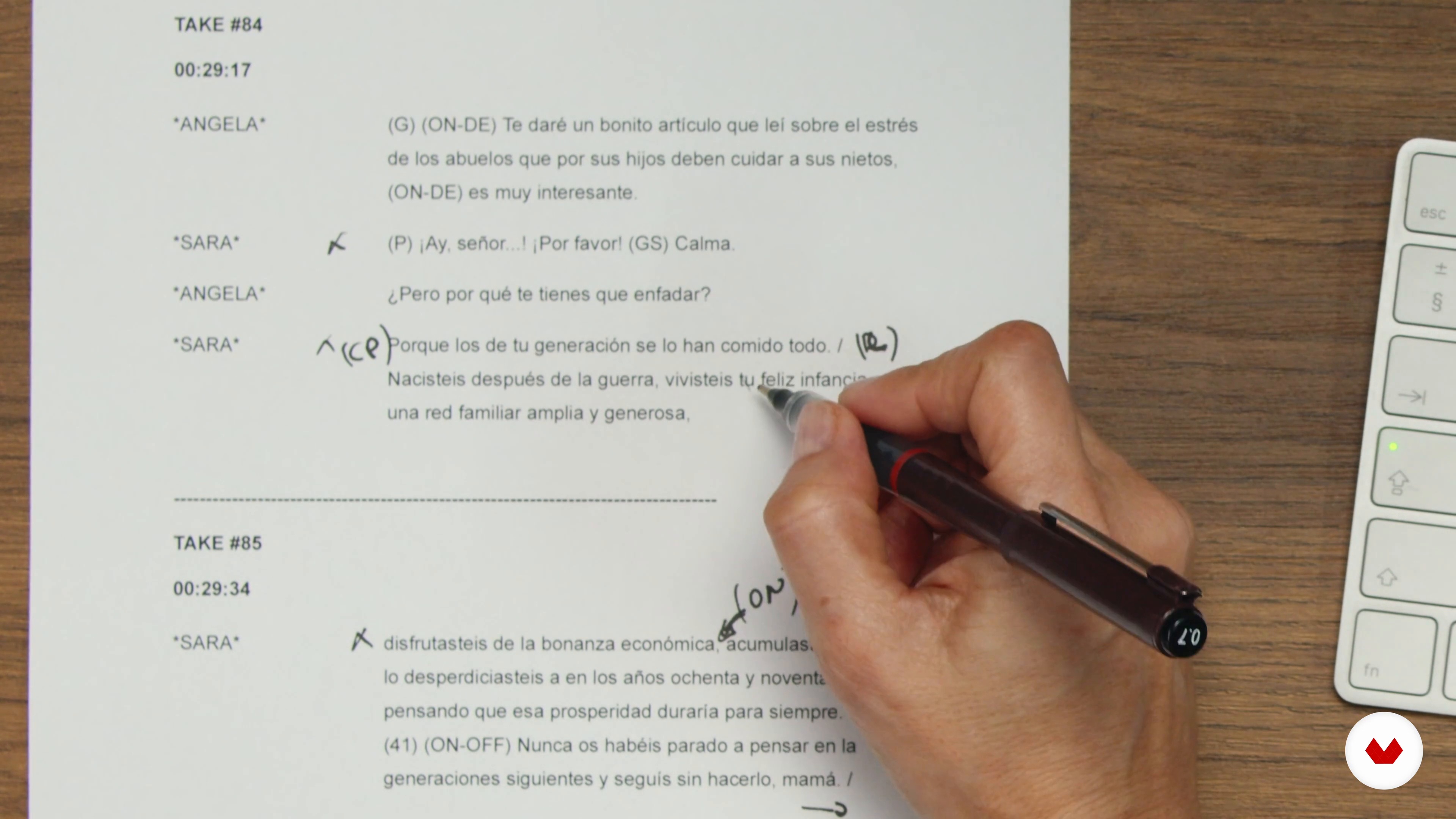
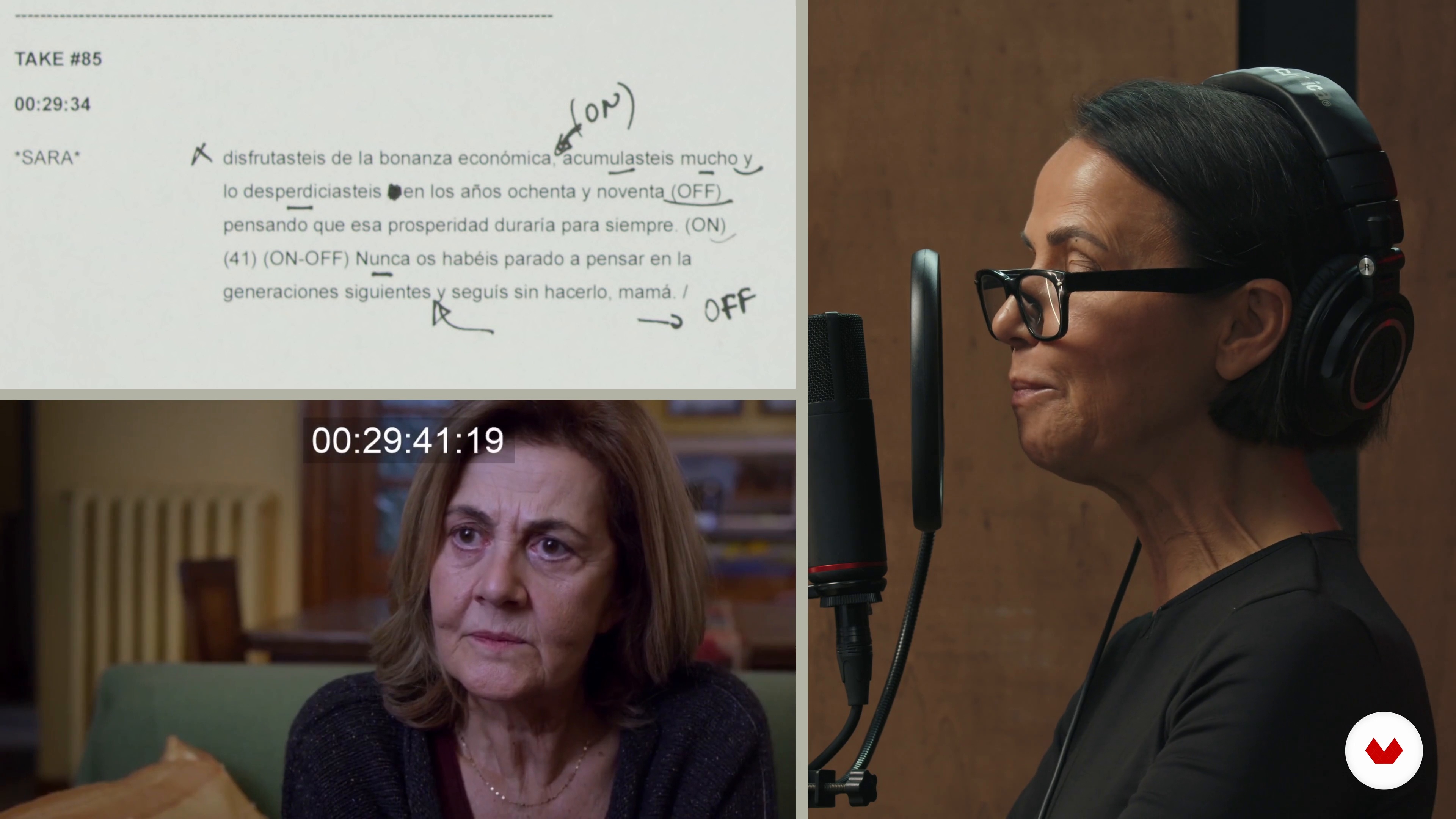
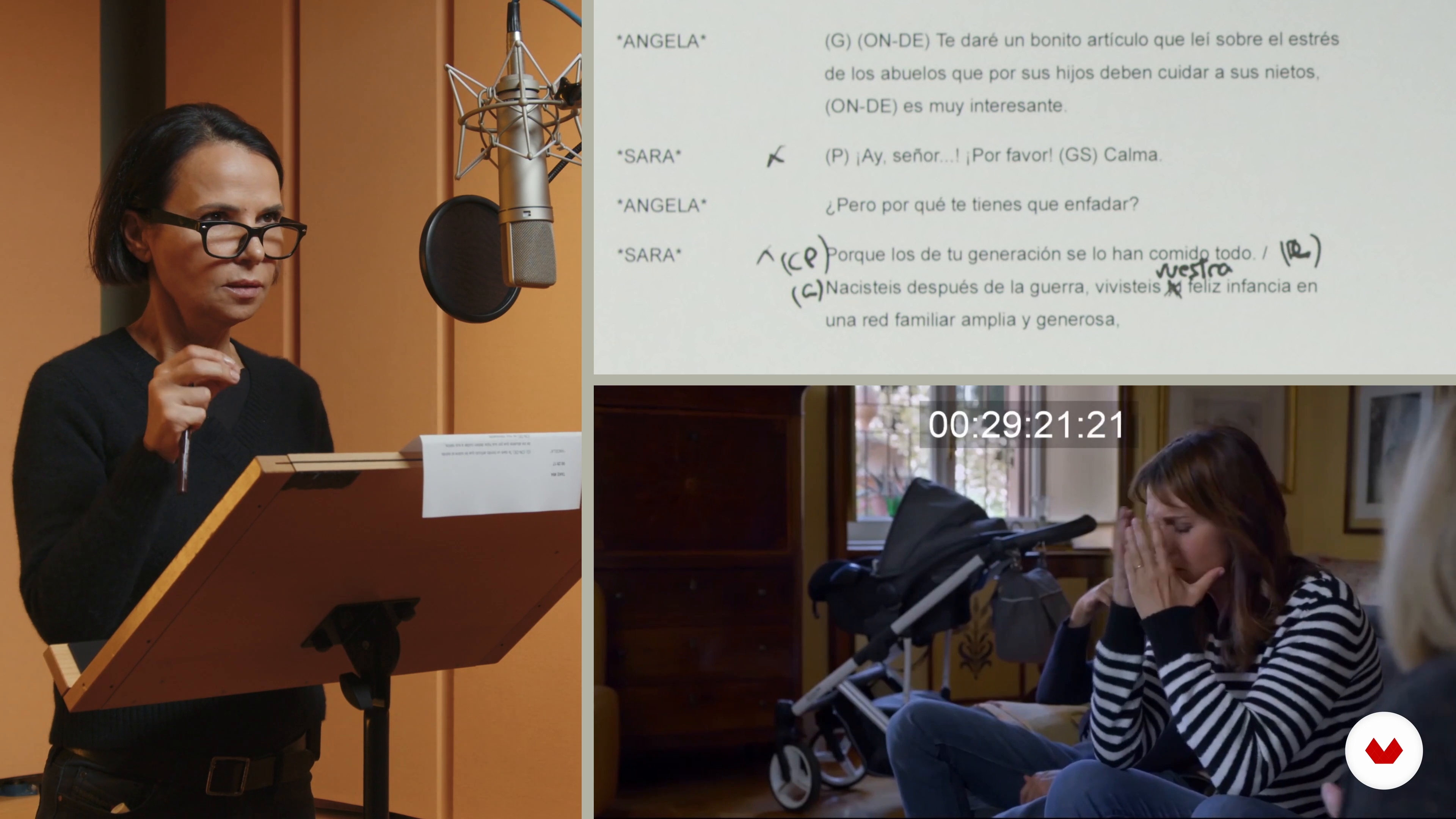
In this lesson we will see how a take is defined, structured and what it is for, as well as the meaning of the symbols that appear in it and the differences between a retake and a revision.
6m
image
4
My method to double takes
Now I am going to explain in depth the method that I use when facing a take.
5m
image
5
Keys to have a good dubbing session
Finally, in this lesson I am going to share some important aspects to take into account before and during a dubbing session.
5m
image
6
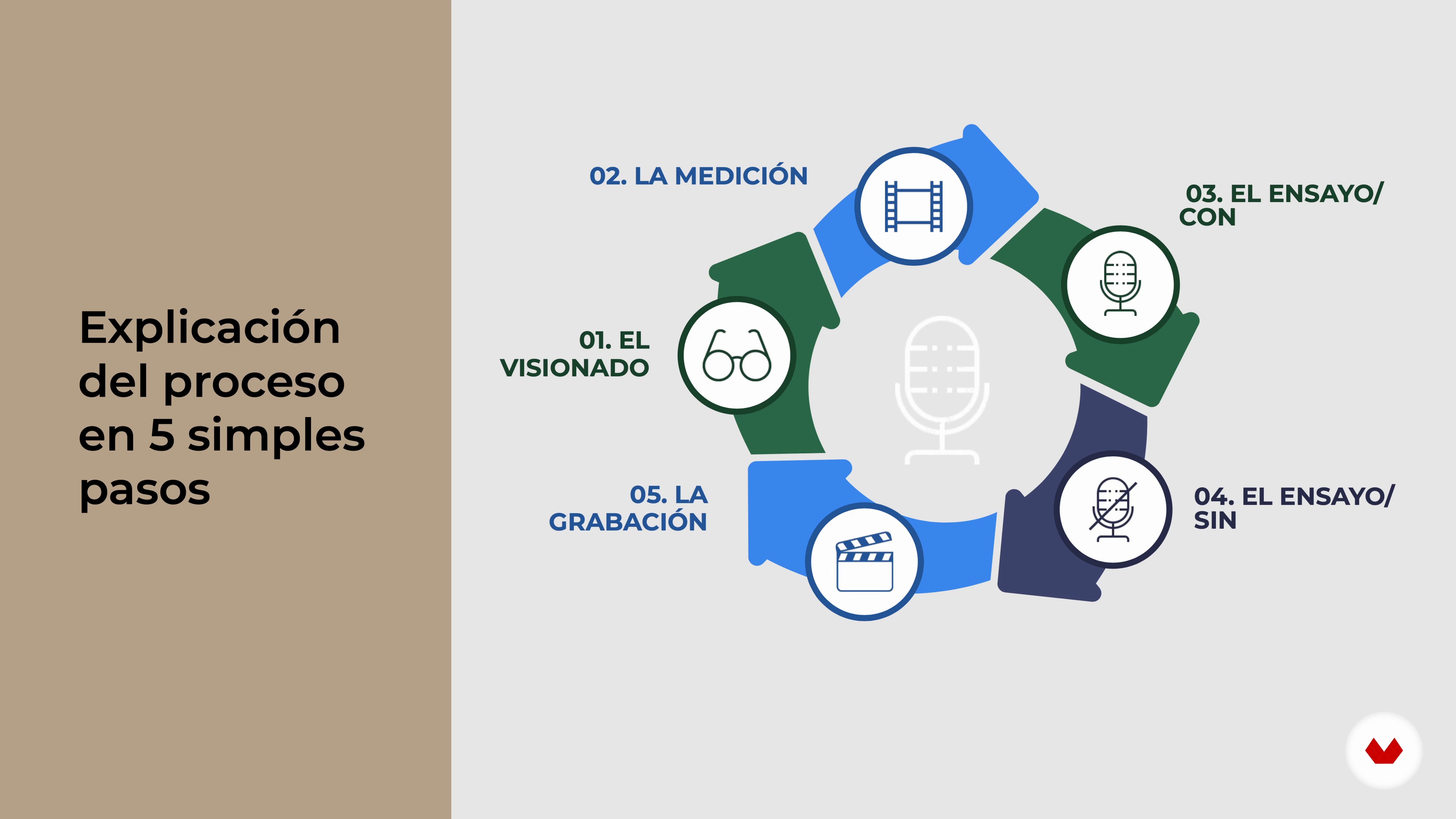
The viewing
In this lesson I will do a live demo of this first step. For this I will use a take of the same film that I have selected for the course project.
9m
image
7
The measurement
Measuring consists of analyzing whether the adapted script fits with the mouths of the take. You will now see the live demo of this second step; I will show you the technique that I perform for its correct execution.
11m
image
8
The sound rehearsal
Practice makes perfect, the saying goes. In this lesson I'm going to teach you how to do several rehearsals with sound, that is, talking about the original sound of the take.
8m
image
9
The rehearsal without sound
Now it's time to do several rehearsals without sound. It will help us to verify that we have taken the references correctly and to consolidate the execution before recording.
6m
image
10
The recording
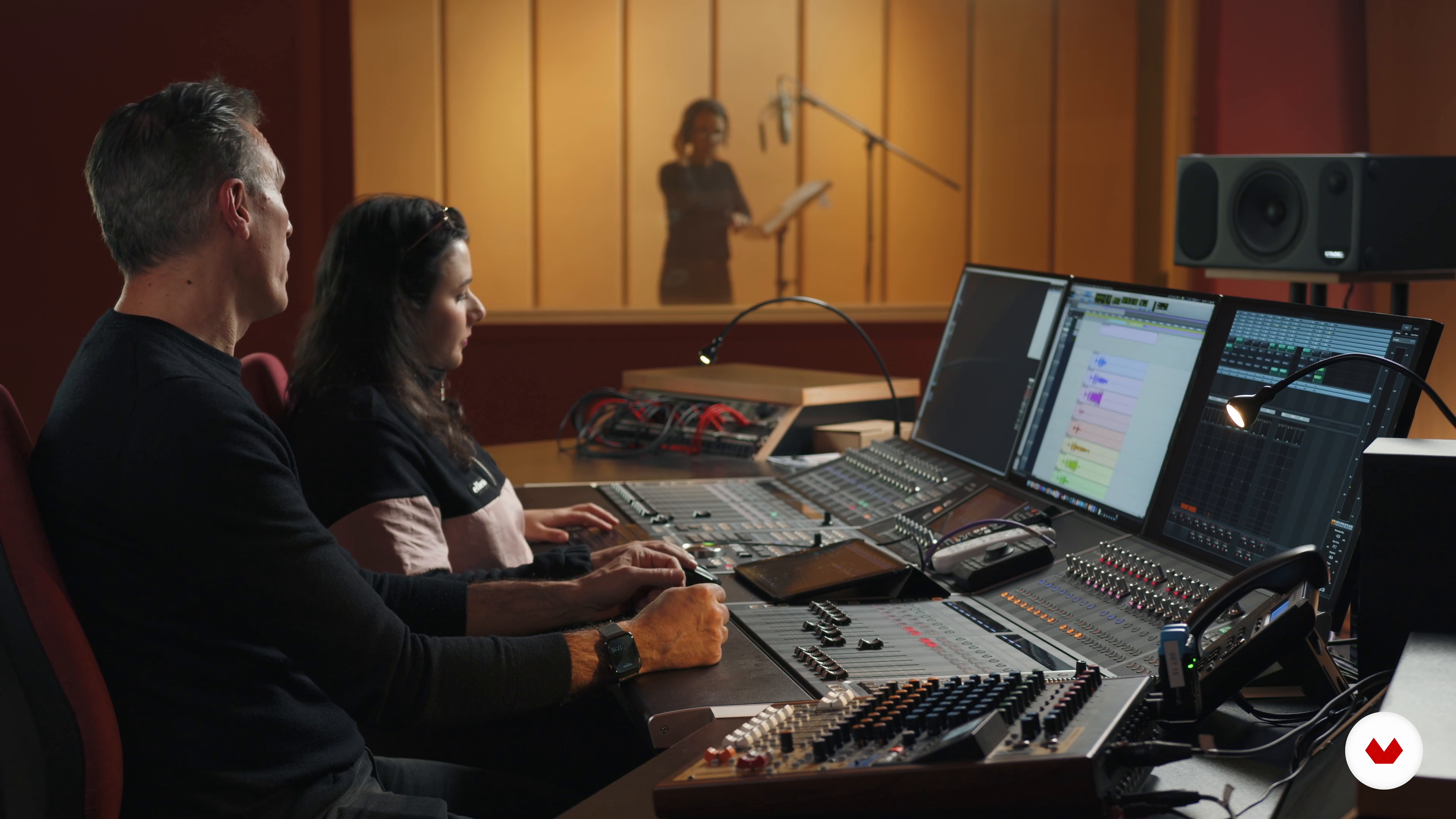
Finally, once we have established the take, we move on to its recording. We will wait for the approval of the dubbing director to be able to move on to the next take or repeat part or all of it.
5m
image
11
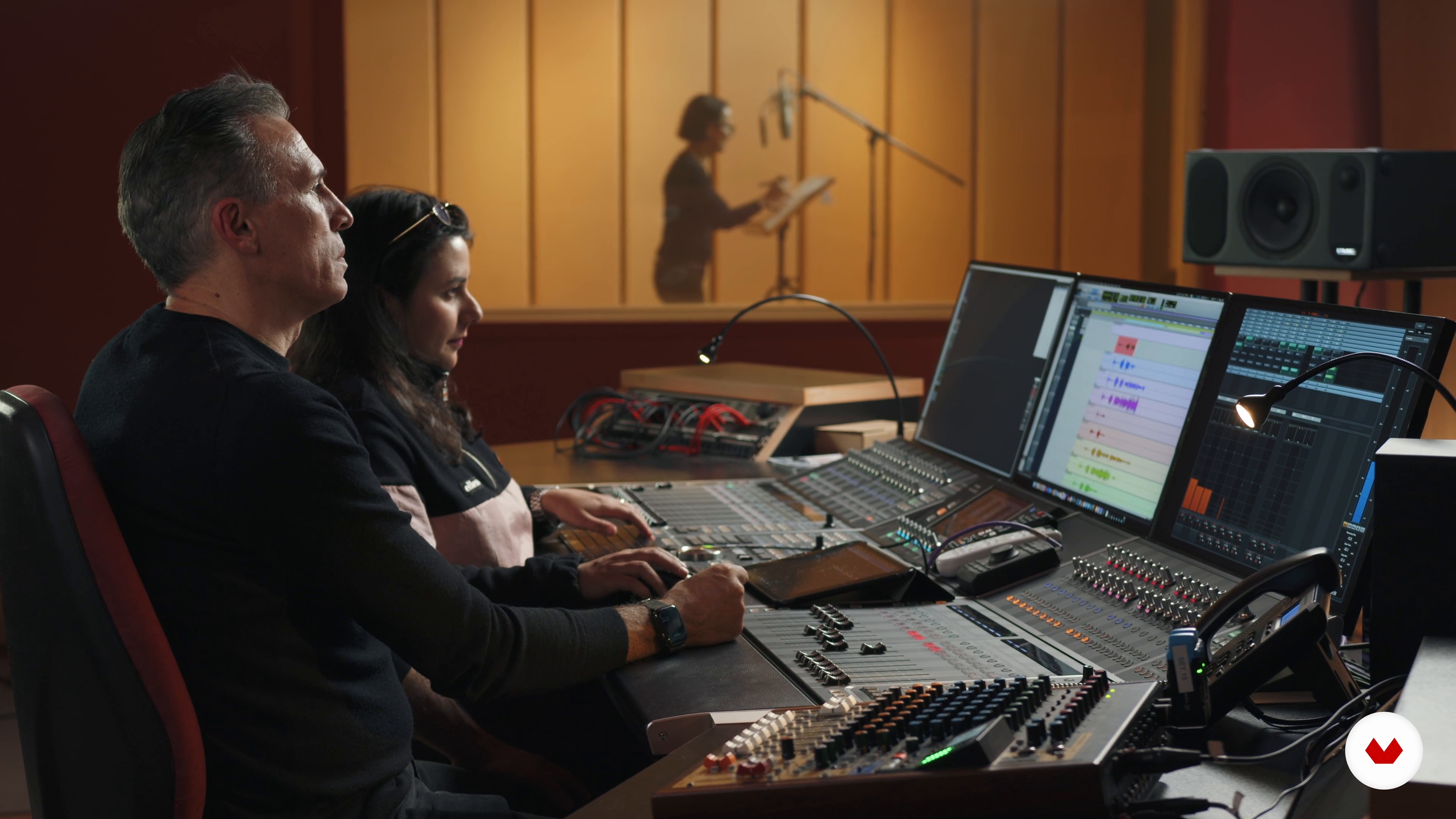
Apply my method in a dubbing session
In this lesson I will show you how the execution of the method that you have learned during the course is put into practice in a real dubbing session.
6m
image
12
Reflections and advice
Finally, I want to share with you some of the lessons learned throughout my career, as well as some of the good advice received that was very useful for me to continue growing as a voice actress.
2m
  • 100% positive reviews (1)
  • 75 students
  • 58 lessons (7h 41m)
  • 59 additional resources (10 files)
  • Online and at your own pace
  • Audio: Spanish, German, English, Spanish (Latam), French, Indonesian, Italian, Dutch, Polish, Portuguese, Romanian, Turkish
  • Spanish · English · Portuguese · German · French · Italian · Polish · Dutch · Turkish · Romanian · Indonesian
  • Level: Beginner
  • Unlimited access forever

What is this course's project?

Develop a professional demo reel showcasing your voice acting and dubbing skills. Include demos of your voice identity, commercial voiceovers, voice acting for animated characters, and advertising spots. Demonstrate creativity, advanced technique, and adaptability to different styles and audiences.

Who is this specialization for?

This course is designed for vocal artists who want to refine their voice-over and dubbing skills. It's ideal for those seeking to professionalize their technique, explore their vocal identity, and create memorable performances in various professional contexts, from animation to advertising.

Requirements and materials

Extensive knowledge is not required, but a basic microphone and access to a computer for practicing recordings are essential. Having a quiet space will help you concentrate on vocal exercises and dubbing techniques.

Select to get to know your teachers in this specialization course
Read more ↓

Reviews

75 Students
1 Reviews
100% Positive ratings


What to expect from this specialization course

  • Learn at your own pace

    Enjoy learning from home without a set schedule and with an easy-to-follow method. You set your own pace.

  • Learn from the best professionals

    Learn valuable methods and techniques explained by top experts in the creative sector.

  • Meet expert teachers

    Each expert teaches what they do best, with clear guidelines, true passion, and professional insight in every lesson.

  • Certificates
    Plus

    If you're a Plus member, get a custom certificate for every specialization course. Share it on your portfolio, social media, or wherever you like.

  • Get front-row seats

    Videos of the highest quality, so you don't miss a single detail. With unlimited access, you can watch them as many times as you need to perfect your technique.

  • Share knowledge and ideas

    Ask questions, request feedback, or offer solutions. Share your learning experience with other students in the community who are as passionate about creativity as you are.

  • Connect with a global creative community

    The community is home to millions of people from around the world who are curious and passionate about exploring and expressing their creativity.

  • Watch professionally produced courses

    Domestika curates its teacher roster and produces every course in-house to ensure a high-quality online learning experience.


FAQs

Domestika courses are online classes that allow you to learn new skills and create incredible projects. All our courses include the opportunity to share your work with other students and/or teachers, creating an active learning community. We offer different formats:
Original Courses: Complete classes that combine videos, texts, and educational materials to complete a specific project from start to finish.
Basics Courses: Specialized training where you master specific software tools step by step.
Specialization Courses: Learning paths with various expert teachers on the same topic, perfect for becoming a specialist by learning from different approaches.
Guided Courses: Practical experiences ideal for directly acquiring specific skills.
Intensive Courses (Deep Dives): New creative processes based on artificial intelligence tools in an accessible format for in-depth and dynamic understanding.

All specialization courses are 100% online, so once they're published, specialization courses start and finish whenever you want. You set the pace of the class. You can go back to review what interests you most and skip what you already know, ask questions, answer questions, share your projects, and more.

The specialization courses are divided into different modules. Each one includes lessons, informational text, tasks, and practice exercises to help you carry out your project step by step, with additional complementary resources and downloads. You'll also have access to an exclusive forum where you can interact with other students, as well as share your work and your final project, creating a community around the specialization courses.

You can redeem the specialization courses you received by accessing the redeeming page and entering your gift code.

If you're a Plus member, when you complete a course you've purchased, you'll instantly get your personalized certificate. You can see all your certificates in the Certificates section of your profile. You can download your certificates as PDFs and share the link online. Learn more about certificates.
Voice Mastery & Recording. Music, and Audio course by Domestika

Voice Mastery & Recording

A specialization by multiple teachers
Berkeley, United States.
Joined April 2002
  • 100% positive reviews (1)
  • 75 students