

Specialization

Specialization in luxury embroidery for fashion and haute couture

Master luxury embroidery and haute couture techniques to create elegant garments with beadwork and unique details.

Specialization · 6 modules

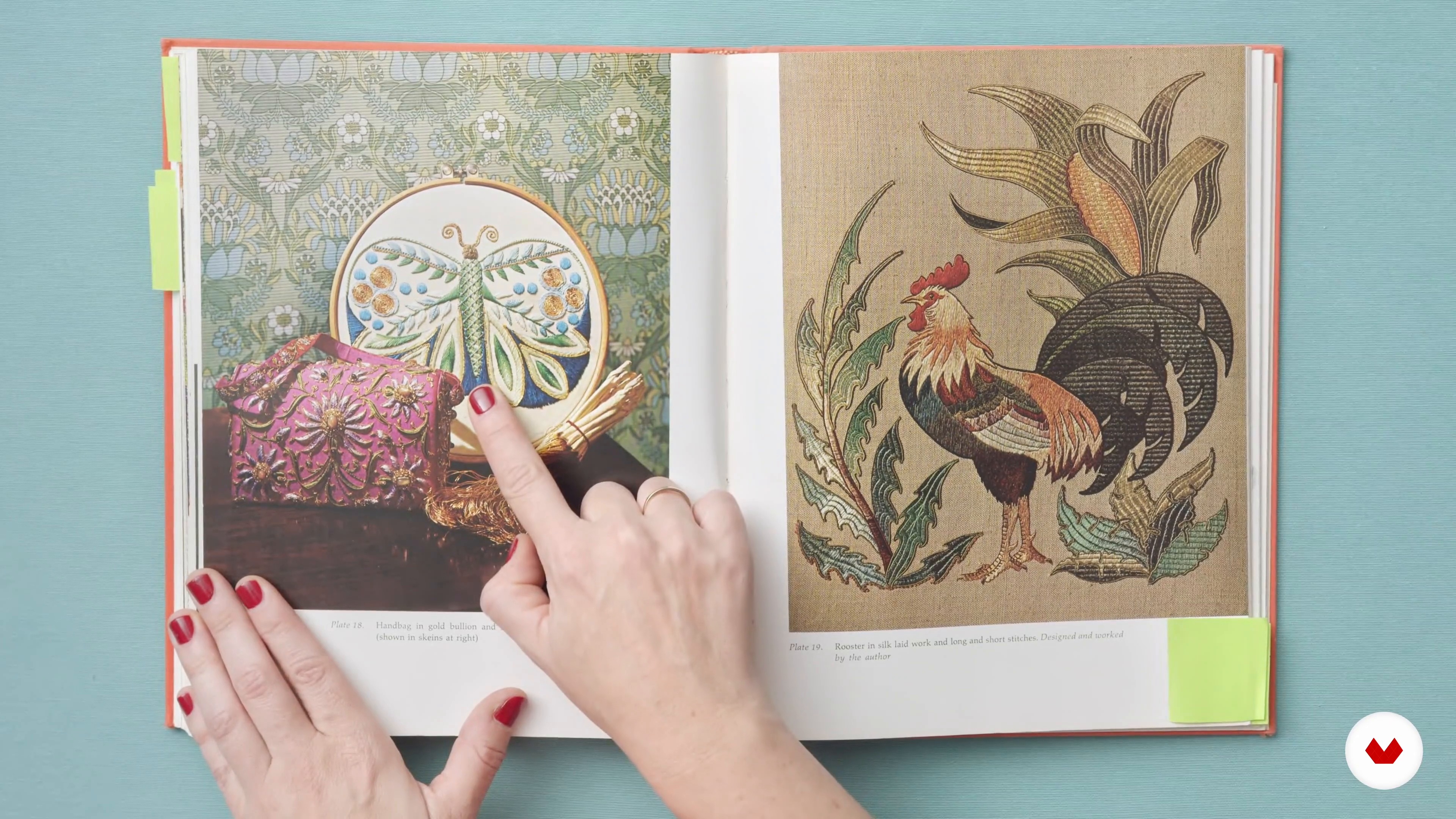
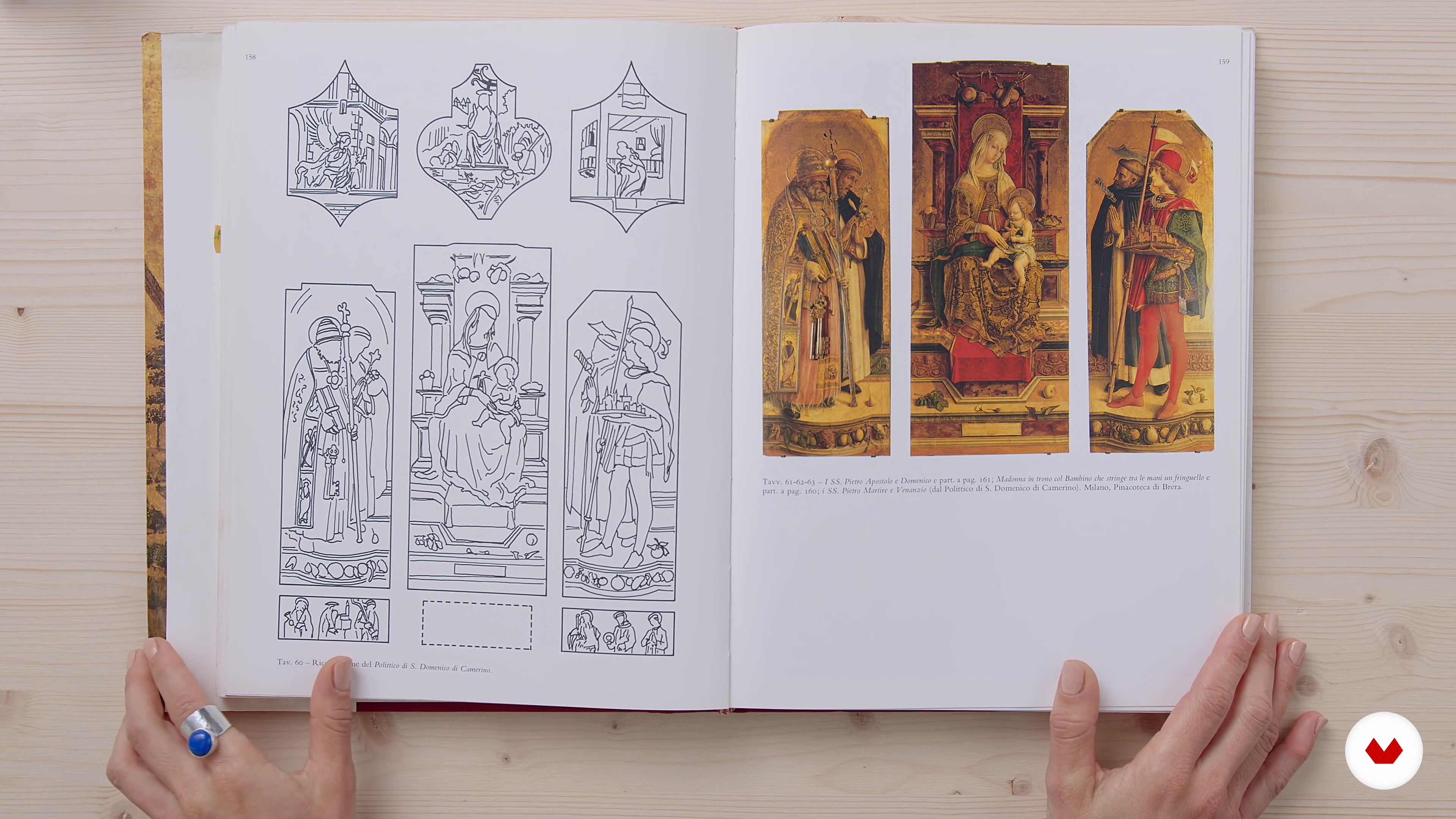
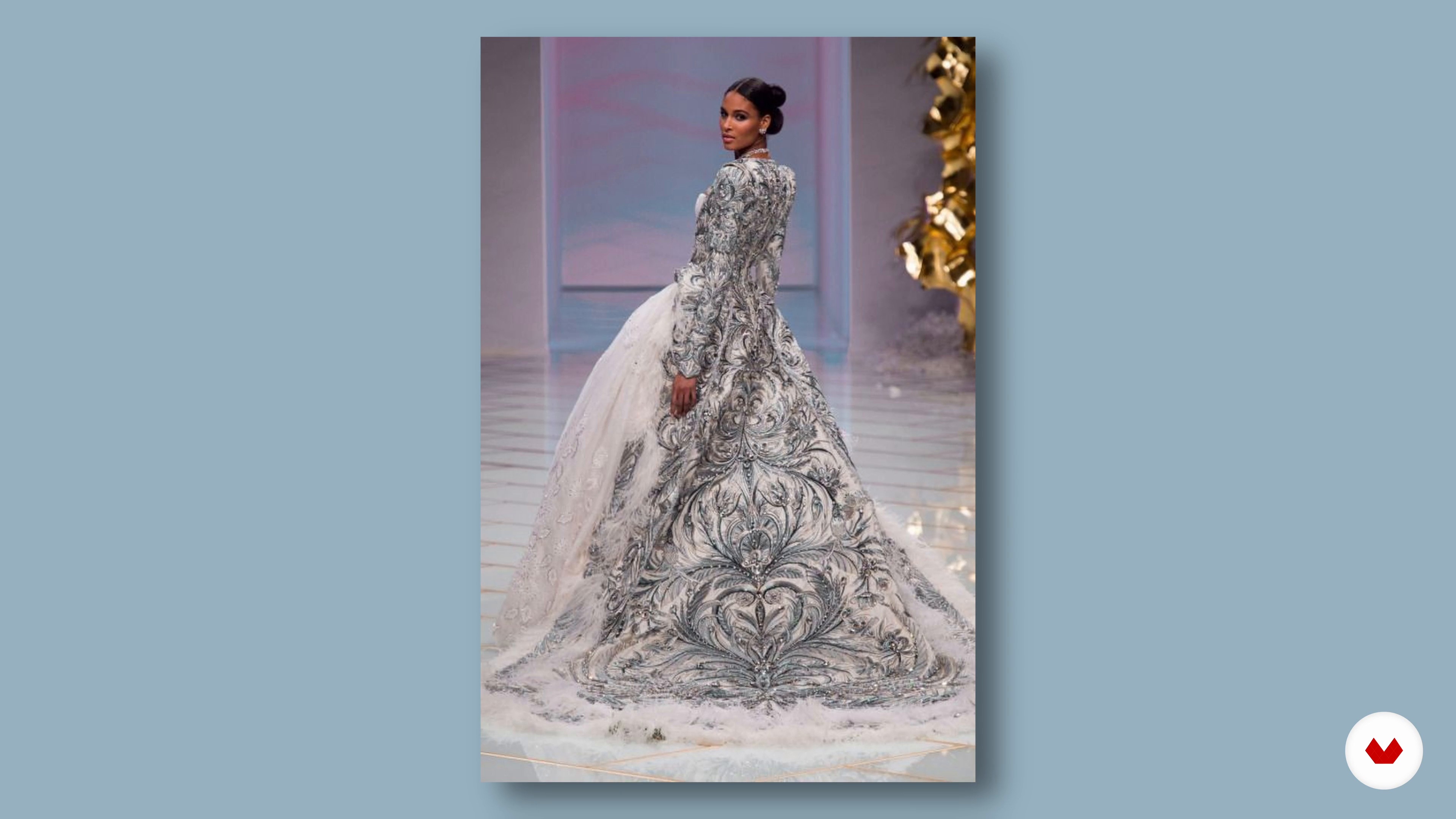
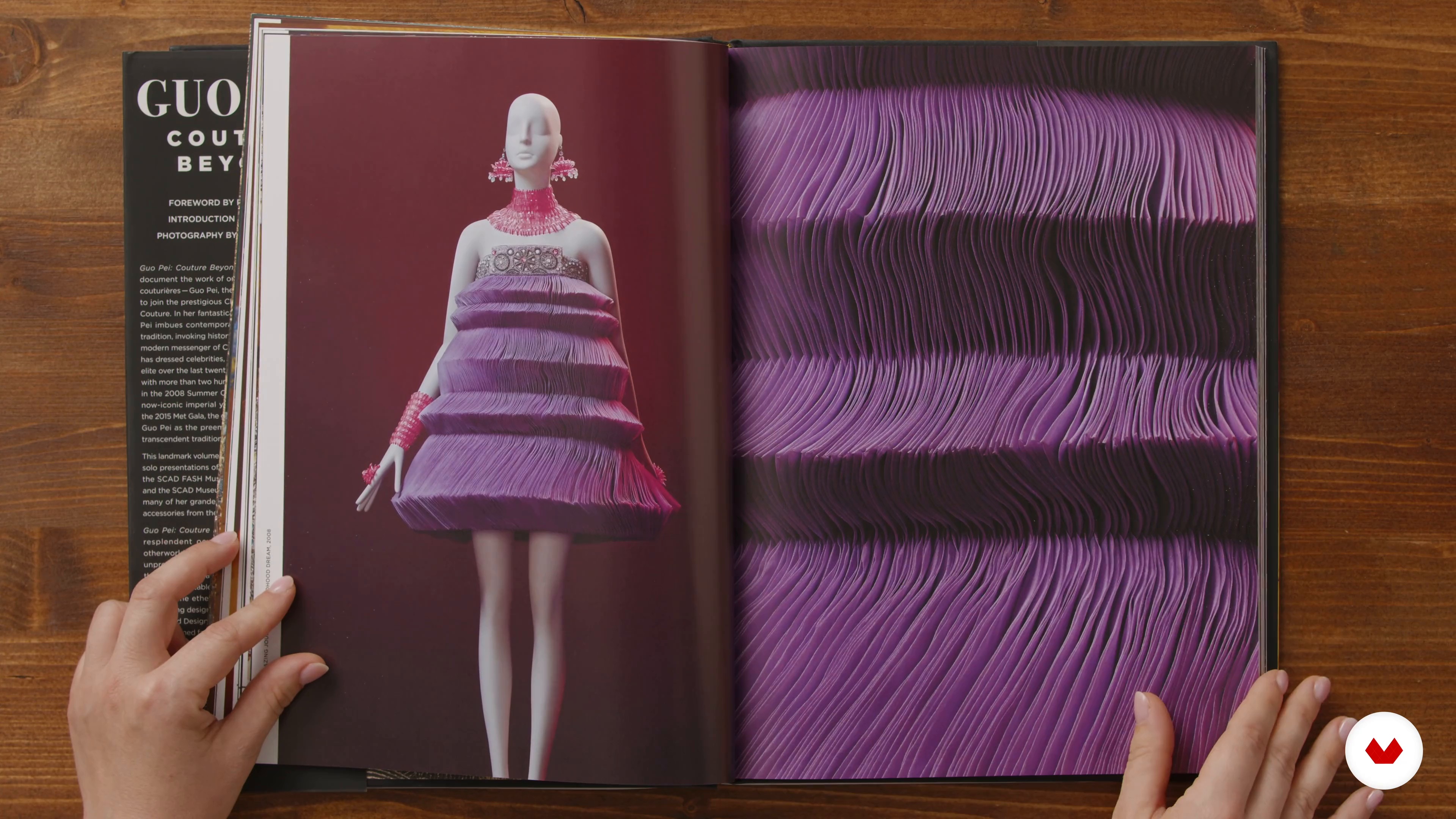
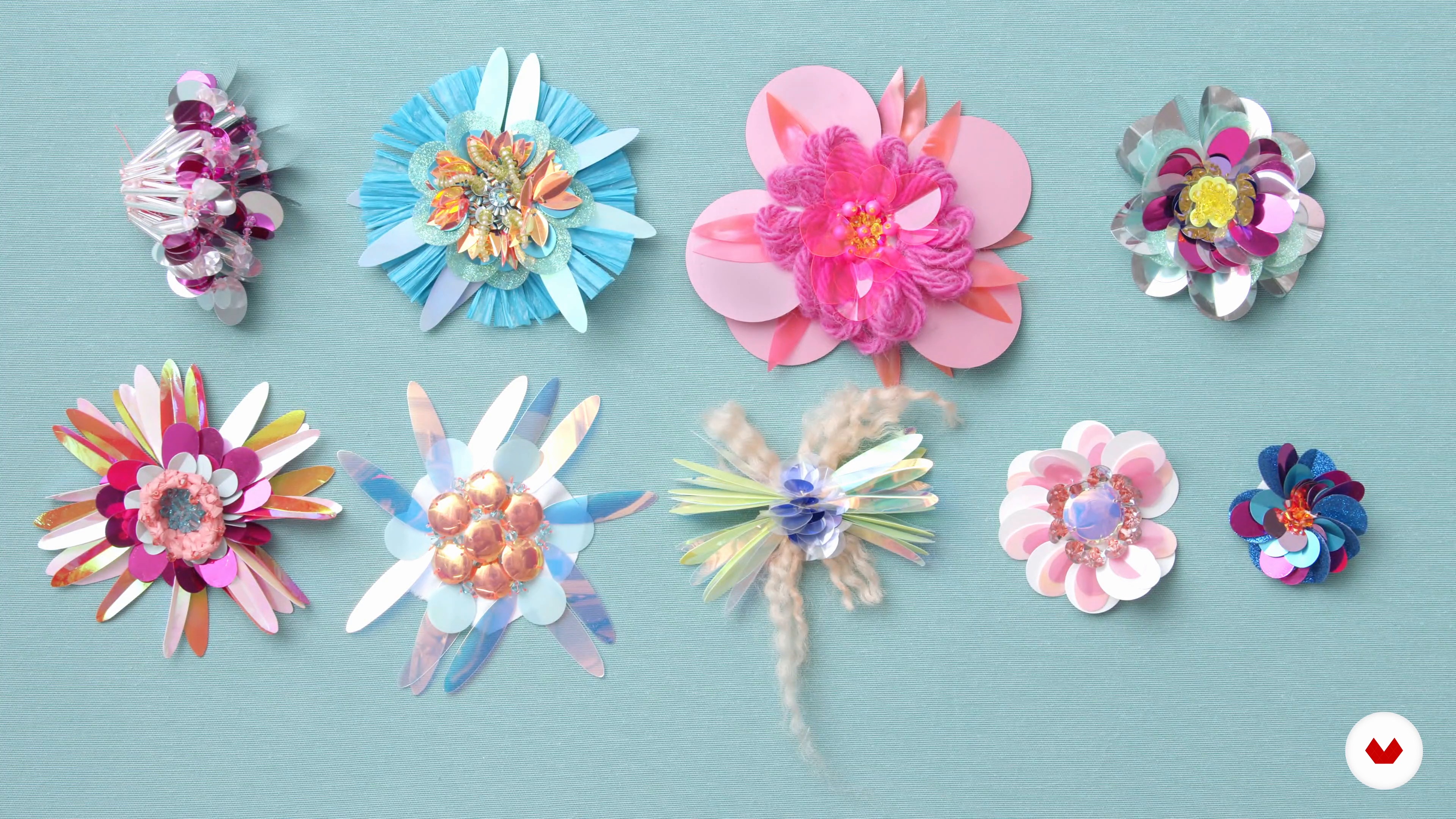
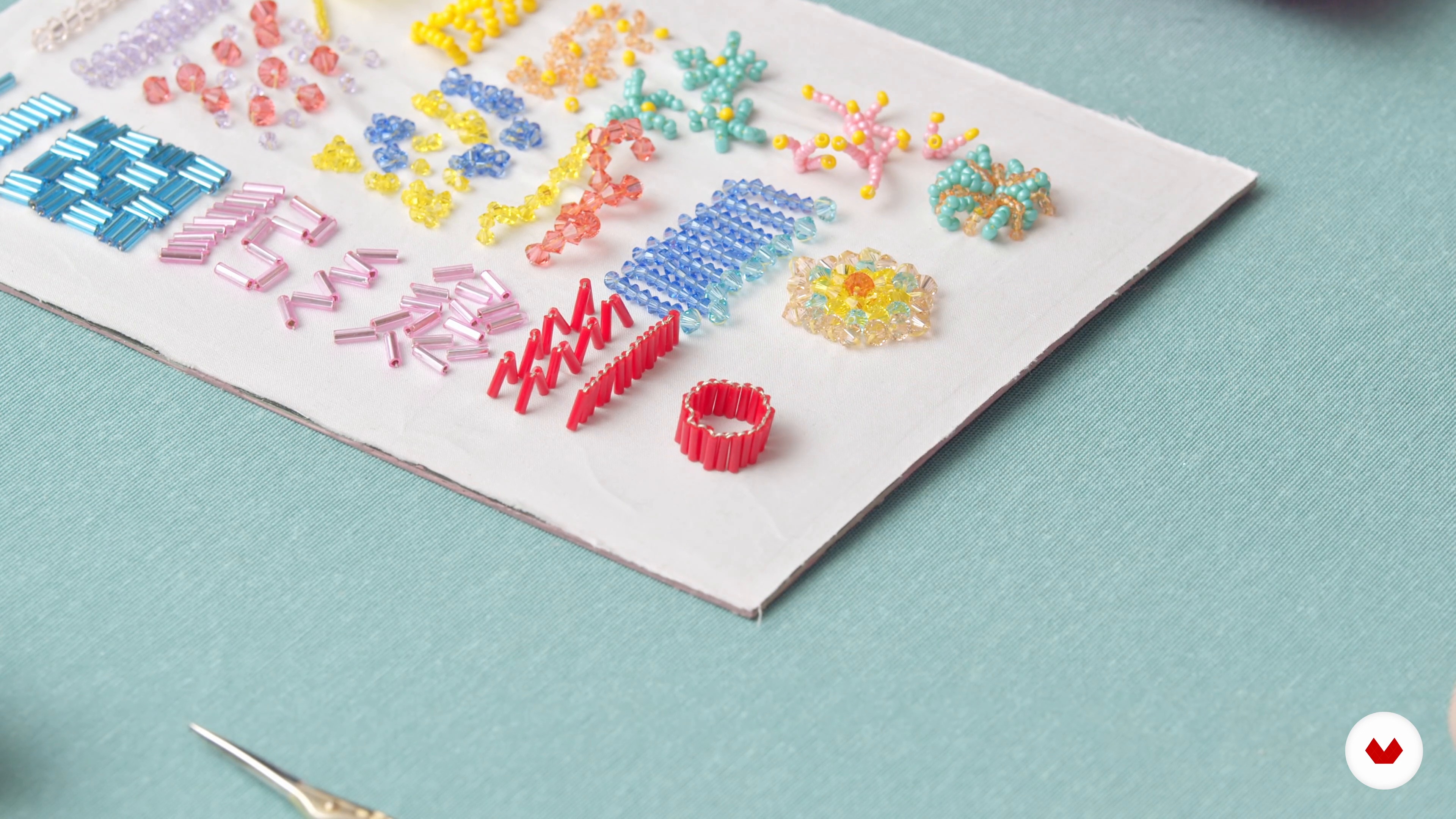
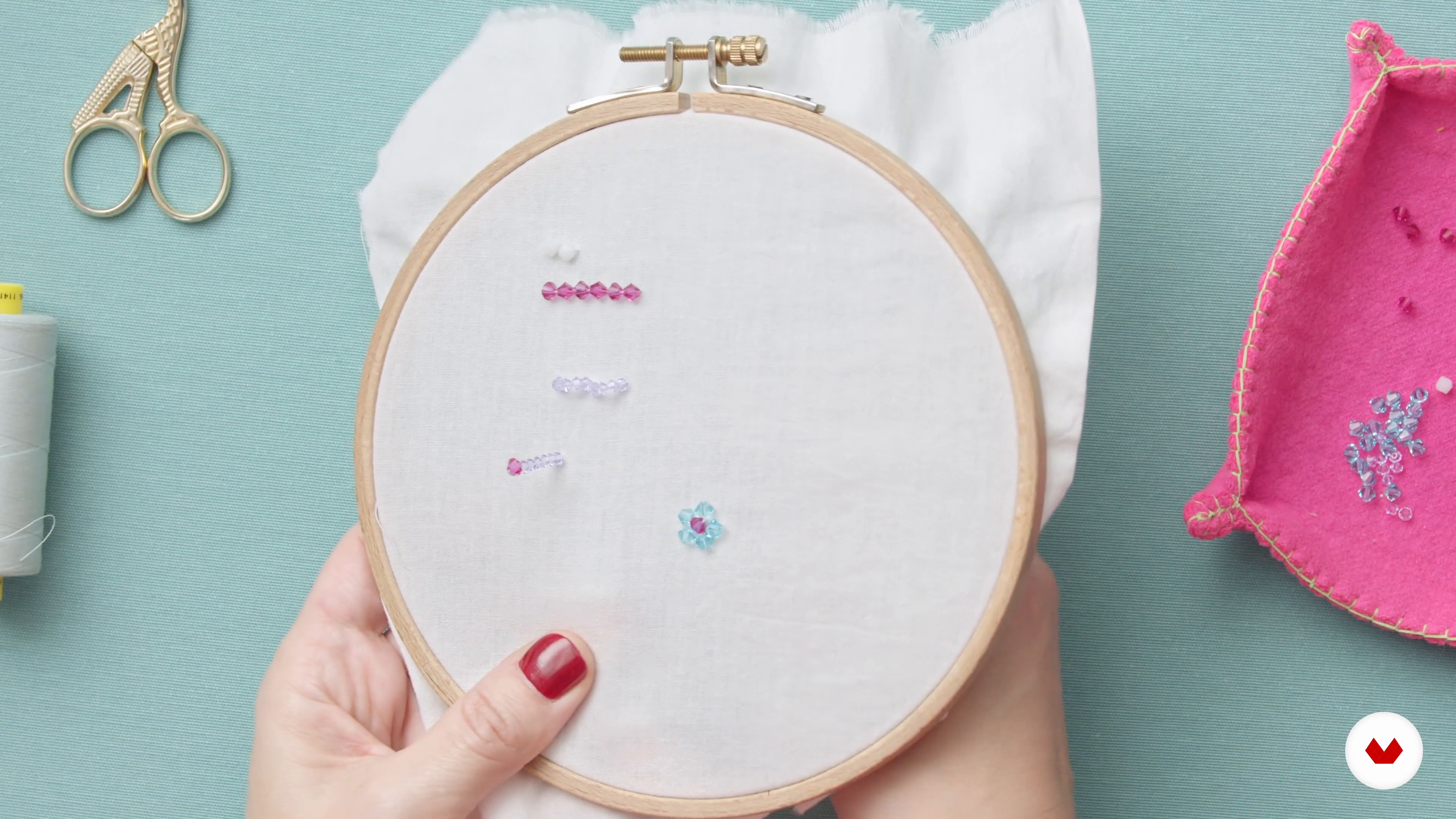
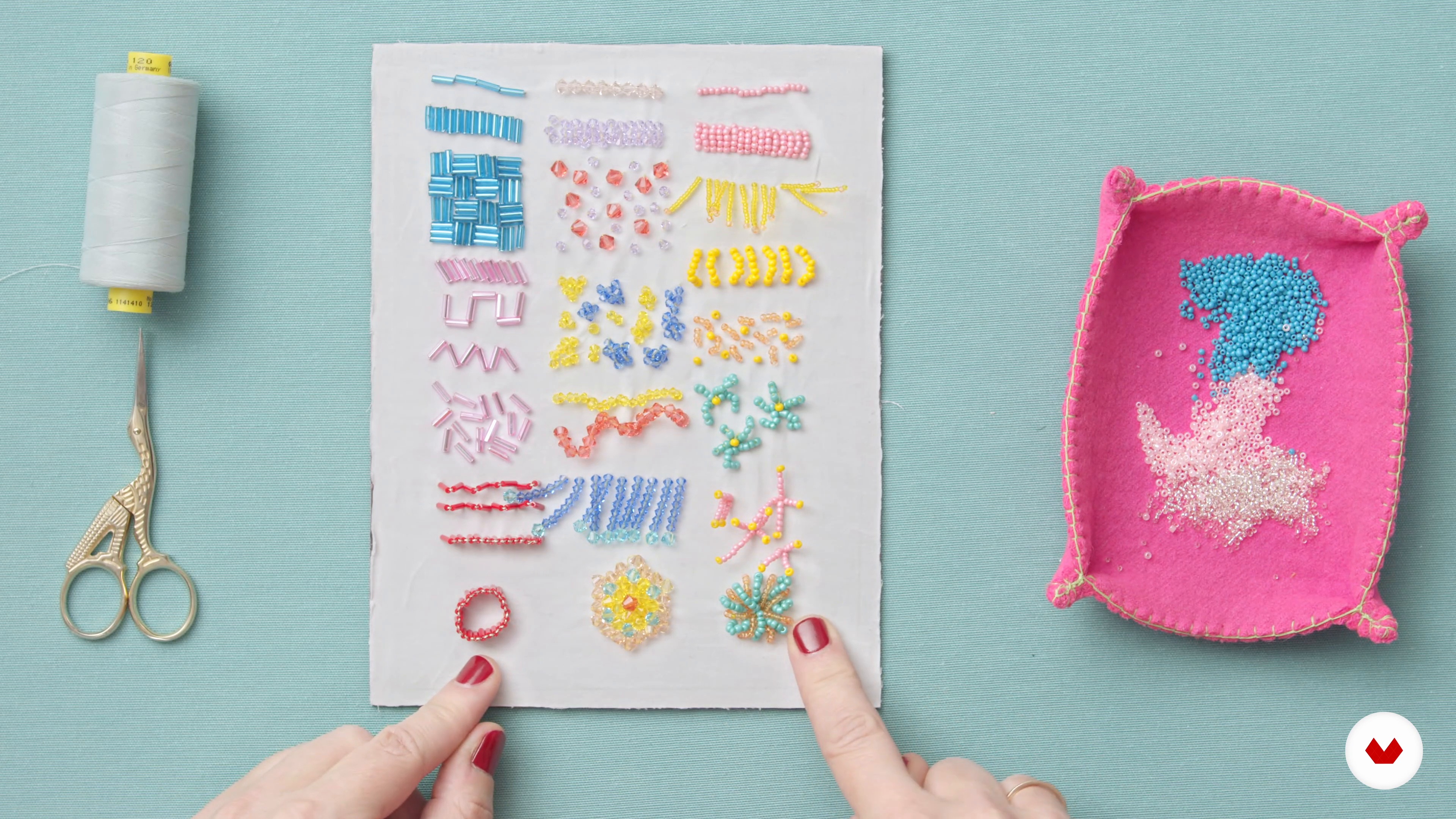
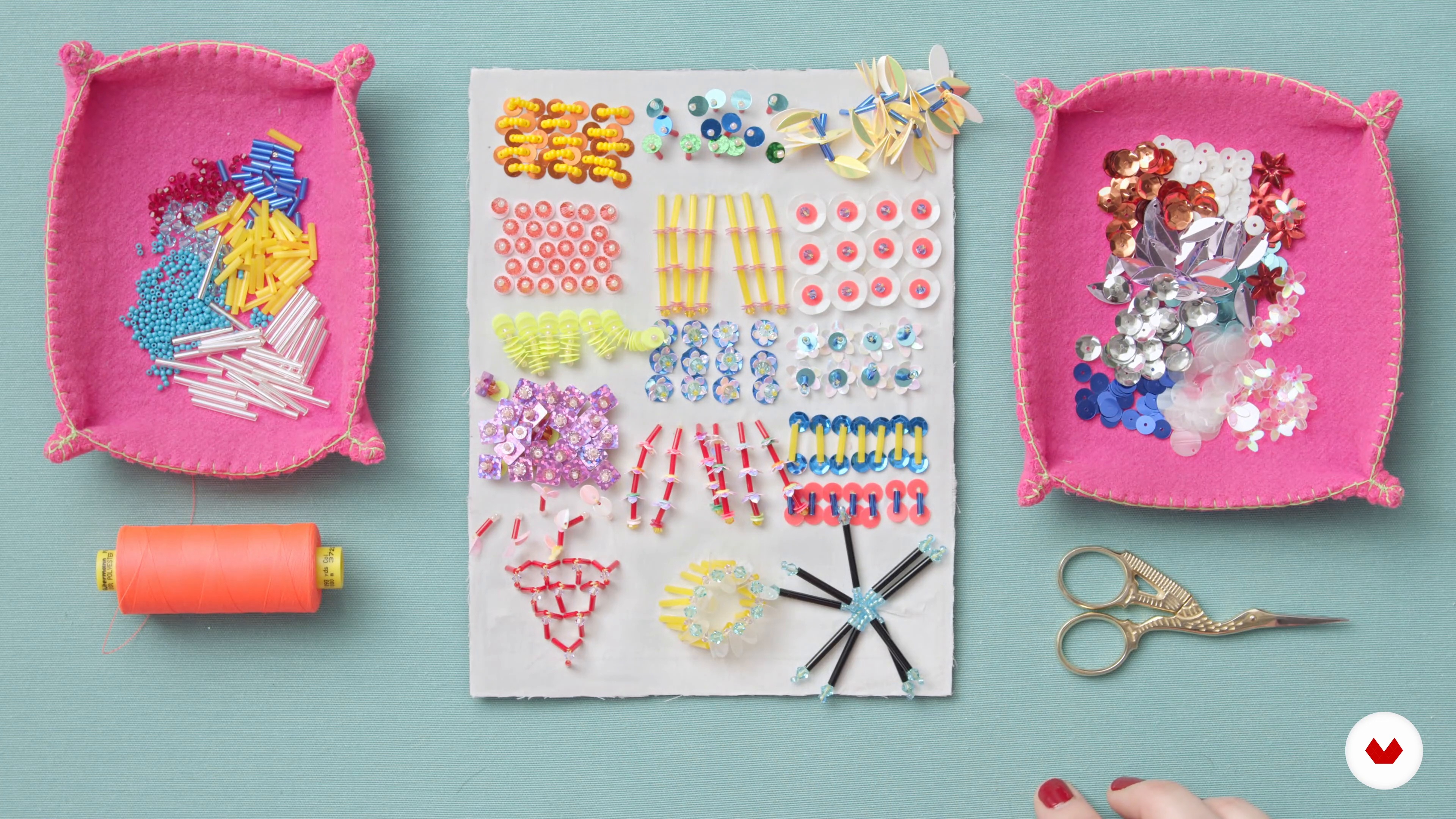
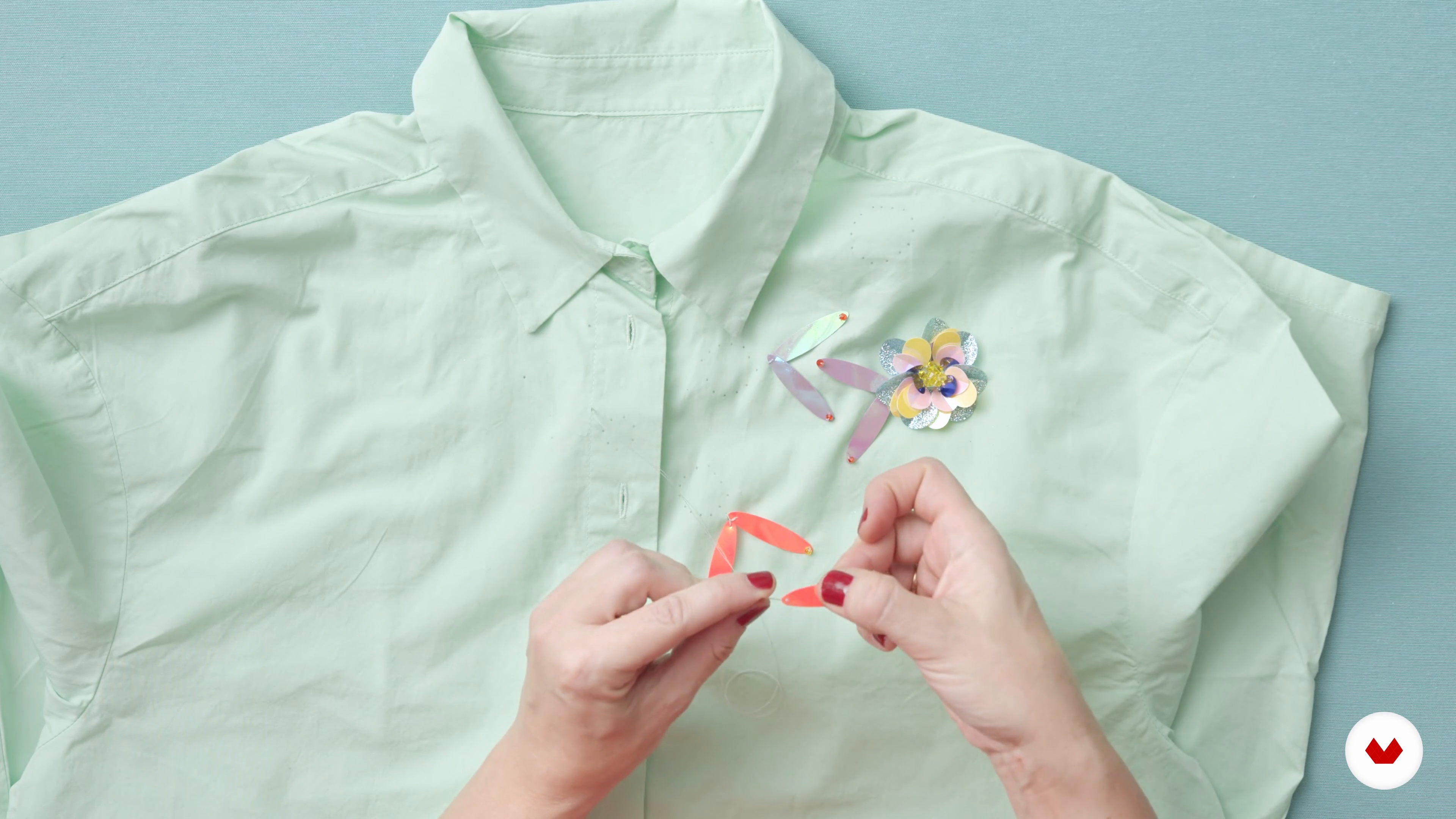
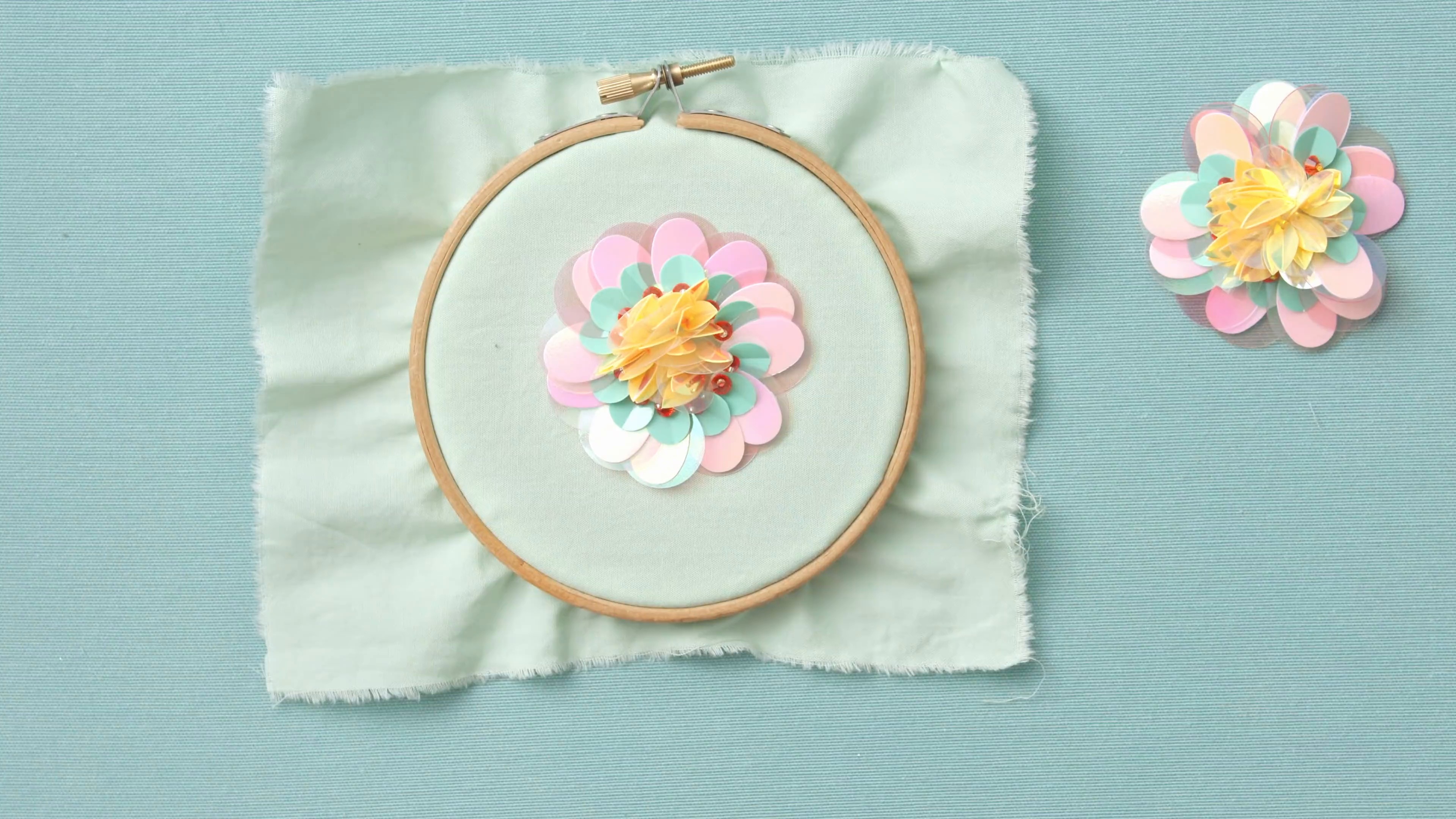
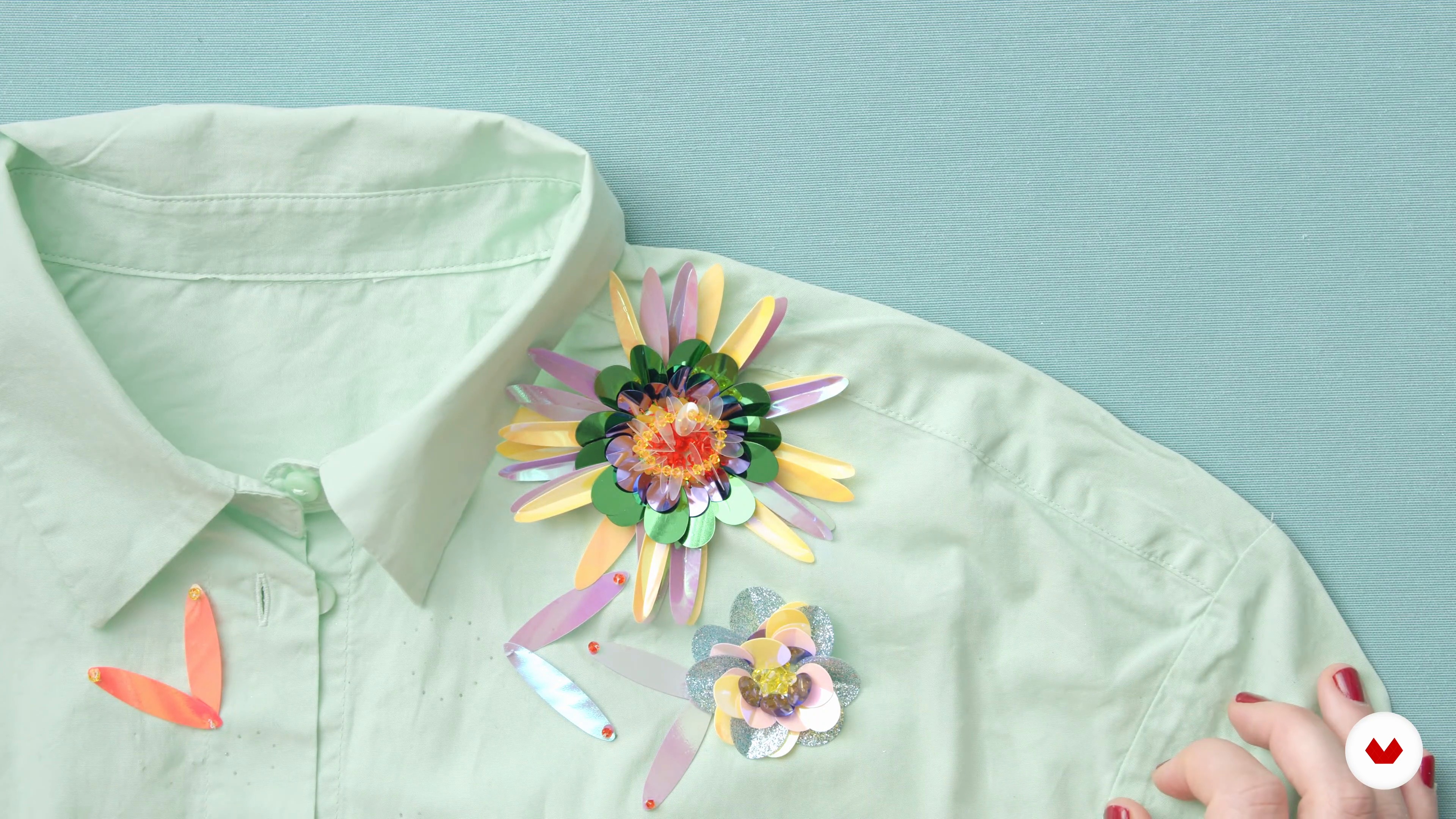
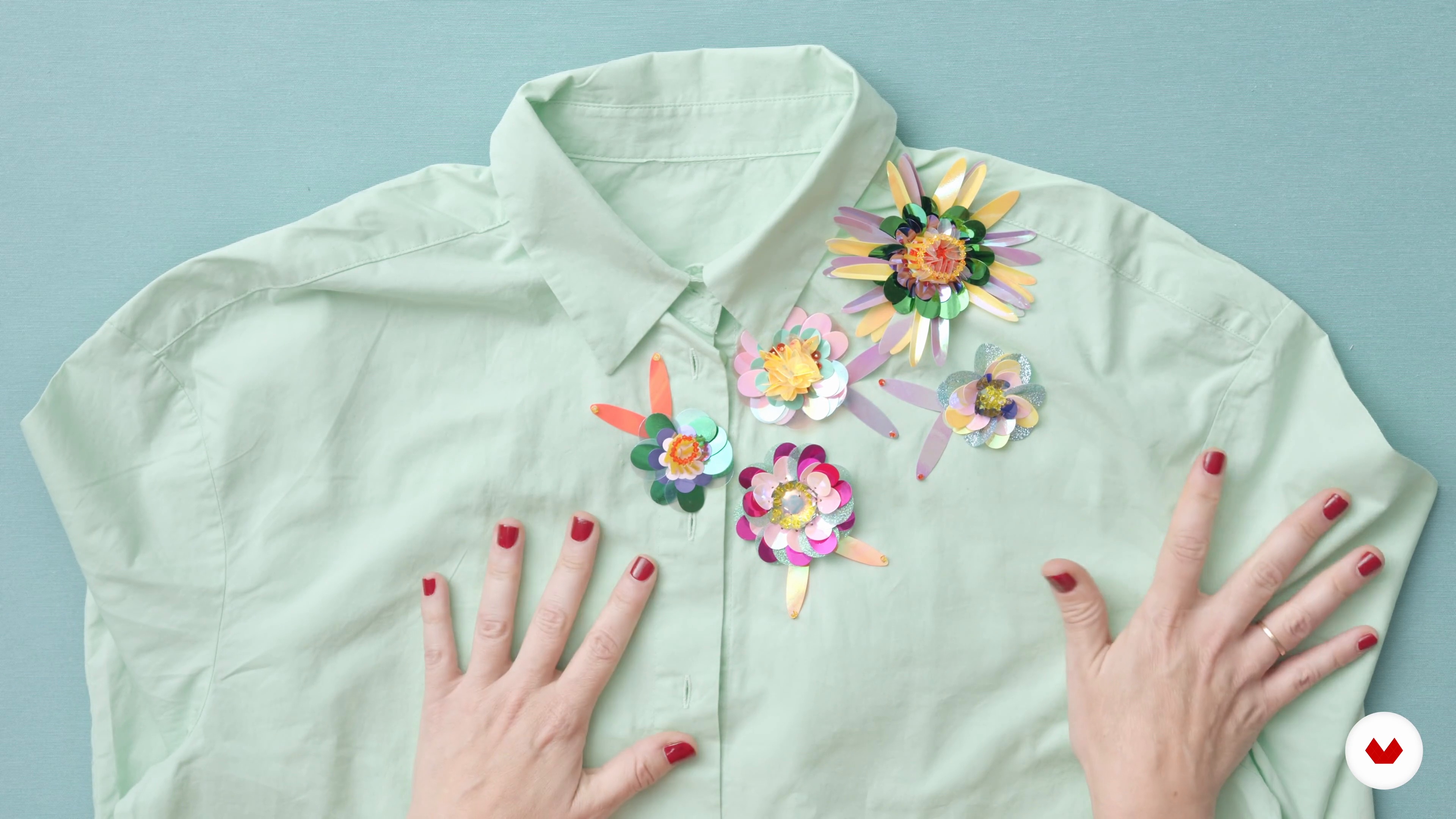
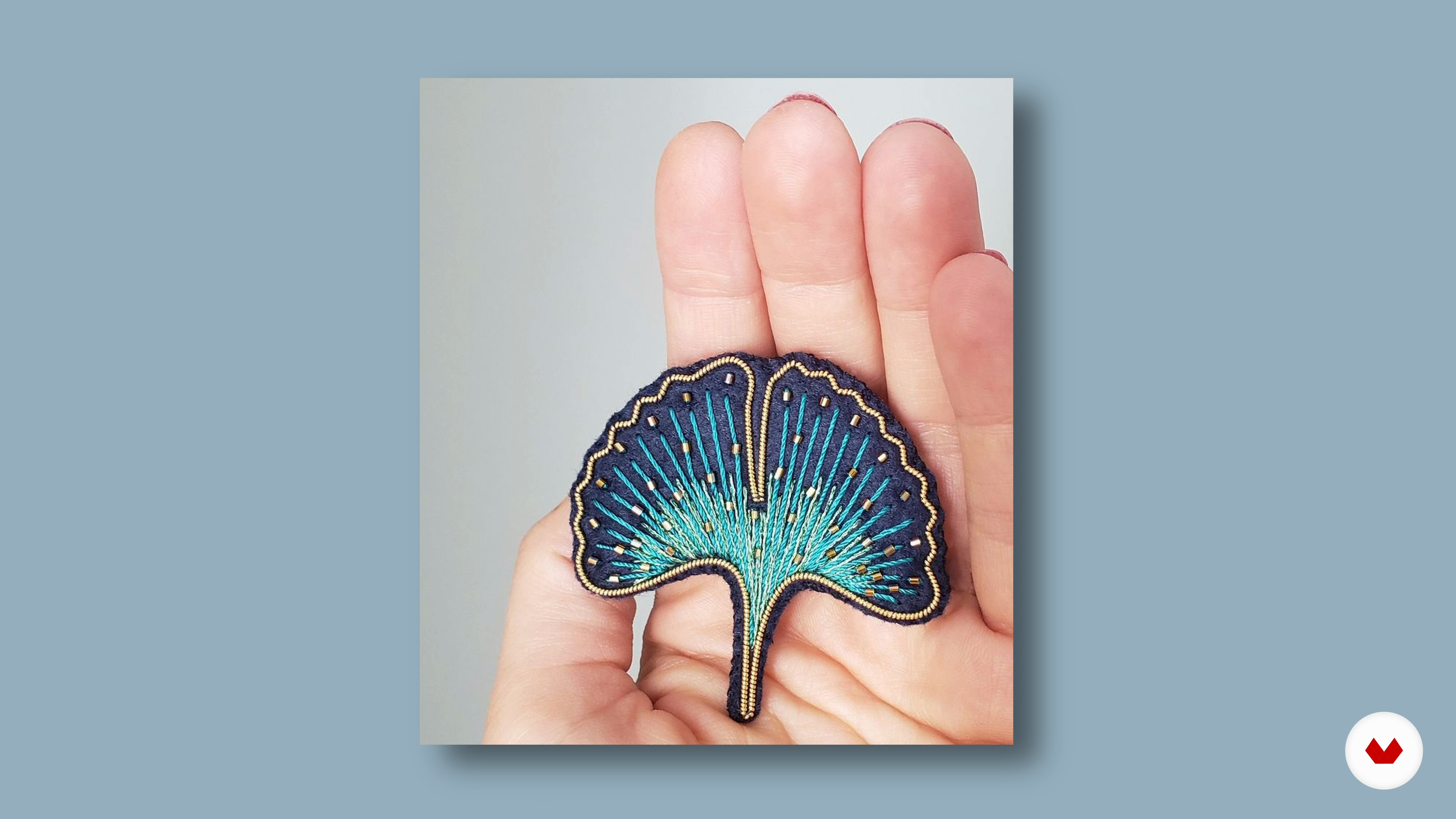
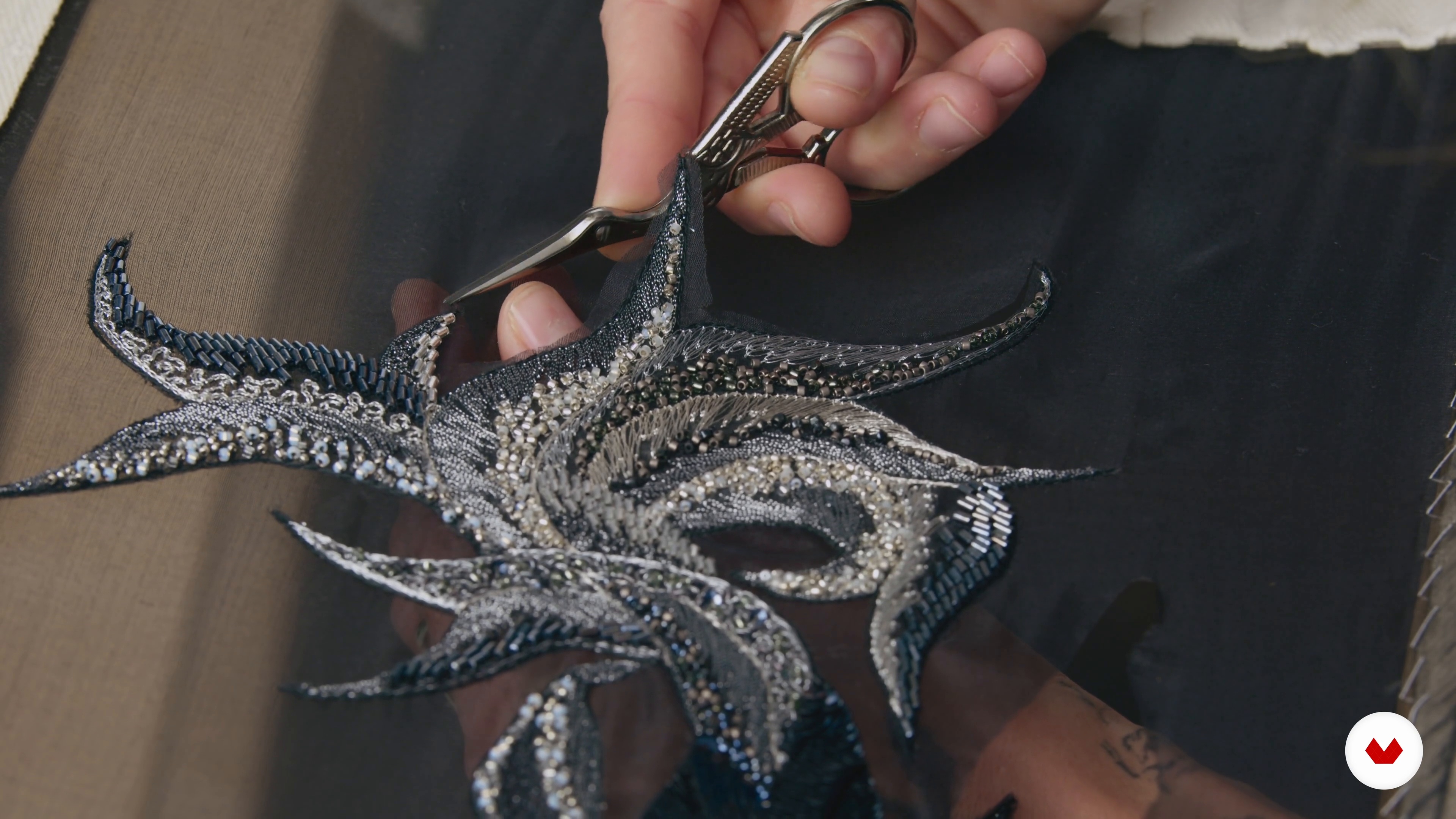
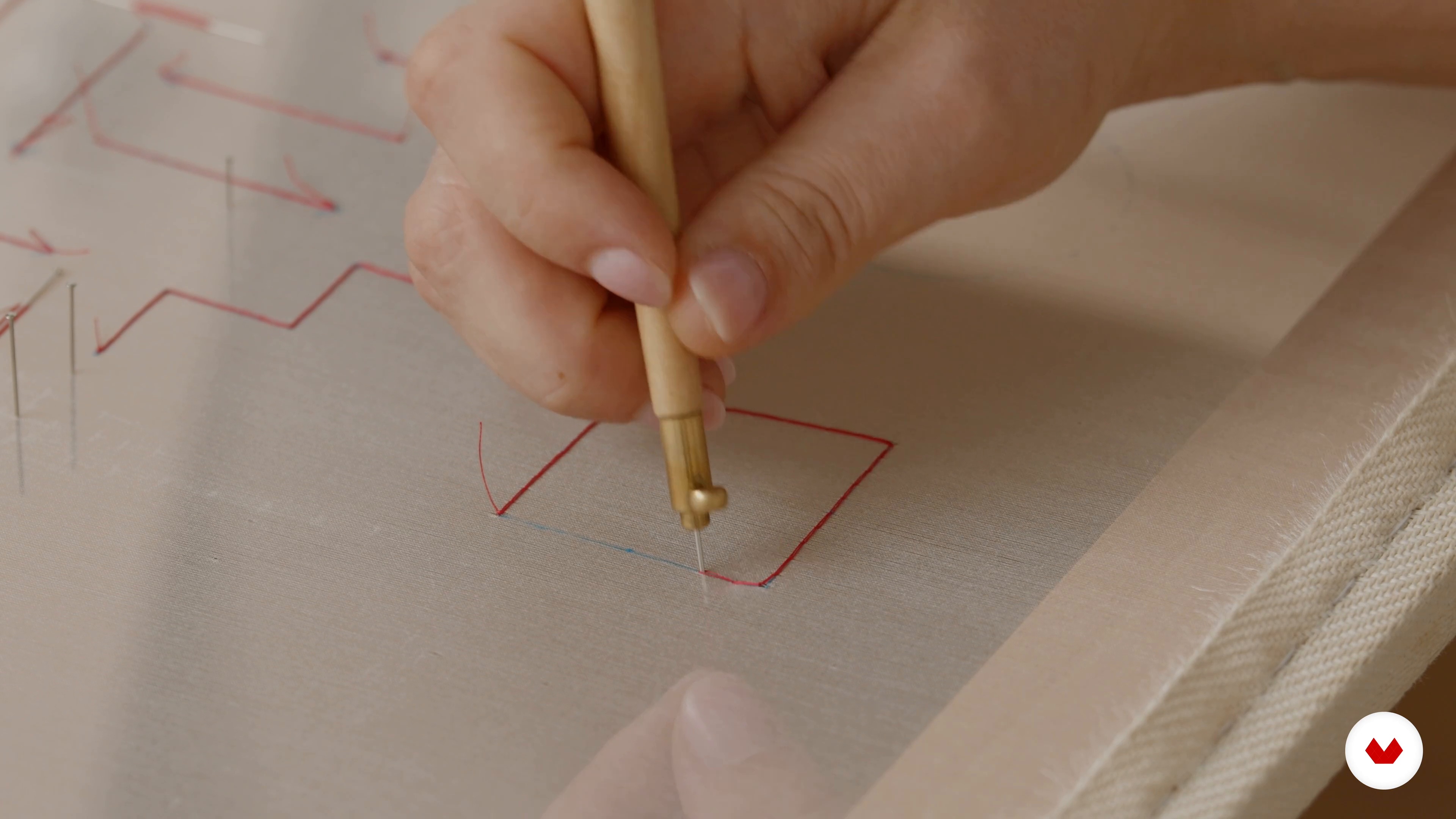
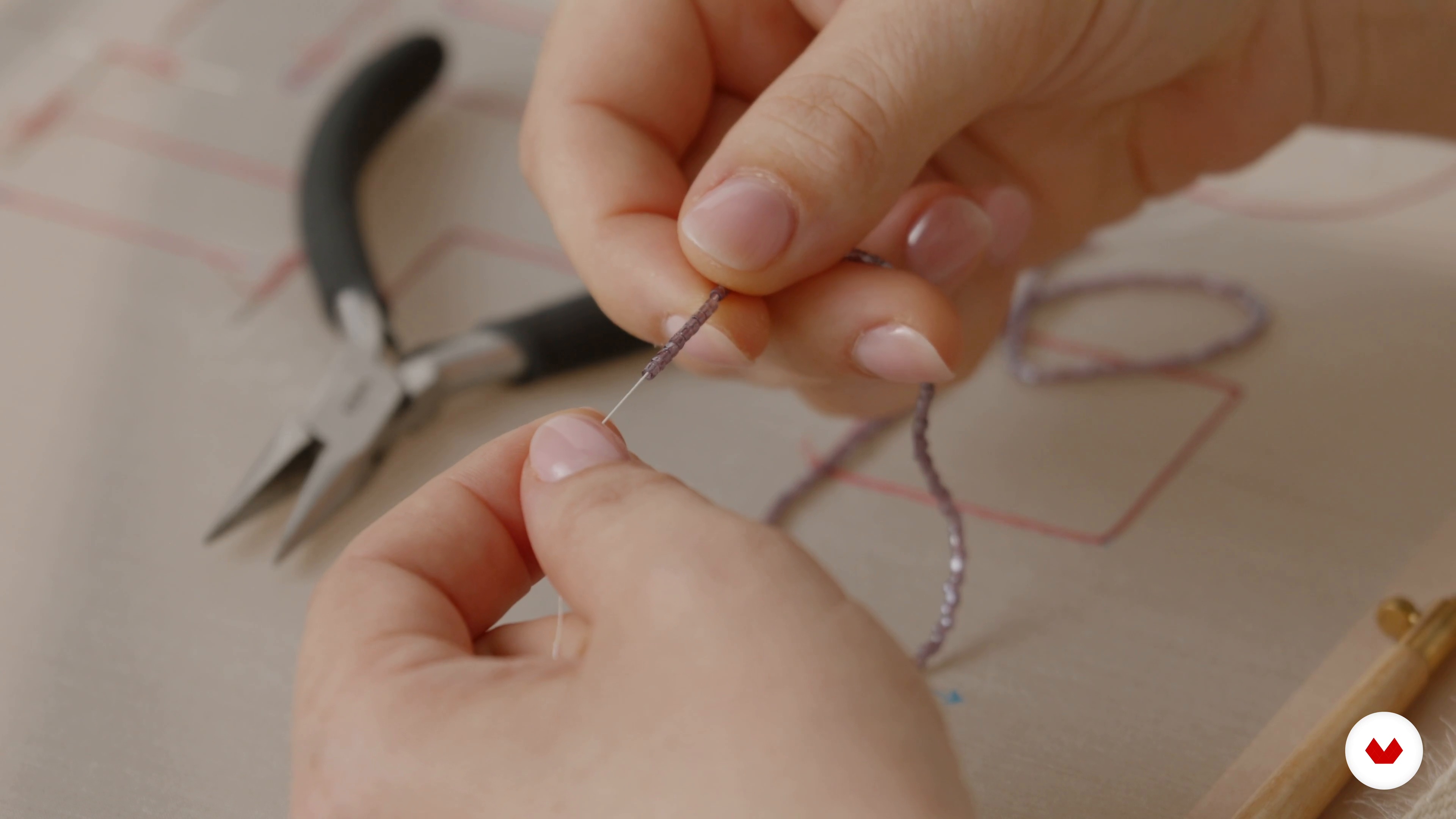
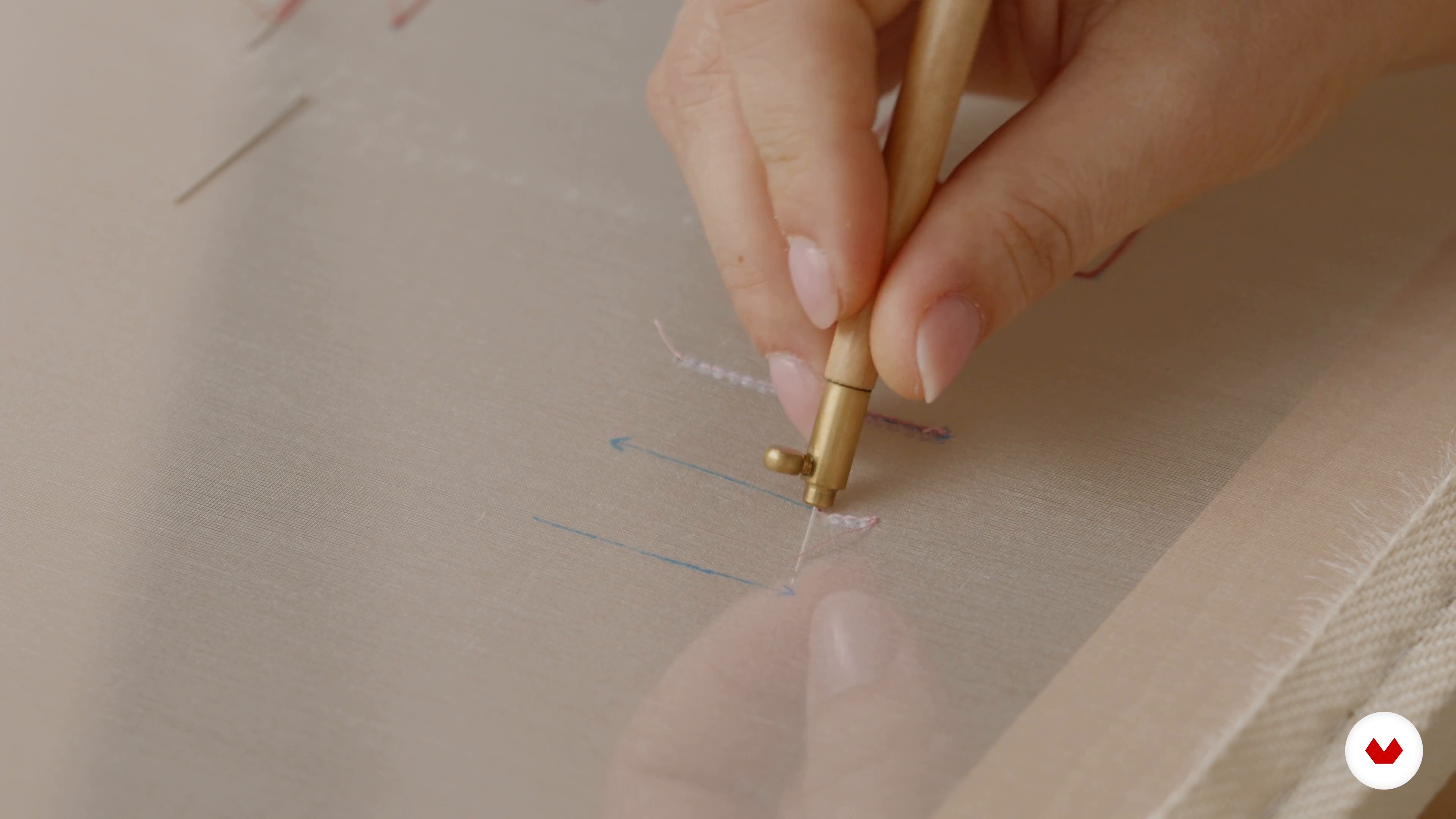
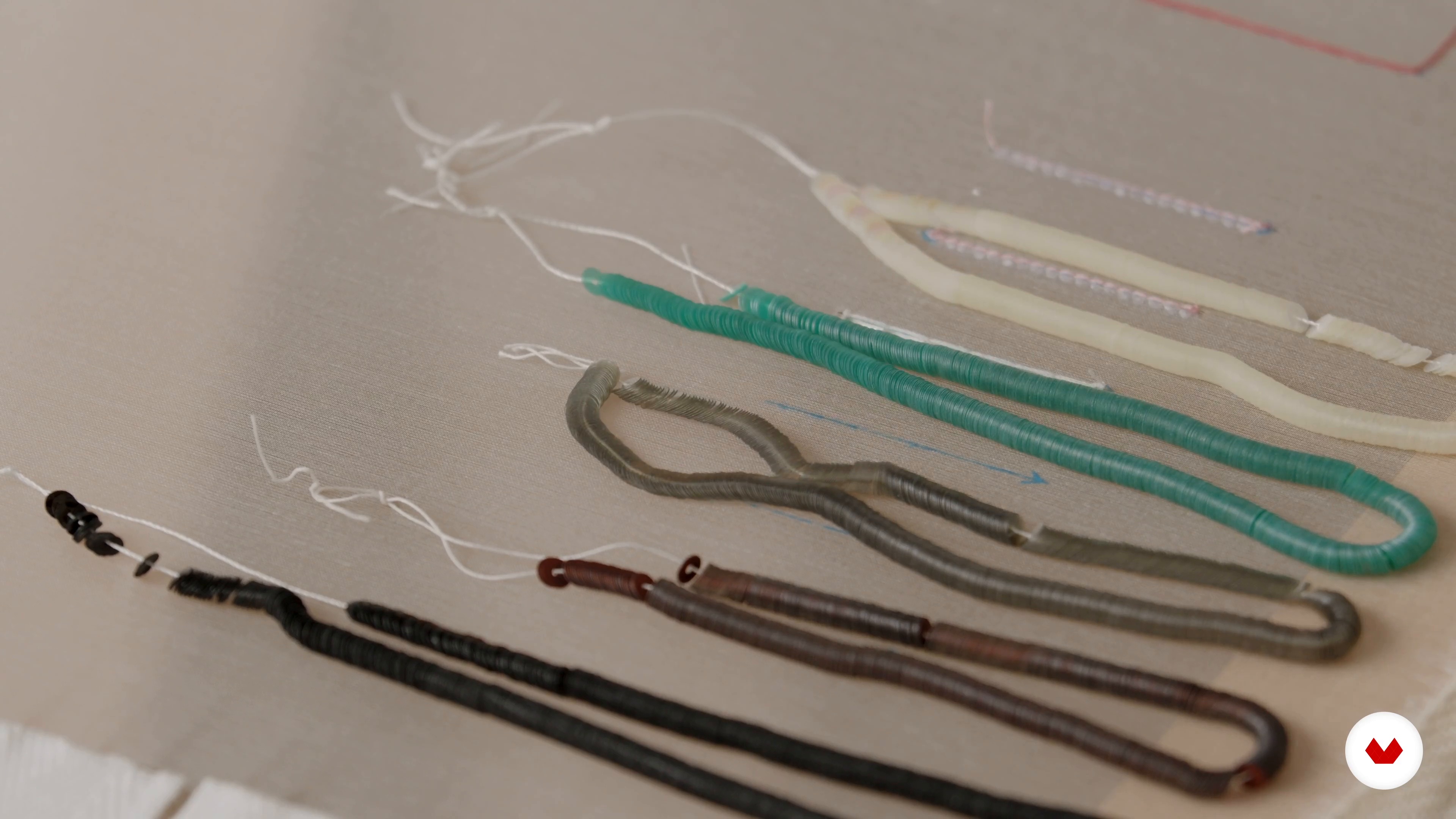
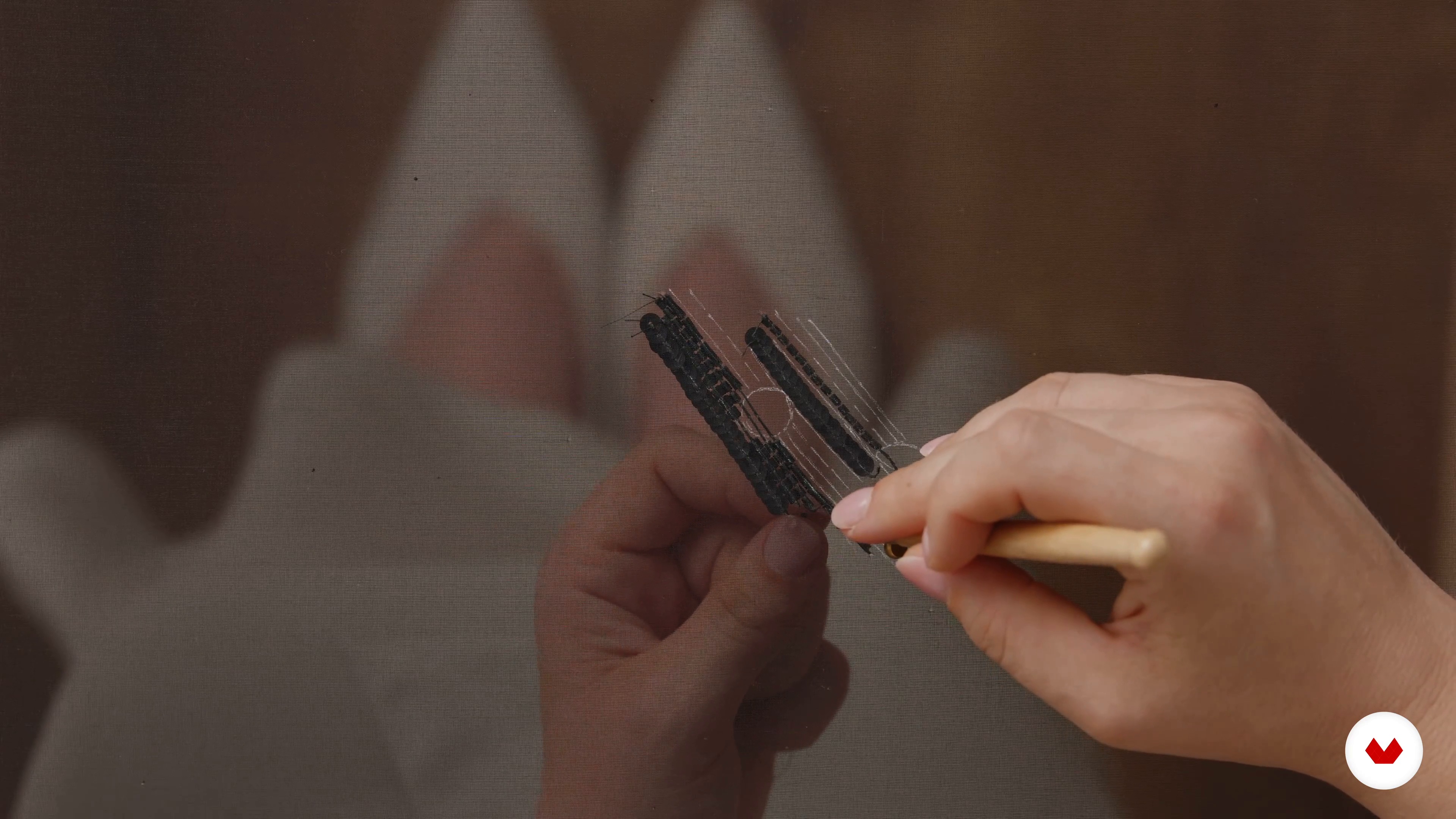
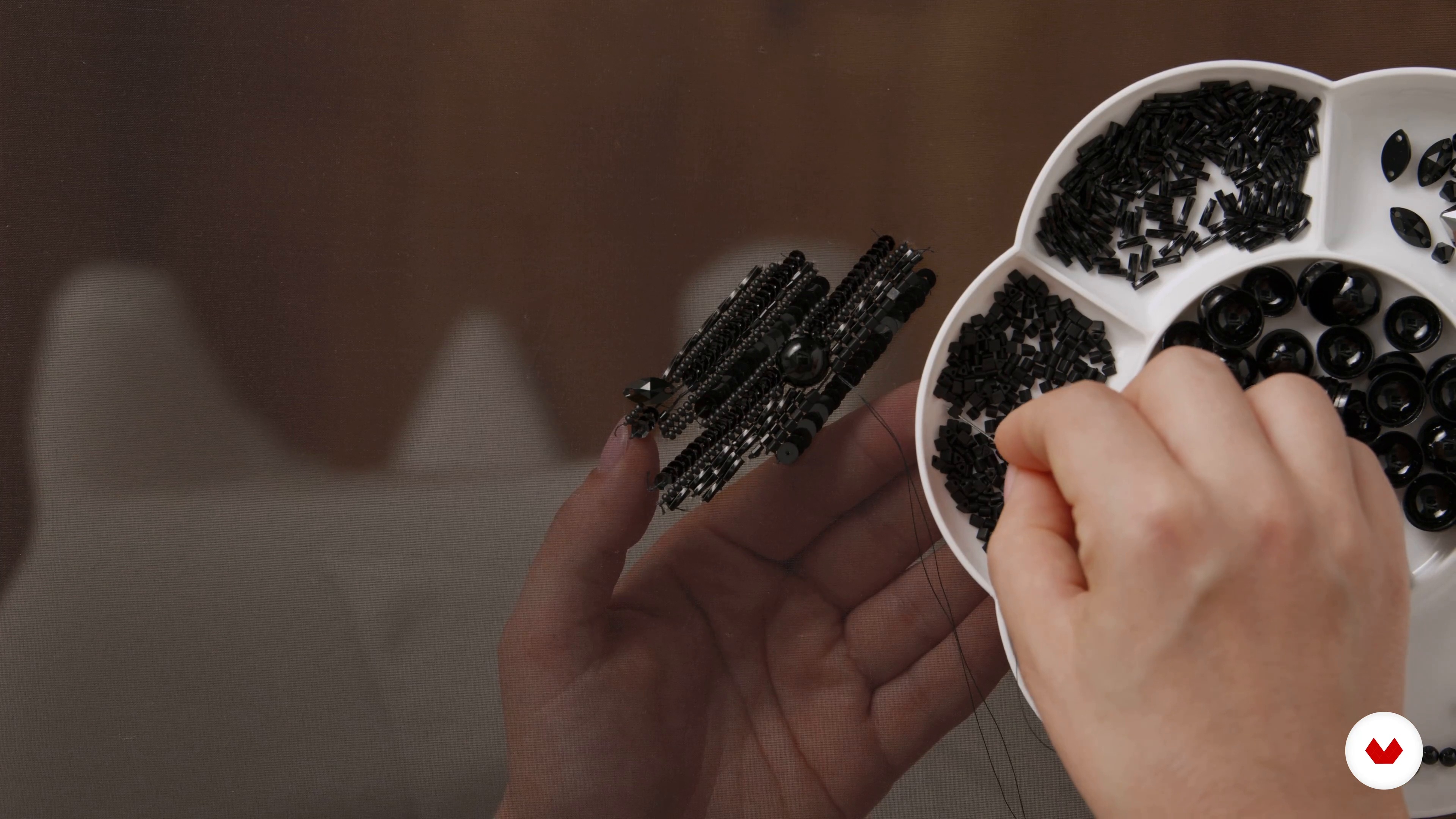
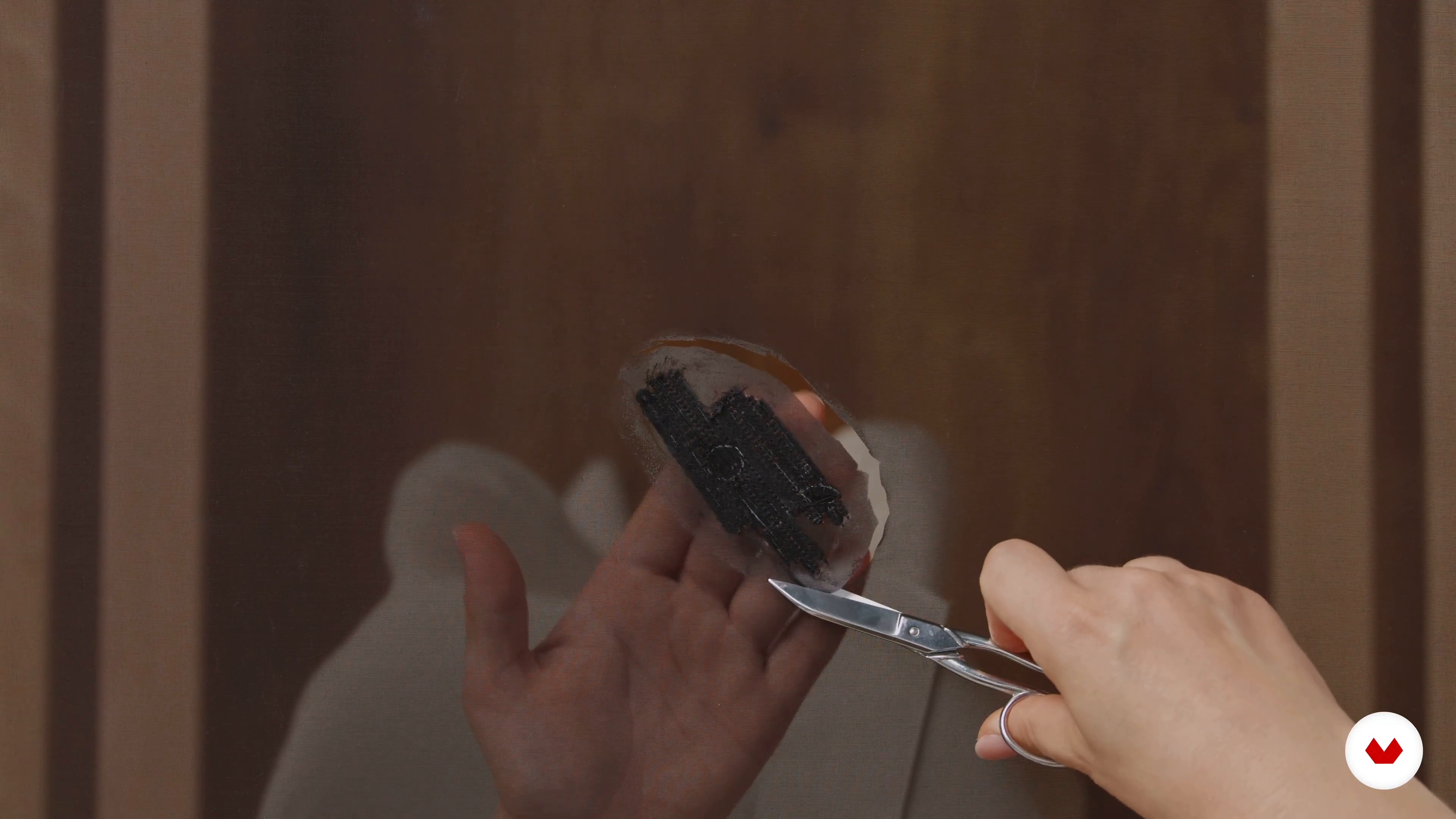
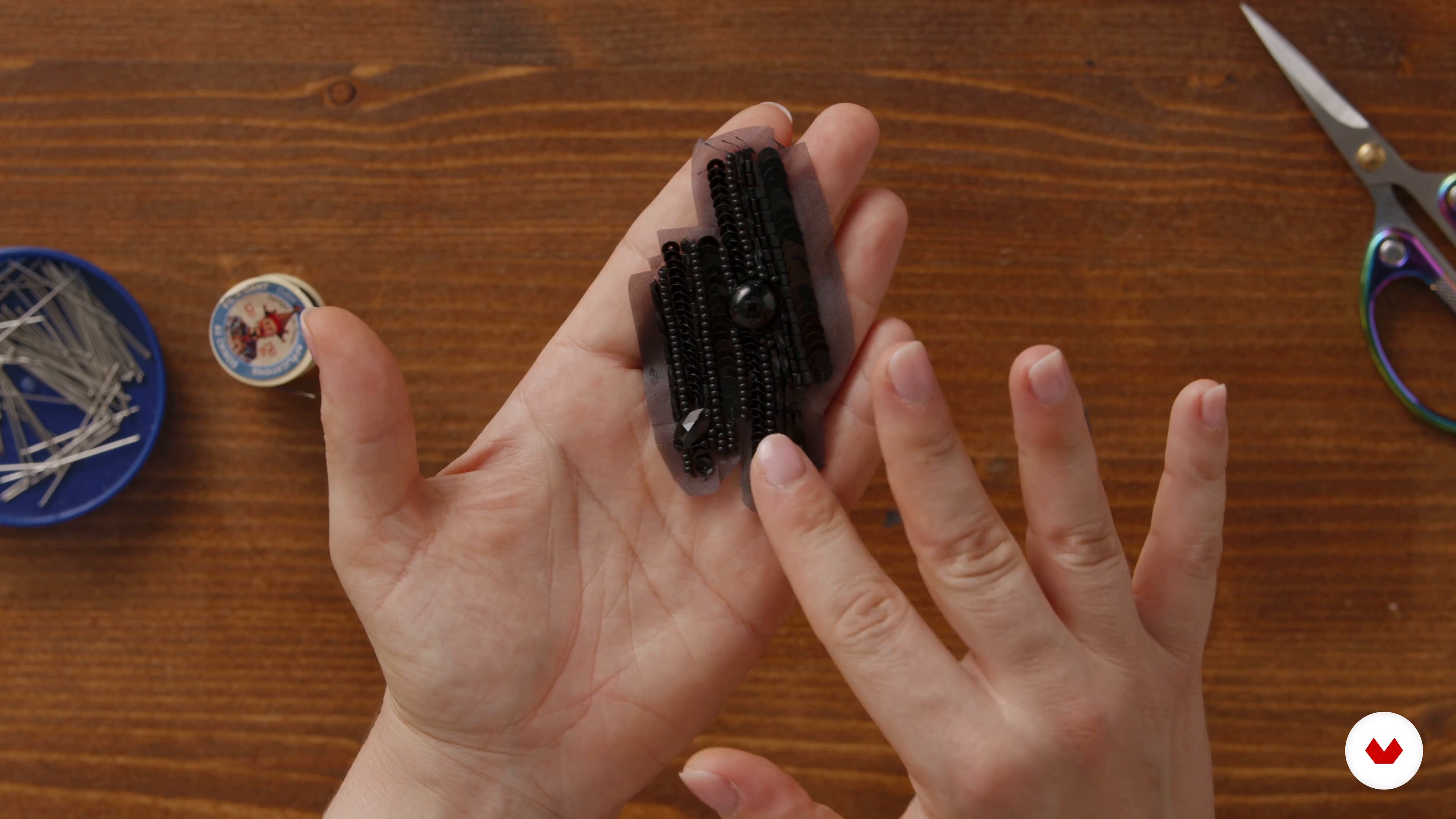
Delve into the fascinating world of luxury embroidery, where each stitch transforms fabrics into works of art filled with elegance and sophistication. Learn exquisite techniques such as bead embroidery, creating compositions with gemstones, majestic gold embroidery, and delicate Lunéville crochet. Discover how these techniques not only beautify garments but also give them a unique and exclusive character, elevating any creation to haute couture.

Guided by experts like Jodie Ruffle, Raquel Ezquerro, Elena Ciarrocchi, Leticia López, and Jelena Saveljeva, explore the fusion of tradition and modernity in each technique. Develop skills that will not only allow you to create unique pieces but also connect you emotionally with each garment, giving them a deeper meaning. With each project, build a portfolio that reflects your personal style, combining the best of classic techniques with a contemporary touch.

Read more ↓

What will you learn in this specialization?
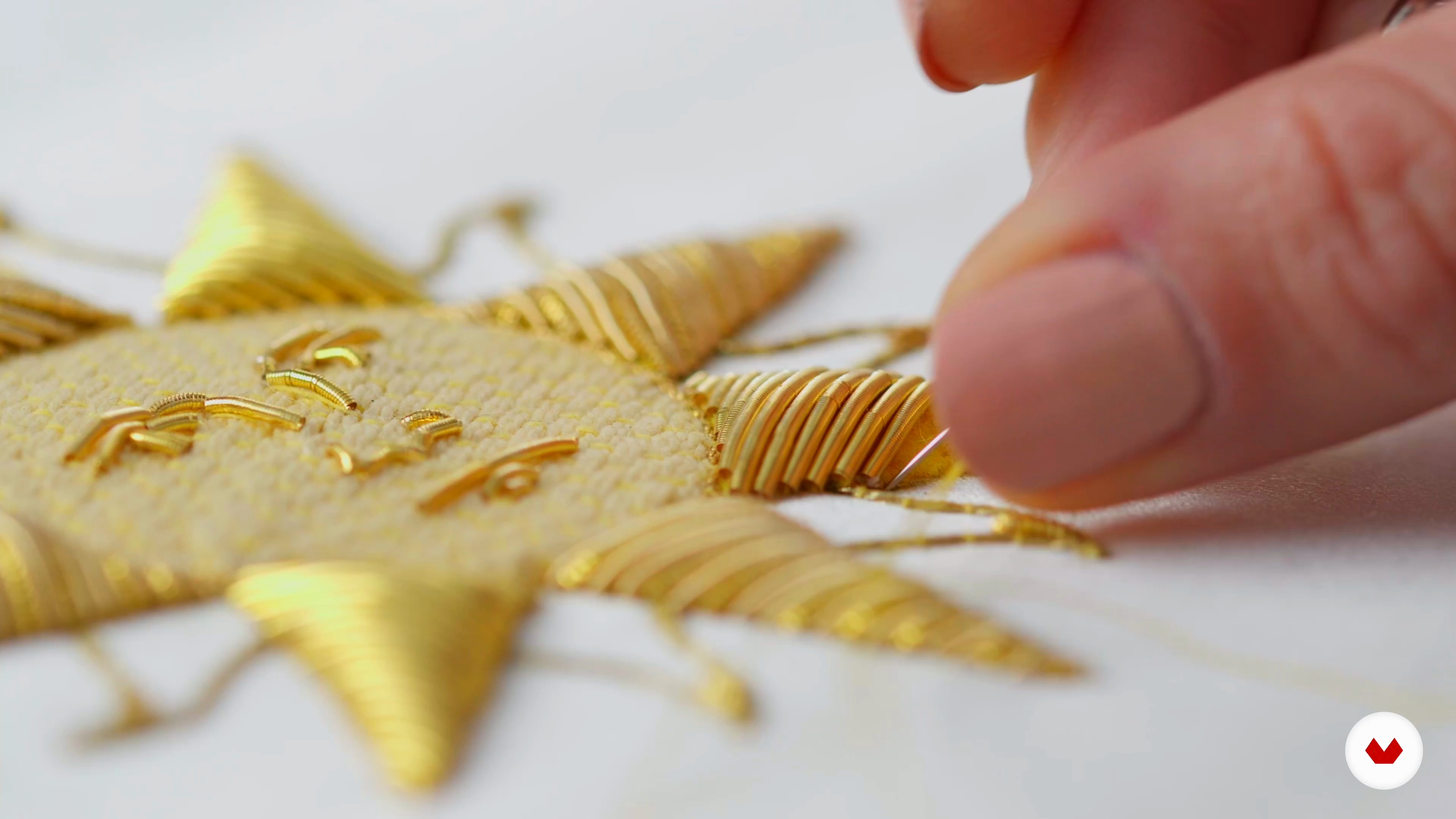
A total of 6 modules and 92 lessons
A total of 18h 16m of vídeo lessons
Taught by 5 selected expert teachers
image
1
Introduction
Luxury embroidery is more than decoration—it's a living art form shaped by history, devotion, and the quiet rhythm of the hand. As you begin this journey, you’ll not only learn technique but also embrace the deeper meaning of slowness, care, and creativity stitched into every thread. In this lesson, you will reflect on embroidery as both craft and cultural expression. You'll trace its historical roots, explore its role in sacred and couture traditions, and learn to appreciate the emotional depth and time-honored patience behind every stitch.
1m
image
2
Influences / Jodie Ruffle
I have lots of different inspirations and in this lesson, I’ll introduce you to some of them and tell you what I love about the possibilities of textiles within fashion. I'll also introduce you to how you can use these possibilities within your own final project.
14m
image
3
Influences / Raquel Ezquerro
I want to share some of my influences with you. On the one hand, there are embroidery artists and some brands that do amazing embroidery, but I also find inspiration in nature and ancient embroidery.
5m
image
4
Sources of inspiration / Elena Ciarrocchi
I'll tell you what inspires me. Specifically, I will show you the artists and works that I look at with the most interest and admiration to find reference models and new ideas.
13m
image
5
Influences / Leticia López
I would like to share my sources of inspiration. I will tell you what influences me in my work and often guides me.
4m
image
6
Reference models / Jelena Saveljeva
Now I will tell you about the characters who continue to inspire me in my work.
10m
image
3
Introduction to Materials and How to Choose a Garment
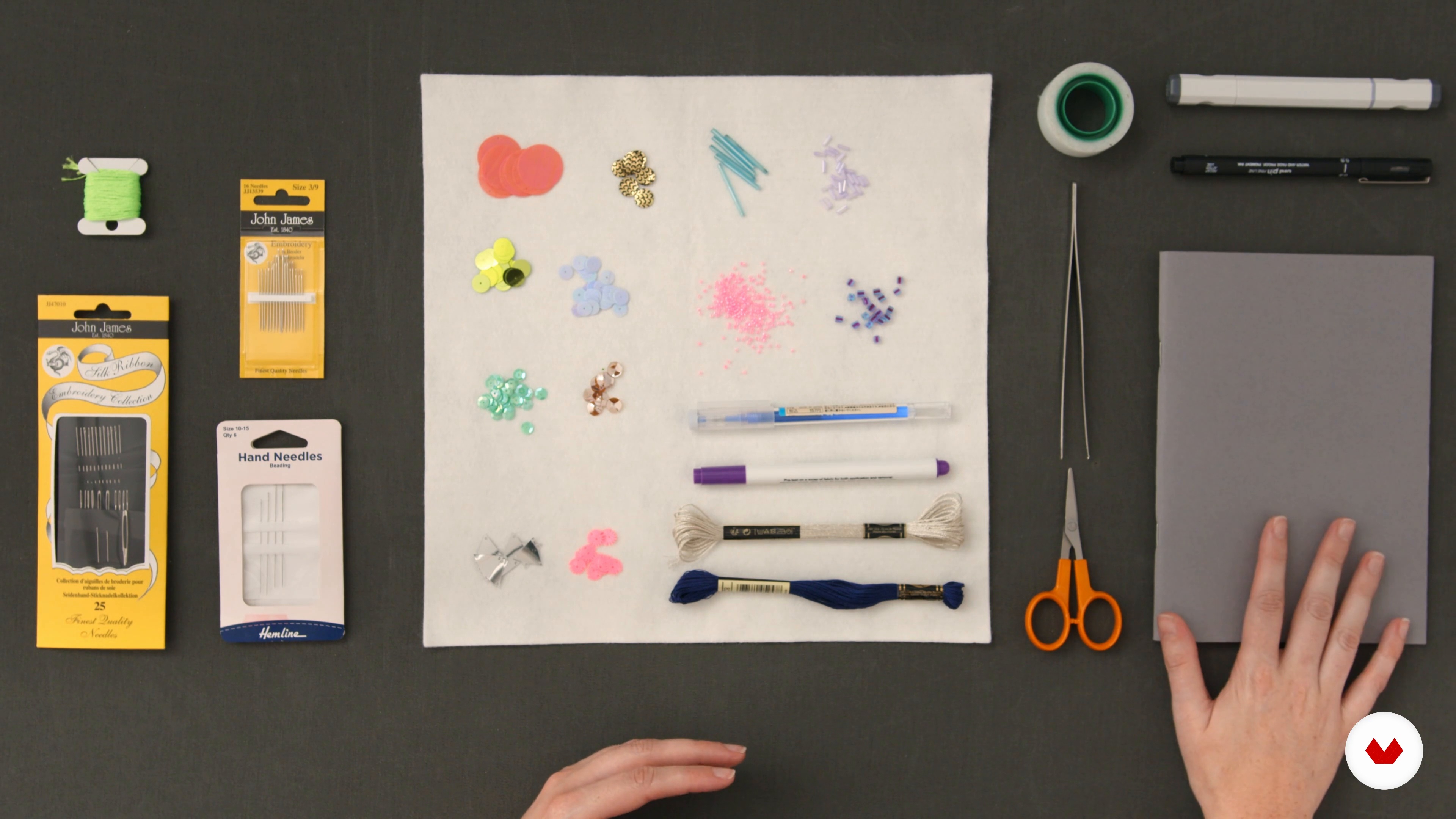
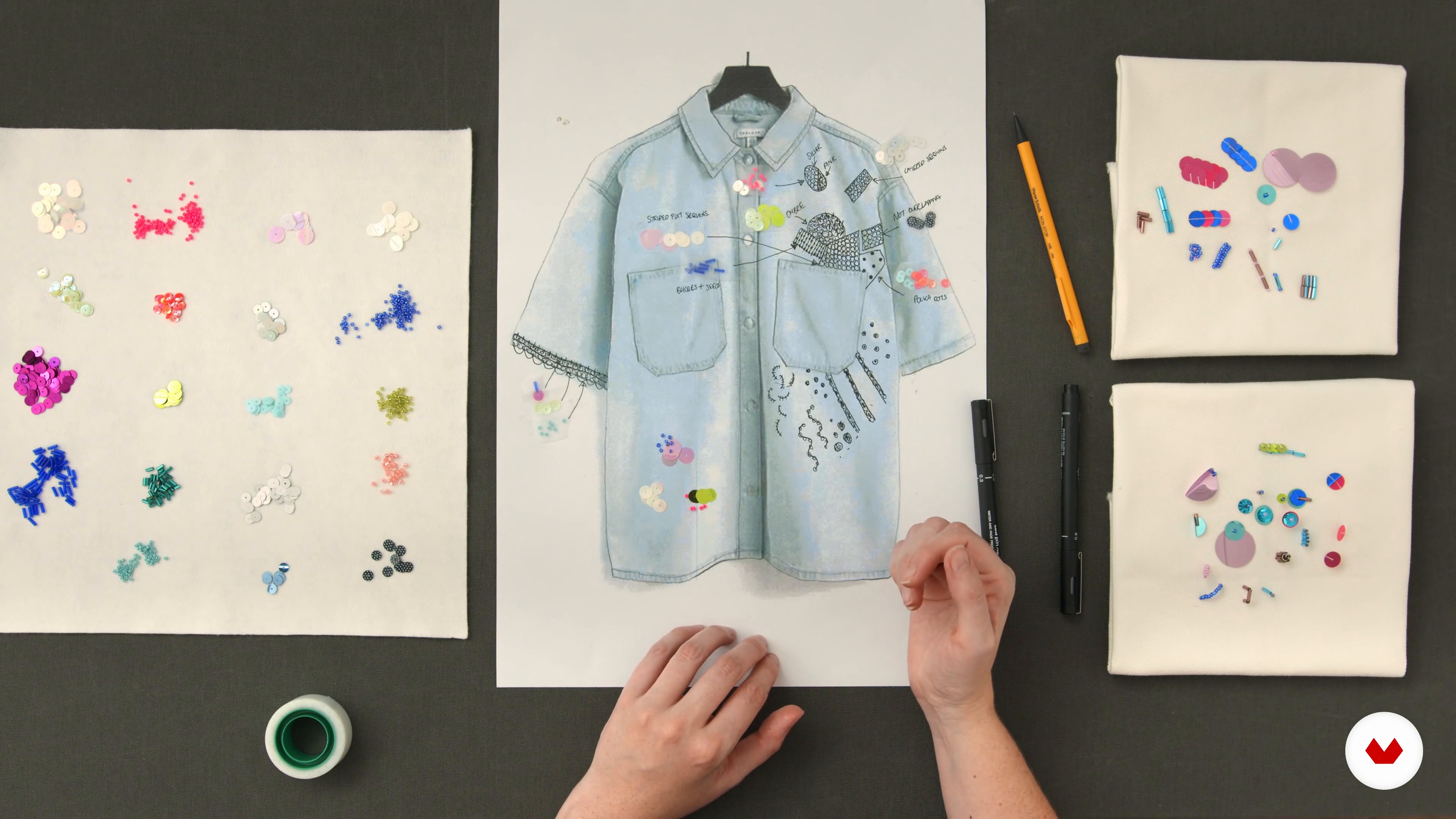
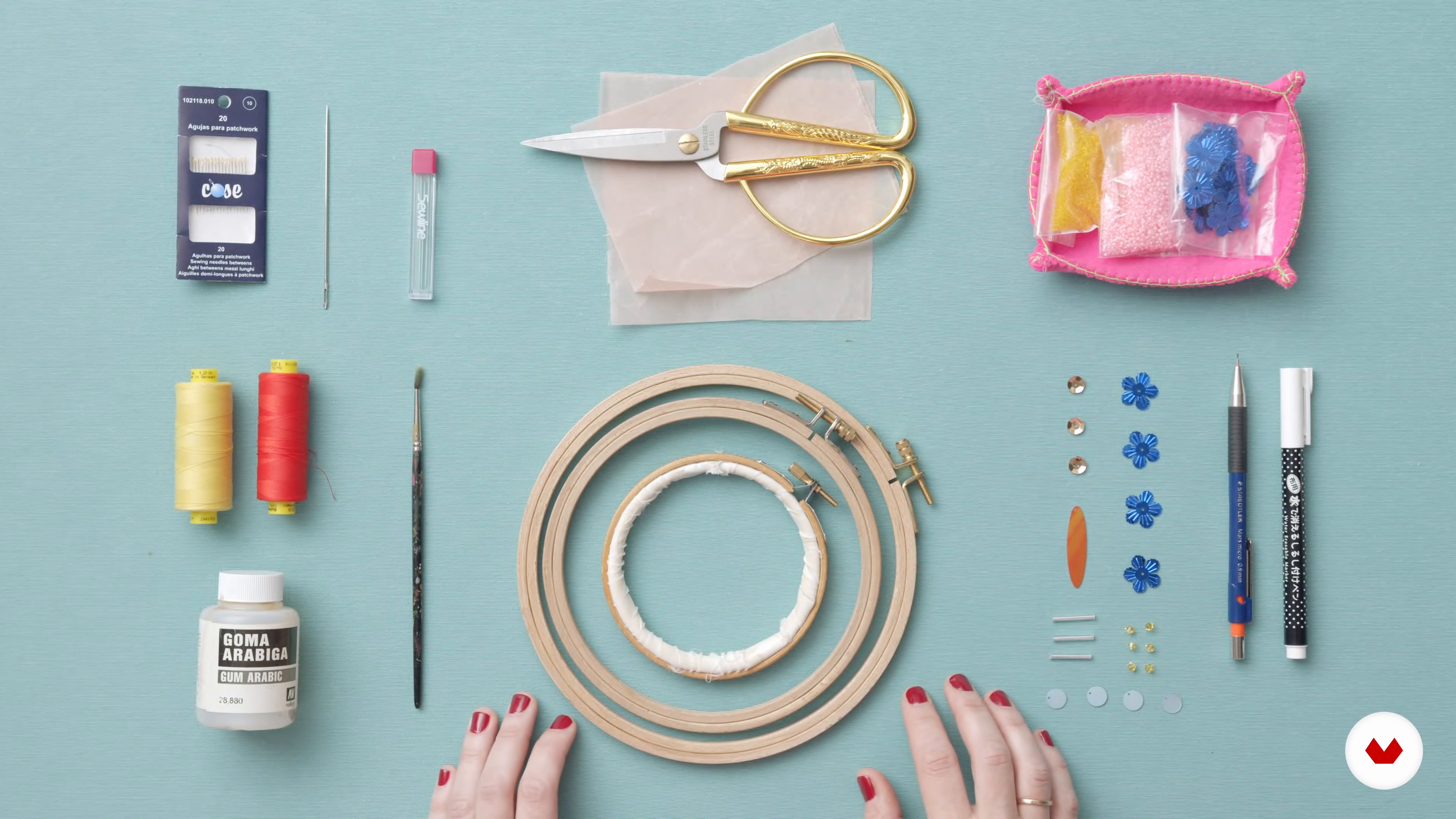
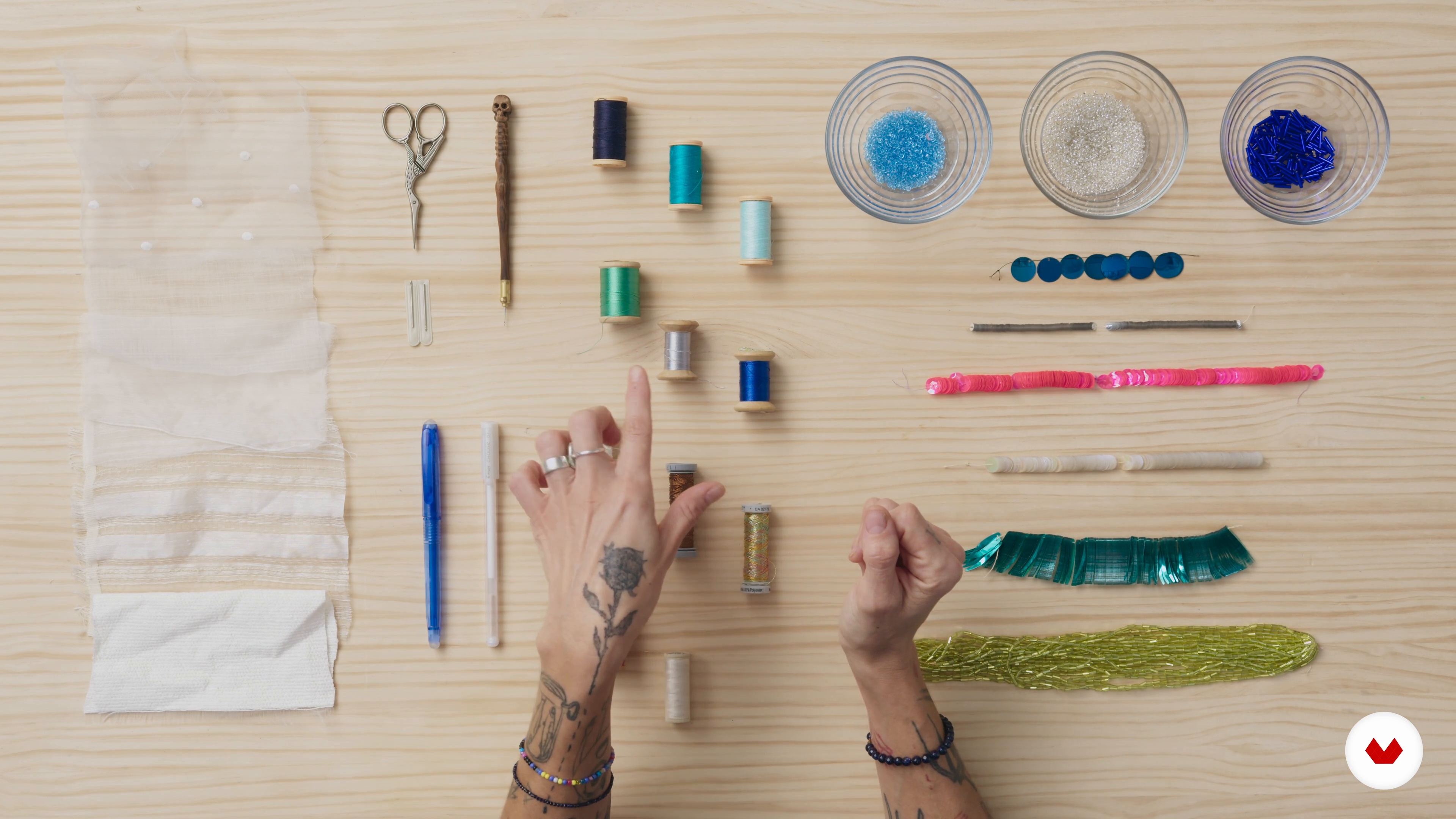
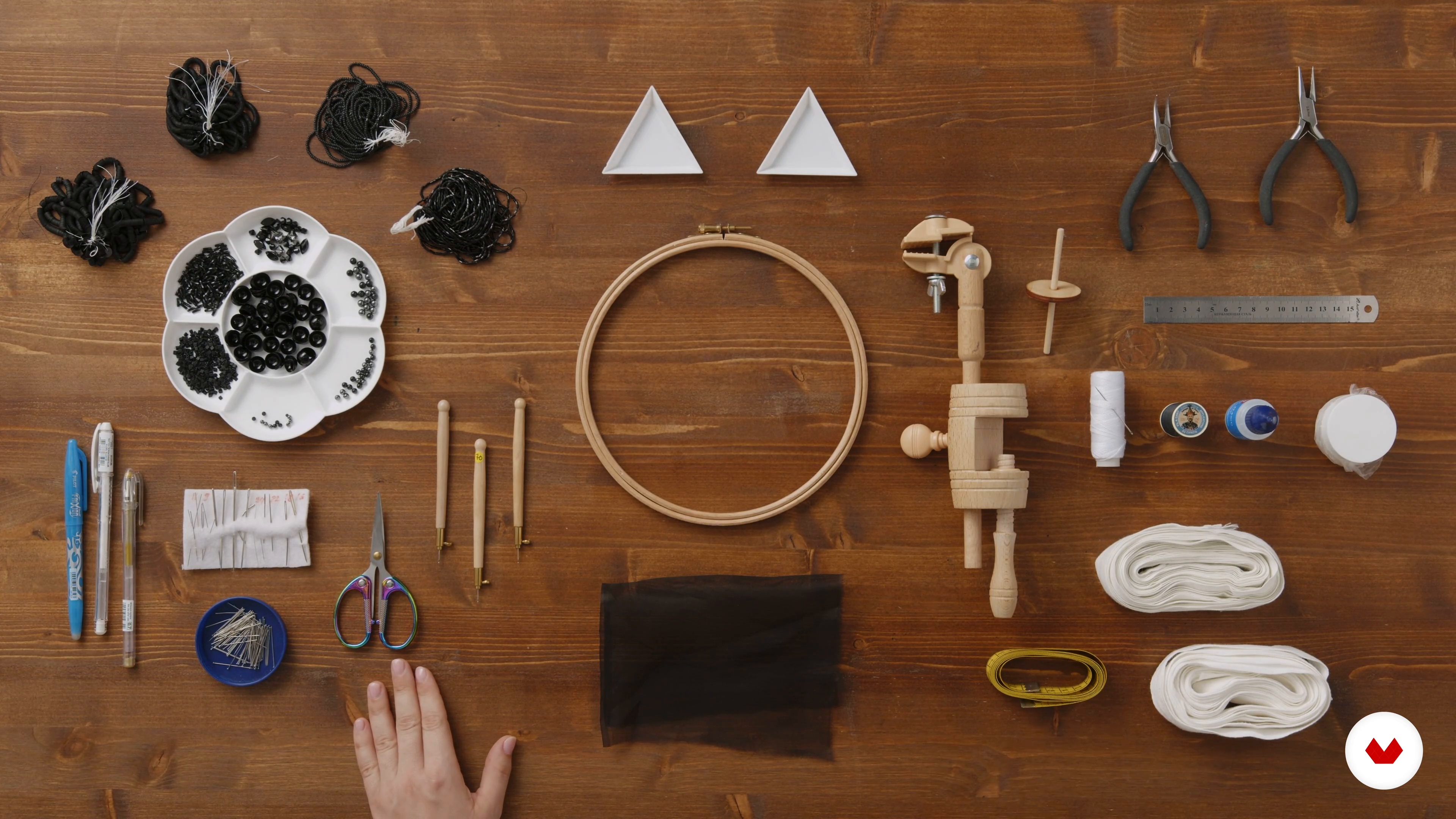
Here I’ll show you the materials you’ll need to complete the course and introduce all the different types of beads and sequins available so you can choose what you would like to work with. I’ll also talk about what you need to consider when choosing a garment to work on.
10m
image
4
Inspirations and Mark Making for Pattern Design
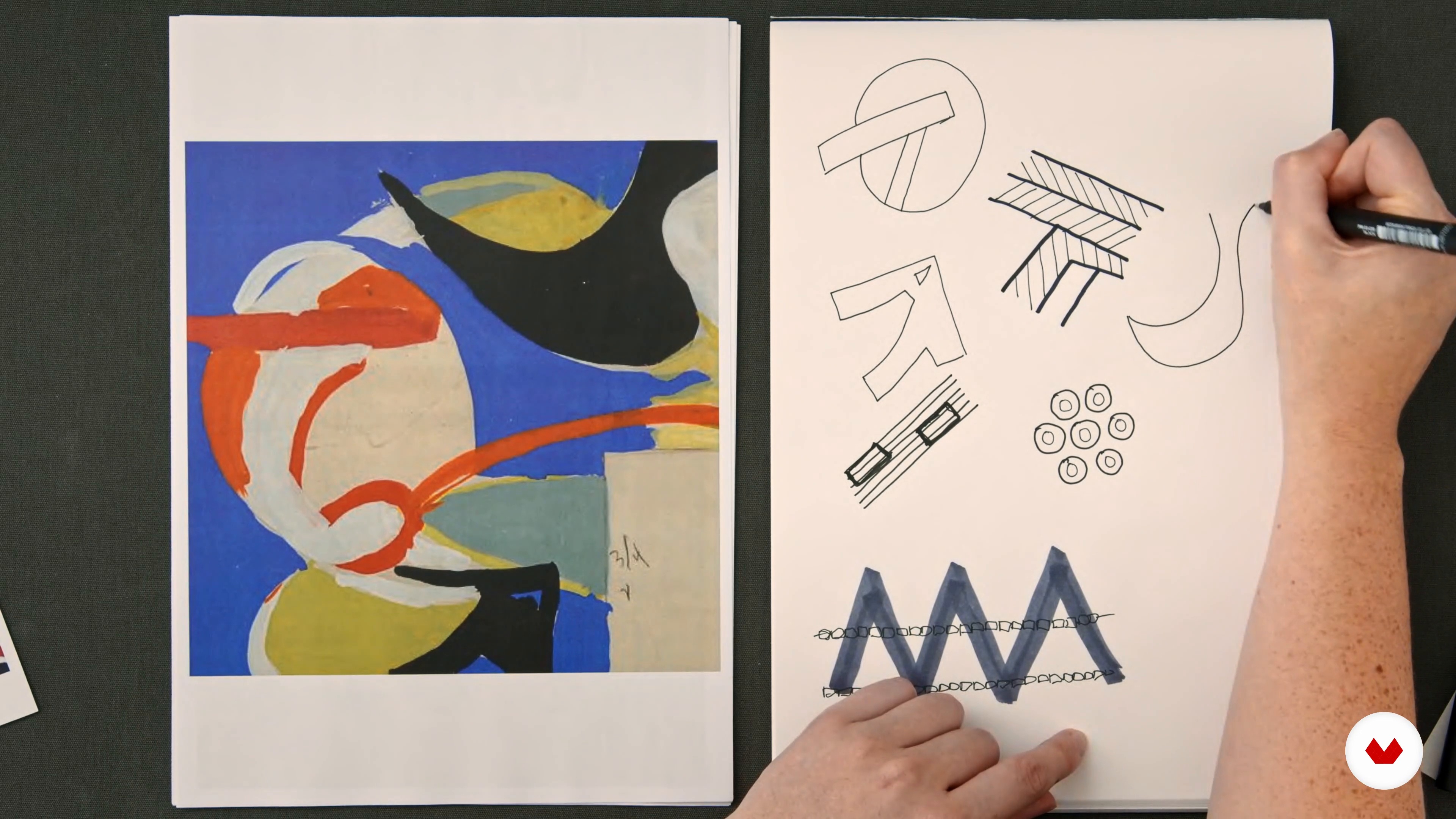
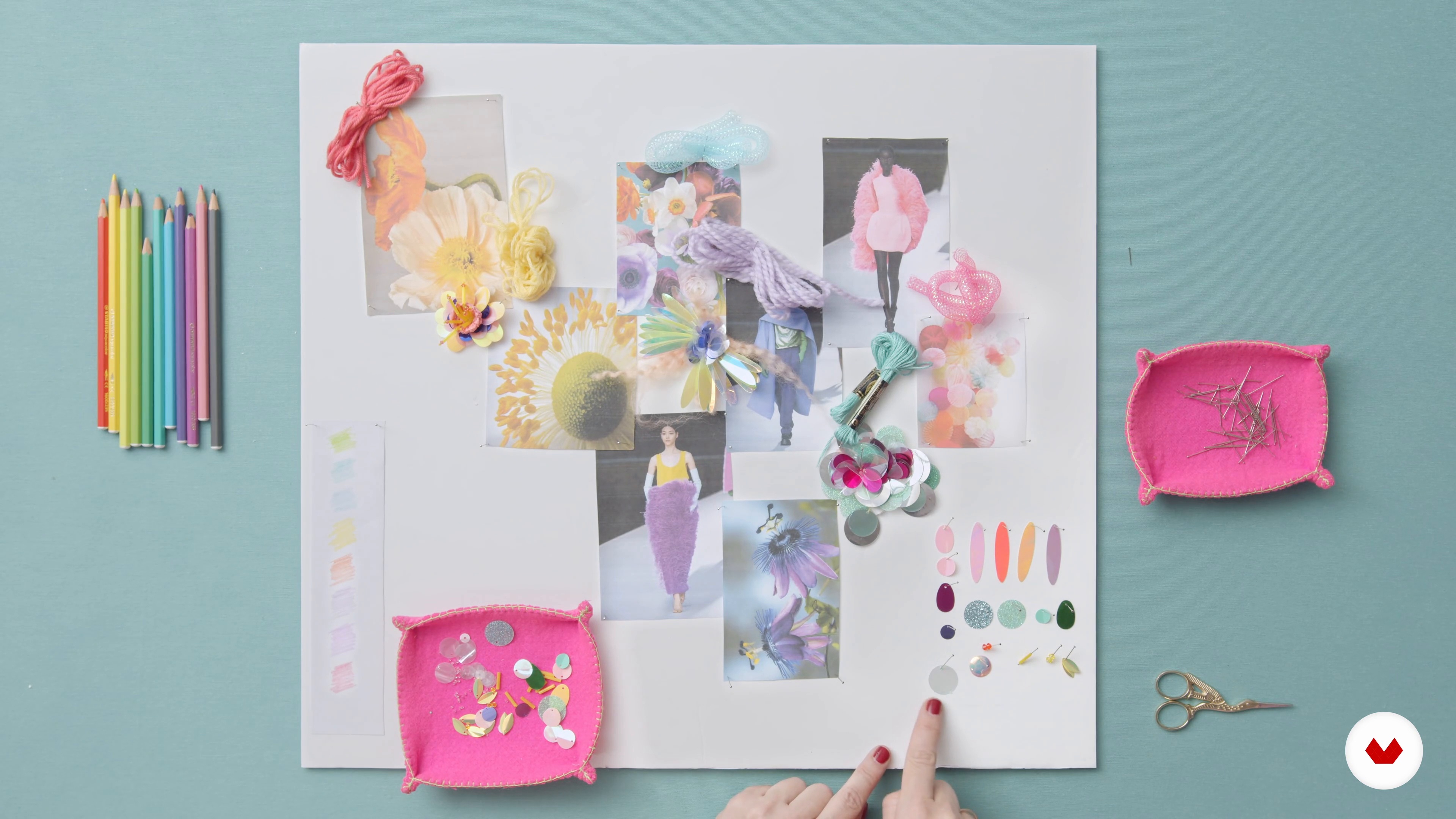
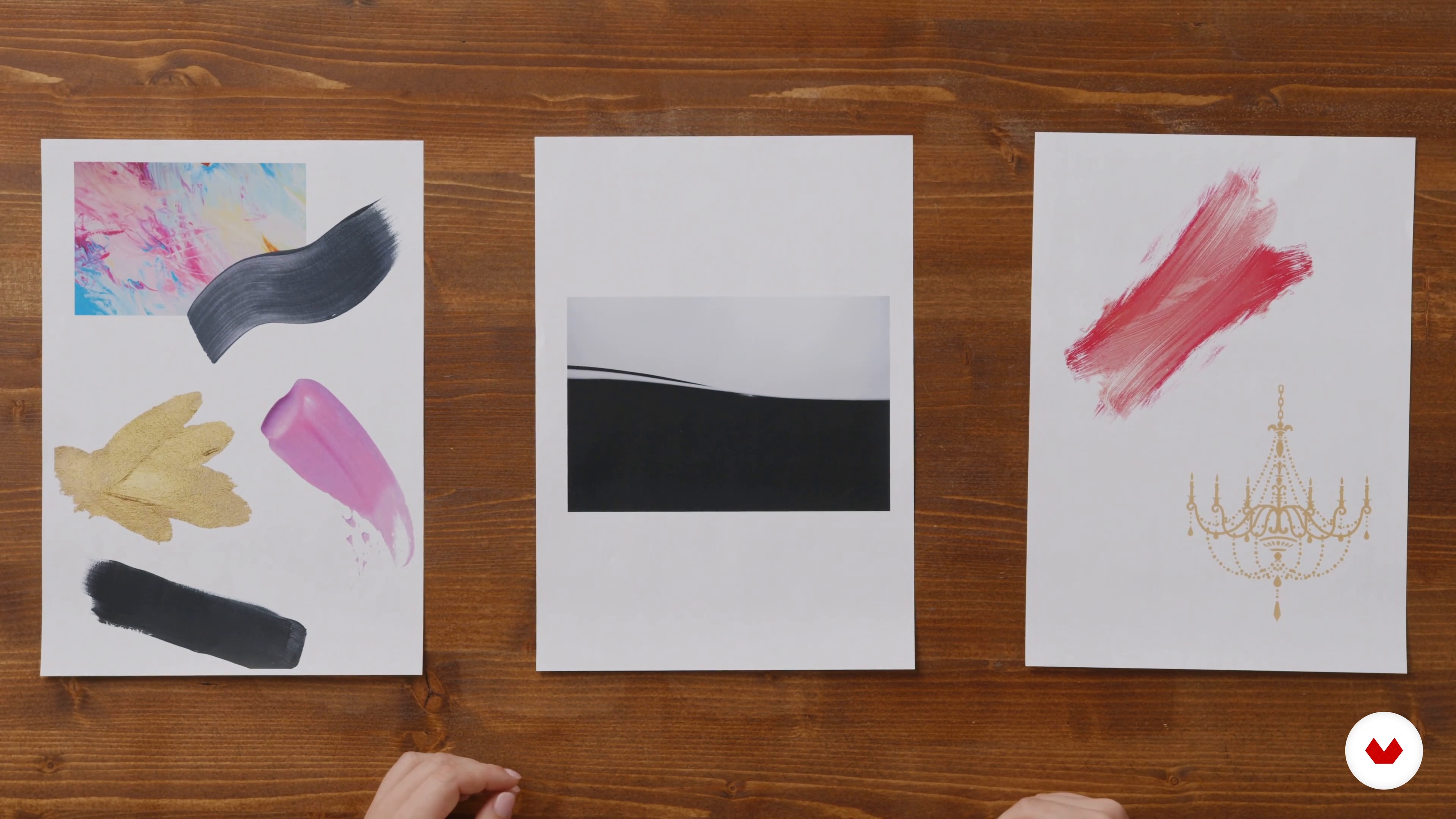
This lesson is all about how to get started with developing ideas for embroidery design. I’ll show you how I take inspiration images, extract colour and use mark-making to create patterns.
20m
image
5
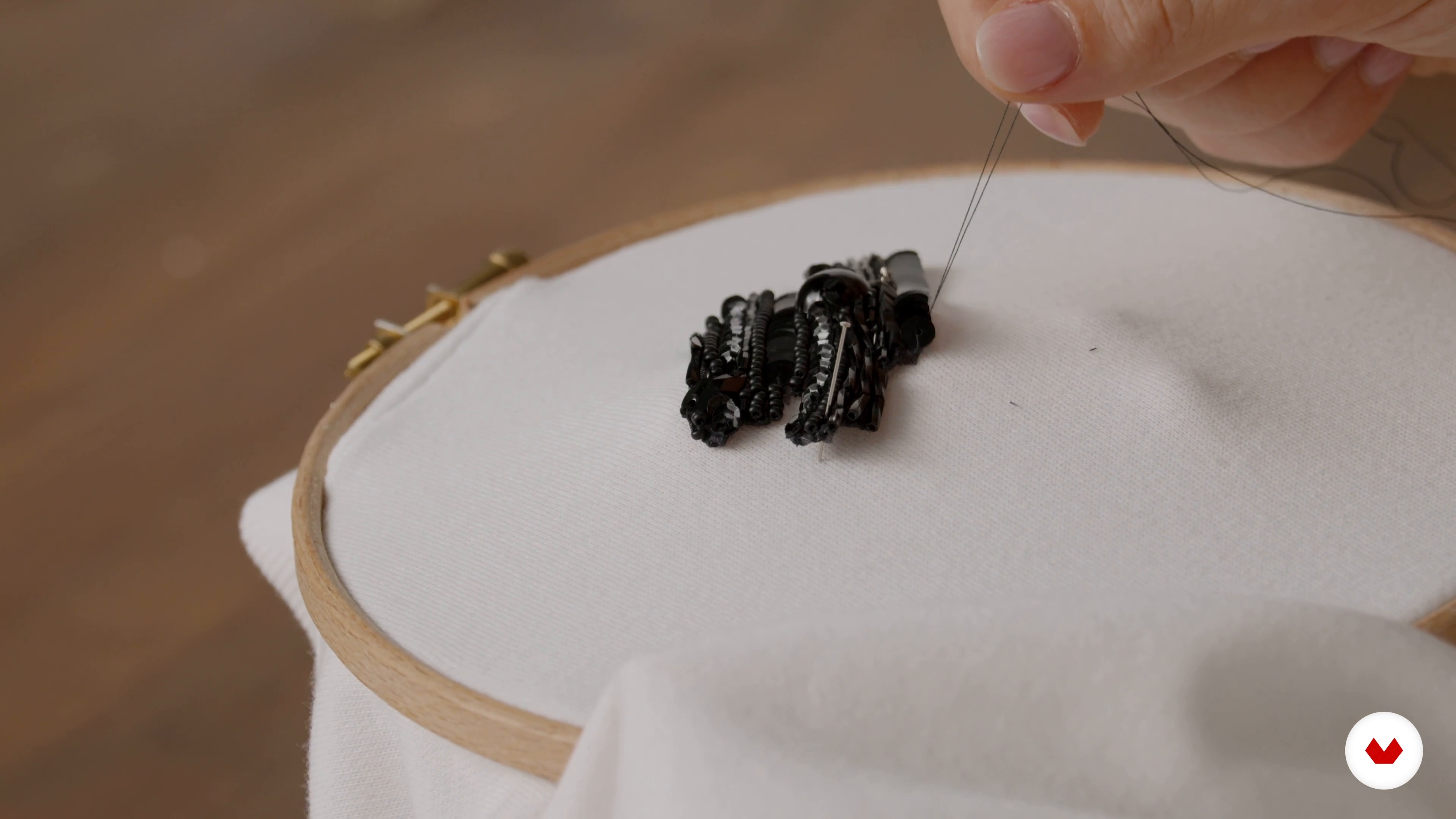
Basic Stitches: Seed Beads, Bugle Beads and Sequins 1
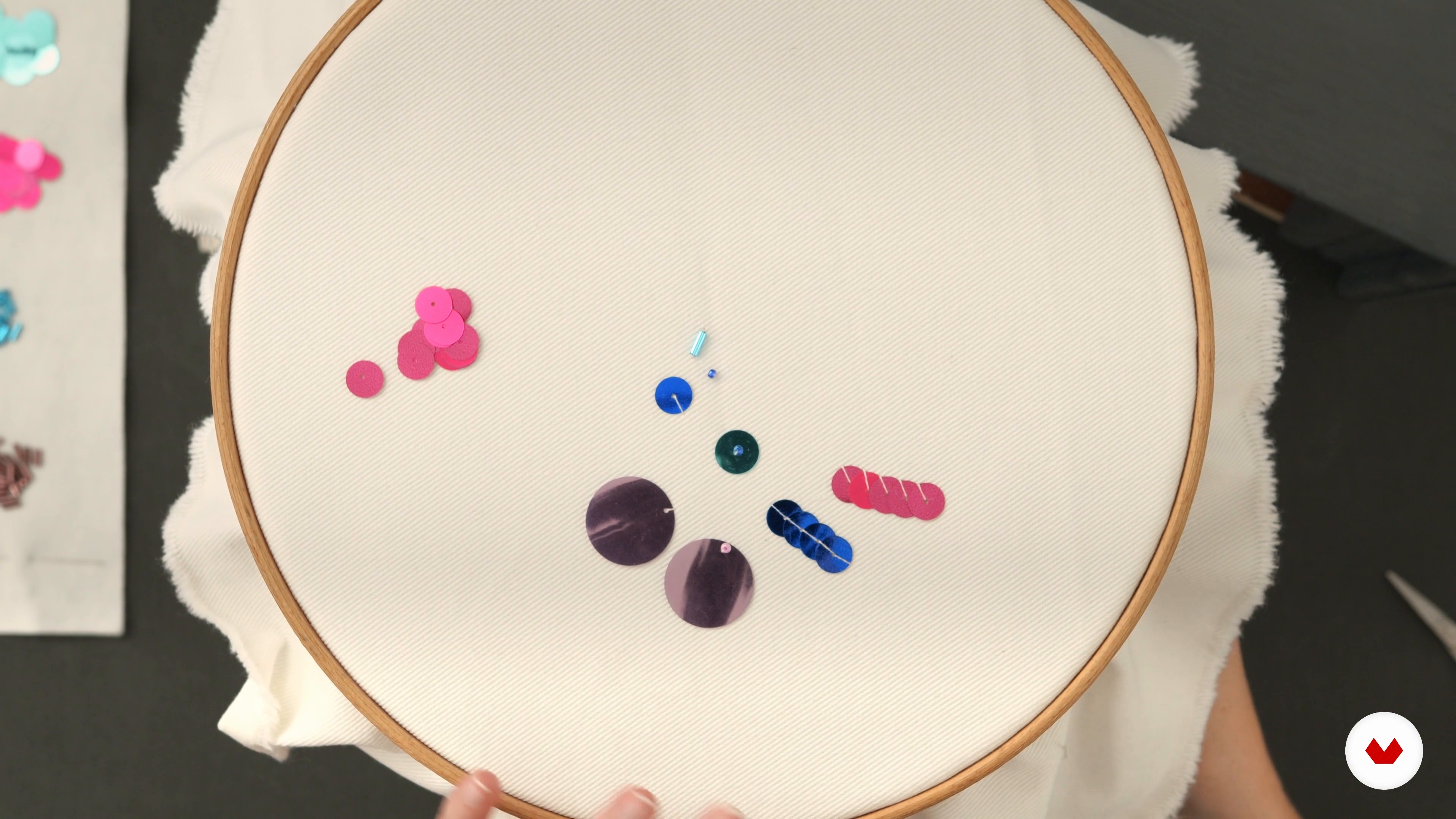
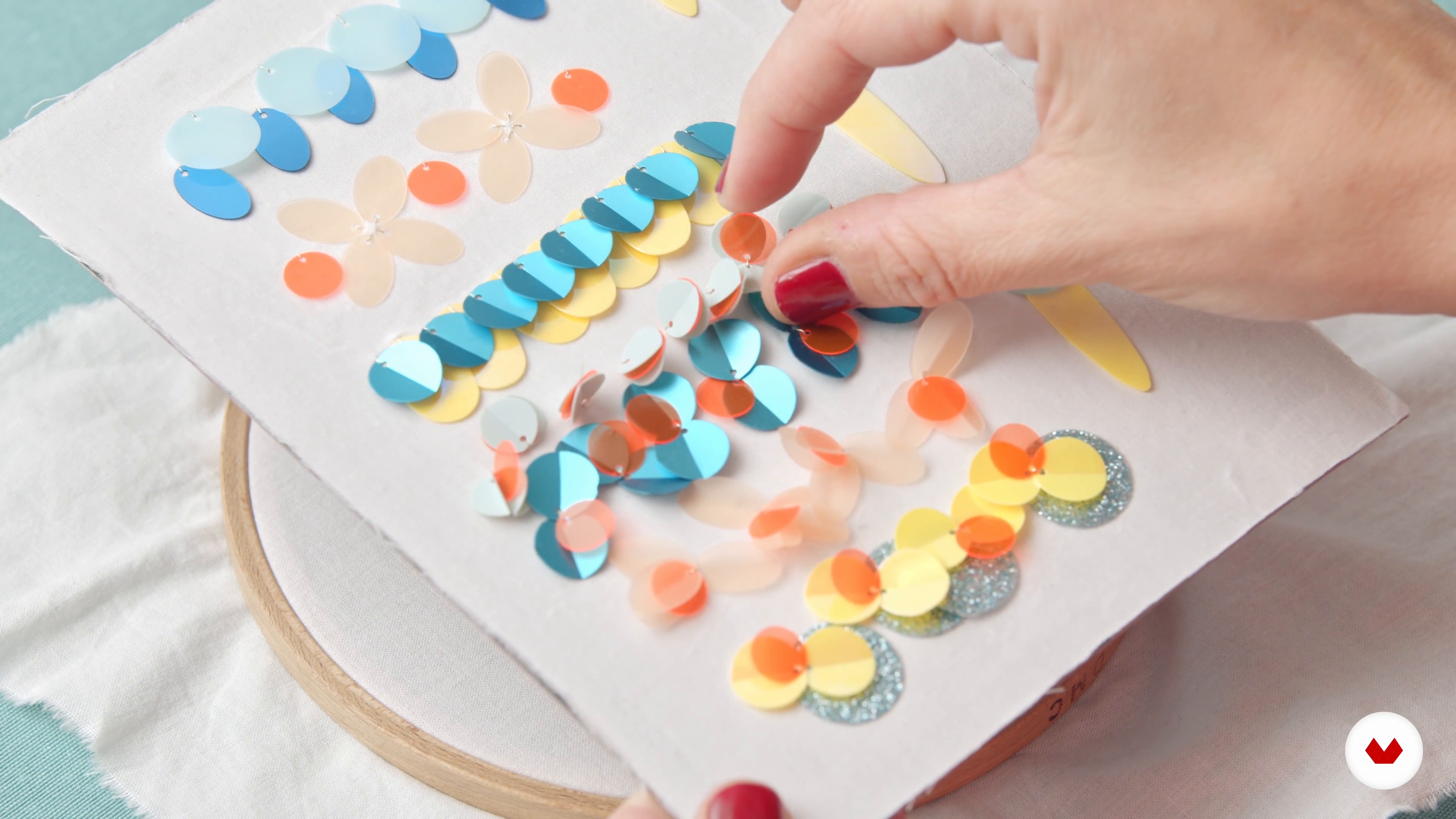
In this lesson, we’ll start embroidering some basic stitches and go through some techniques for attaching different types of beads and sequins onto fabric.
18m
image
6
Basic Stitches: Seed Beads, Bugle Beads and Sequins 2
In this second part of the lesson, we'll think about the colours we're going to use and how to combine them.
3m
image
7
Basic Stitches: Combined and 3D Embellishment
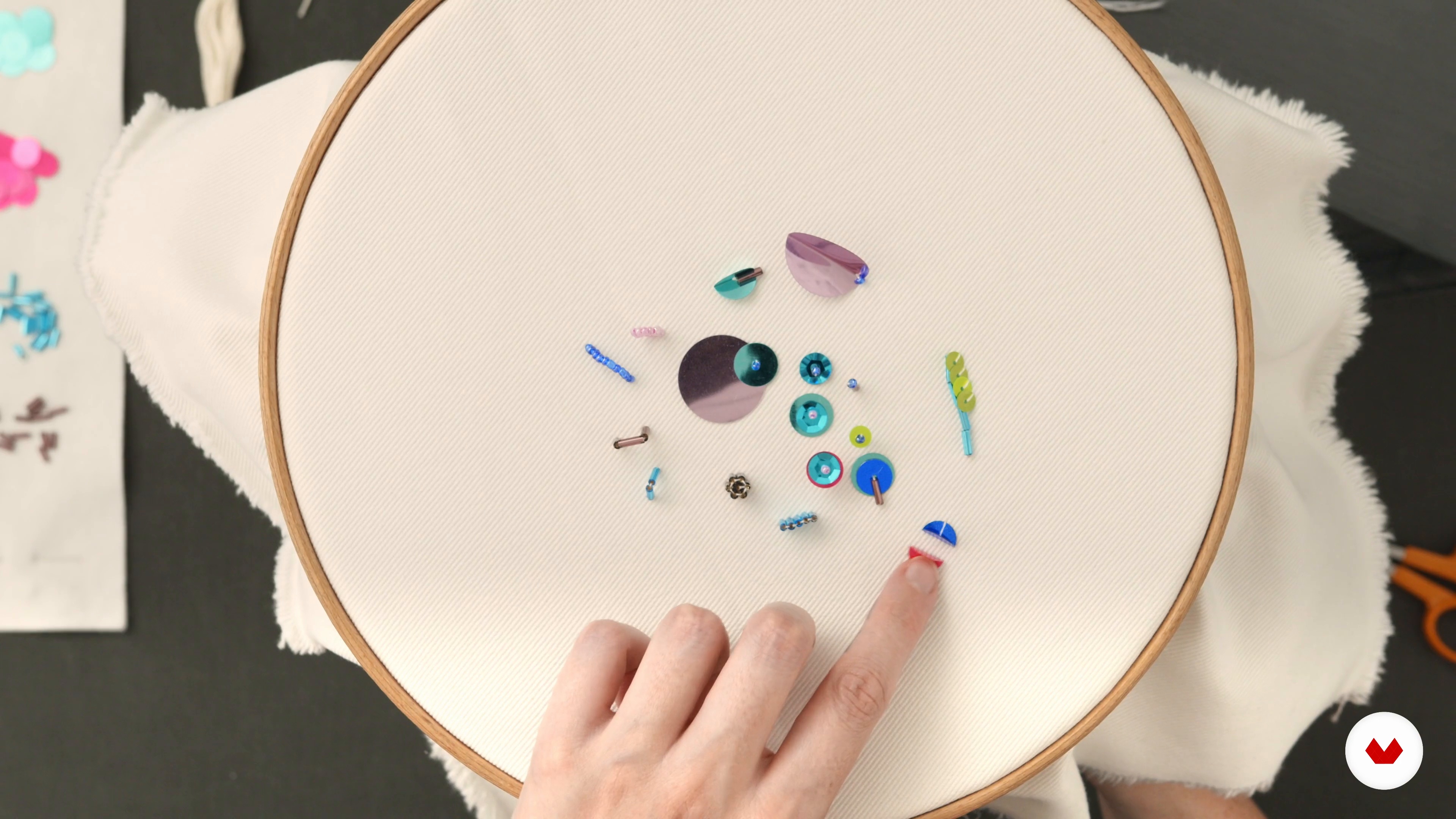
In this lesson, I’ll show you how to start working with combining sequins and beads together and introduce you to some 3D techniques.
14m
image
8
Design Your Embellishment 1
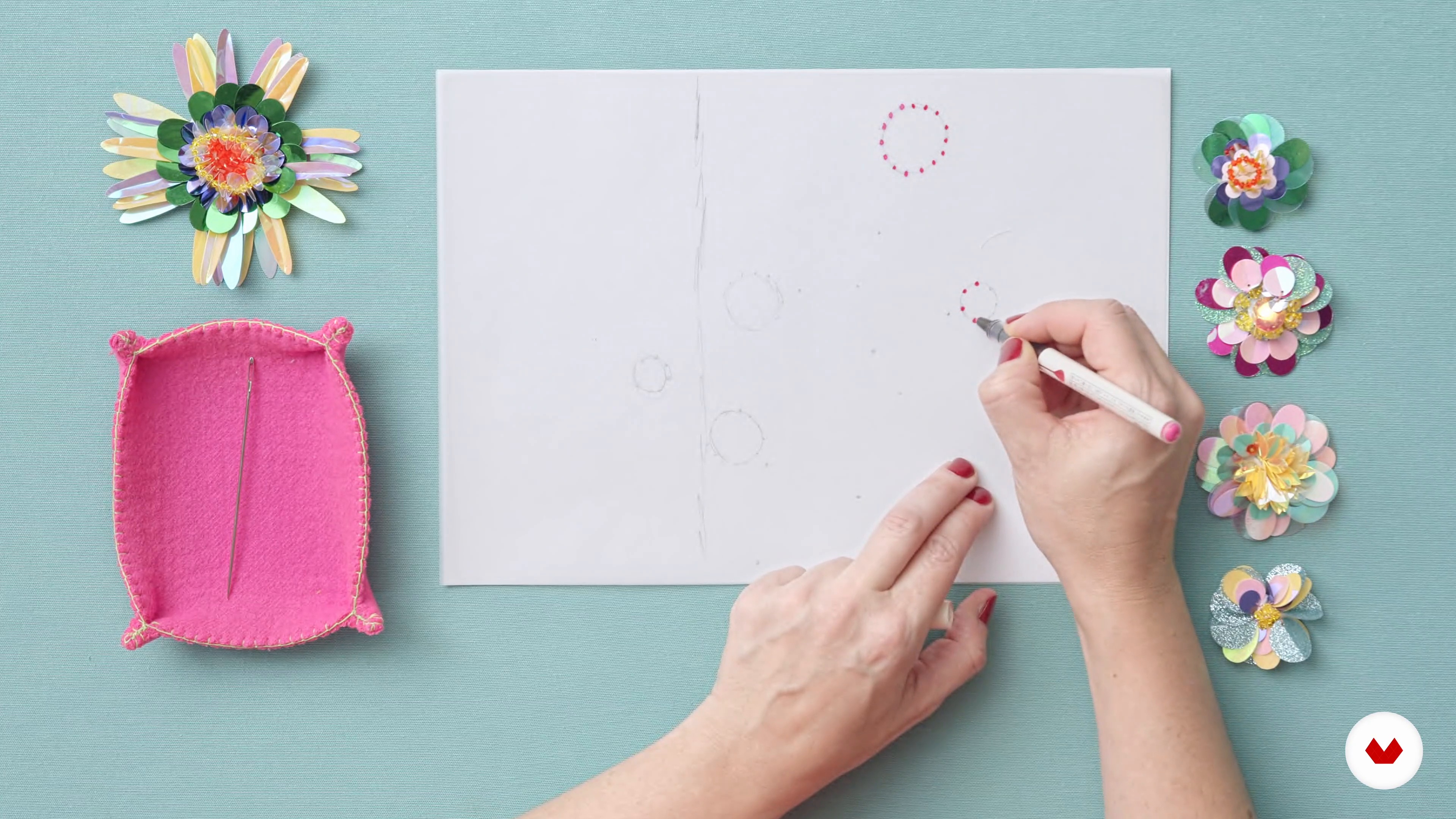
In this lesson, I’ll guide you through the process I use to design embellishments for garments. We’ll look at our mark-making and materials and make decisions about placement, whilst drawing out a design plan so we have it to refer back to once we’ve started.
14m
image
9
Design Your Embellishment 2
In this second part of the lesson, I'll choose the places where I'm going to put the beads and the sequins. I'll do it by picking the colours and sticking them together.
7m
image
10
Setting up Embroidery Hoops on Different Garment Placements
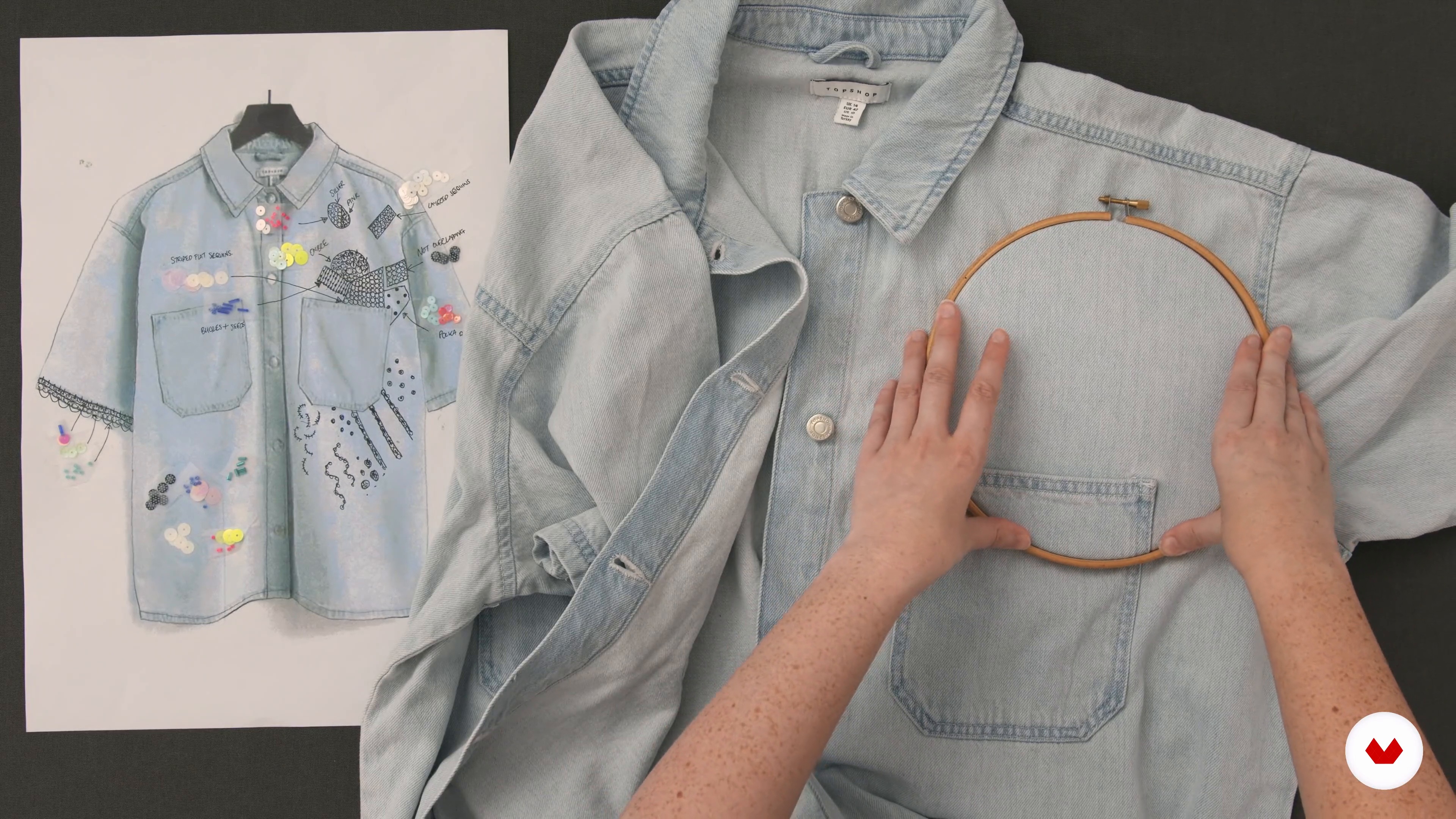
During this lesson, I’ll show you some different types of embroidery hoops and what works best for different areas of the garment. These will be: handheld embroidery hoop, table clamp embroidery hoop, and a larger embroidery frame.
14m
image
11
Solid Areas of Embellishment 1
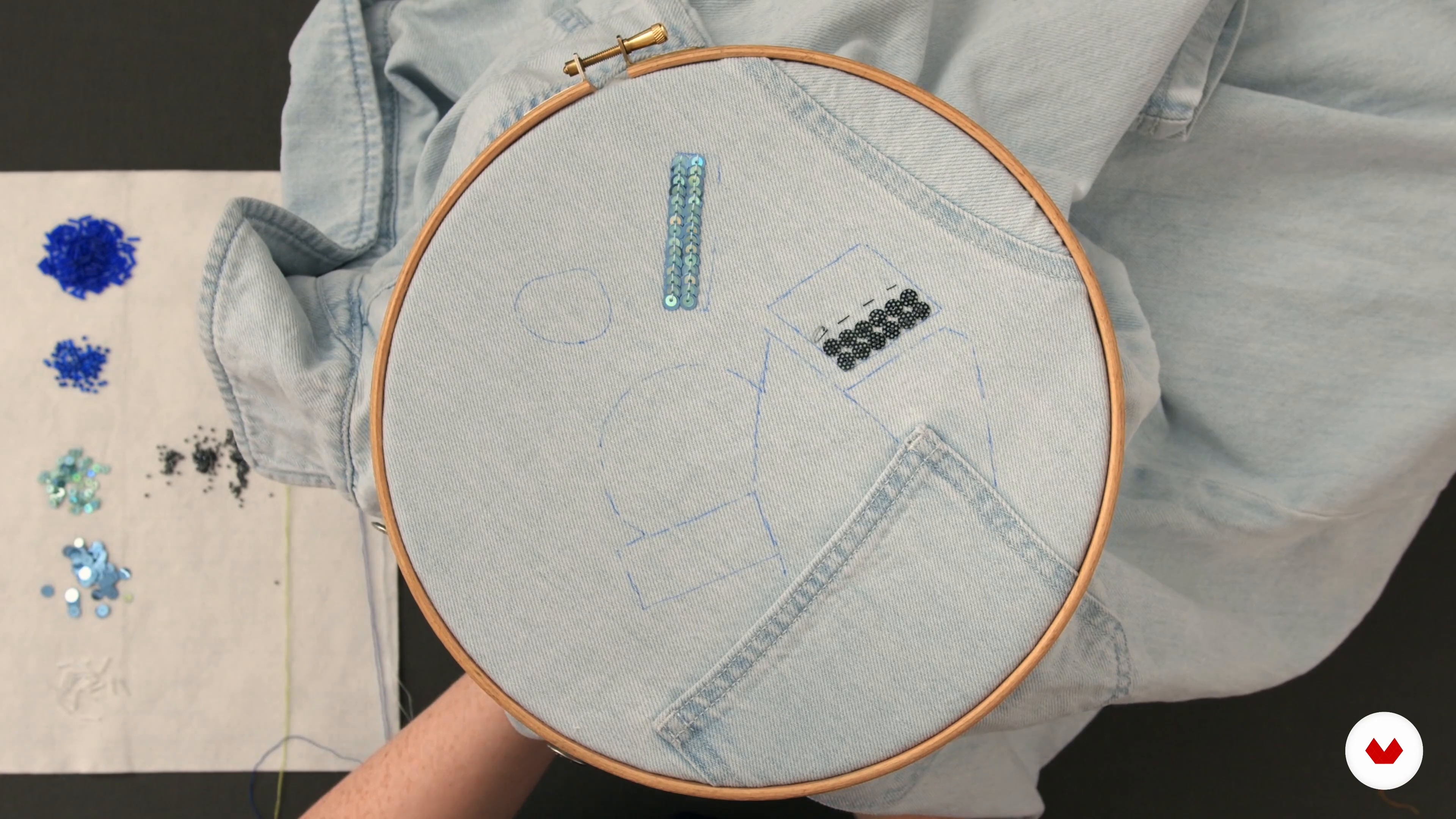
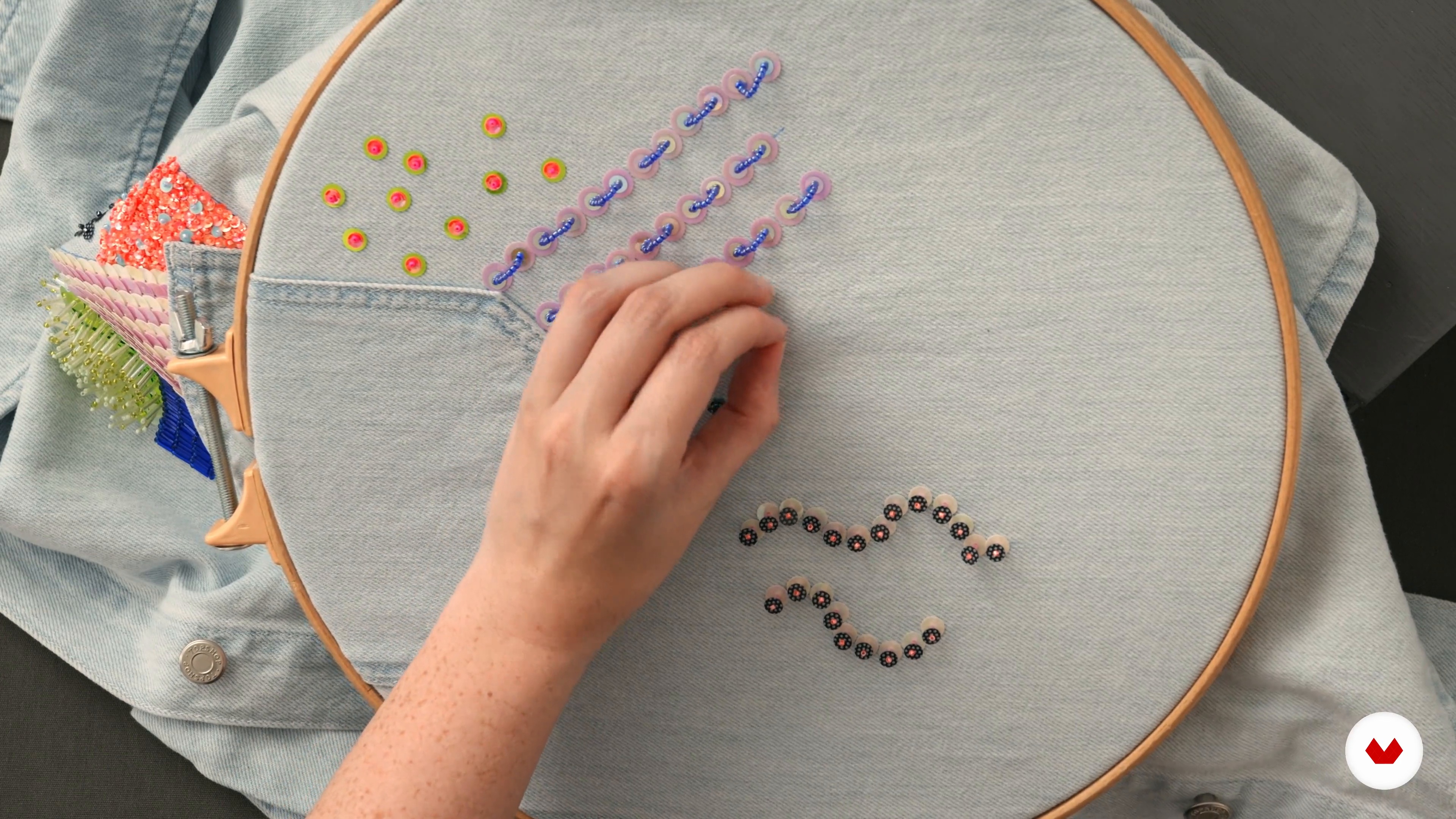
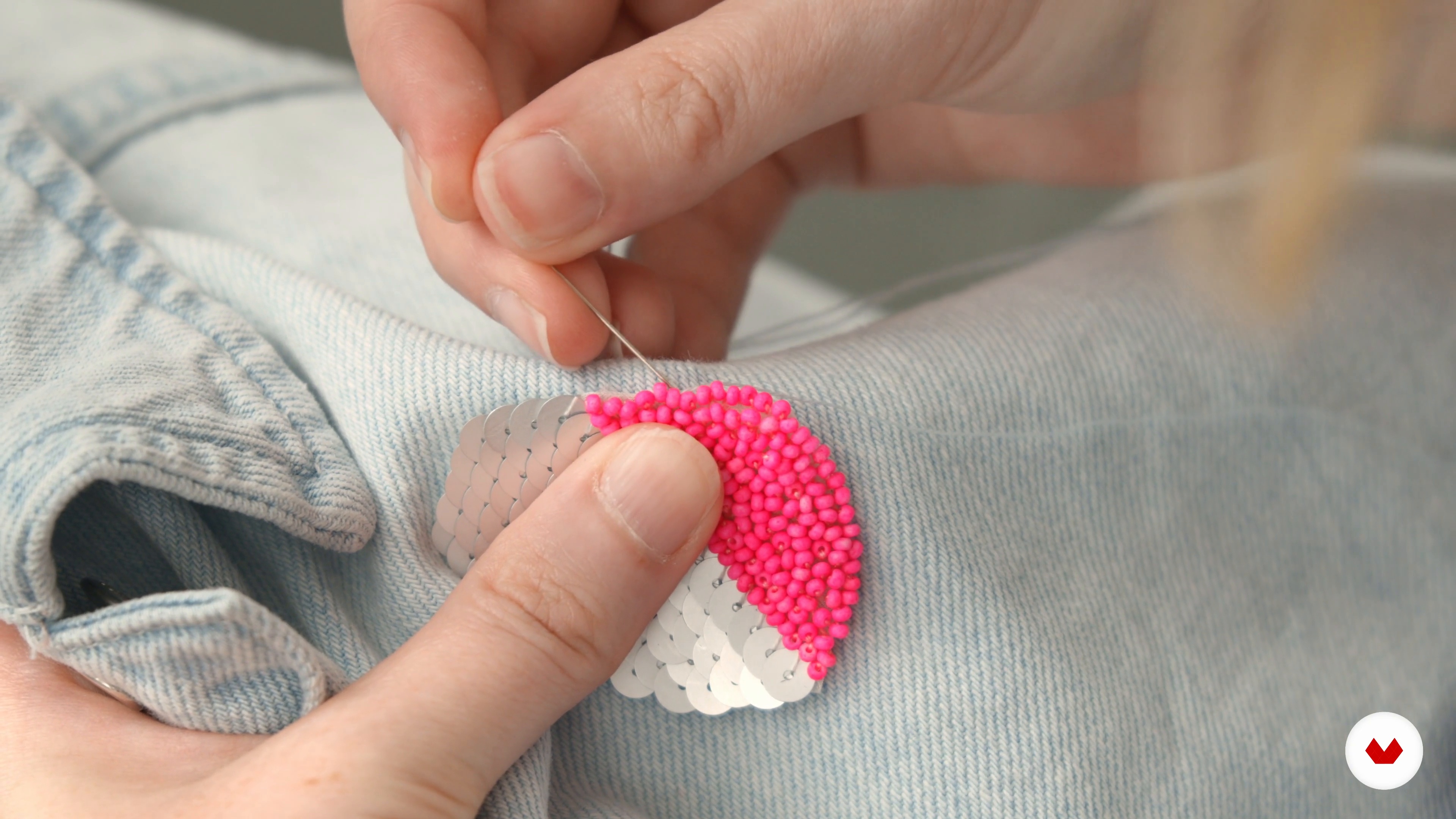
In this lesson, I’ll show you how to combine different materials and techniques together to create an area of solid embellishment on your garment.
16m
image
12
Solid Areas of Embellishment 2
In this second part of the lesson, I will use a mix of sequins, beagle beads, and seed beads for the last flat areas of the garment.
5m
image
13
Open 3D Embellishment
In this lesson, we’ll take some of the techniques we learnt in the unit "Getting Started with Embroidery and Embellishment," and apply different combinations to create an area of open 3D embellishment. We’ll refer back to our plans, but you can choose to be more freestyle here if you like.
16m
image
14
Edging Embellishment
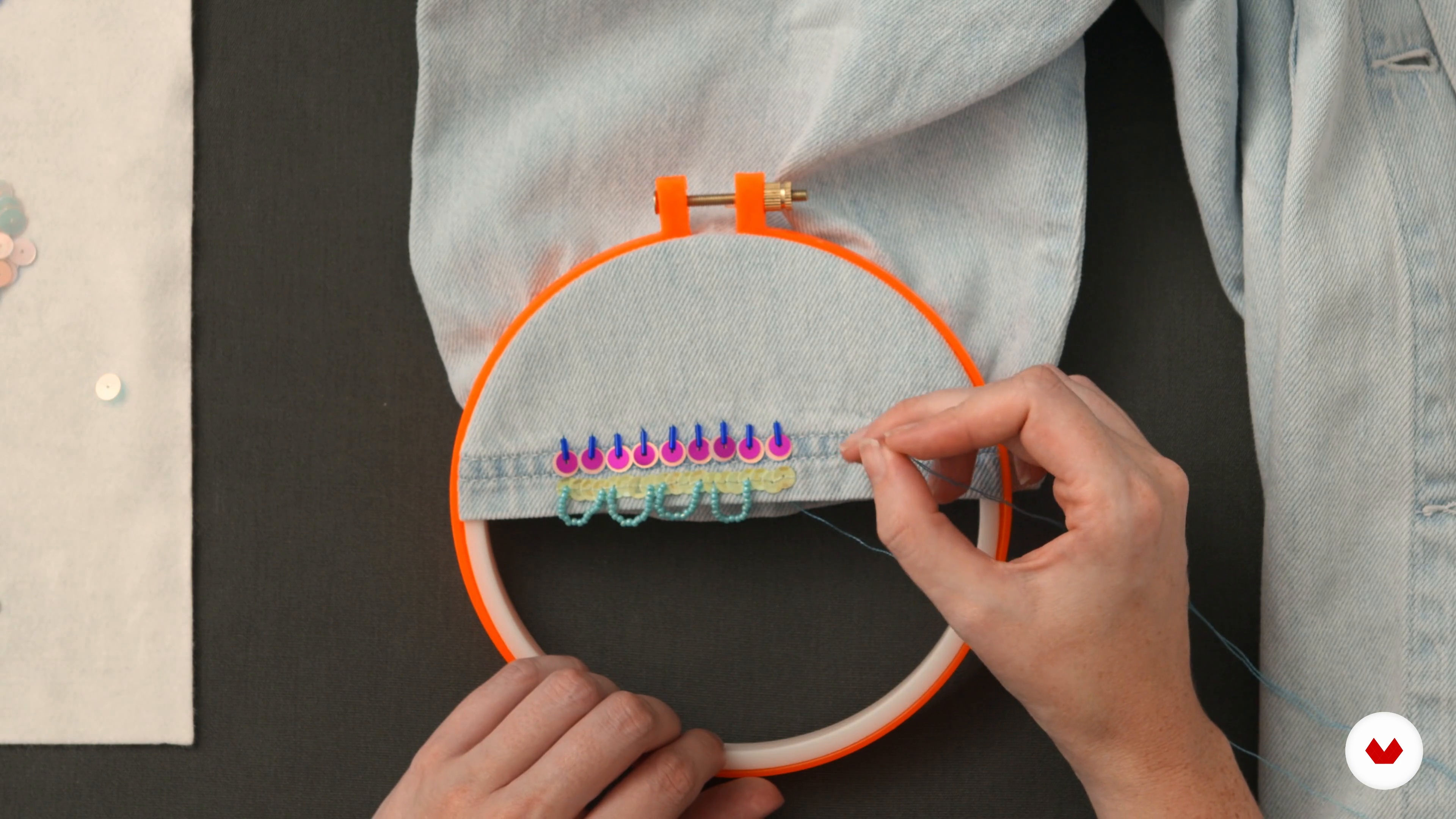
For this lesson, I’ll show some advancements on the 3D embellishments and create an edge finishing with beads and sequins including some fringing techniques.
12m
image
15
How to Make a Patch for Other Placements
In this lesson, I’ll show you how to make a separate embellishment, finish the edges, and how to stitch it directly to a garment, as well as how to turn it into a separate, detachable patch.
15m
image
16
Caring for Your New Pieces
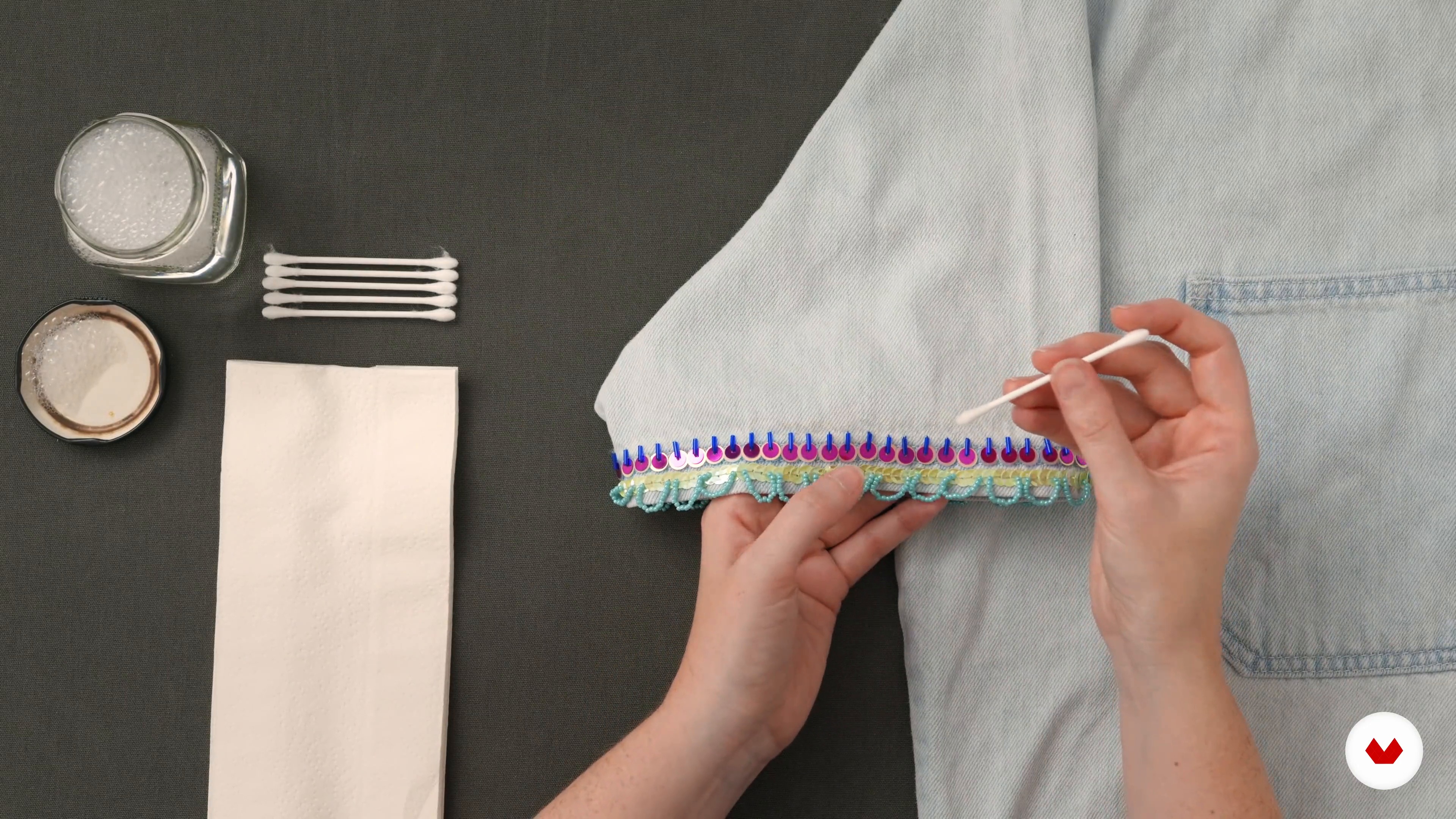
For this lesson, I’ll talk through some good after-care techniques for your embellishments, including cleaning and fixing.
7m
image
3
Materials
I will start by showing you the materials that are usually used to make an embroidery, I will show you different modalities and characteristics.
2m
image
4
Different compositions
In this lesson I am going to show you embroidery samples with very different compositions. You will see textures, motifs, set and positioned. I will show you examples of both geometric and organic compositions.
5m
image
5
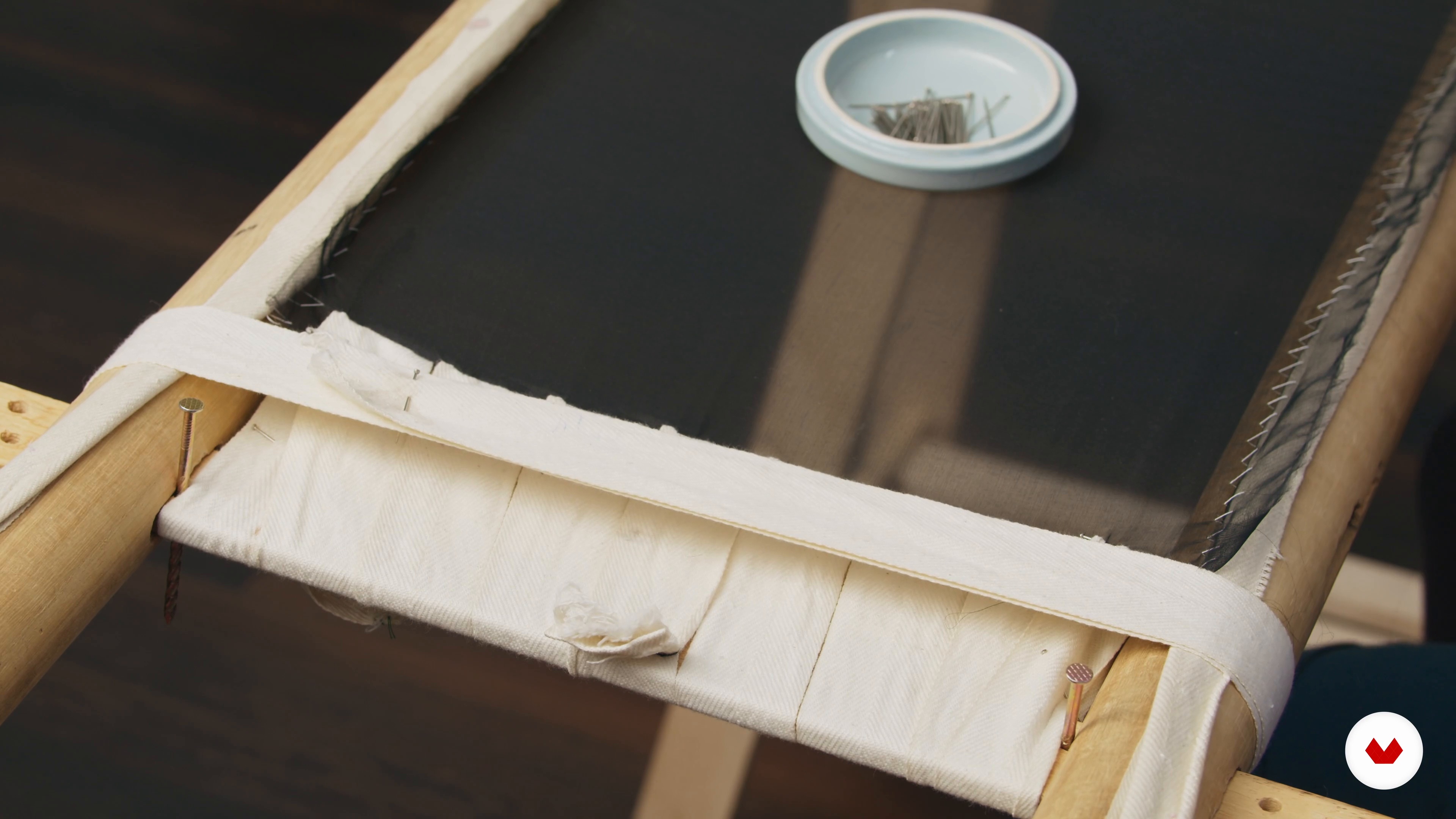
Assemble the frame
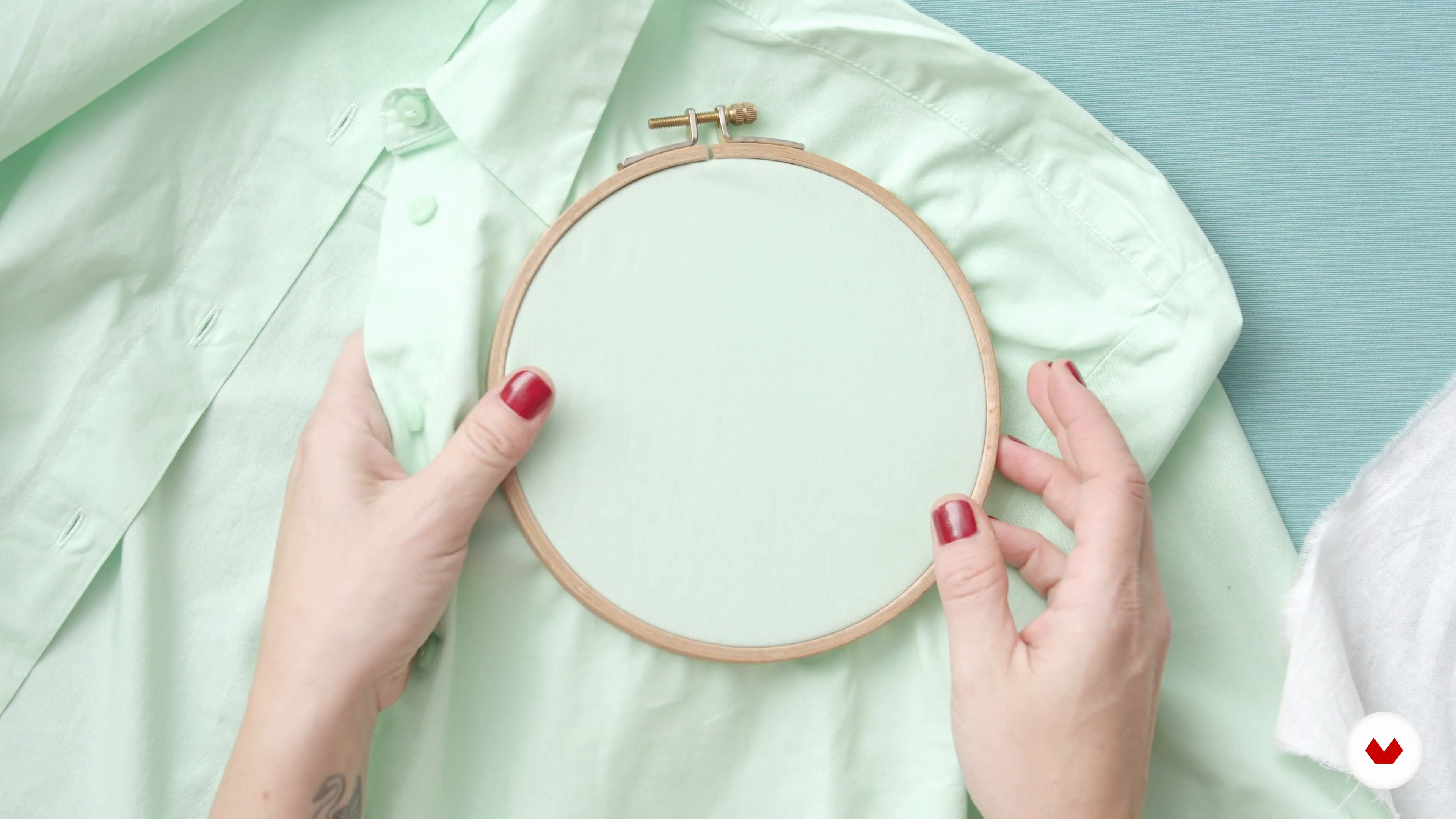
Here you will learn how to mount a standard rack, I will share my tricks to achieve the right tension.
3m
image
6
Embroidery with rhinestones: sequins
It is time to enter the world of embroidery with rhinestones and you will start learning to work with sequins.
18m
image
7
Embroidery with rhinestones: beads
Here you will learn to sew the beads individually, it may seem simple, but it has many possibilities!
7m
image
8
Embroidery with rhinestones: crystals
In this lesson you will learn how to work with Swarovski crystals individually.
9m
image
9
Embroidery with rhinestones: beads
The turn of the mostacilla has arrived, you will see how to achieve 3D effects using only this element.
8m
image
10
Mixing materials
In this lesson I will delve into beaded embroidery and its variant techniques. I will teach you how to mix the pieces explained above to achieve 3D effects full of nuances of shapes and colors.
20m
image
11
Looking for inspiration and selection of materials
In this lesson I will show you how I look for inspiration to develop my embroidery. I will share my secrets and tricks to get the best out of your idea and transmit your own style.
16m
image
12
Composition
Next I will explain the process to follow so that you arrive at your final composition.
10m
image
13
Creation of the embroidery template
In this lesson I will explain how to create your embroidery template. I will show you the techniques and materials needed to do it.
9m
image
14
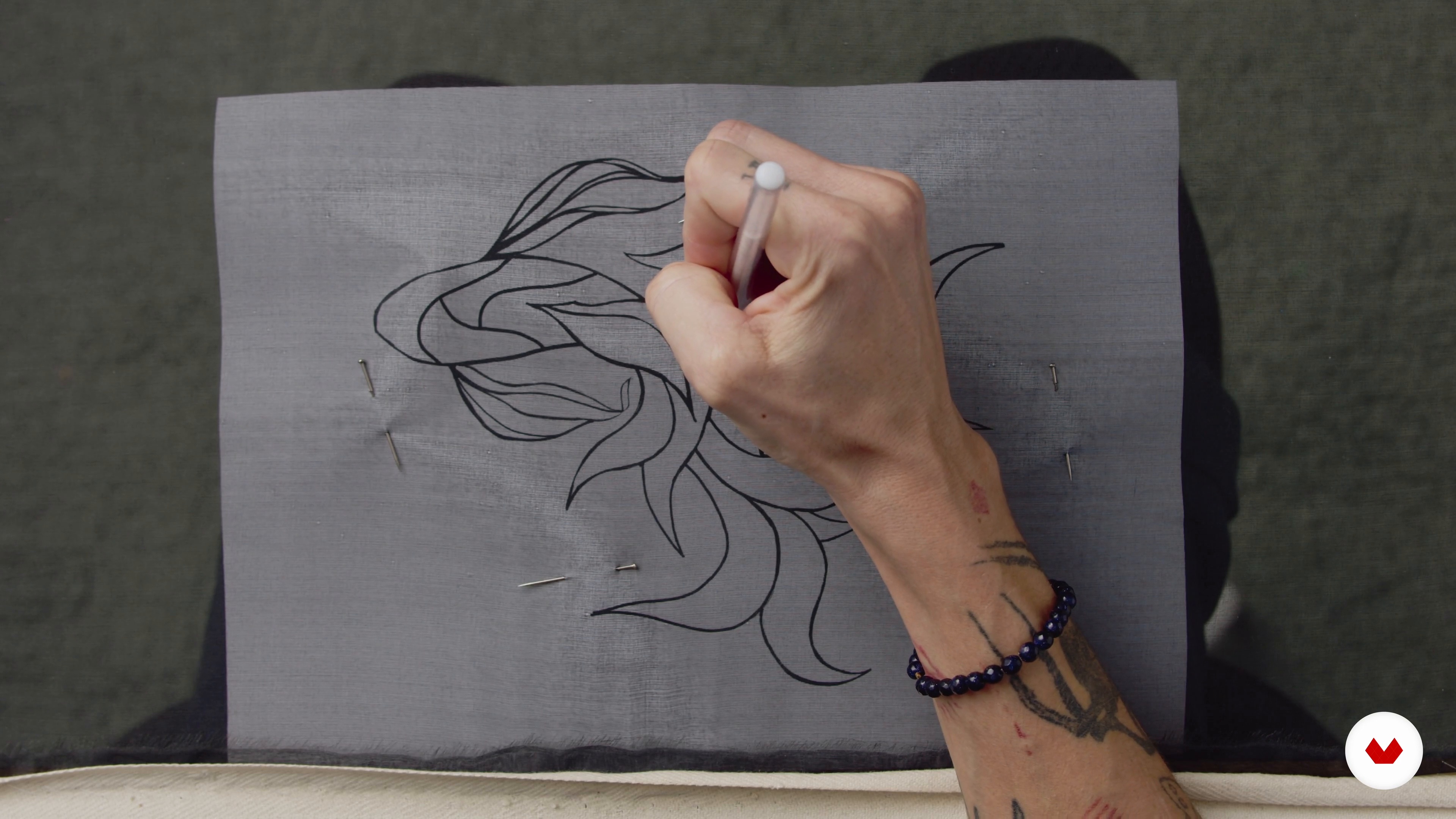
Transfer to fabric
I will teach you how to transfer your design to any surface.
6m
image
15
Embroidery 1
In this lesson I will teach you how to embroider the final composition on the surface that you have previously marked with the template.
15m
image
16
Embroidery 2
Now I will embroider the next four flowers in a frame.
17m
image
17
Embroidery 3
Join me to embroider the fifth and last flower.
19m
image
18
Finish and details
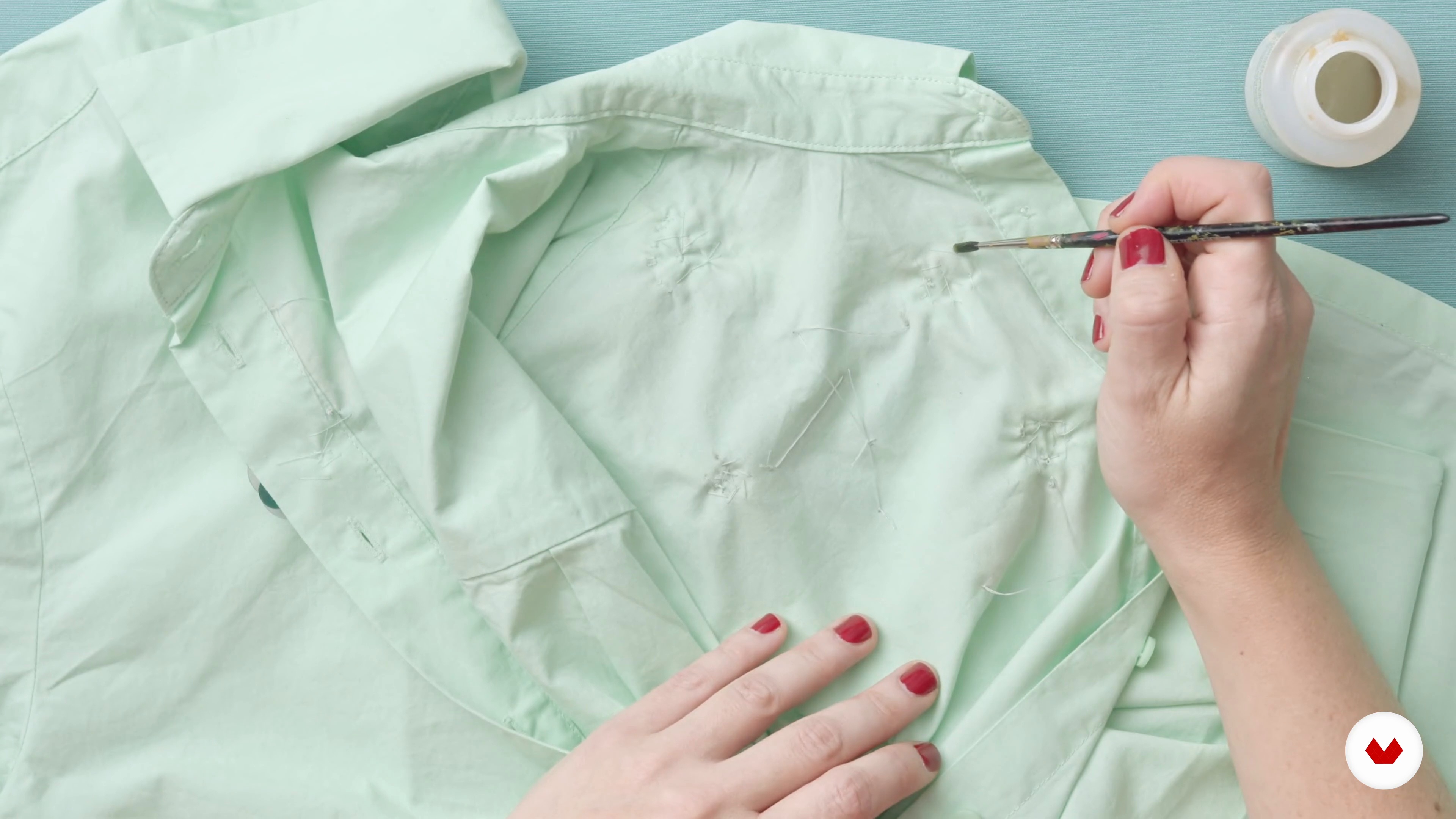
In this lesson I am going to teach you the tricks to finish an embroidery well: how to make the knots well so that they do not come undone and how to reinforce the knots with gum arabic or glue.
3m
image
19
Garment care
Finally, I am going to share some tricks to take good care of the embroidery and that it lasts over time. I will tell you about how to wash the garment so that the embroidery does not get damaged.
2m
image
3
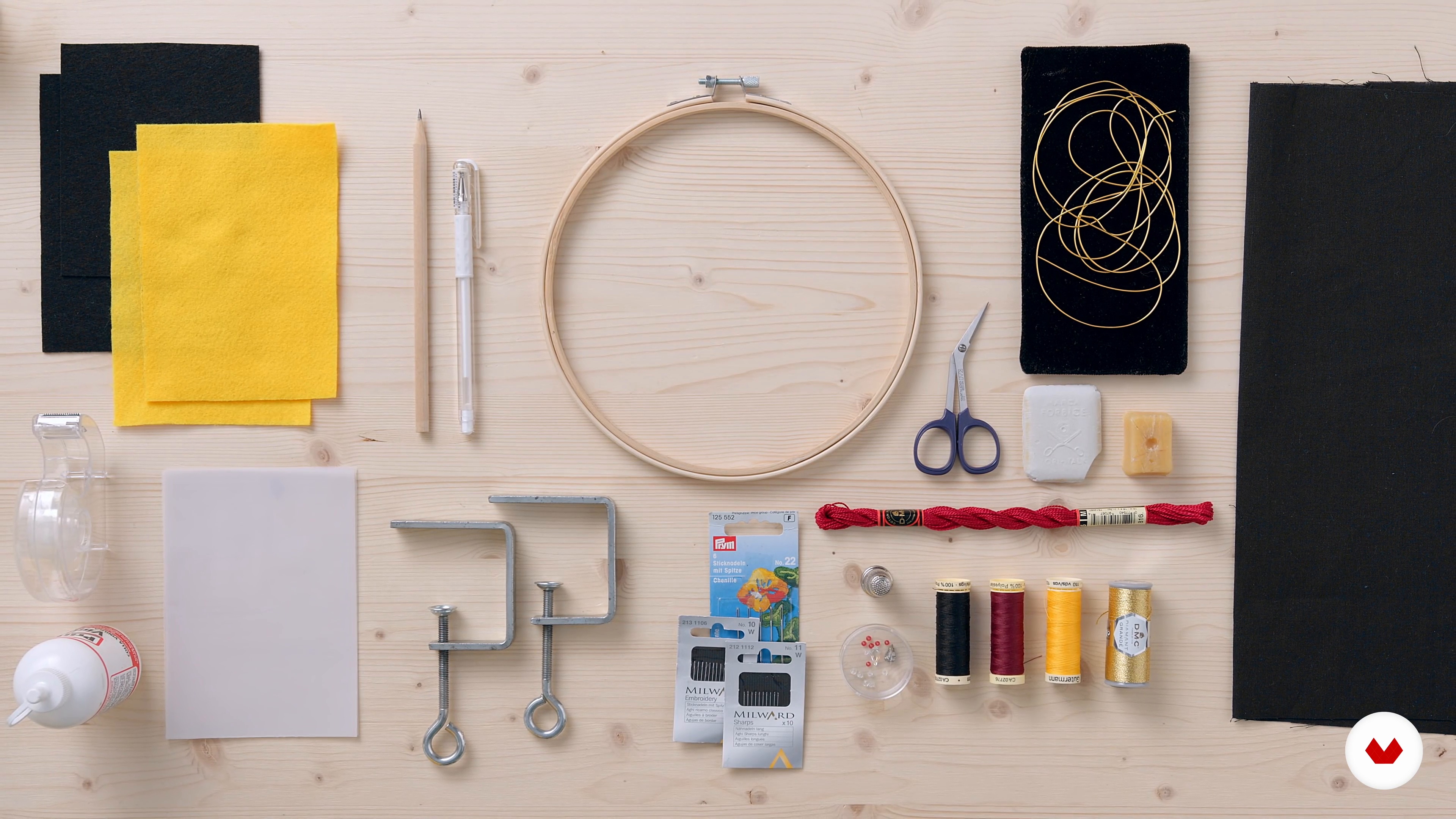
The materials
Let's find out together the materials of the gold embroidery and those we will use in our final project.
6m
image
4
Frame and padding 1
In this lesson, we will see how to create the perfect felt padding, so that we have the perfect base for our embroidery.
10m
image
5
Frame and padding 2
Let's continue with the padding of our frame. I will also give you some tips to get the best possible result and different effects.
12m
image
6
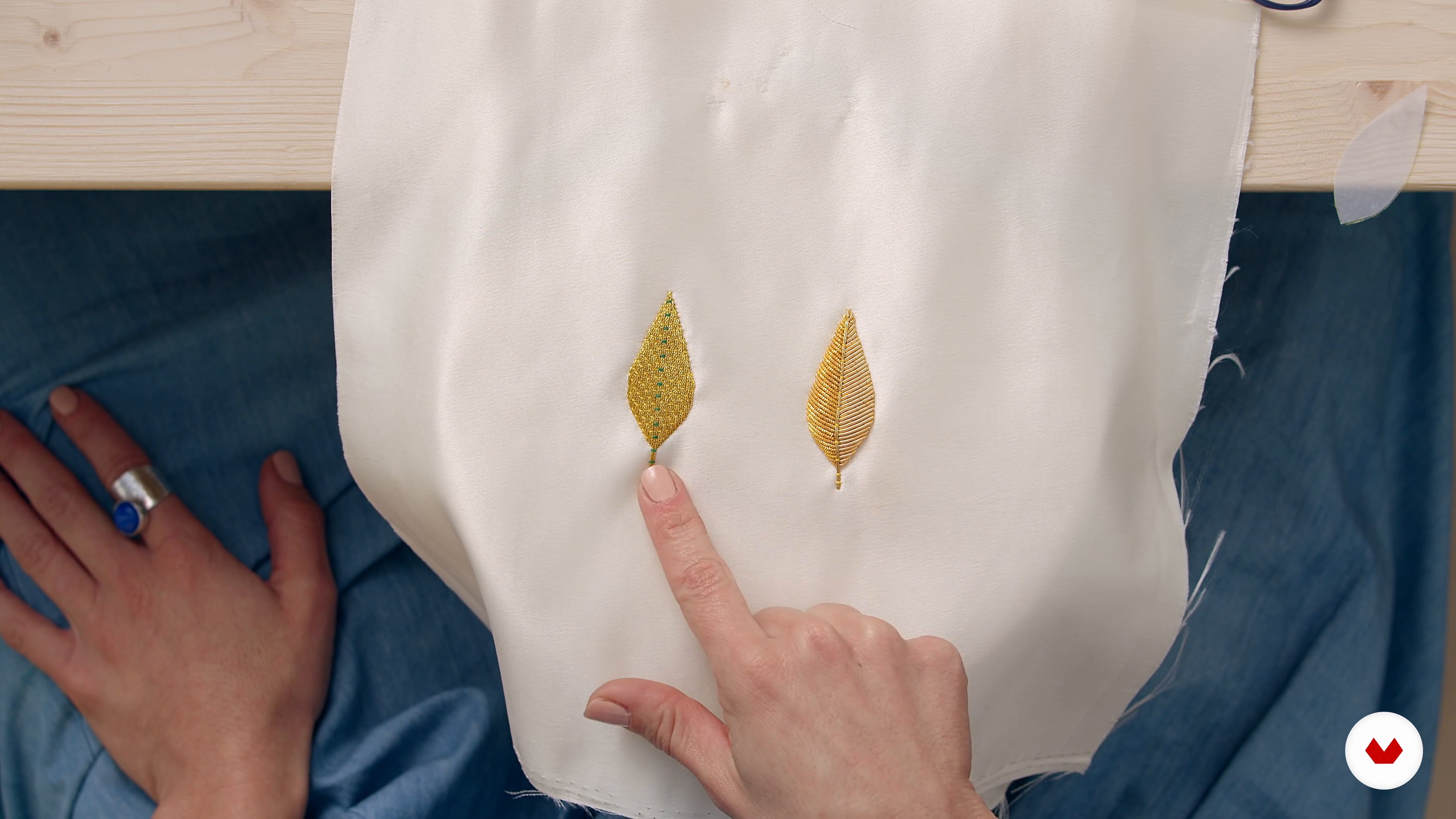
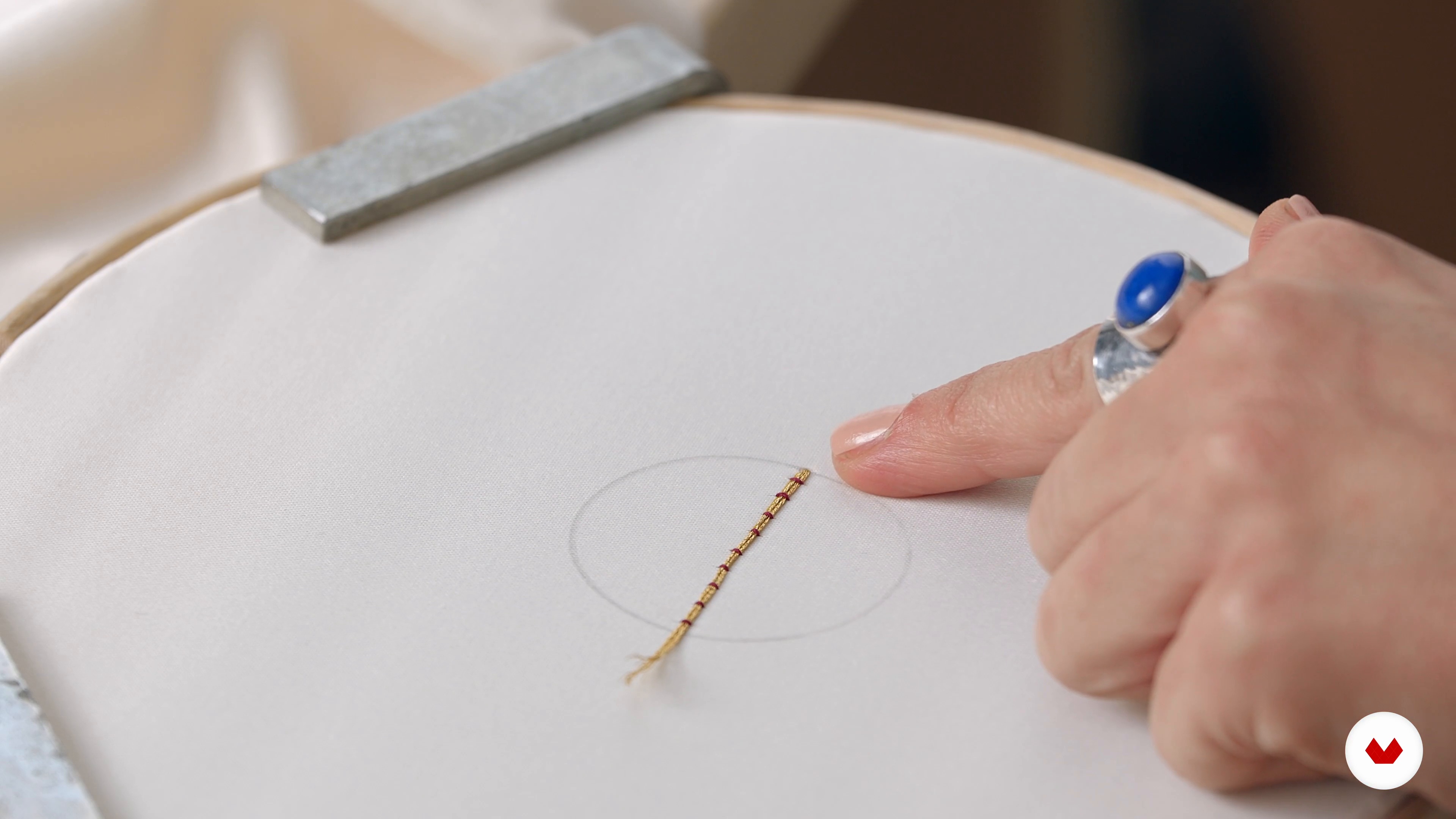
Sewing gold technique
Now, I will tell you how to embroider with gold thread with the gold sewing technique. You will need it to embroider a line and also to fill a surface.
19m
image
7
Revisiting the technique 1
In this lesson, I'll show you how to revisit the gold sewing technique using colored cotton yarn instead of gold yarn.
11m
image
8
Revisiting the technique 2
Let's continue with the embroidering of the rest of the circle and see how to combine cotton threads with gold ones.
11m
image
9
Traditional embroidery with tinsel
To wrap up this unit, I'll tell you how to use tinsel to embroider a small padded area with felt.
18m
image
10
Preparation of the frame
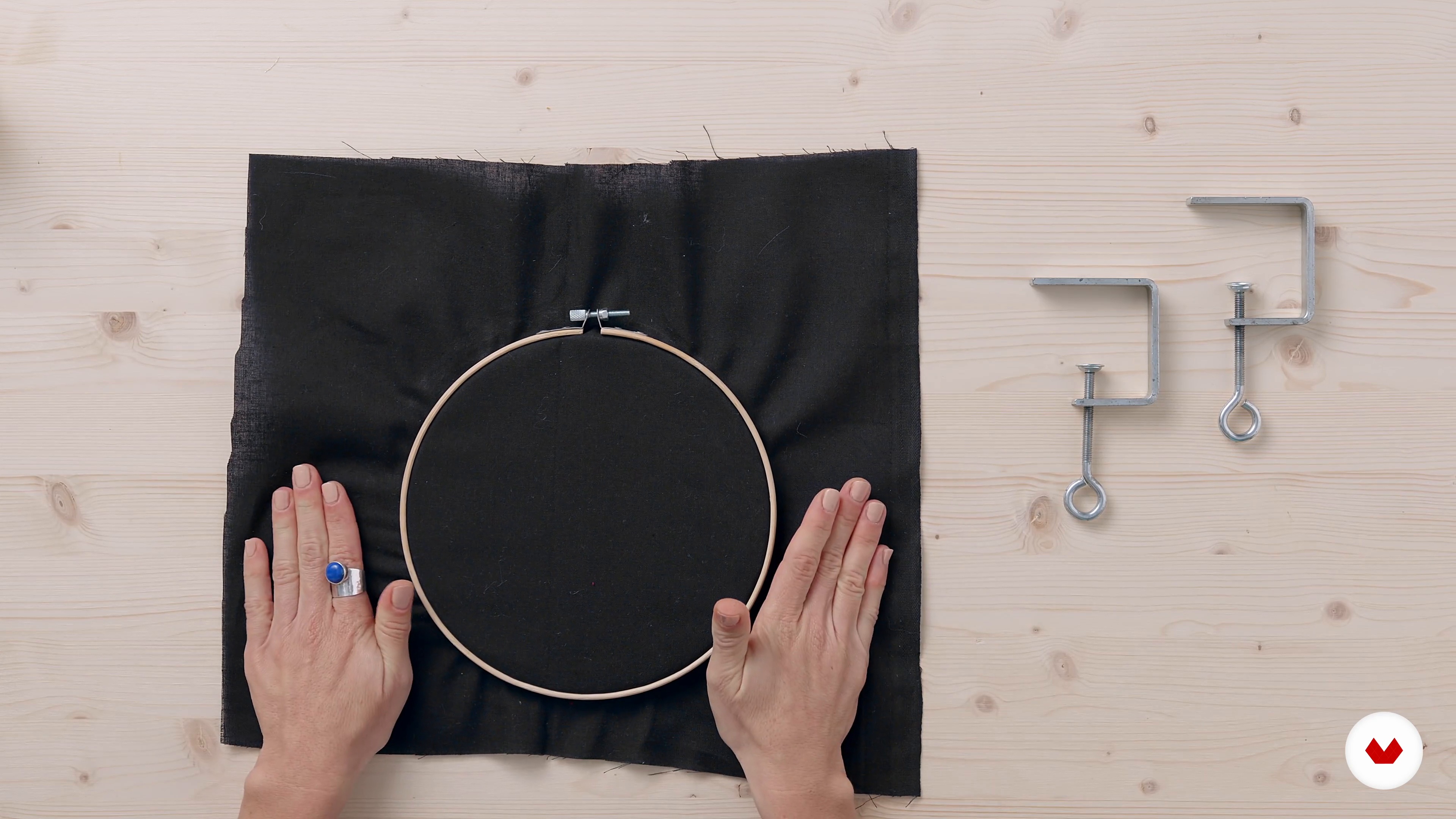
In this lesson I'll show you how to pull the fabric onto the hoop correctly and how to attach it to the work surface to have both hands free to embroider.
5m
image
11
Preparation of the substrate: felt and drawing
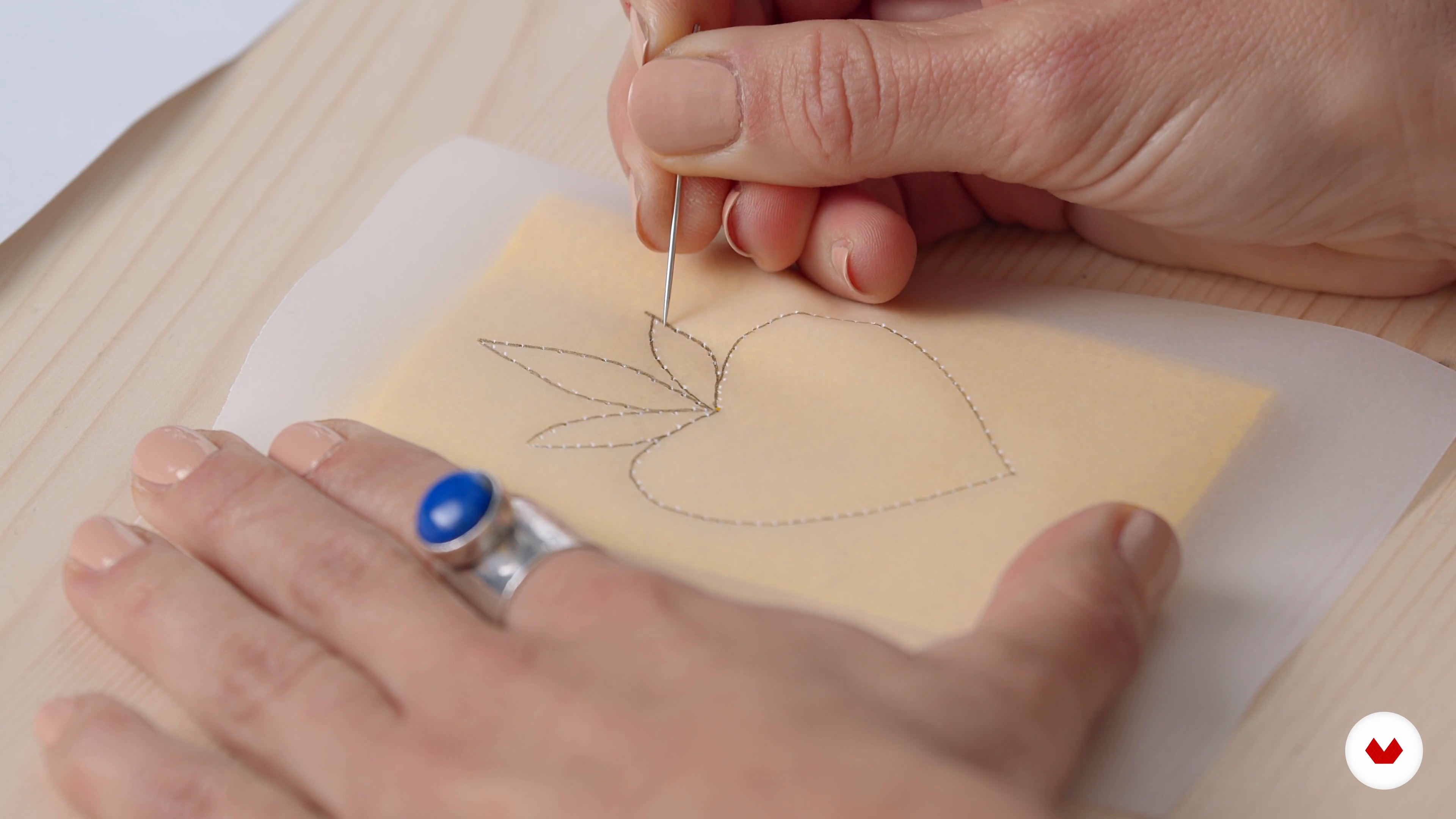
Now, I'll show you how to get the design back onto the felt and how to attach the felt to the hoop so you can then start embroidering.
10m
image
12
Central body padding and embroidery 1
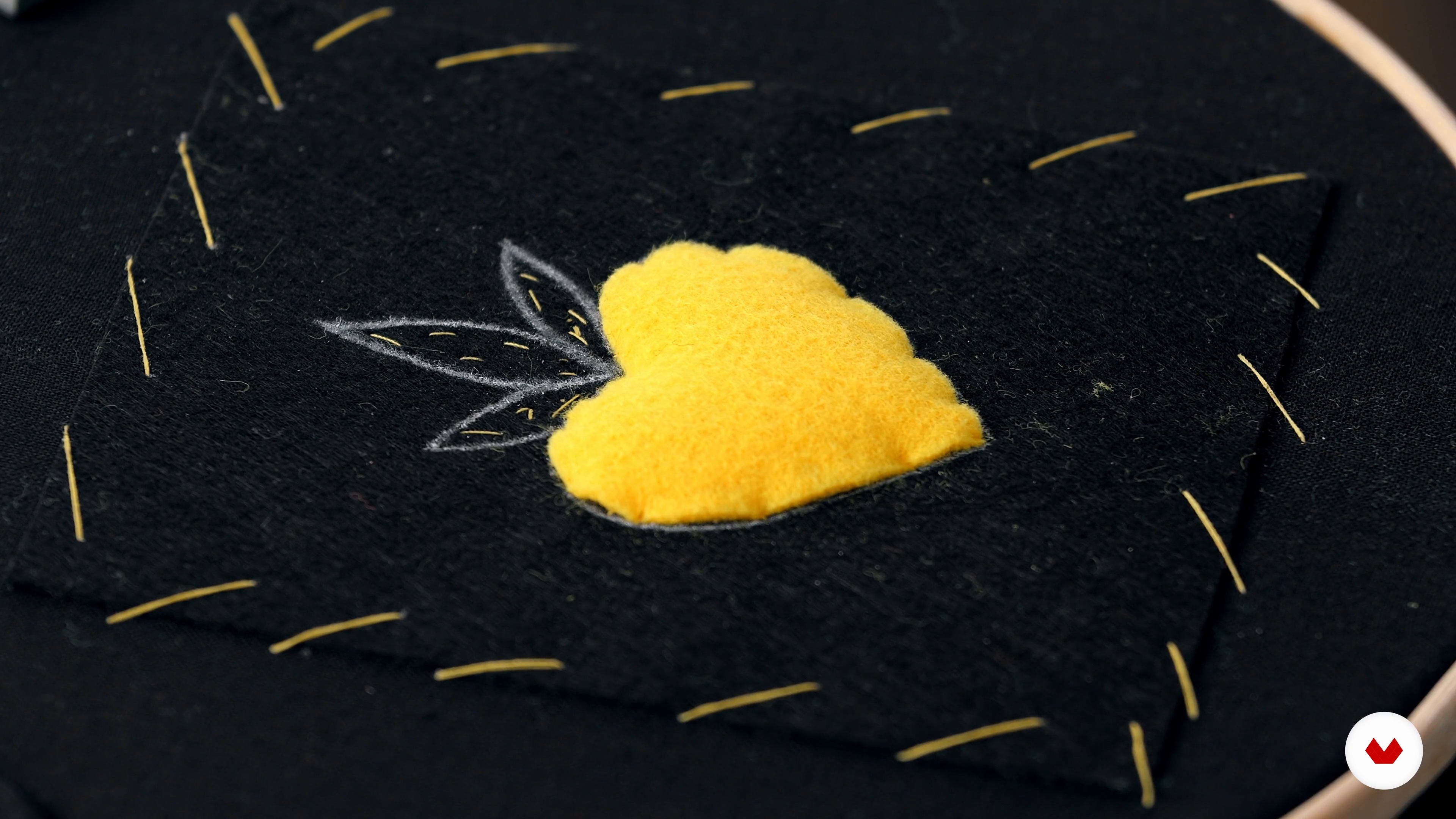
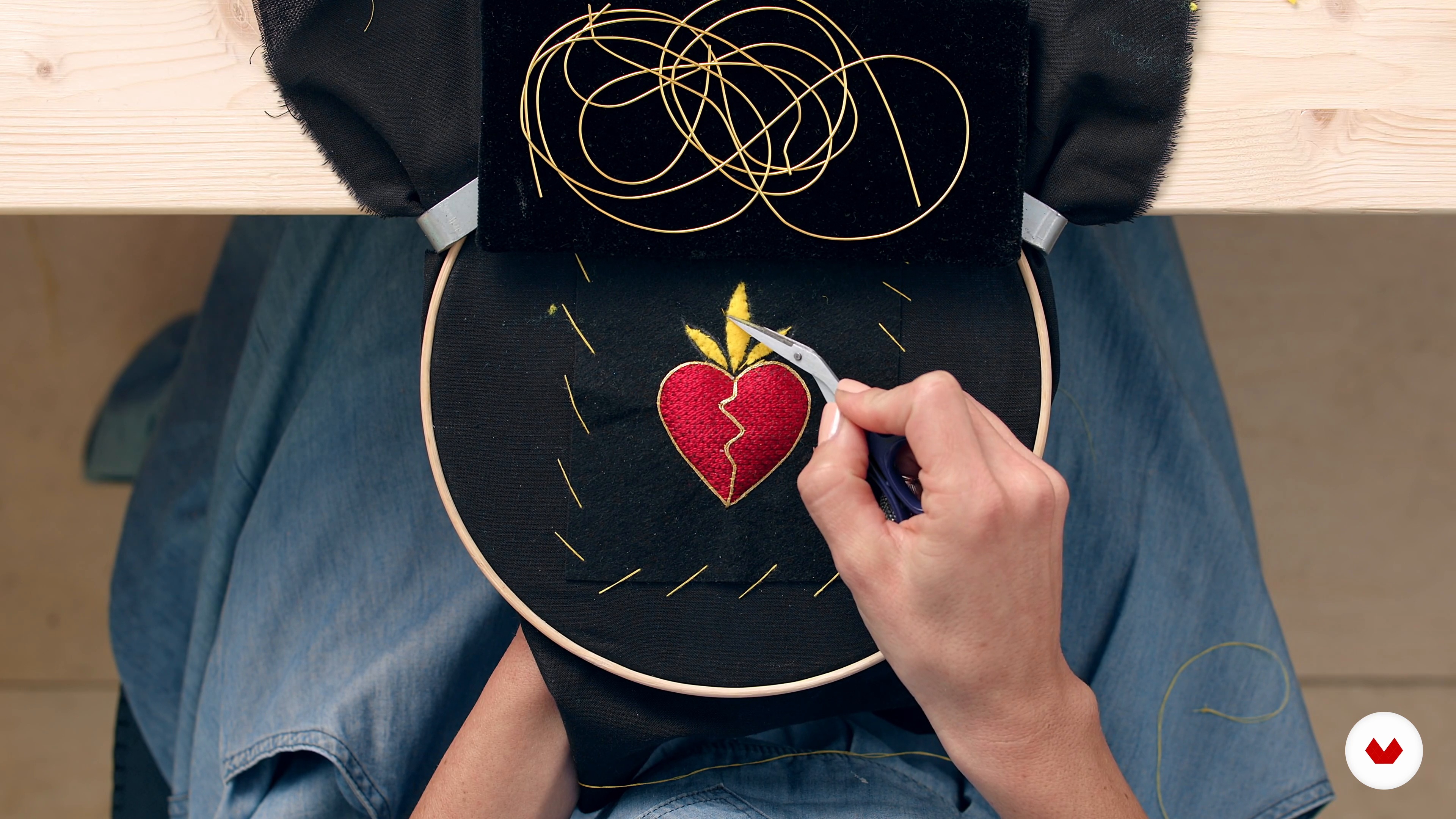
Let's see how to work on the heart, first creating the felt padding.
17m
image
13
Central body padding and embroidery 2
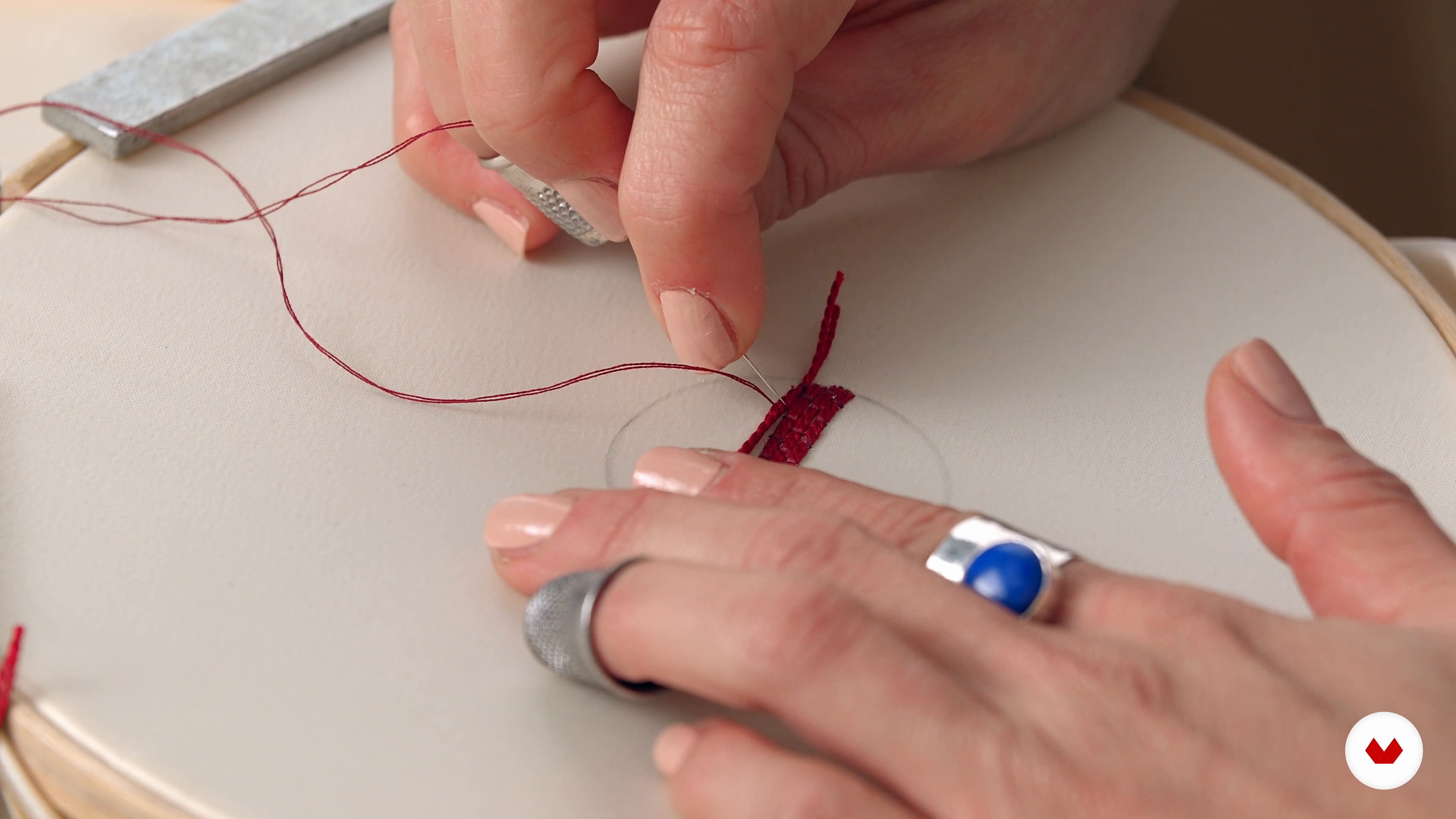
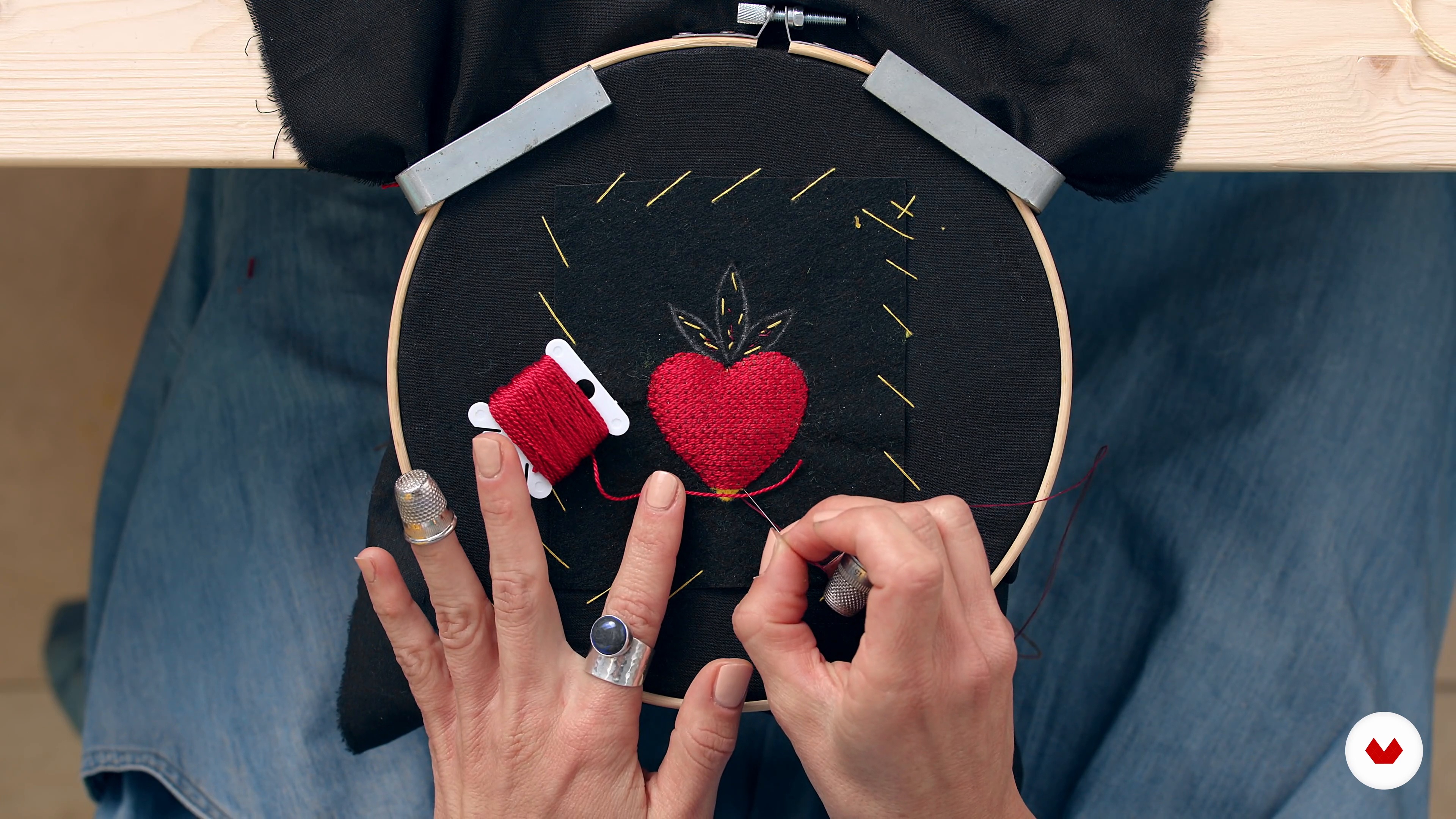
The time has come to embroider the heart. To do this, I'll use some red cotton yarn.
14m
image
14
Central body padding and embroidery 3
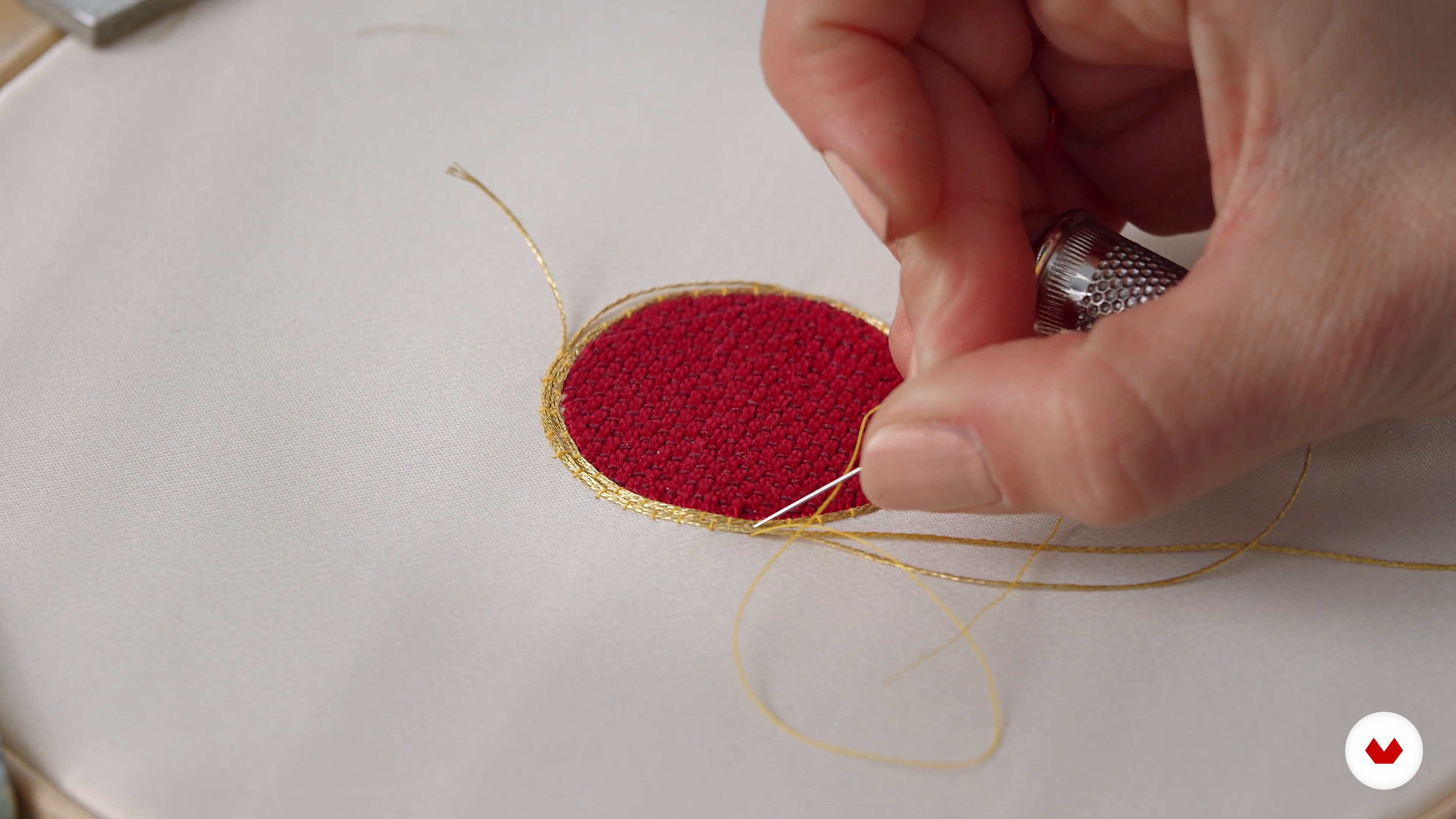
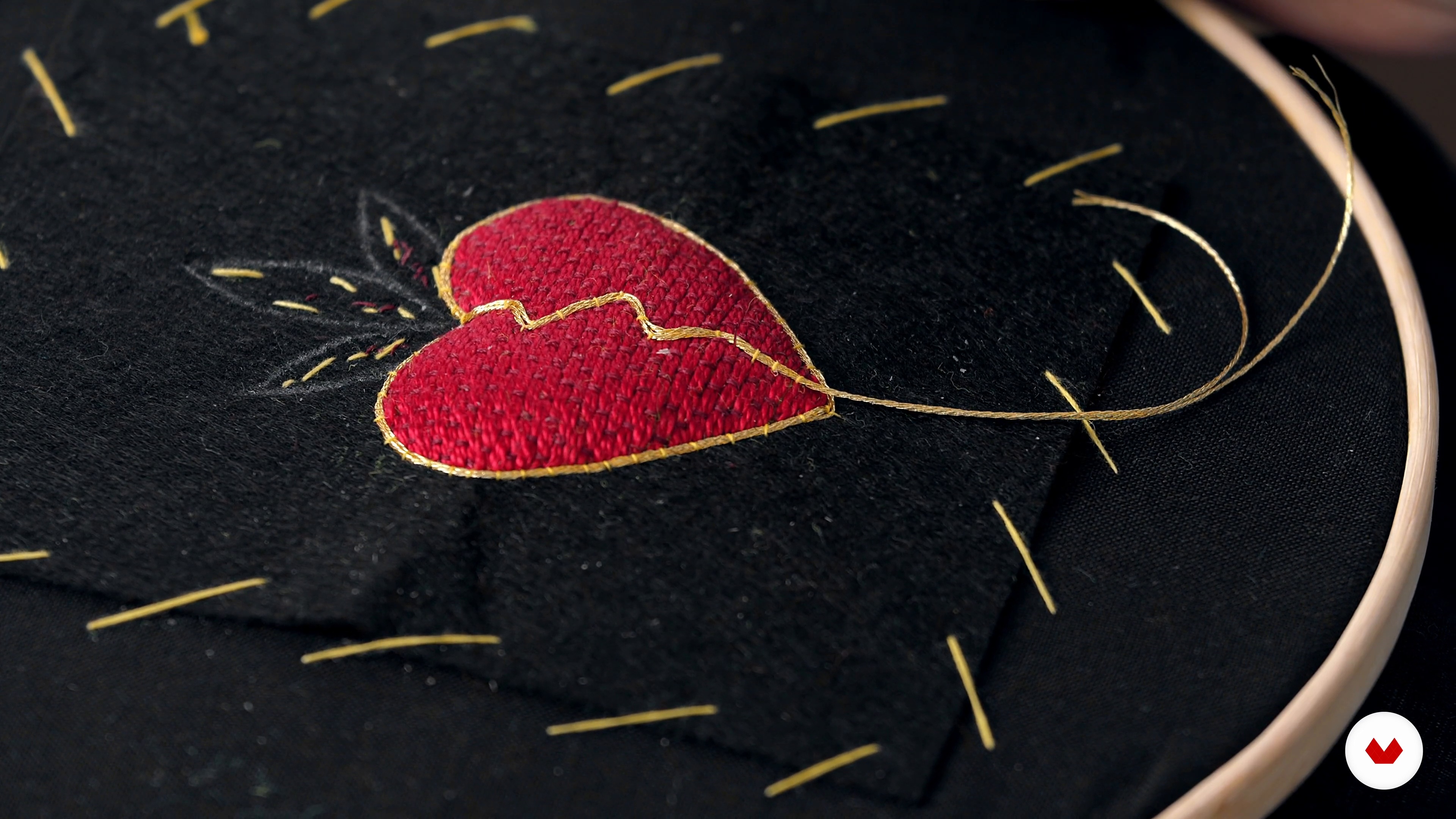
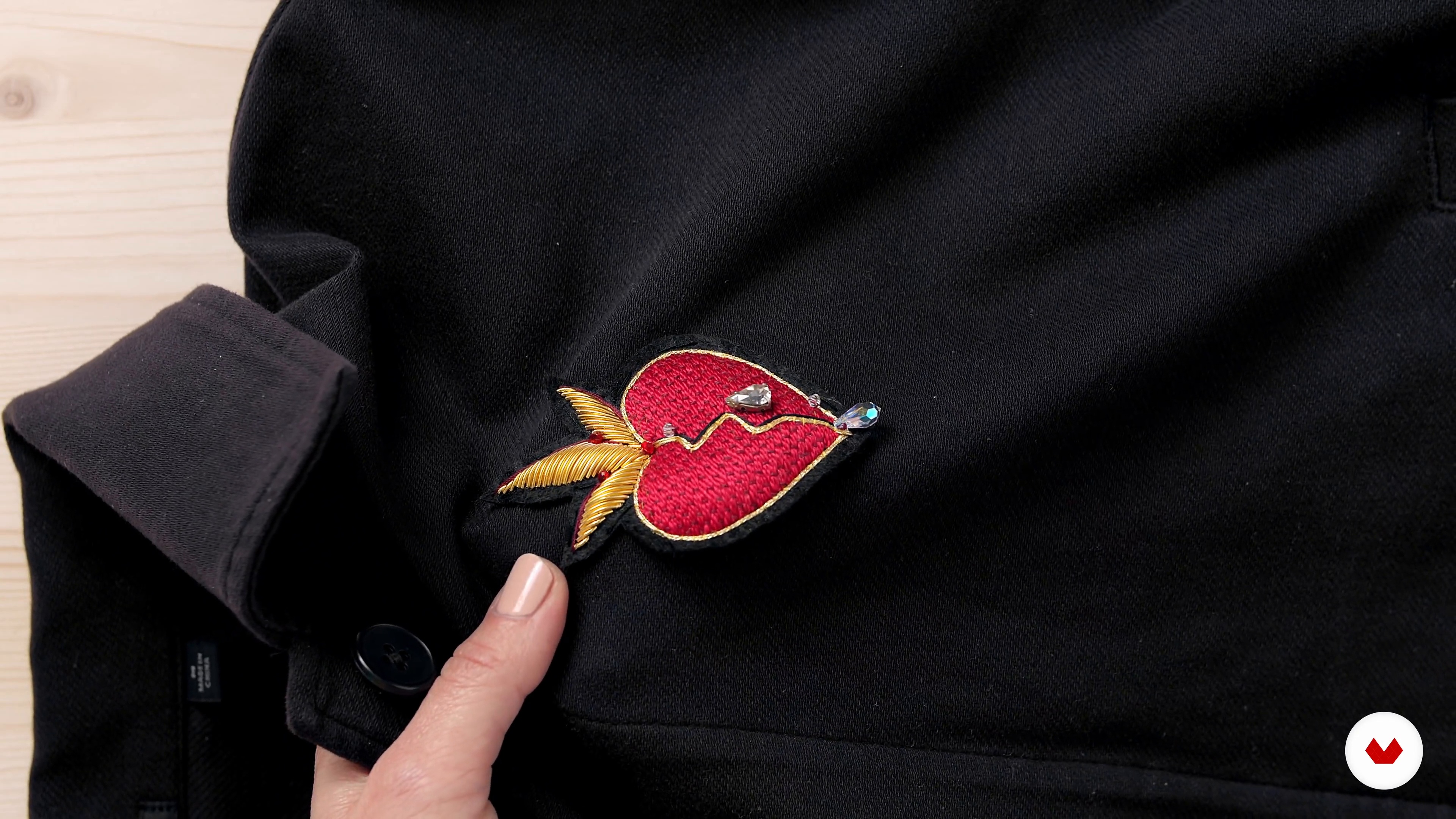
To conclude the processing of the central body, we fix the threads and outline the heart with a gold border.
15m
image
15
Padding and tinsel embroidery 1
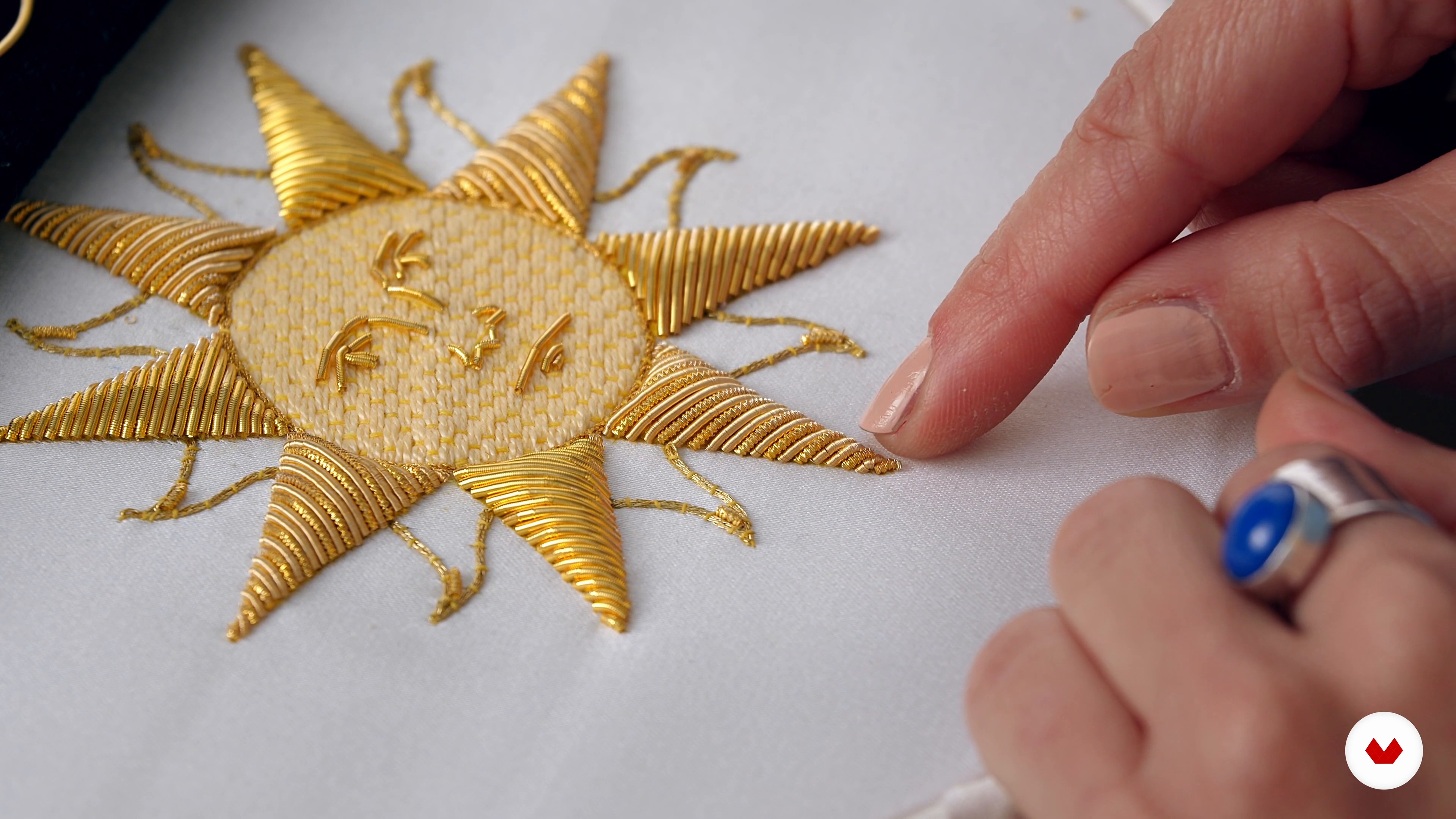
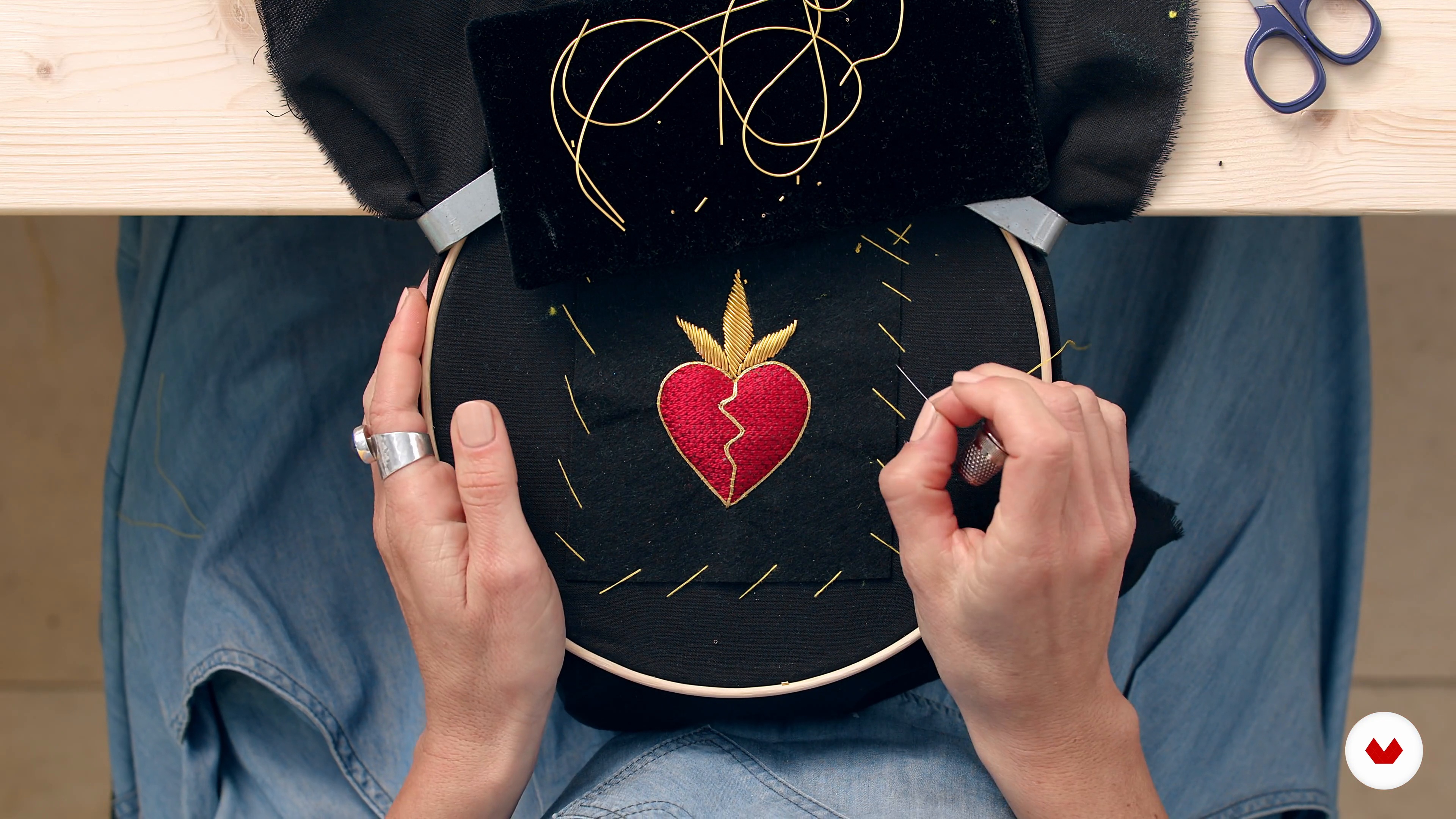
In this lesson I will explain how to stuff and embroider flames with gold tinsel.
15m
image
16
Padding and tinsel embroidery 2
We continue and conclude the embroidering of the secondary parts of our heart and then move on, in the next unit, to the definition of the details.
13m
image
17
Final details
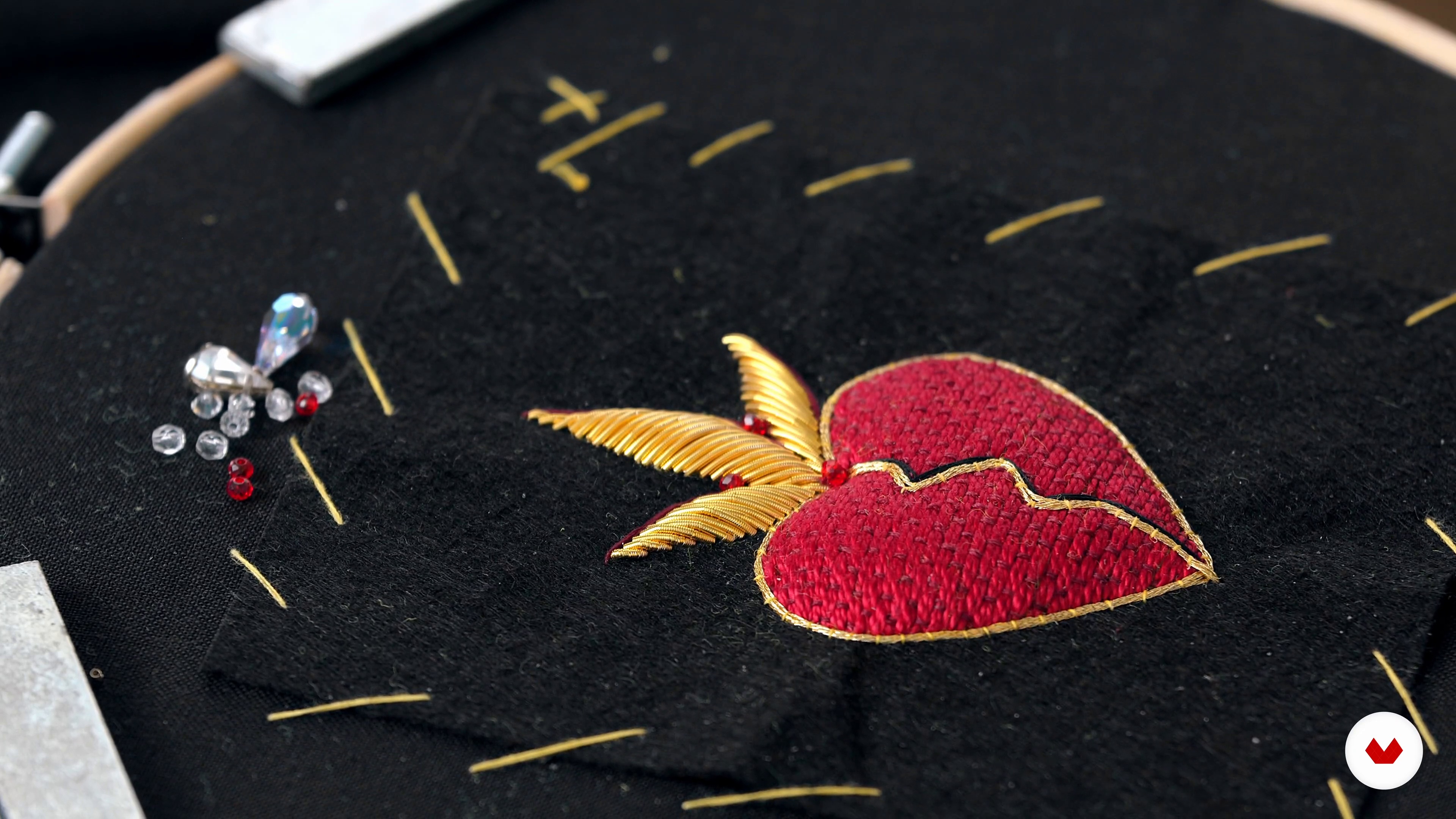
Let's see how to add small details that will embellish and make the work unique.
13m
image
18
Refine the final patch
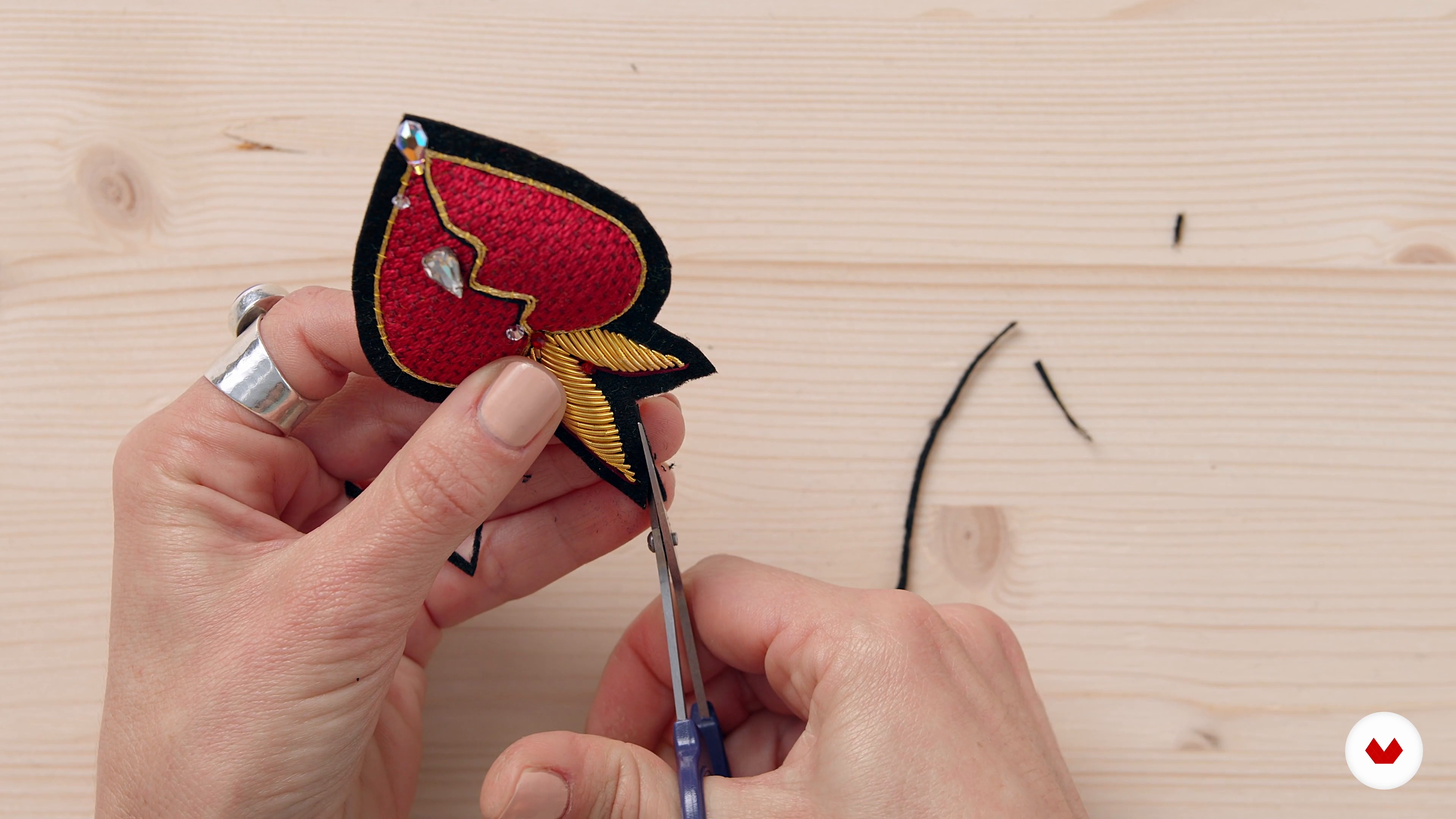
In this lesson, I'll show you how to finish your patch, leaving only a black felt trim edge.
6m
image
19
Transform the patch into an application
It's time to find out how to use embroidery to apply it to an item of clothing or to turn it into a brooch.
8m
image
3
Why luneville embroidery?
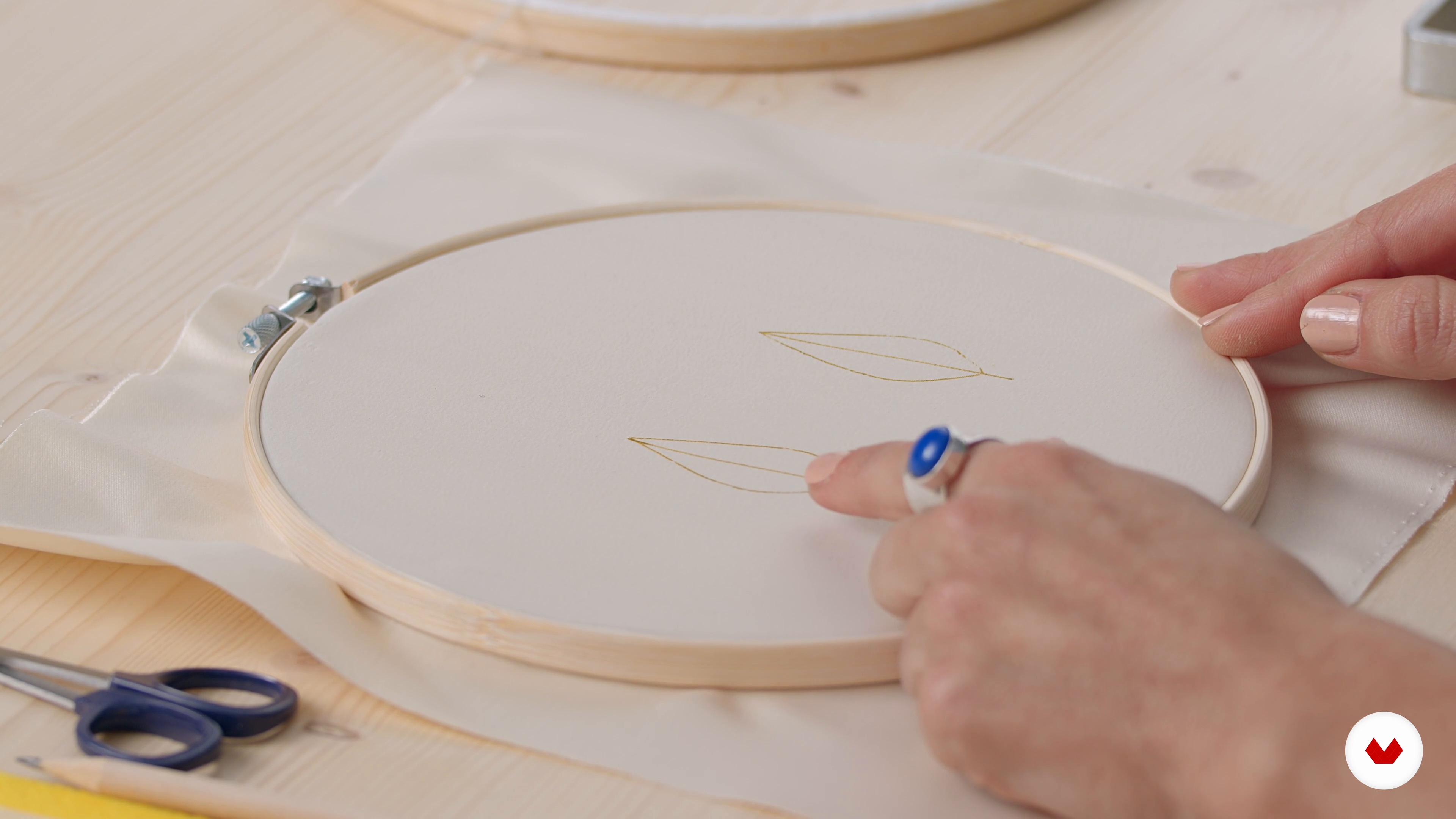
First I will talk about luneville embroidery and we will take a tour of the different elements to take into account for the correct execution of the technique. I will also explain what the project to be developed during the course consists of.
2m
image
4
The materials
In this second lesson you will learn about the different materials that we can use for our projects. I will talk about the types of beads, sizes and shapes. We can mix colors and textures and try fabrics and threads of different thicknesses. I will show you some ways to create materials that will give a unique touch to your projects.
7m
image
5
From idea to design
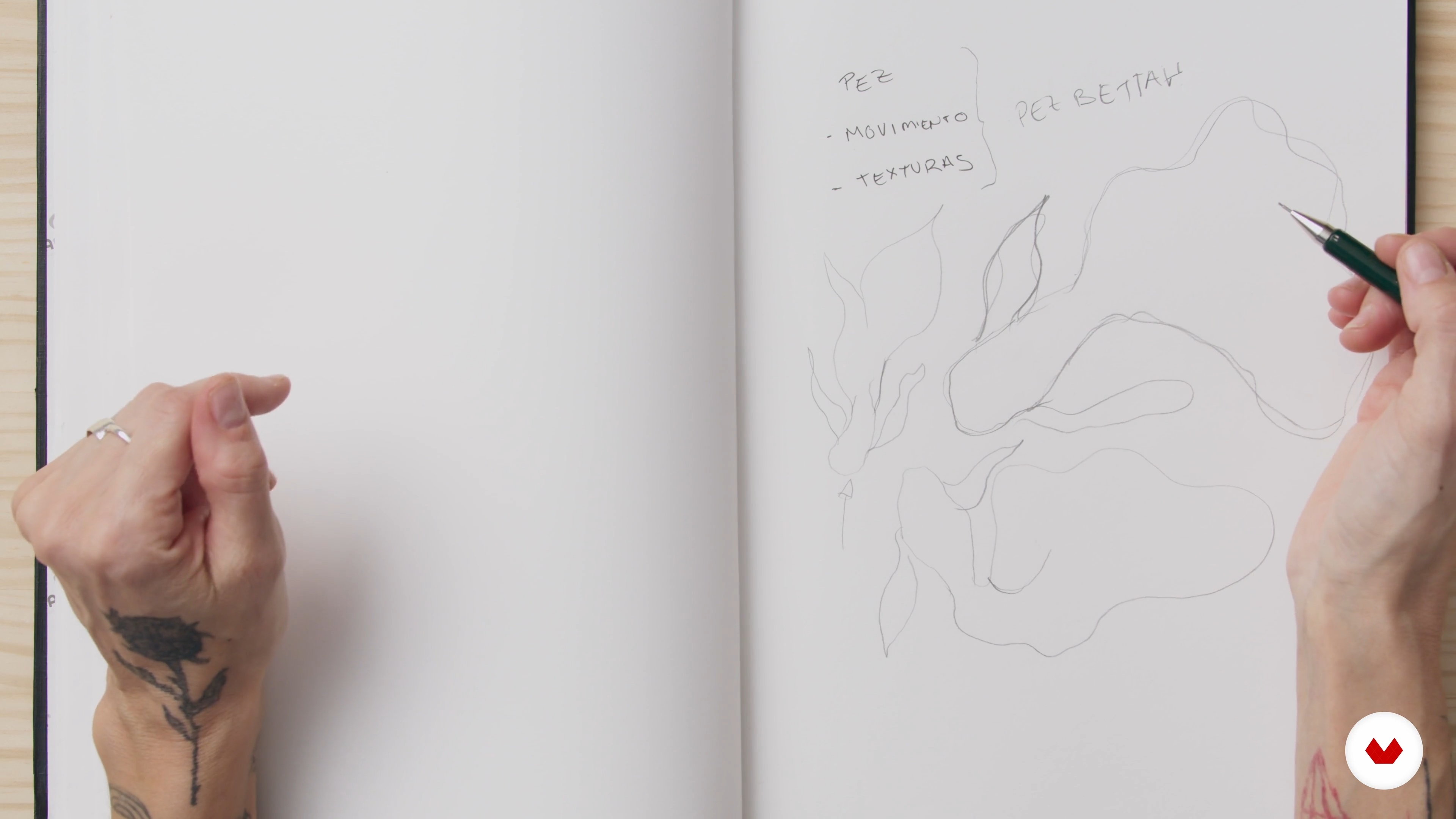
In this lesson we will take a tour of the creative process that will lead us to the execution of our embroidery design.
5m
image
6
The frame
It is essential that the fabric is well tensioned. I will show you how the hoop works, how it is assembled and how we adapt the fabric by giving it the necessary tension to make the embroidery work easier.
4m
image
7
Transfer from paper to fabric
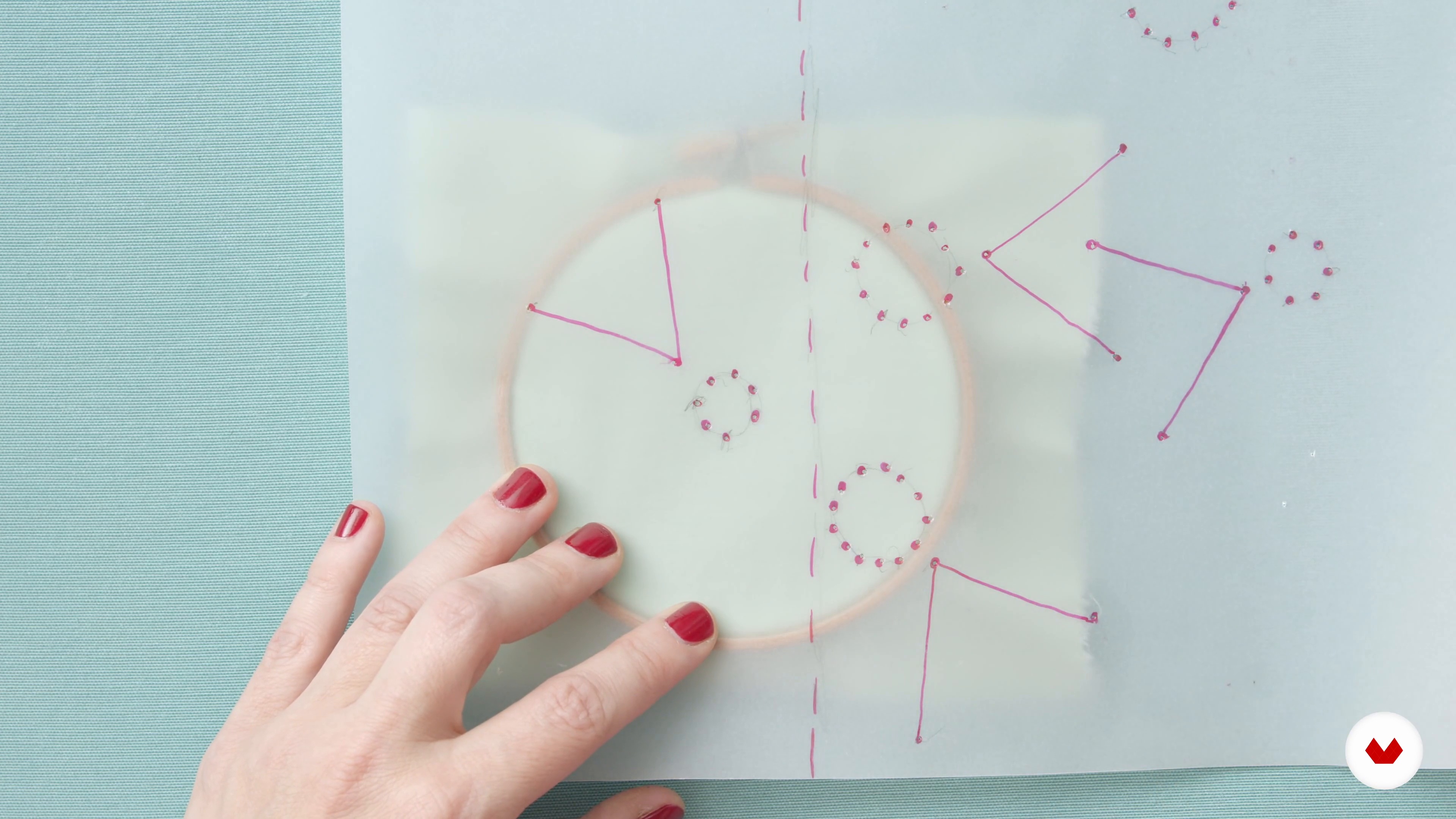
Next, you will learn the different methods to transfer the design to the fabric we have chosen.
3m
image
8
Embroidery tool and movements
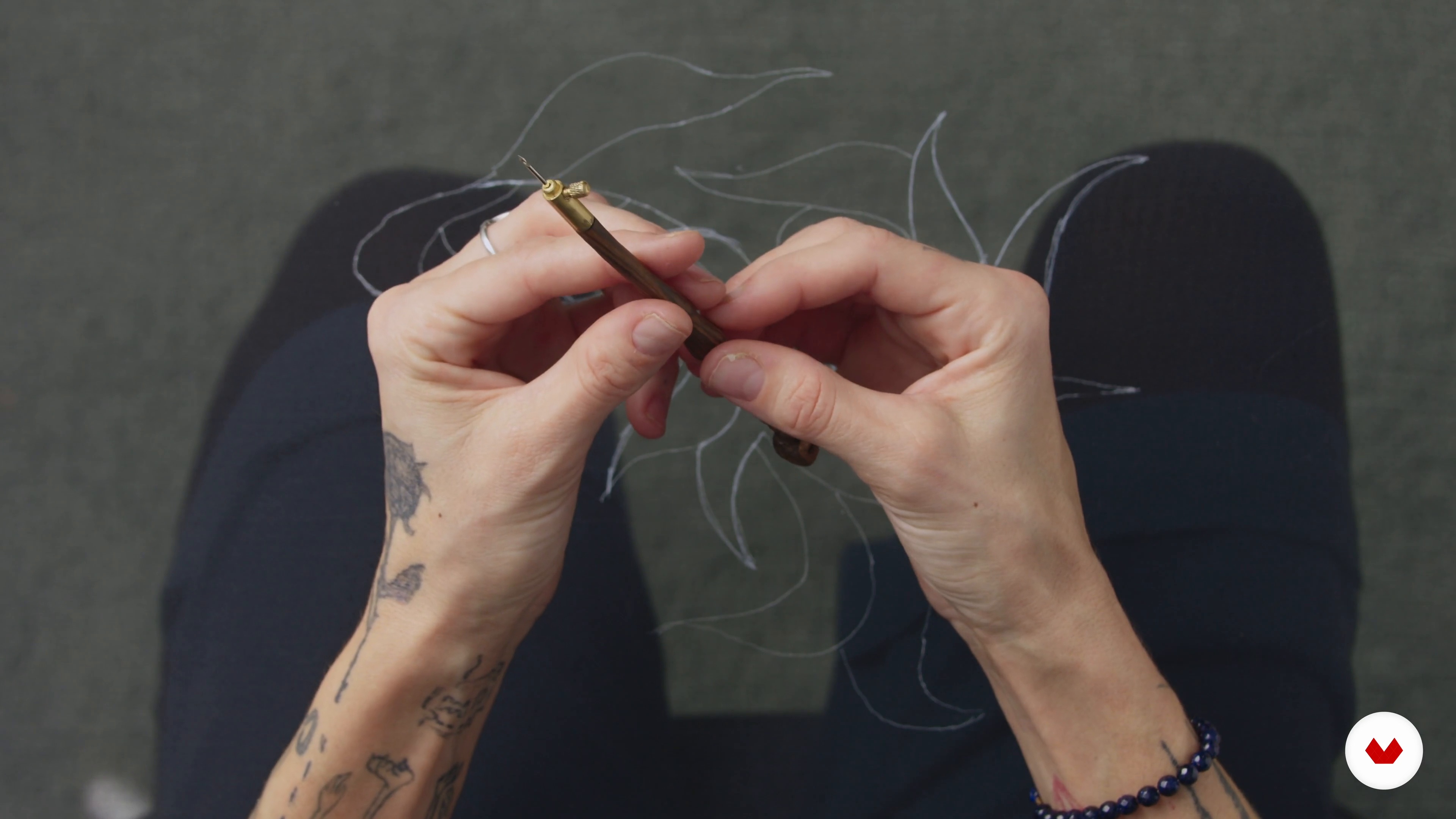
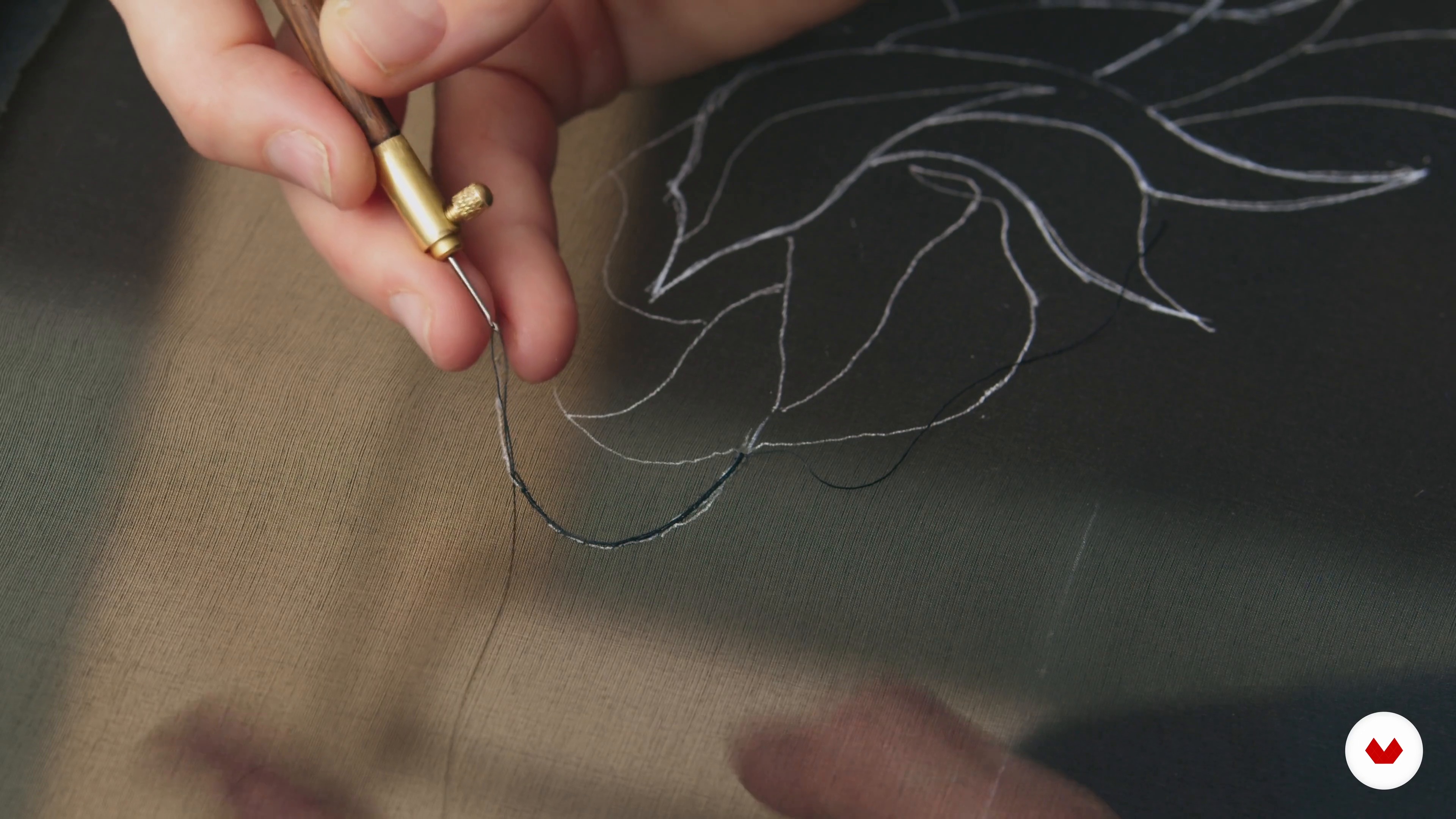
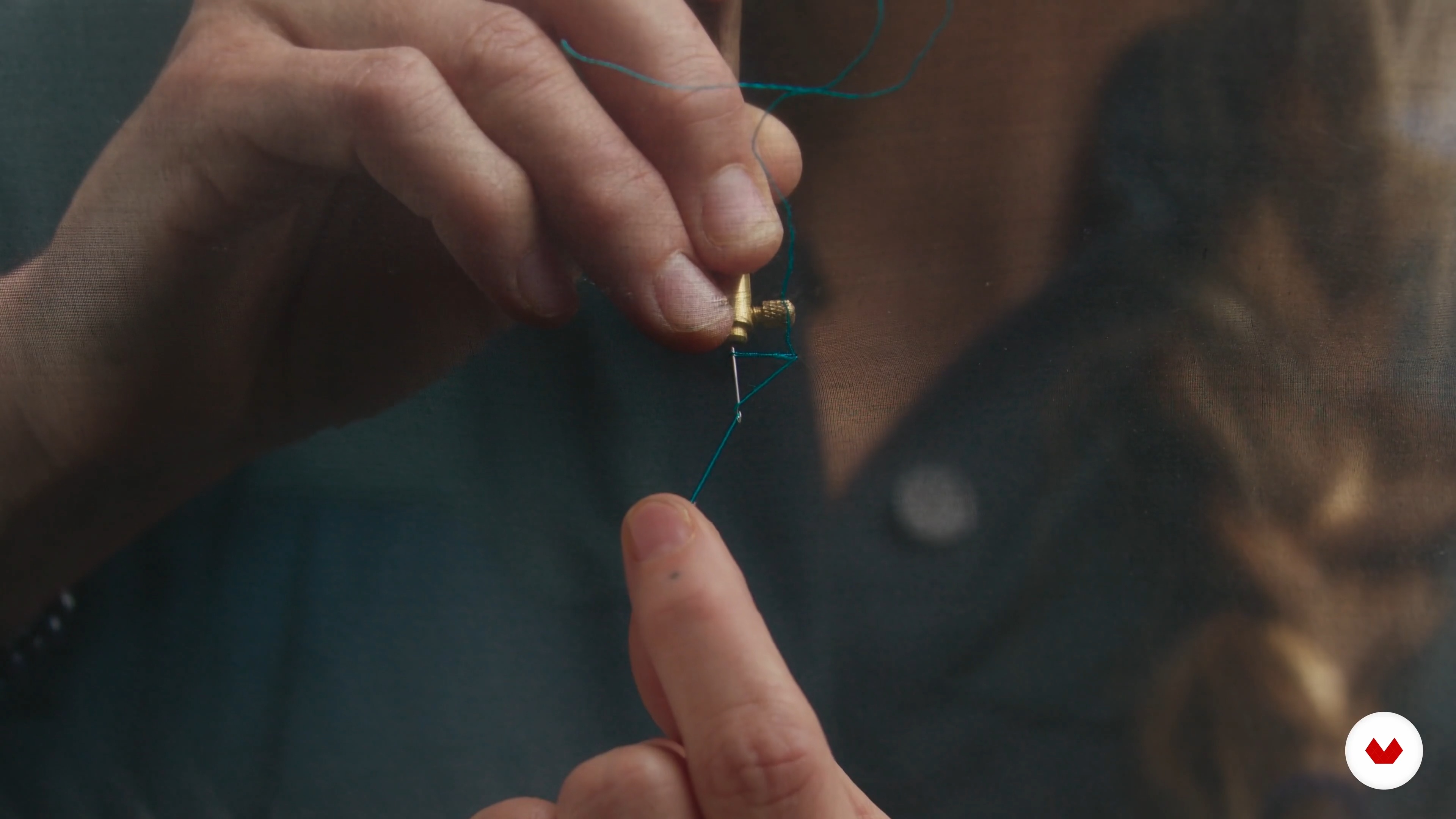
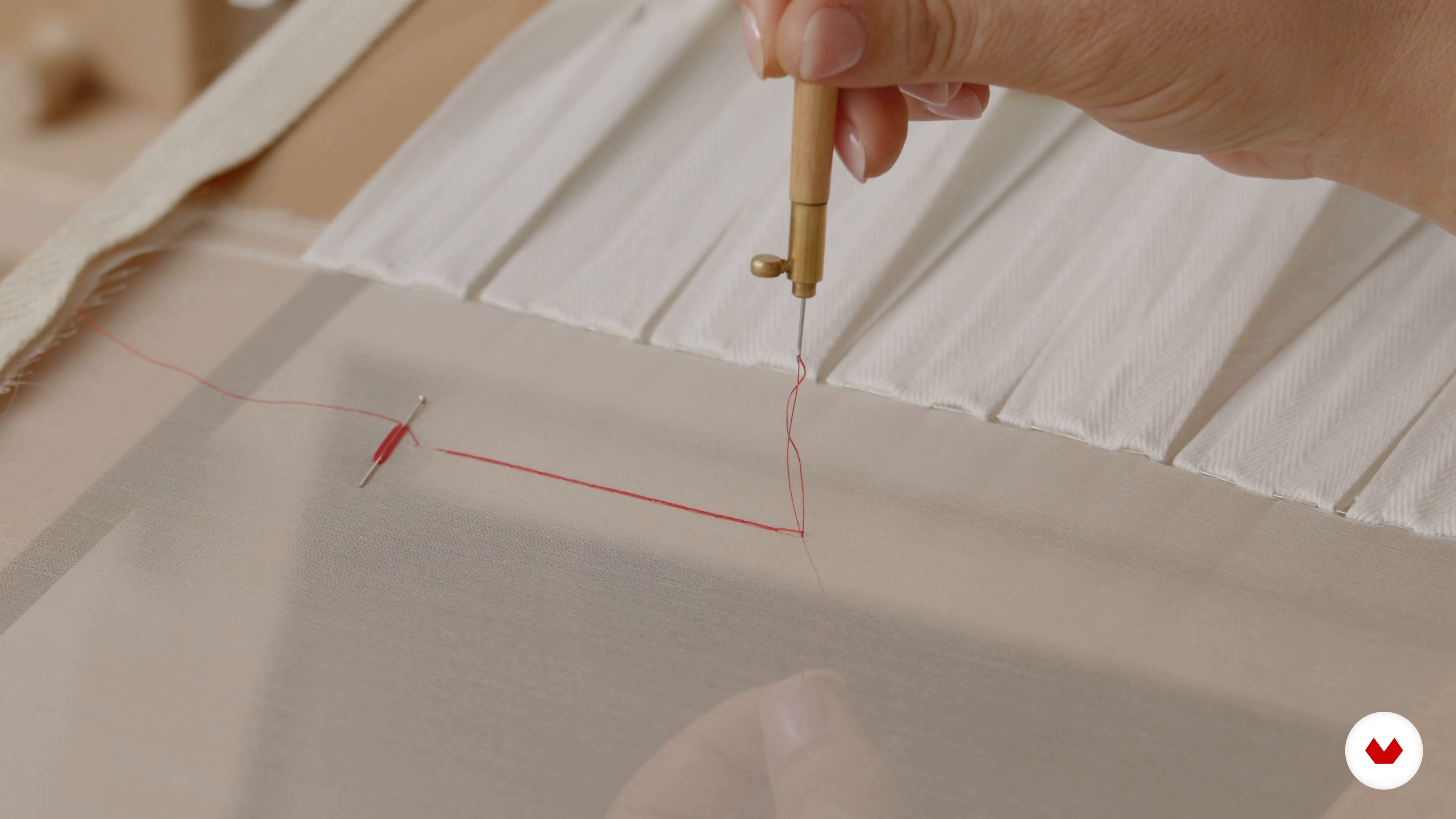
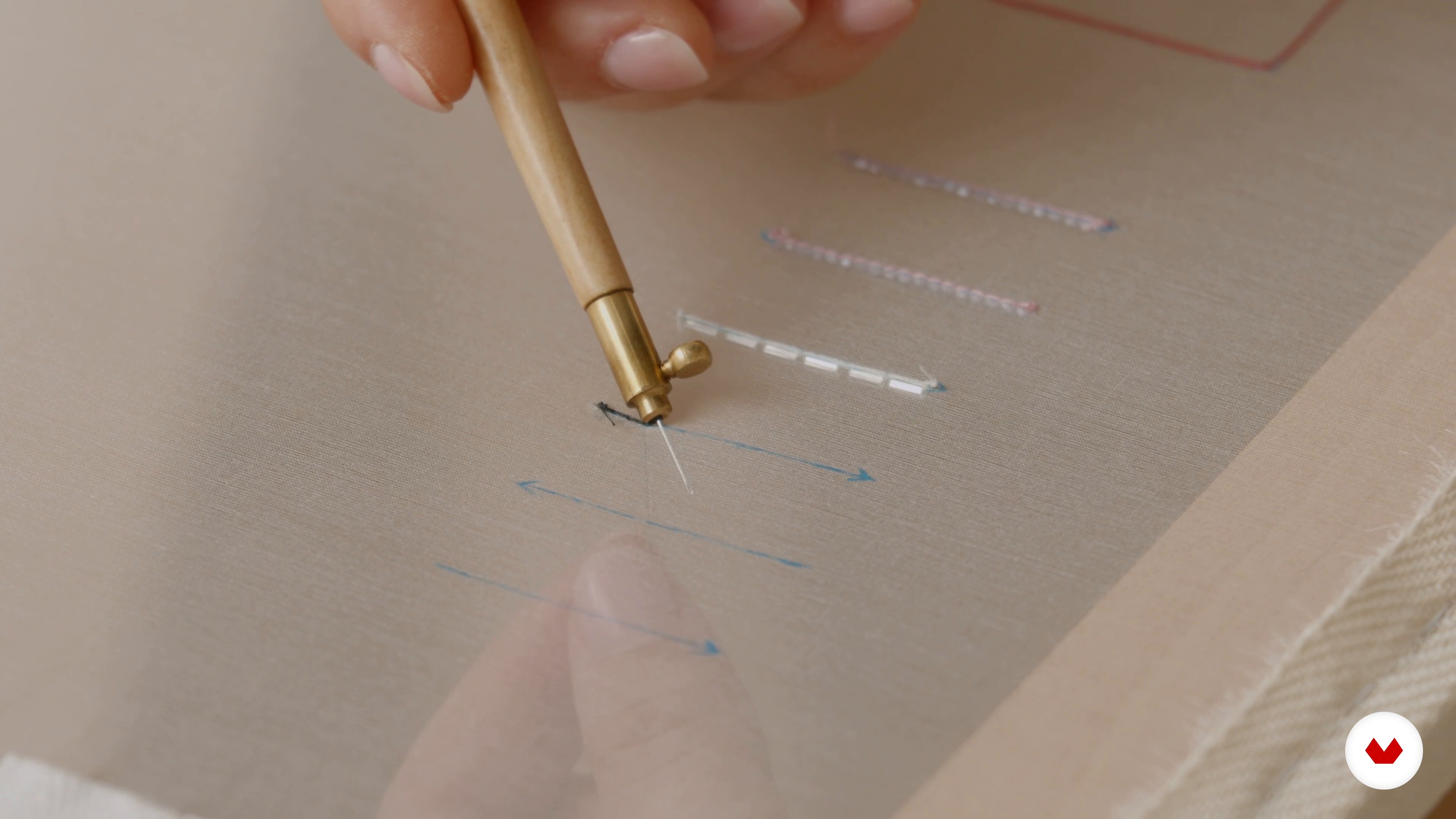
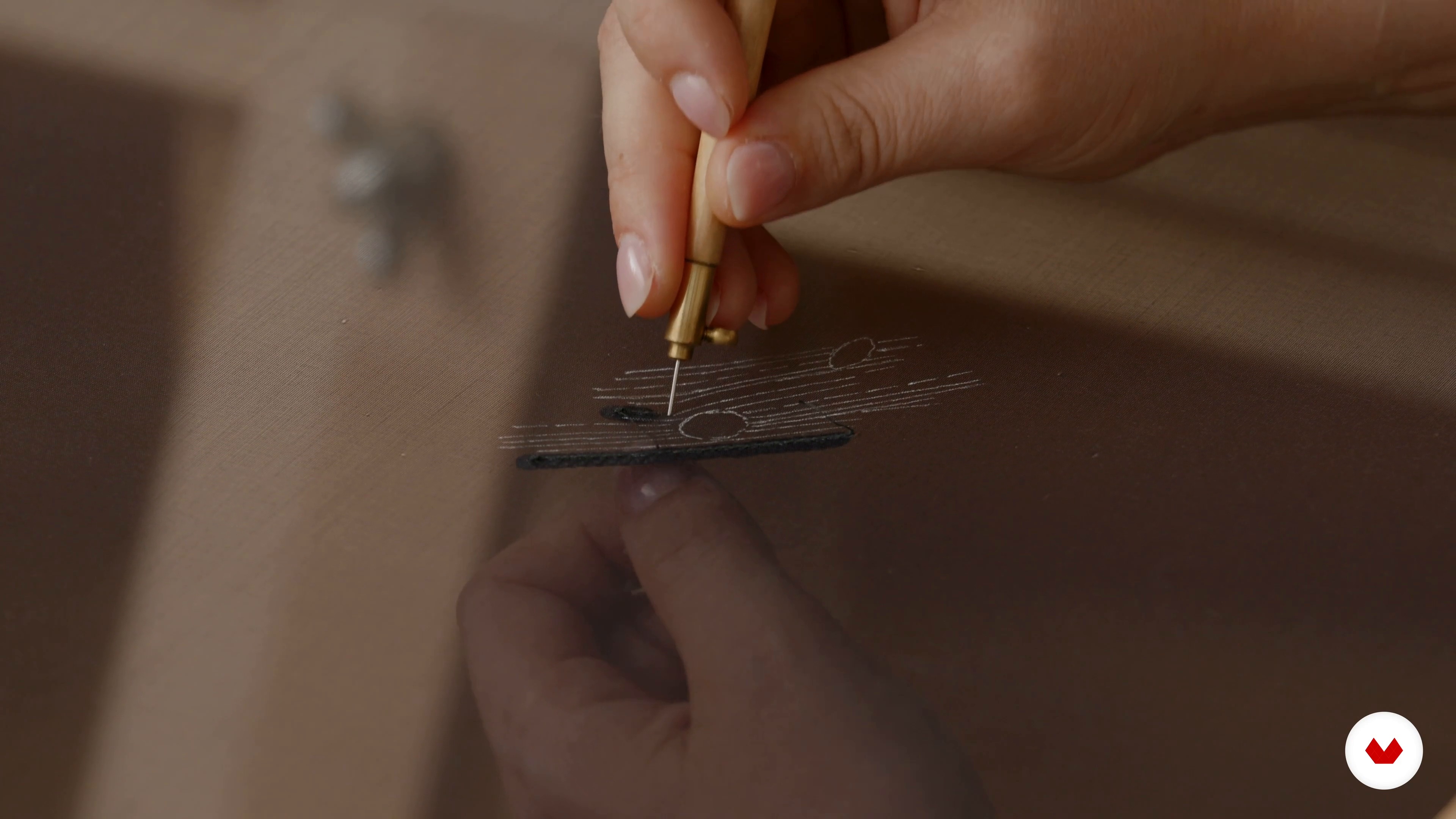
Now we will focus on the luneville crochet, the essential tool. You will learn how to assemble it and define the important points to take into account when carrying out the embroidery.
6m
image
9
Main stitches 1
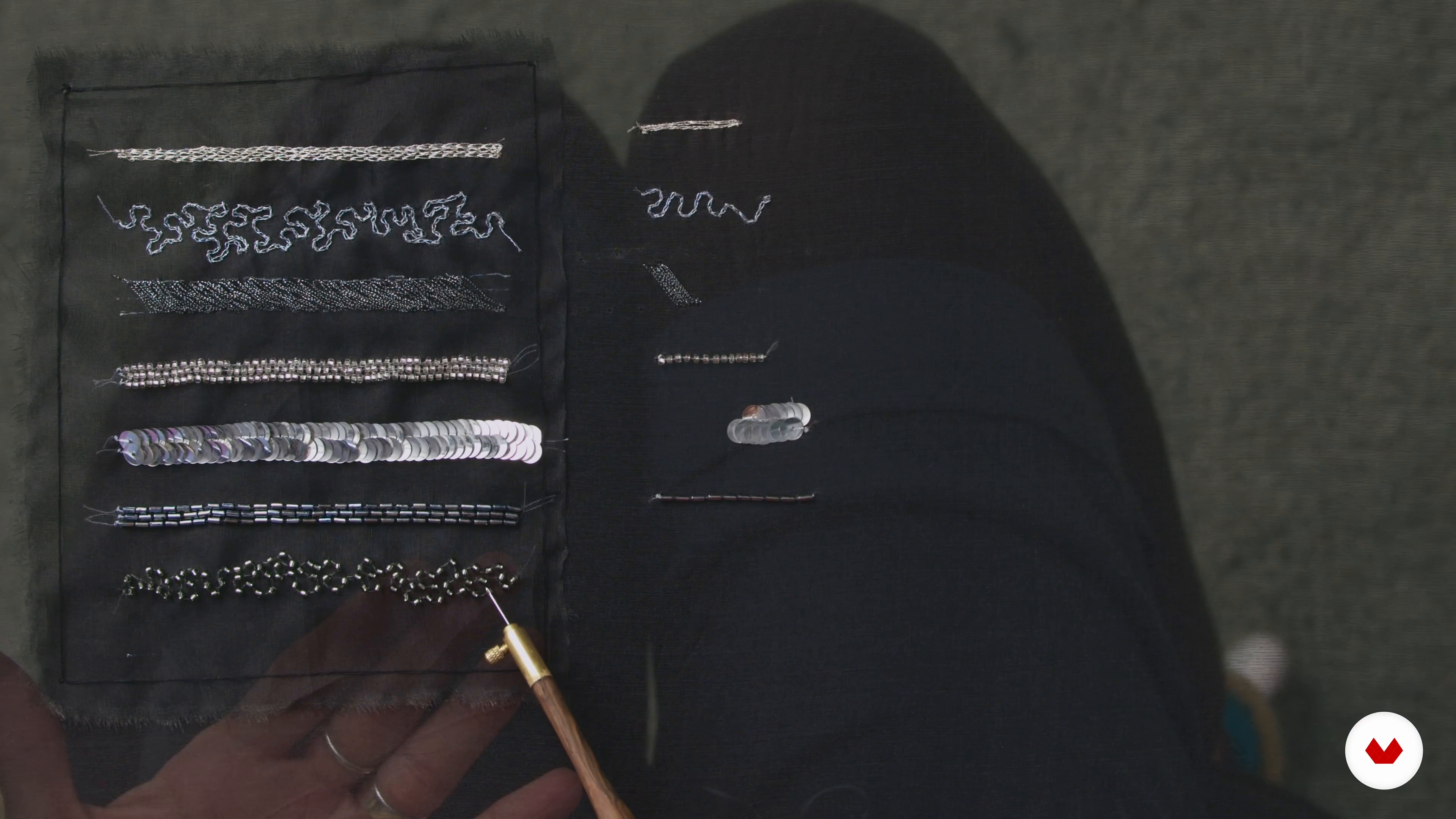
Before we start embroidering, I'll show you how I make a guide to the stitches we'll use in this course.
19m
image
10
Main stitches 2
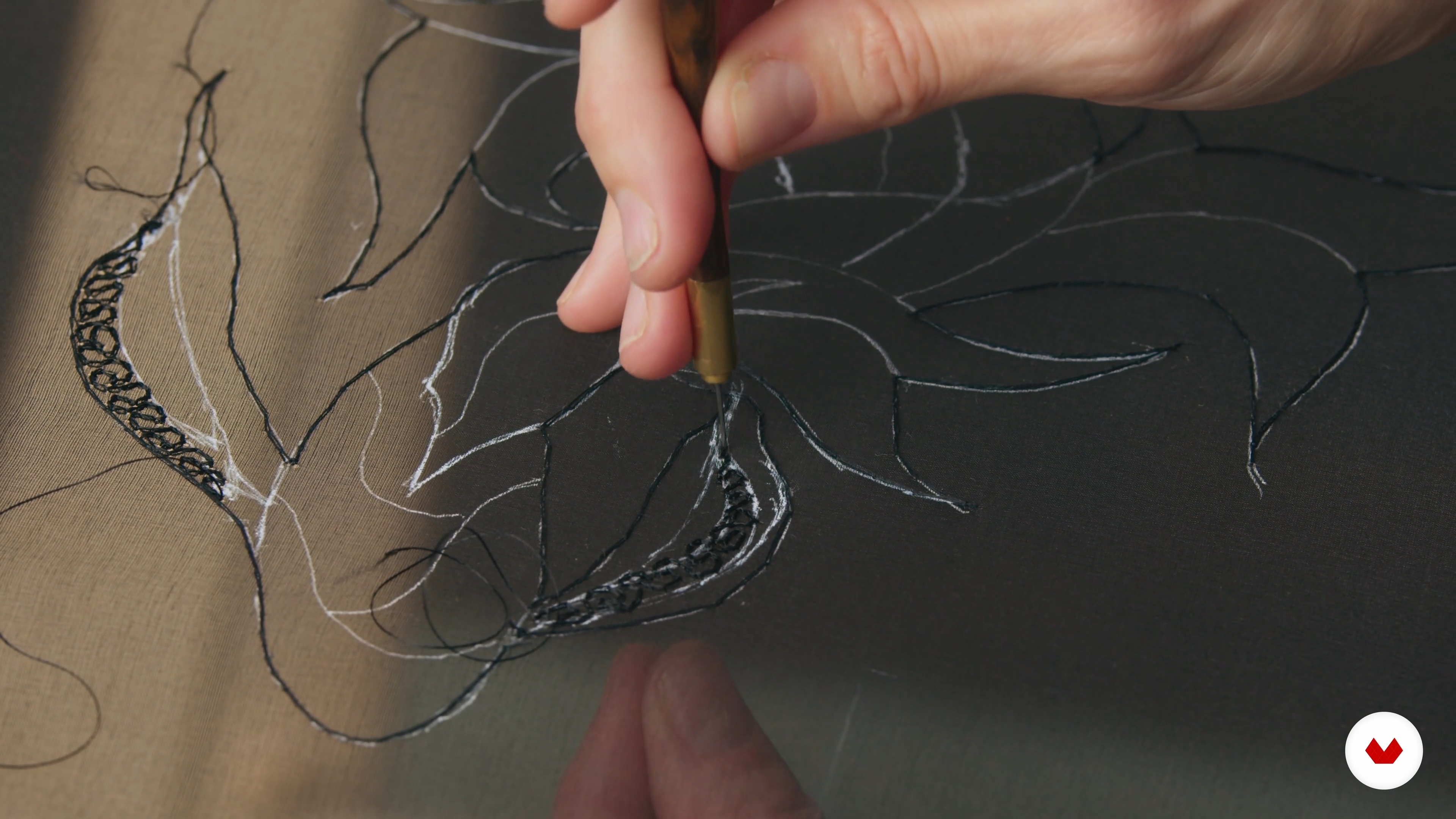
Now, I will start working on my design with the base or chain stitch. You will learn the starting stitch and the locking stitch, which is important when finishing so that the motif does not come undone.
4m
image
11
Labyrinth stitch
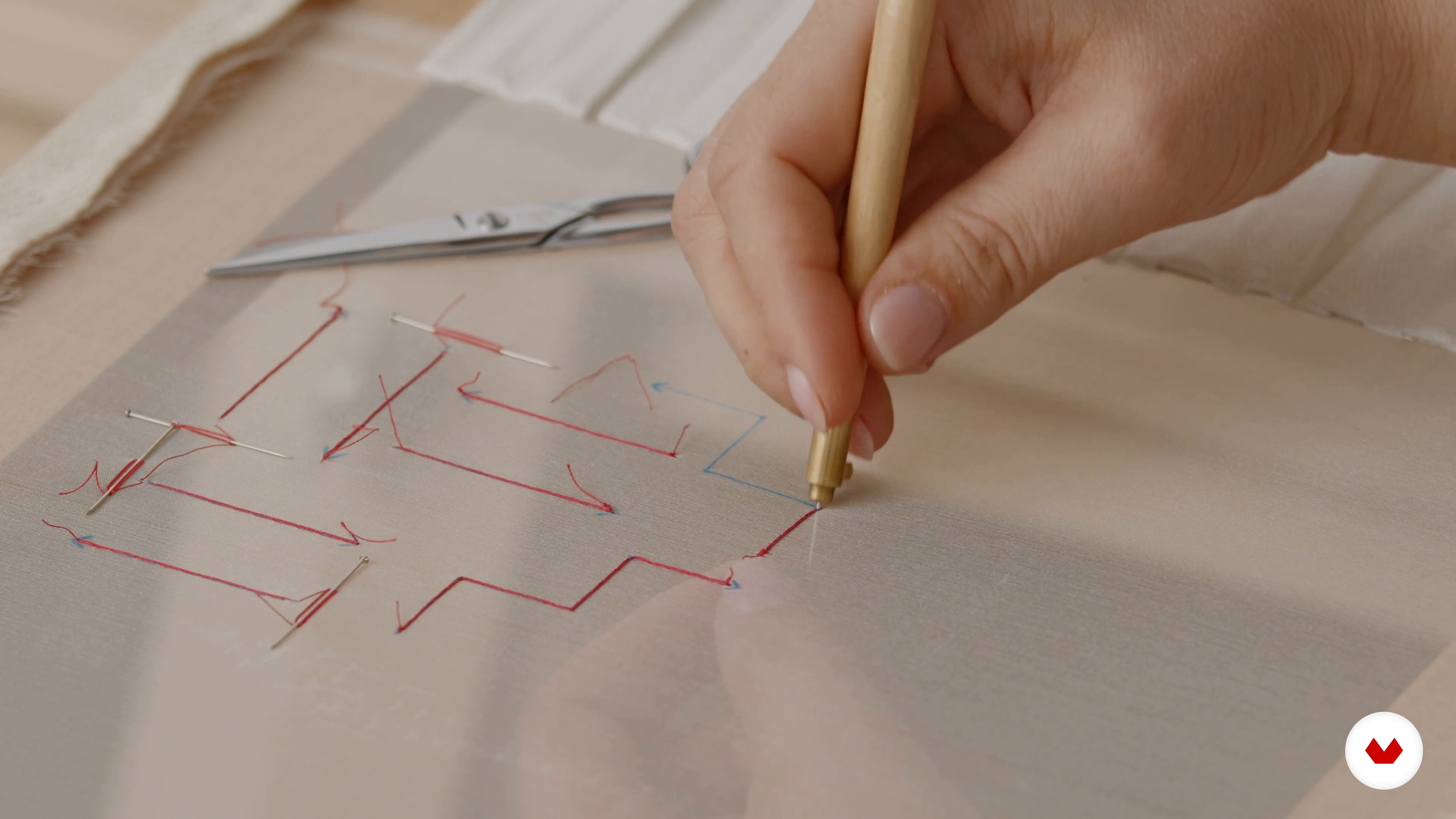
In this lesson, you will learn how to make the labyrinth-shaped base stitch with only thread to make fillings.
5m
image
12
Filling stitch
The filling stitch helps us to work only with thread, to make nuances. It is important to control the tension of the thread well so that it is not loose or too tight. I show you how it works!
5m
image
13
Stitches with materials
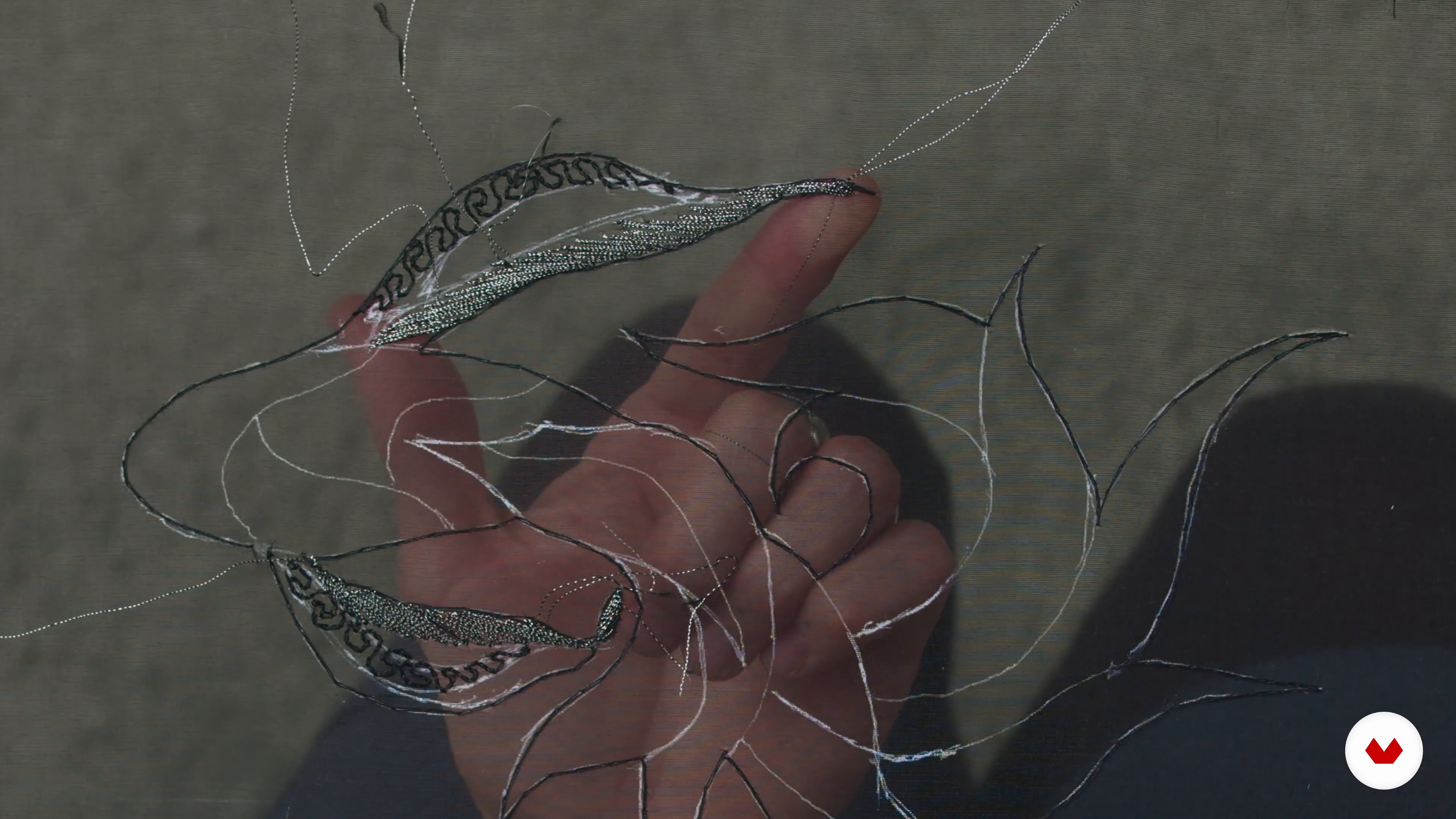
You have already learned the necessary stitches to develop your project. Now you can start placing decorations on the thread. I will fill the fish using the stitches randomly.
18m
image
14
Finishing and dismantling of the design
Once the embroidery is finished, you must check the locking stitches, make sure there are no loose threads and trim any long threads. In this lesson I will show you how I work on the finishes of my embroidery and teach you how to pin it to cut out and apply to any element.
7m
image
15
Tips for hand mechanization
Now I would like to talk about some complications that will appear as we take the first stitches and how to solve them.
5m
image
16
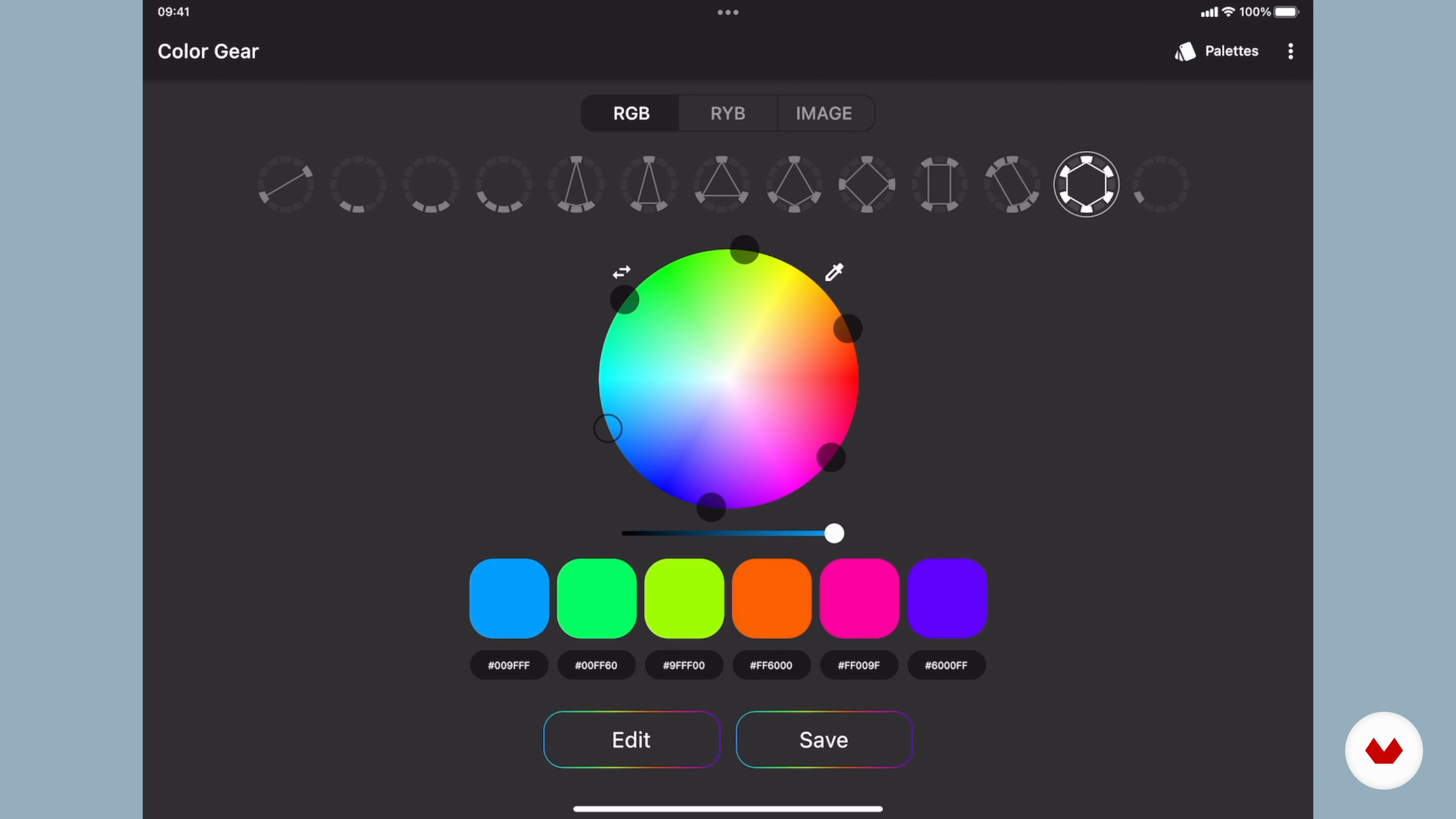
Useful programs and optimize resources
Nowadays there are countless applications for drawing and designing for computers, tablets or mobile phones. It is true that paper is necessary for many parts of the embroidery process, but we can optimize our time and of course take care of our mother earth by using these programs for some of the phases. In this lesson I will show you some programs that I use regularly and can help us a lot to develop our projects.
6m
image
3
Introduction to high fashion embroidery
In this lesson you will learn what art embroidery or haute couture embroidery is, what study methodology you will learn for the Lunéville crochet embroidery technique and you will get to know the important embroiderers and embroiderers in the field of haute couture embroidery.
4m
image
4
The tools for embroidering
In this lesson you will see a variety of tools and materials that can be used for high fashion embroidery and you will learn in detail about Lunéville crochet.
5m
image
5
How to assemble the frame 1
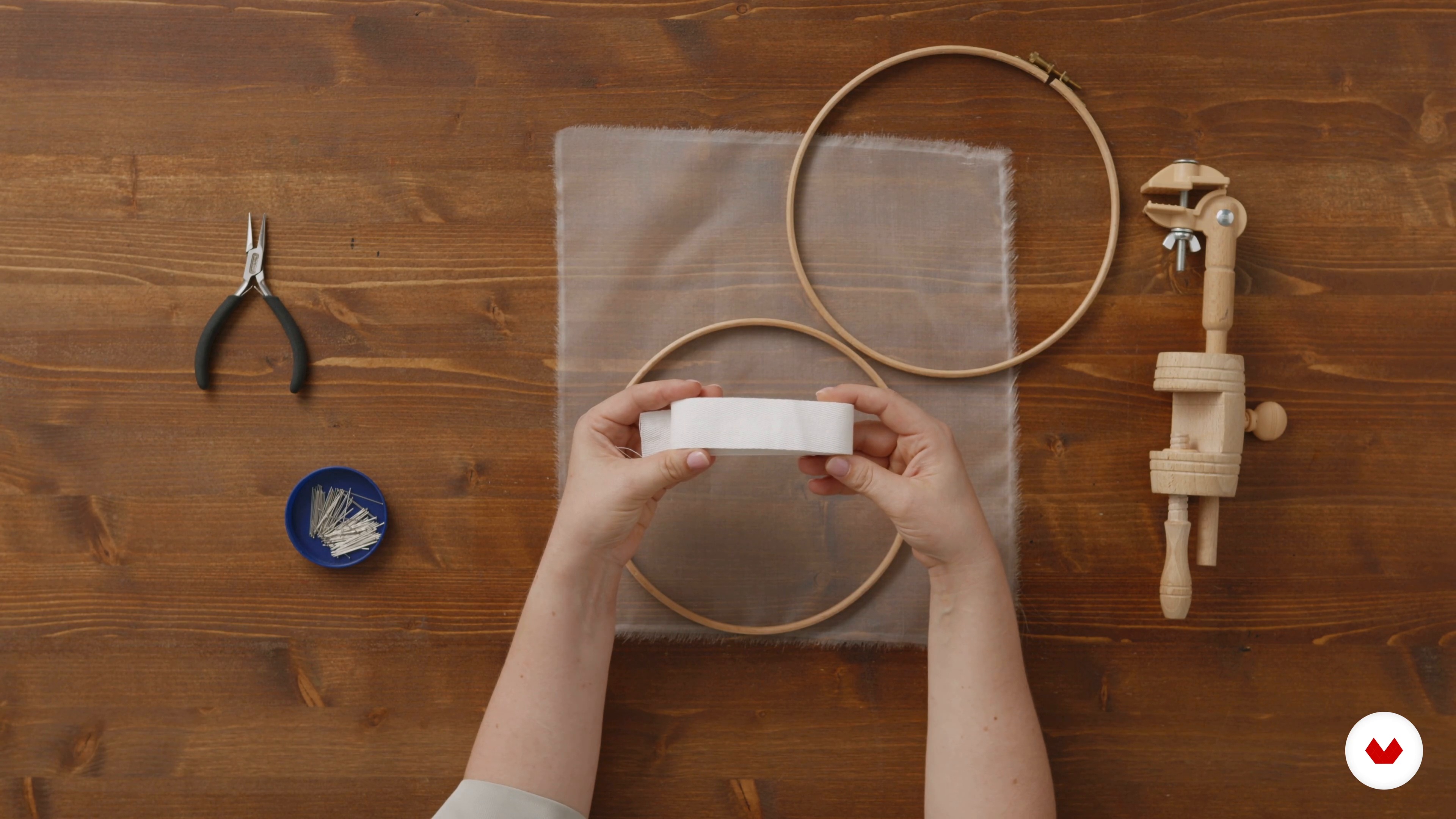
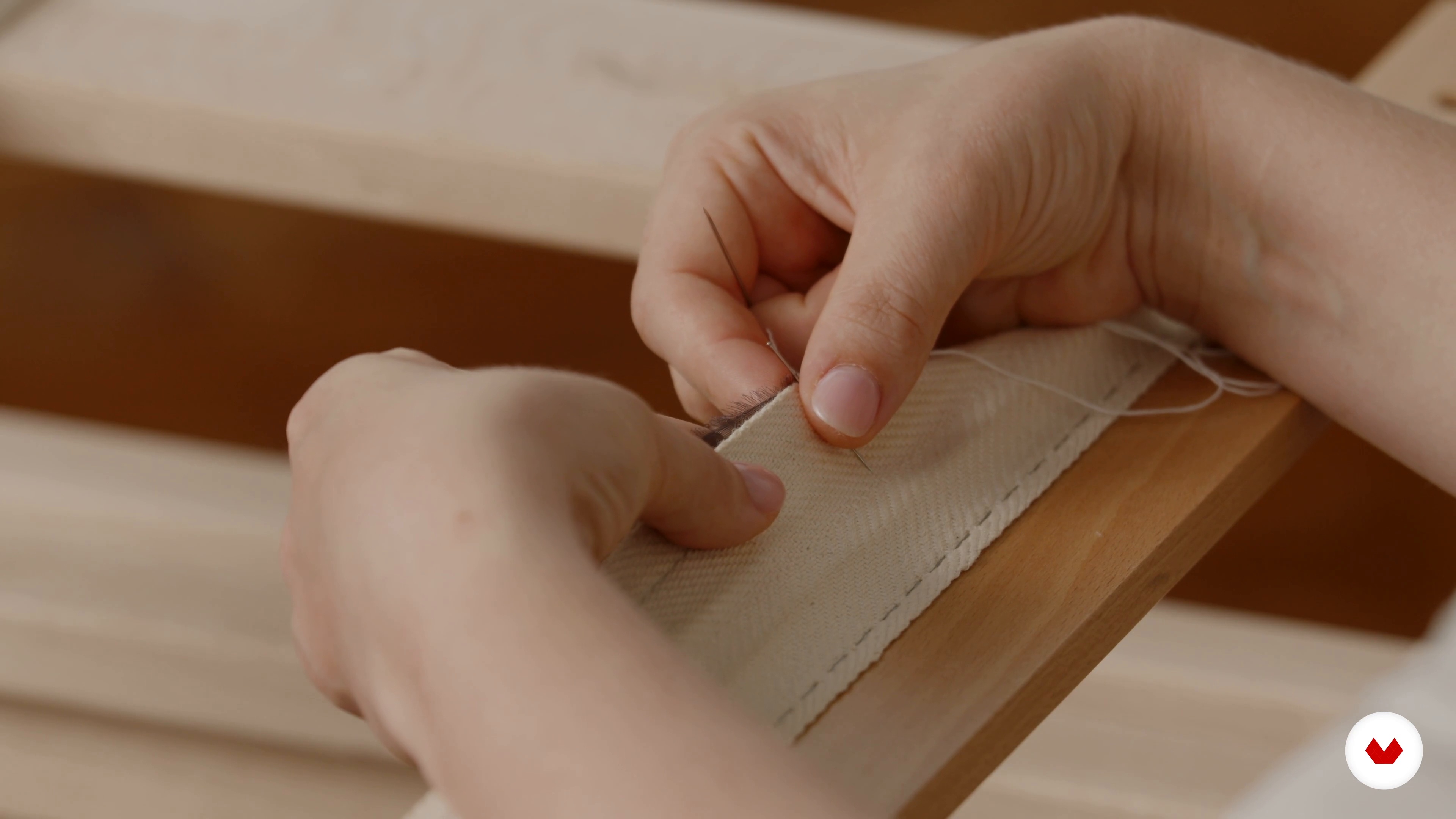
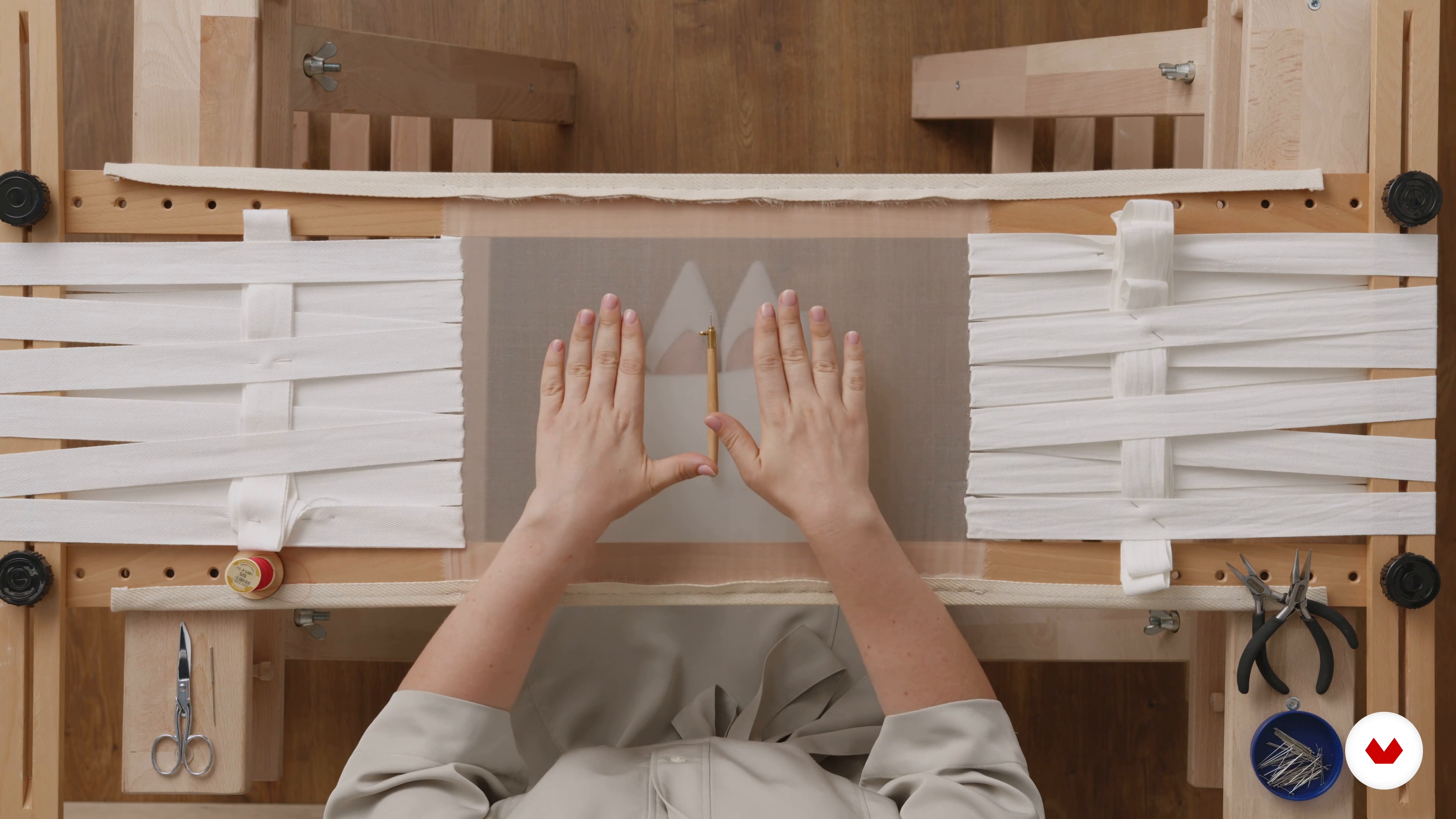
In this lesson you will learn to prepare your embroidery base, to assemble the rectangular and round frame for embroidery with Lunéville crochet.
20m
image
6
How to assemble the frame 2
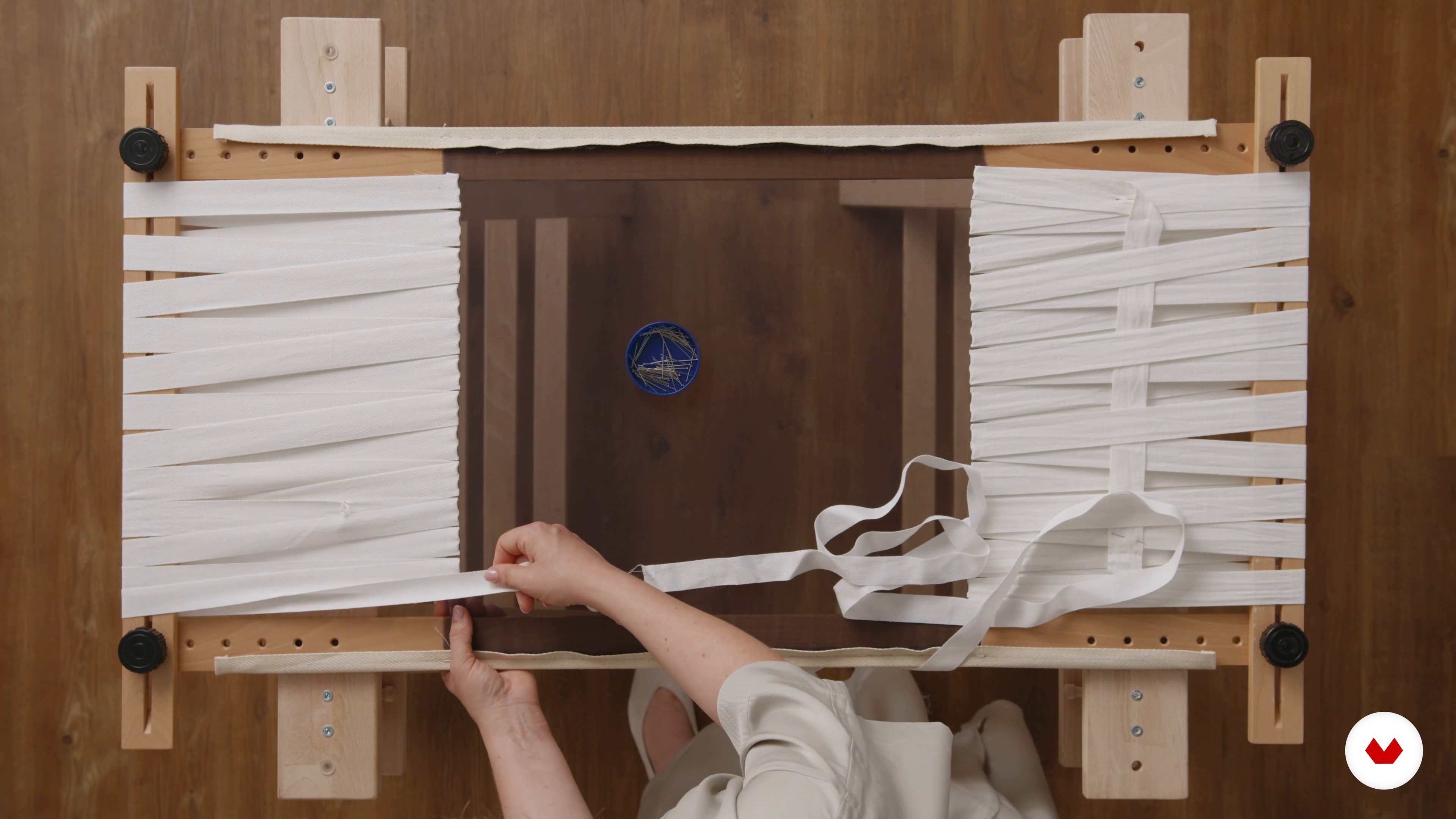
Now that I have shown you how to prepare the base for embroidery, treating the base with steam and ironing it to assemble a round hoop, I will show you the steps necessary to assemble a rectangular hoop.
20m
image
7
How to assemble the frame 3
I will continue to show you how to give tension to the base of the rectangular frame to obtain an optimal result.
19m
image
8
First approach to Lunéville crochet
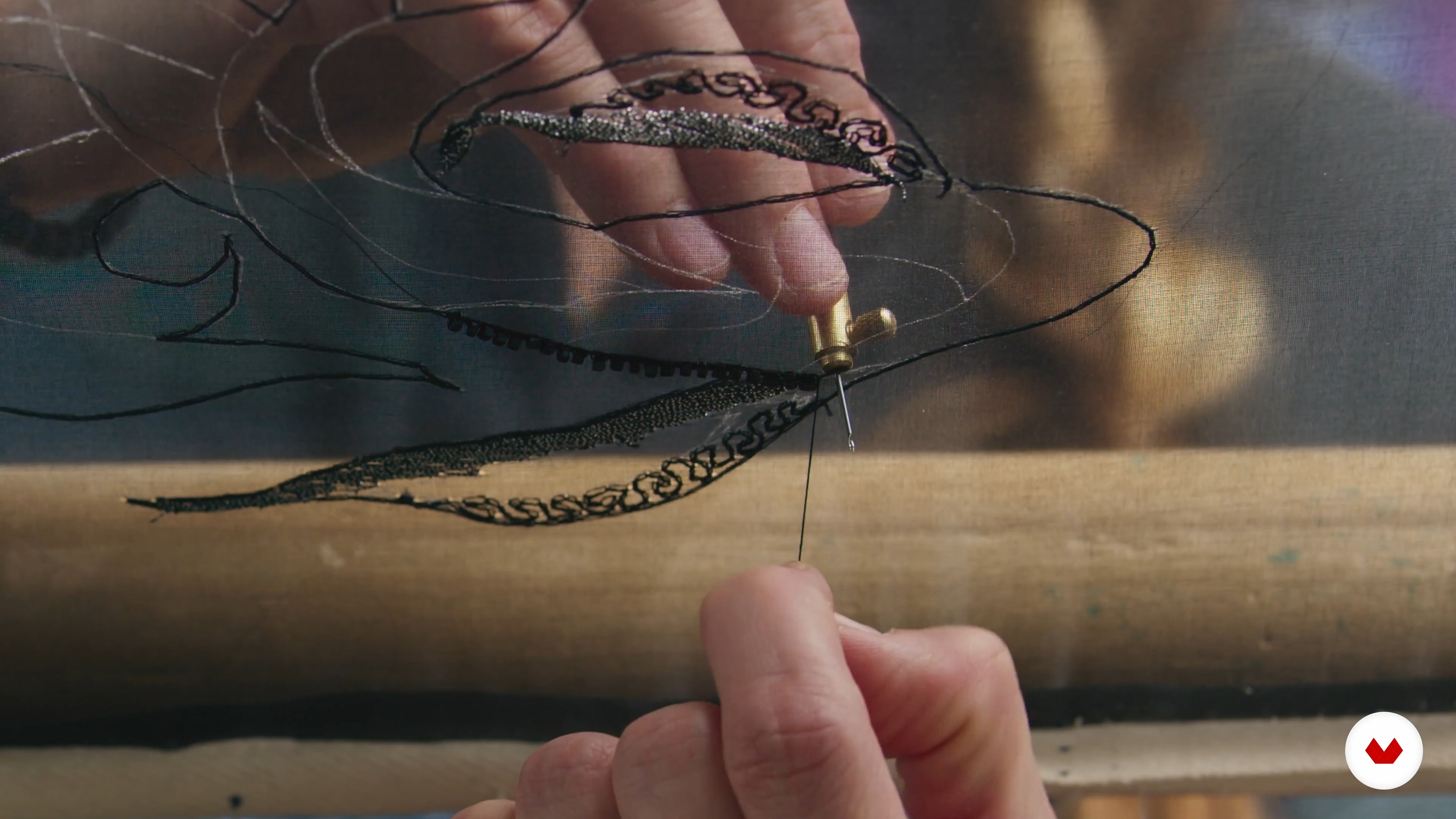
In this lesson you will learn to handle the crochet and make the first movements with this tool.
10m
image
9
The basic points 1
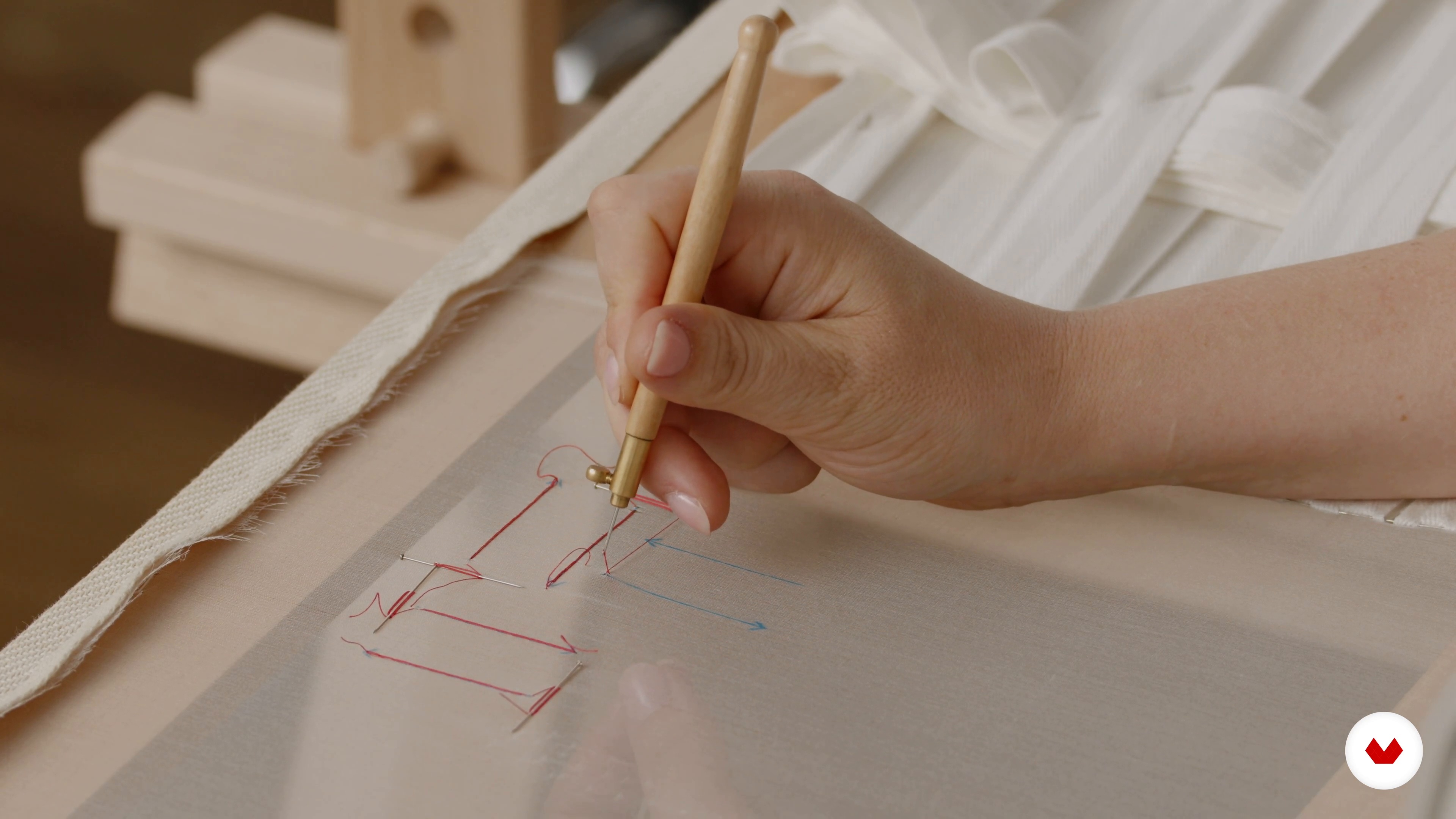
In this lesson you will learn the main points of the Lunéville crochet embroidery technique. I will focus in particular on the study of the directions (up, down, left, right) and the winding directions of the thread and the looper.
20m
image
10
The basics 2
Now let's continue with the main points, such as the base point, the starting point and the closing point.
17m
image
11
Wavy lines and angles 1
In this lesson you will learn to make corners with thread and manage fluid shapes by adapting the direction rules learned in the previous lesson.
16m
image
12
Wavy lines and angles 2
Now that I've already done an explanation on the paper, I'll show you an example of geometric shapes on the frame. I'll also show you how to transfer the design to the hoop.
19m
image
13
Beading application 1
In this lesson you will learn to size the beads, transfer them to the working thread and apply the beads with the in-line Lunéville crochet.
19m
image
14
Beading 2
You have already learned to apply the beads in a straight line, always maintaining the same distance between them. Now I will show you how to apply tubes of different lengths.
17m
image
15
Application of sequins with Lunéville crochet 1
There are many varieties and sizes of sequins. So, I'm going to start this lesson by showing you some of the types that I'm going to be working with. You will also learn to distinguish the right and wrong sides of the sequins.
11m
image
16
Application of sequins with Lunéville crochet 2
The sequins have already been transferred to the workpiece, so it's time to start applying them to the loom with the Lunéville crochet.
15m
image
17
Inspiration
In this lesson we will briefly see how to get from an idea to a concrete project and how to choose a color palette for our project.
15m
image
18
Prepare the base
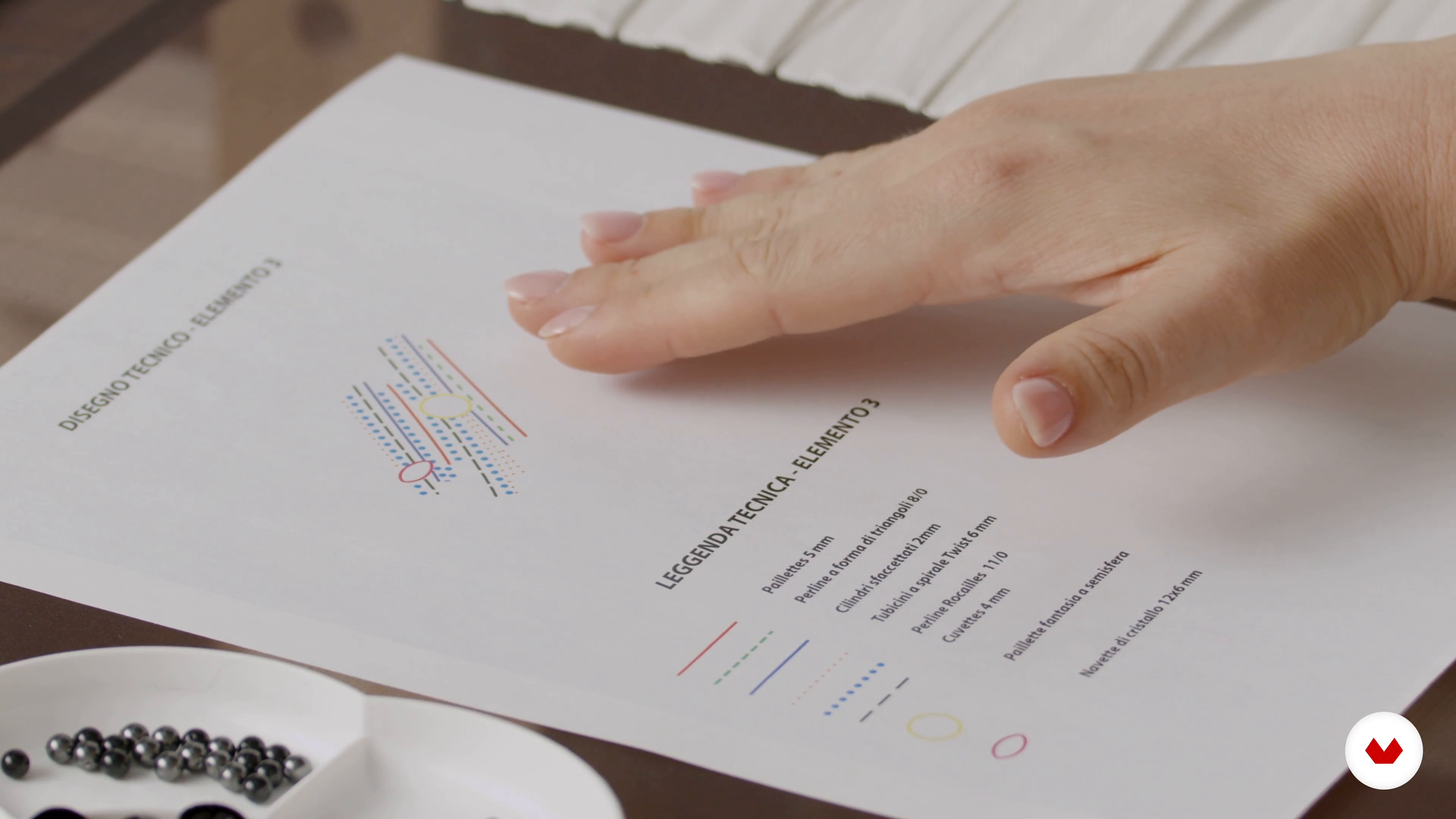
In this lesson we will hoop the base for our embroidery, we will transfer the design and we will analyze the technical drawing together to learn how to read it.
15m
image
19
Embroidery 1
It's time to get to work! In this lesson we create our embroidery following the technical drawing.
13m
image
20
The embroidery 2
Embroidery is a process that requires time, patience and a lot of practice. Now I will continue working with embroidery following the technical drawing to apply different materials on my hoop.
20m
image
21
Application of hemispherical sequins
In this lesson we will learn how to needle sew hemisphere sequins and sew-on shuttles.
15m
image
22
Embroidery treatment
In this lesson we will see all the final steps to do to our embroidery before applying it to the chosen item of clothing.
17m
image
23
Embroidery application 1
In this lesson you will see how to treat the edge of the embroidery to later sew it to the sweater.
15m
image
24
Embroidery application 2
Now I will use a round wooden frame so as not to have to hold all the weight of the frame and it will be easier to apply the embroidery on the pullover.
16m
image
25
Embroidery application 3
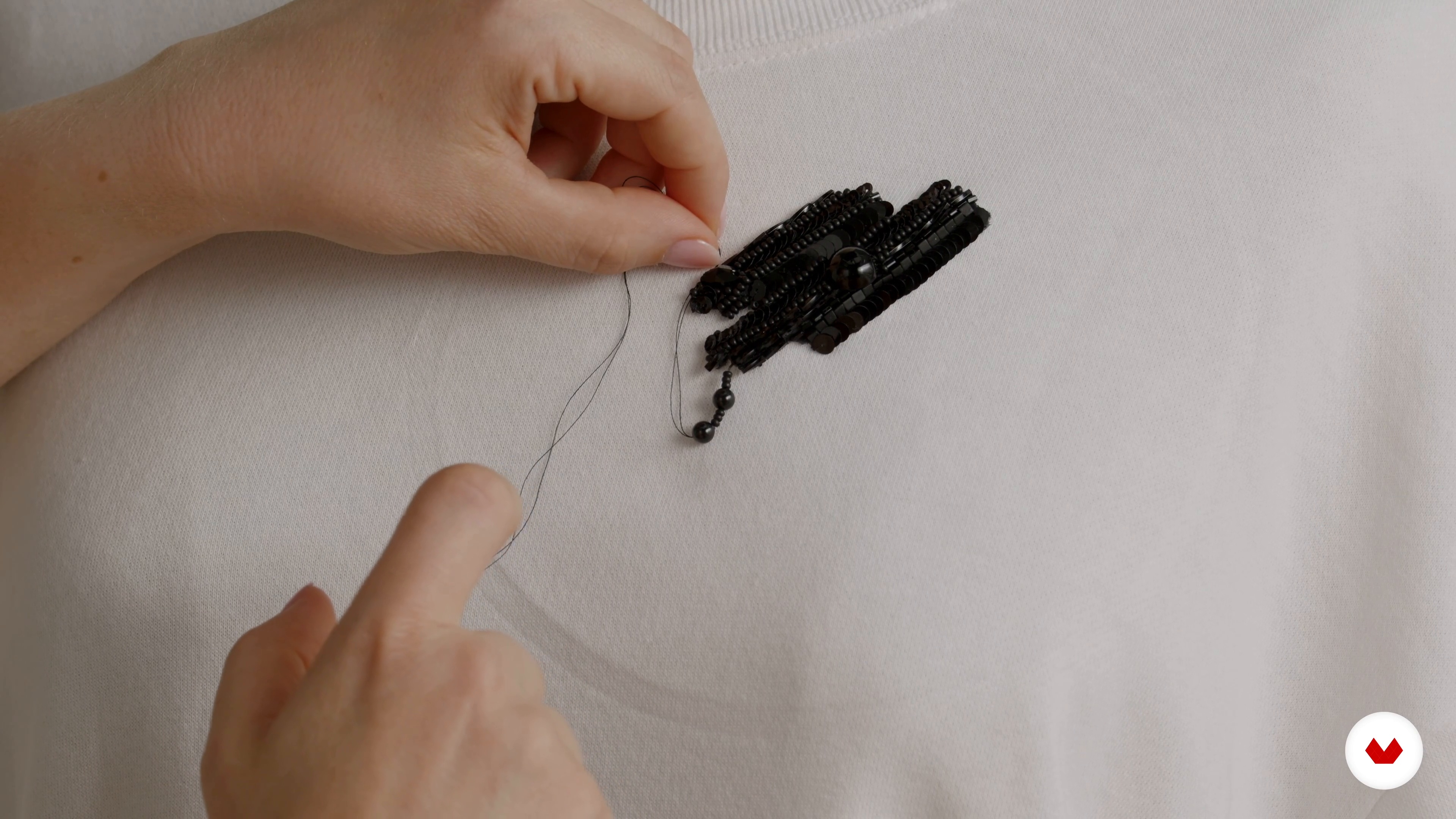
In this phase of my process I will go to work on the pendants. To this end, I will use pearls of different sizes and crystals.
15m
image
26
Apply the techniques to different materials
In this lesson we will see how to create a variety of embroideries with the same techniques by applying small variations.
8m
  • 100% positive reviews (1)
  • 261 students
  • 92 lessons (18h 16m)
  • 79 additional resources (22 files)
  • Online and at your own pace
  • Audio: Spanish, German, English, Spanish (Latam), French, Italian, Polish, Portuguese, Turkish
  • Spanish · English · Portuguese · German · French · Italian · Polish · Dutch · Turkish · Romanian · Indonesian
  • Level: Beginner
  • Unlimited access forever

What is this course's project?

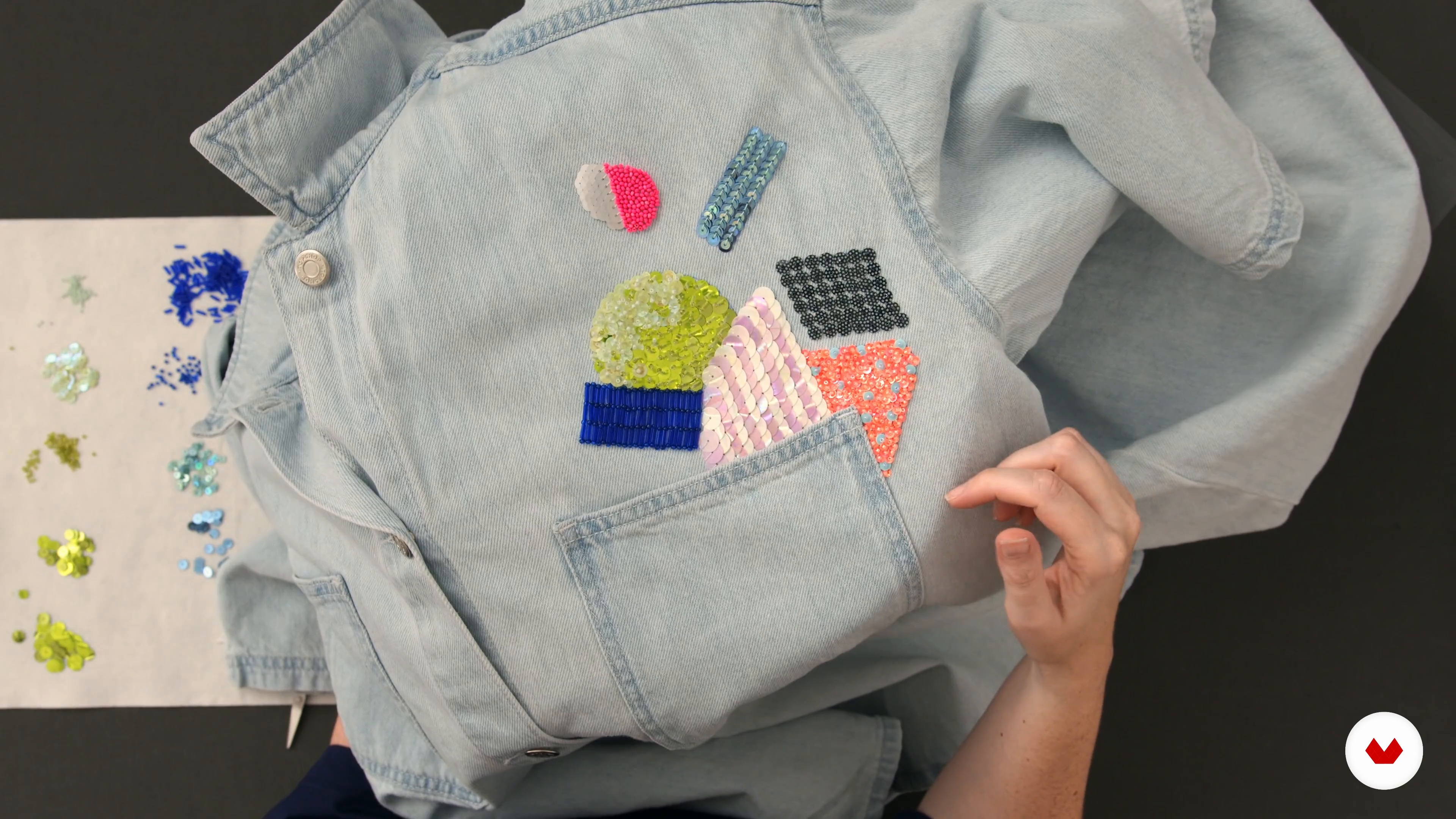
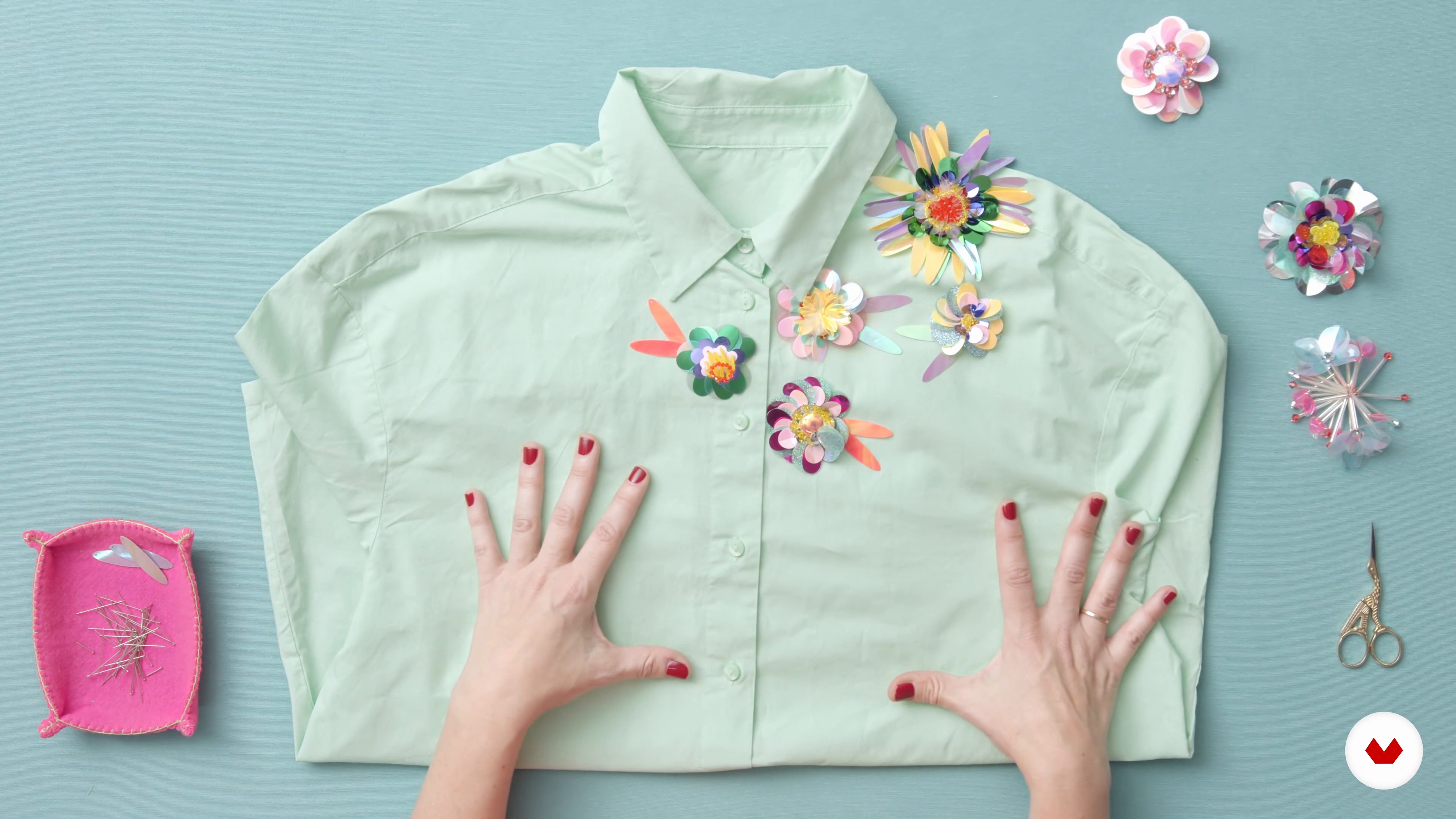
The course project invites you to create a unique bead embroidery design on a simple garment, embellishing it with sparkle and detail. You will learn to combine colors and patterns to transform your garments into elegant and sophisticated pieces.

Who is this specialization for?

This course is designed for individuals passionate about fashion and haute couture who wish to master advanced luxury embroidery techniques. Ideal for those looking to elevate their creations with exquisite and personalized details, blending tradition and modernity in every stitch.

Requirements and materials

No extensive prior knowledge is required, just a basic notion of embroidery. You will need a hoop, needles, threads, and beadwork materials such as seed beads, gemstones, or sequins. The approach is practical and accessible for everyone, encouraging creativity and experimentation.


Select to get to know your teachers in this specialization course
Read more ↓

Reviews

261 Students
1 Reviews


What to expect from this specialization course

  • Learn at your own pace

    Enjoy learning from home without a set schedule and with an easy-to-follow method. You set your own pace.

  • Learn from the best professionals

    Learn valuable methods and techniques explained by top experts in the creative sector.

  • Meet expert teachers

    Each expert teaches what they do best, with clear guidelines, true passion, and professional insight in every lesson.

  • Certificates
    Plus

    If you're a Plus member, get a custom certificate for every specialization course. Share it on your portfolio, social media, or wherever you like.

  • Get front-row seats

    Videos of the highest quality, so you don't miss a single detail. With unlimited access, you can watch them as many times as you need to perfect your technique.

  • Share knowledge and ideas

    Ask questions, request feedback, or offer solutions. Share your learning experience with other students in the community who are as passionate about creativity as you are.

  • Connect with a global creative community

    The community is home to millions of people from around the world who are curious and passionate about exploring and expressing their creativity.

  • Watch professionally produced courses

    Domestika curates its teacher roster and produces every course in-house to ensure a high-quality online learning experience.


FAQs

Domestika courses are online classes that allow you to learn new skills and create incredible projects. All our courses include the opportunity to share your work with other students and/or teachers, creating an active learning community. We offer different formats:
Original Courses: Complete classes that combine videos, texts, and educational materials to complete a specific project from start to finish.
Basics Courses: Specialized training where you master specific software tools step by step.
Specialization Courses: Learning paths with various expert teachers on the same topic, perfect for becoming a specialist by learning from different approaches.
Guided Courses: Practical experiences ideal for directly acquiring specific skills.
Intensive Courses (Deep Dives): New creative processes based on artificial intelligence tools in an accessible format for in-depth and dynamic understanding.

All specialization courses are 100% online, so once they're published, specialization courses start and finish whenever you want. You set the pace of the class. You can go back to review what interests you most and skip what you already know, ask questions, answer questions, share your projects, and more.

The specialization courses are divided into different modules. Each one includes lessons, informational text, tasks, and practice exercises to help you carry out your project step by step, with additional complementary resources and downloads. You'll also have access to an exclusive forum where you can interact with other students, as well as share your work and your final project, creating a community around the specialization courses.

You can redeem the specialization courses you received by accessing the redeeming page and entering your gift code.

If you're a Plus member, when you complete a course you've purchased, you'll instantly get your personalized certificate. You can see all your certificates in the Certificates section of your profile. You can download your certificates as PDFs and share the link online. Learn more about certificates.
Specialization in luxury embroidery for fashion and haute couture. Craft, and Fashion course by Domestika

Specialization in luxury embroidery for fashion and haute couture

A specialization by multiple teachers
Berkeley, United States.
Joined April 2002
  • 100% positive reviews (1)
  • 261 students