Weaving with a Circular Loom
A course by AncestralTextile Artist
A course by Ancestral, Textile Artist

Learn how to weave and create contemporary decorative pieces without prior knowledge
A loom doesn't have to be rectangular! Weaving with a round base opens up a world of possibilities for you to imagine and create unique tapestries. Erika Pineda, textile artist and founder of the brand Ancestral, teaches you how to make them in this online course. She makes hand-woven decorative pieces and has collaborated with brands such as American Eagle, Egeo restaurant (Hotel Click Clack), Azul selva, and El Tesoro shopping center in Medellin.
Get to know circular loom weaving, learn the basic stitches such as taffeta, Soumak, and fringes, to then create four tapestries ready to decorate the walls of your house, enjoying the process and connecting with the material stitch by stitch.
What will you learn in this online course?
16 lessons & 14 downloads
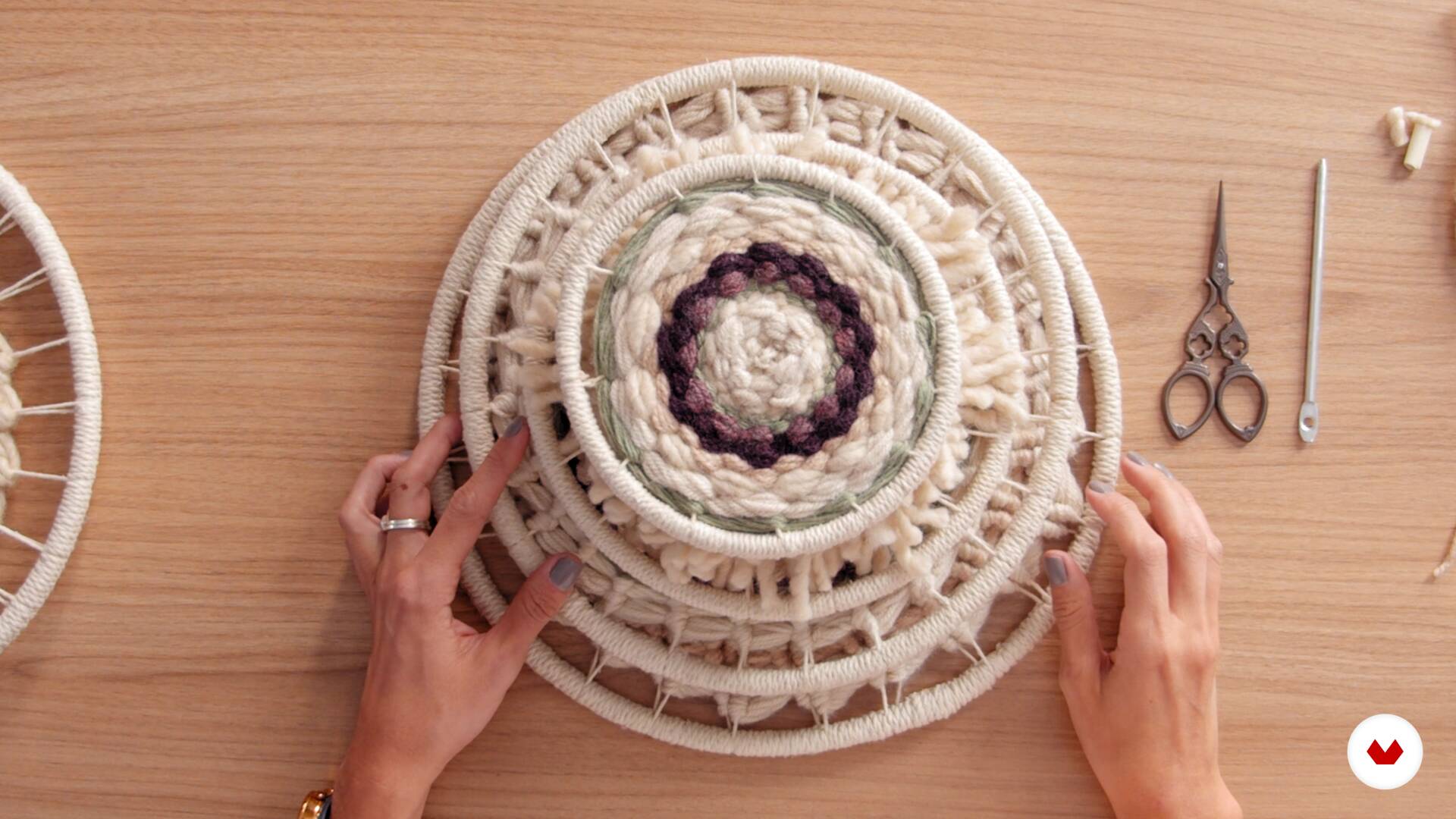
What We Will Do in the Course
54 seconds
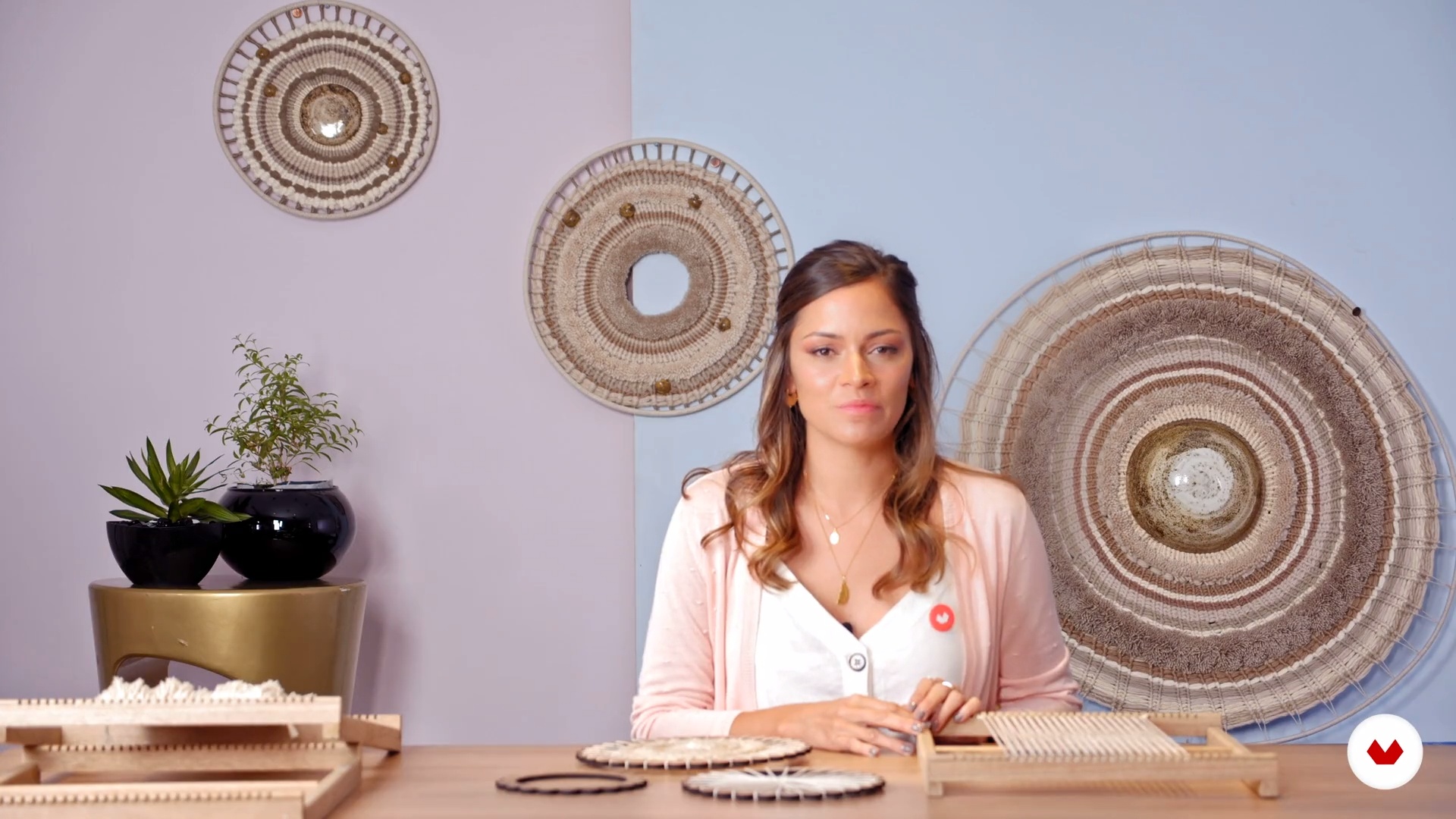
The Loom, a Technique with Multiple Forms
1 minute, 45 seconds
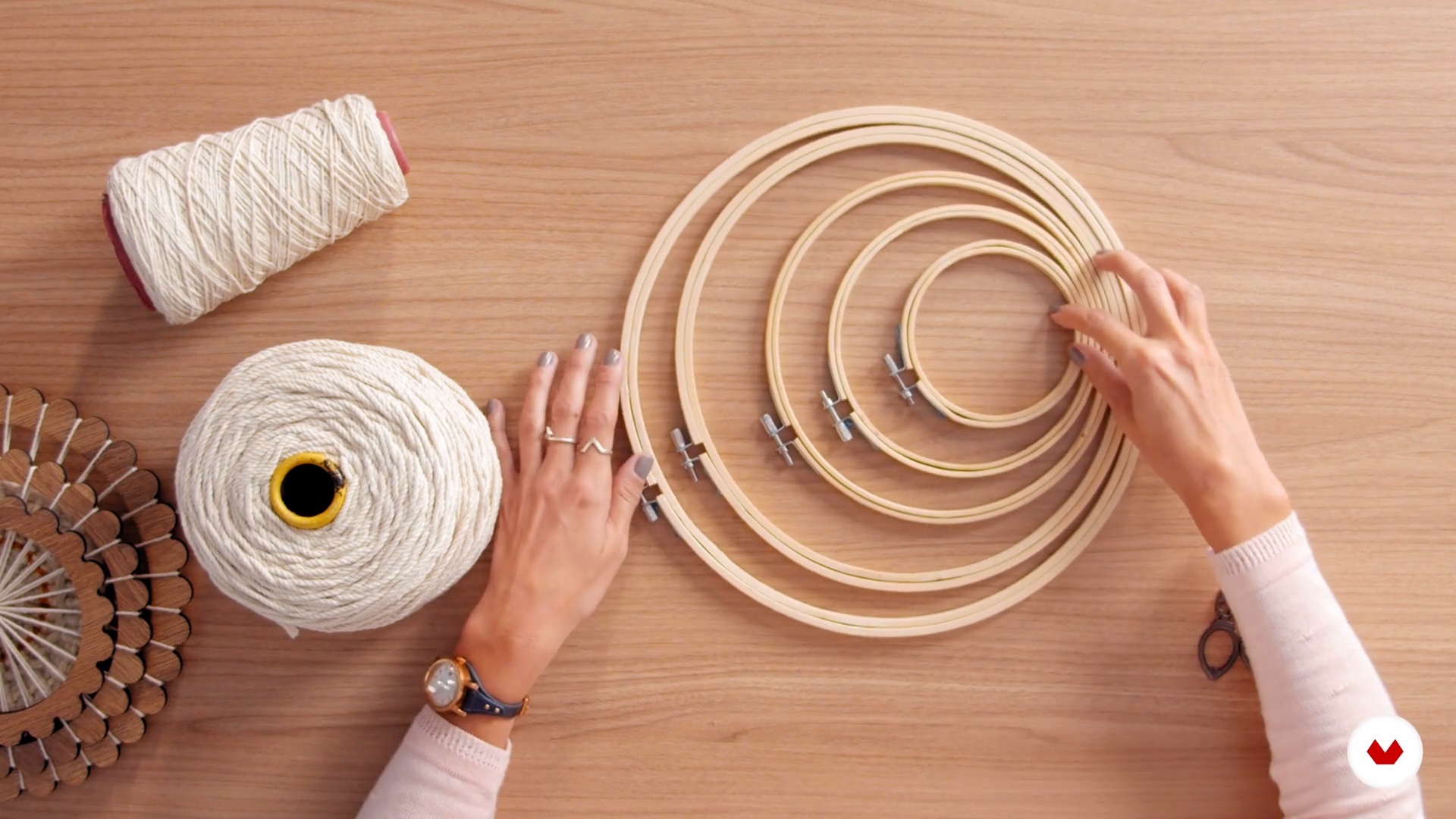
The Frame: the Main Tool of the Technique
3 minutes, 27 seconds
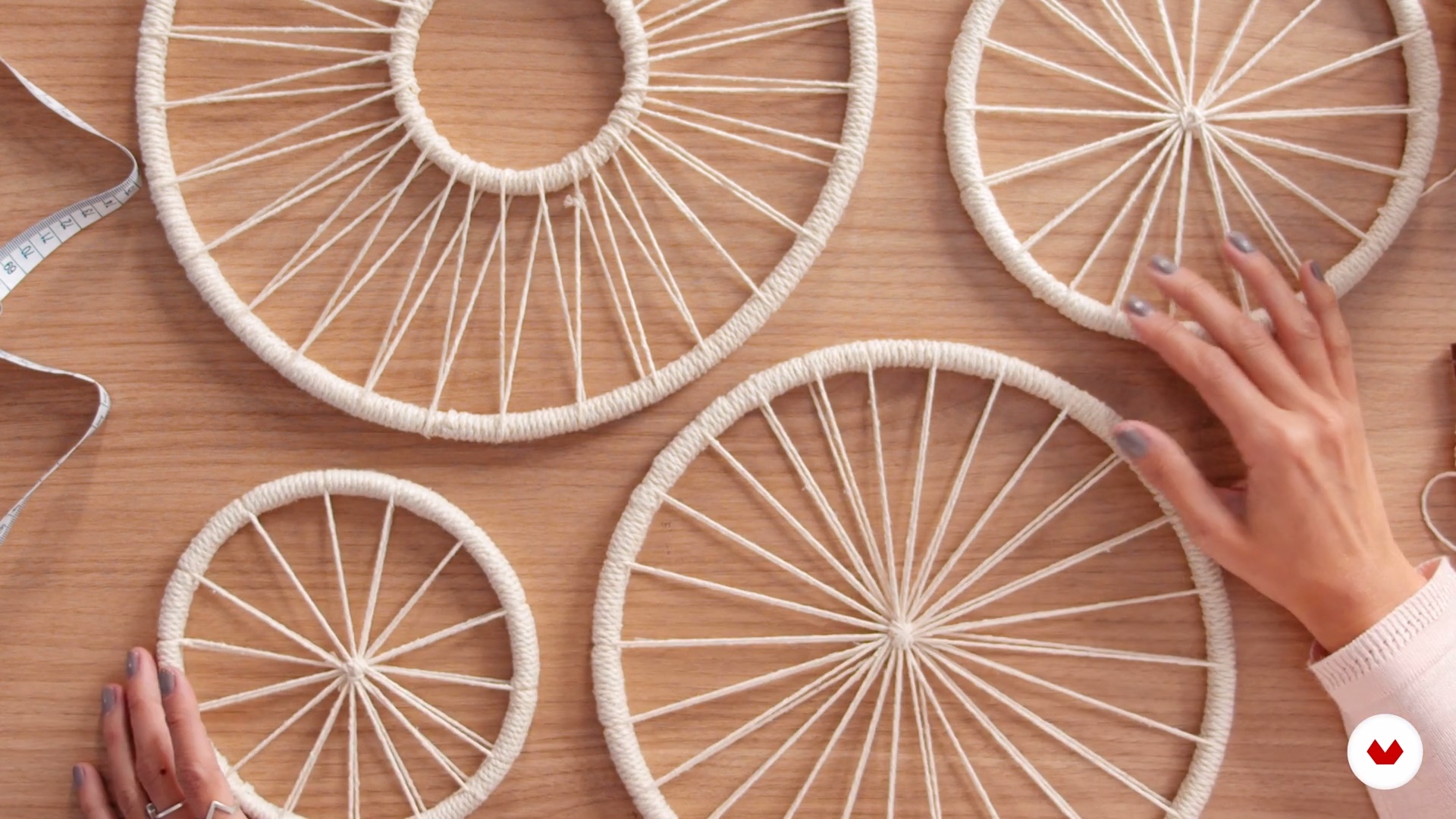
The Warp or First Laying of Yarn
10 minutes, 25 seconds
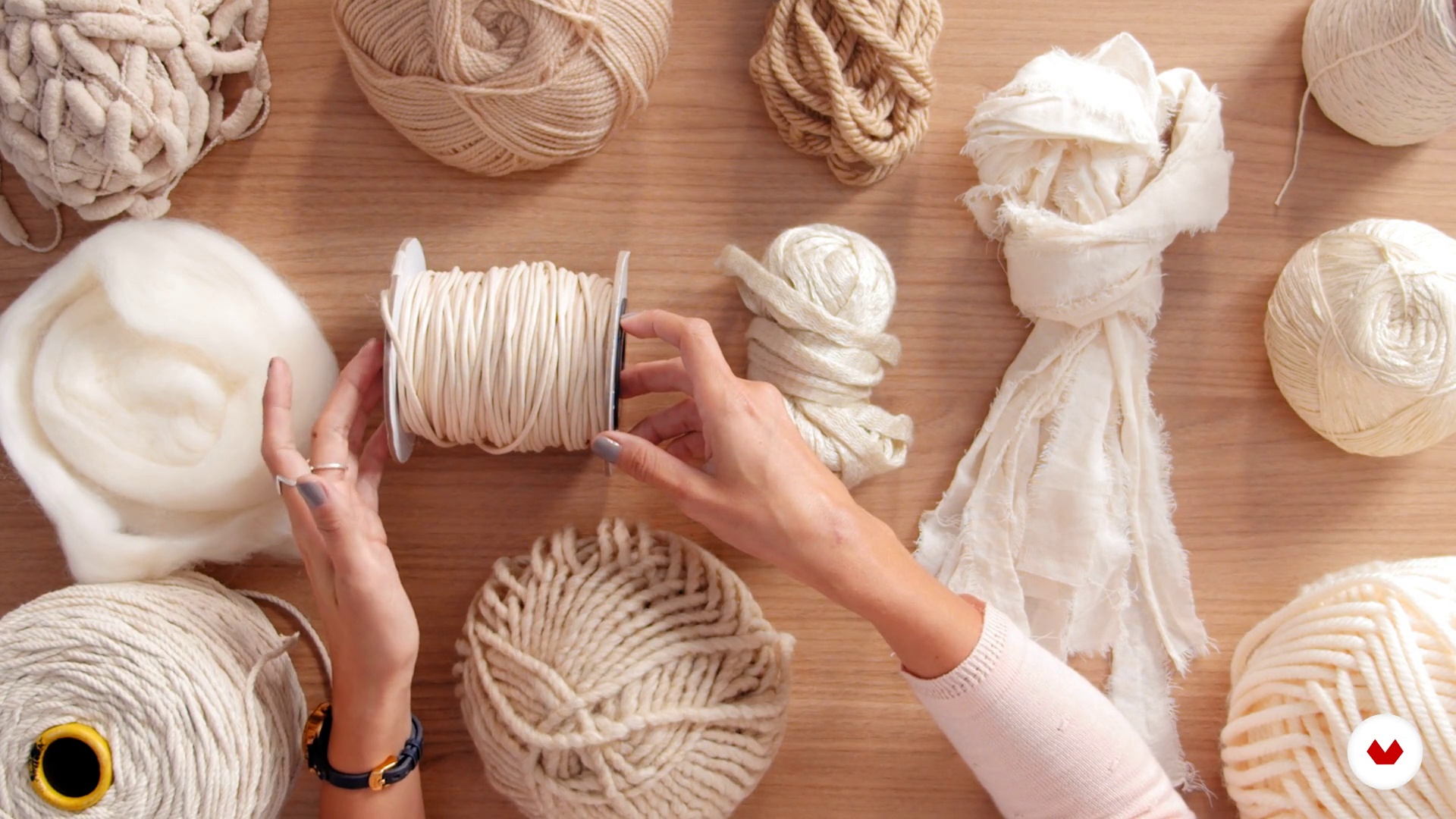
The Weave and Materials
2 minutes, 29 seconds
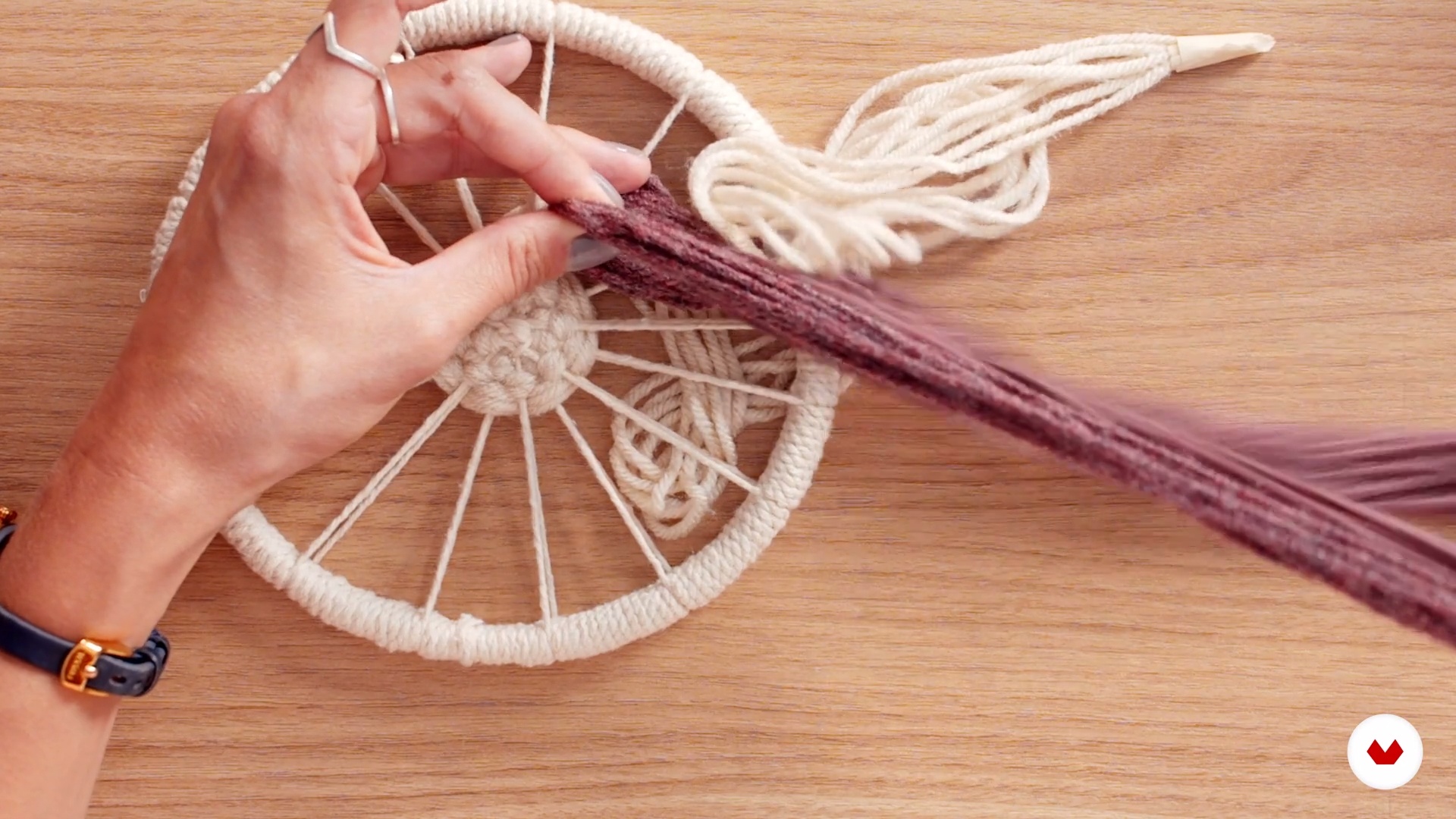
Taffeta Weave Sampler
9 minutes, 57 seconds
What's included in this course?
First, meet Erika, who tells you the reasons that led her to dedicate herself to weaving. See how she created the Ancestral brand, in which she seeks to revive artisan techniques and apply them in the development of contemporary pieces and reclaim weaving as a lifestyle. She introduces you to her biggest influences and references from the world of weaving, ranging from her childhood to the present.
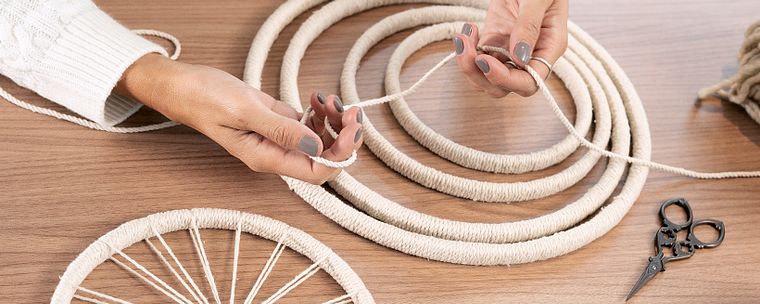
Explore the basics of loom weaving and learn the differences and similarities between the upright and circular loom. Get to know the main work tool to make a tapestry: the frame, then build your own one with easy-to-find tools.
Discover the characteristics that the warp thread must have and learn step by step how to assemble it on the frame. Next, choose the materials to use to compose the weave of the loom.
Erika teaches you basic stitches such as the taffeta, the Soumak, and adding fringes in your pieces to create volume, through different practices, creating three mini tapestries that serve as a sample of the ideal stitches and accessories.
Upon completion of the exercises, design and create your tapestry. To do this, define the order of the stitches, colors, and materials that you use. Then, start weaving from the center to the ends, applying the Soumak stitch and adding different fringes.
Finally, Erika teaches you how to disassemble the fabric from the frame to give it a different use and other applications to the fabric that you can do on the circular loom.
What is this course's project?
Create four tapestries that you can use to give life to any wall: three for practice to learn the basic stitches and the last one where you apply everything you have learned.
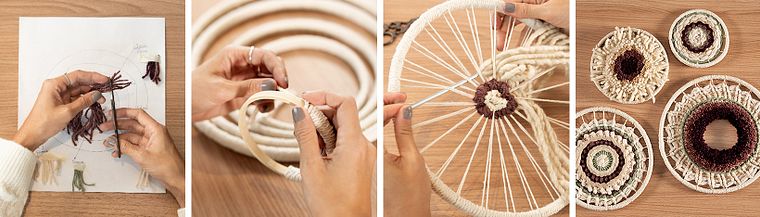
Projects by course students


Who is this online course for?
Anyone who wants to learn to weave on a circular loom and for those who want to adopt this technique in order to create handmade and contemporary decorative pieces.
Requirements and materials
No previous knowledge is necessary, since Erika teaches you the technique and the basic stitches from scratch. As for materials, you need four drums or hoops of different sizes to embroider, thread, wool, scissors, and needles.
Reviews
- 6 months ago
Very helpful trainer. She is a real inspiration and i love her creativity
- 1 year ago
excelente la profesora y la claridad en la presentacio! me encata
- 1 year ago
Curso interesante, que permite utilizar diferentes materiales y colores incentivando nuestra creatividad. También contribuye a mantenernos activas, física y mentalmente, ocupando nuestro tiempo para relajarnos realizando hermosos adornos que podemos vender, regalar o adornar nuestro hogar. Excelente profesora: clara, amable con dominio de los conocimientos. Me encantó que enseñe a crear las urdimbres con material que podemos adquirir con facilidad.
- 1 year ago
¡¡Me encantó este curso!! Muy bien explicado y con muchas posibilidades por explorar retando a la imaginación. El tejido es absolutamente terapéutico, y por lo que he aprendido en este curso, es también un excelente recurso para mejorar la salud emocional y cognitiva de las personas, en especial cuando por desgracia viven alguna situación estresante. Incluso el tejido sirve para retrasar la artritis en las articulaciones de las manos. Gracias muy especiales a la maestra.
- 1 year ago
Me ha gustado mucho el curso, tiene muchas posibilidades y la profesora lo explica muy bien

The work created by Ancestral is full of intricate details and are individually made so that the result of each piece is unique. This has led them to a presence in several stores in Colombia, as well as collaborating with brands such as American Eagle, Egeo (restaurant in the Click Clack hotel in Colombia), Azul selva, and the El Tesoro shopping mall in Medellin.
Content
- U1
Introduction
- Introduction
- Influences
- What We Will Do in the Course
- U2
Get to Know the Technique
- The Loom, a Technique with Multiple Forms
- The Frame: the Main Tool of the Technique
- The Warp or First Laying of Yarn
- The Weave and Materials
- U3
Basic Stitches
- Taffeta Weave Sampler
- Soumak Weave Sampler
- Sampler with Tassles
- U4
Circular Loom Tapestry
- Design: Stitches, Colors, and Shapes
- Start or Central Part of the Tapestry
- The Middle Part of the Tapestry
- Edge or End Part of the Tapestry
- U5
Ideas and Recommendations
- Disassembly
- Other Uses
- FP
Final project
- Weaving with a Circular Loom
What to expect from a Domestika course
Learn at your own pace
Enjoy learning from home without a set schedule and with an easy-to-follow method. You set your own pace.
Learn from the best professionals
Learn valuable methods and techniques explained by top experts in the creative sector.
Meet expert teachers
Each expert teaches what they do best, with clear guidelines, true passion, and professional insight in every lesson.
Certificates
PLUSIf you're a Plus member, get a custom certificate signed by your teacher for every course. Share it on your portfolio, social media, or wherever you like.
Get front-row seats
Videos of the highest quality, so you don't miss a single detail. With unlimited access, you can watch them as many times as you need to perfect your technique.
Share knowledge and ideas
Ask questions, request feedback, or offer solutions. Share your learning experience with other students in the community who are as passionate about creativity as you are.
Connect with a global creative community
The community is home to millions of people from around the world who are curious and passionate about exploring and expressing their creativity.
Watch professionally produced courses
Domestika curates its teacher roster and produces every course in-house to ensure a high-quality online learning experience.
FAQs
You’ll learn how to build your own circular frame, set up the warp, weave basic stitches like plain weave and soumak, create decorative tapestries, experiment with materials and colors, and finish your pieces with professional-quality edges.
The course is intermediate level, perfect if you already have some basic weaving knowledge, but it also covers fundamental circular loom concepts to make learning easier.
You’ll need a circular frame (which you can build during the course), cotton or wool yarns, a weaving needle, scissors, and optional materials like waxed cord and yarns of various thicknesses and colors.
The course teaches warping, weft techniques, plain weave and soumak stitches, fringe making, texture and color variations, and professional finishing for circular tapestries.
Yes, the course focuses on creating decorative tapestries, and you can adapt the techniques to design lamps, wall hangings, and other unique textile pieces.
A circular loom lets you weave warp and weft in a circle, creating radial designs, while a vertical loom produces flat, rectangular fabrics. Both techniques are explored in the course.
It’s not required, but having some crochet or macramé experience will help you grasp the techniques faster and progress more smoothly.