Sustainable Fashion: Introduction to Upcycling
A course by Ximena Corcuera, Fashion Designer





Give unused clothes new life with a weaving technique

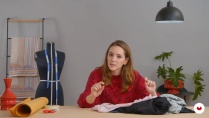
Upcycling is a form of reusing and demonstrates a social commitment. Today, due to the environmental problems generated by the fashion industry, new techniques and trends have emerged to create amazing and unique garments responsibly. Ximena Corcuera is a fashion designer who seeks to make people aware of the possibilities offered by upcycling and using sustainable materials instead of generic ones. With years of experience and learning, and having collaborated with big names in fashion such as Agatha Ruiz de la Prada, in this course Ximena teaches you how to create garments with pieces of fabric, making new use of materials that would otherwise be considered disposable.
She teaches you the importance of joining this movement. Learn some of the most important facts about the environmental impact of the fashion industry, as well as new options to create sustainable fashion. Practice an upcycling technique with fabric that allows you to create your own garments, promoting a circular economy.
What will you learn in this online course?
14 lessons & 15 downloads
What's included in this course?
Meet Ximena and learn how life led her to fashion design almost without realizing it. She eventually decided to focus her full attention on it, and in 2018 she launched her brand, which is a space where she combines all of her interests, visions, and experience in sustainable fashion. Learn about her main inspiration for researching and developing zero-waste proposals.
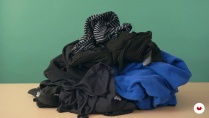
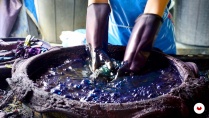
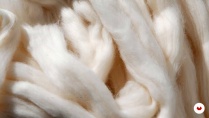
Discover some of the most important facts about the environmental impact of the fashion industry and the main developments in order to raise awareness about it. Get to know the characteristics of sustainable materials and understand why cotton is part of one of the most harmful processes for the environment, and open your eyes to more responsible alternatives such as organic and recycled cotton, as well as other innovative materials. In addition, discover new manufacturing techniques and processes that are emerging as points of interest to create sustainable fashion.
Ximena explains the process of upcycling fabric step by step. Go over the details of the materials you need to give new life to old garments, and then focus on designing your piece and analyzing the combinations of materials and colors.
Prepare the materials and molds to create different woven pieces, transforming them through cuts and knots. Once the materials are ready, learn all the phases to make the basic fabric to later weave each piece and join them to produce the final result—a garment. These techniques can be replicated with different types of textile waste, as well as tighter or looser weaves, to achieve different results. The idea is to get to know the tool so that you can experiment freely.
To finish, learn what to keep in mind when washing your piece. In addition, as inspiration, take a look at different pieces made with this technique to learn about the possibilities it offers, along with other techniques that you can explore to continue your journey in the world of sustainable fashion.
- 98% positive reviews (285)
- 6,434 students
- 14 lessons (2h 25m)
- 15 additional resources (4 files)
- Online and at your own pace
- Available on the app
- Audio: Spanish, English, French, Italian, Portuguese, Turkish
- Spanish · English · Portuguese · German · French · Italian · Polish · Dutch · Turkish
- Level: Beginner
- Unlimited access forever
What is this course's project?
Make a sweater by applying a weaving technique inspired by upcycling to make a new garment from old ones.

Projects by course students


Who is this online course for?
This course is for anyone who is interested in sustainable fashion and manual and creative processes, and anyone who wants to get started with a technique to create incredible pieces by deconstructing others.
Requirements and materials
No prior knowledge is necessary but having a little experience with pattern making and weaving will make it easier for you to follow along with the course.
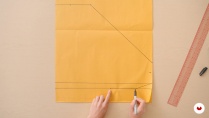
Regarding the materials, you need fabric scissors, a sheet of manila paper, masking tape, a pencil, an eraser, a pencil sharpener, rulers, and old clothes that you want to use in your project (6 to 12 garments that have spandex or lycra, such as leggings, socks , sweatshirts, t-shirts, pants, etc.).

Reviews

Ximena Corcuera
A course by Ximena Corcuera
Ximena grew up in a spontaneous environment surrounded by art and creativity, which led her to overcome her fear of processes and enjoy artistic experimentation as a way of life. From an early age she worked on different projects related to fashion, but it wasn't until later that she discovered that it was her passion. Ximena has more than five years of experience in the world of fashion, trends, experimental design, sustainable fashion, retail, and licenses, which has led her to learn from experts in countries such as Mexico, France, Spain, Brazil, Guatemala, Chile, Argentina, and Ecuador, among others.
She is currently working on her own project, where she seeks to generate cultural experiences responsibly through fashion and demonstrate its power as a channel for expressing ideas in order to connect with each other.
Content
-
U1
Introduction
-
Presentation
-
Influences
-
What will we do during the course
-
-
U2
Introduction to sustainable fashion
-
Fashion, the second most polluting industry
-
Cotton and sustainable materials
-
New options to design sustainable fashion
-
-
U3
Weaving leftovers
-
materials
-
Mold stroke
-
Material Preparation
-
Base fabric
-
Torso tissue
-
Sweater union
-
-
U4
Care and references
-
Applications and care
-
Other techniques to explore
-
-
FP
Final project
-
Get started in the upcycling fabric
-
What to expect from a Domestika course
-
Learn at your own pace
Enjoy learning from home without a set schedule and with an easy-to-follow method. You set your own pace.
-
Learn from the best professionals
Learn valuable methods and techniques explained by top experts in the creative sector.
-
Meet expert teachers
Each expert teaches what they do best, with clear guidelines, true passion, and professional insight in every lesson.
-
Certificates
PlusIf you're a Plus member, get a custom certificate signed by your teacher for every course. Share it on your portfolio, social media, or wherever you like.
-
Get front-row seats
Videos of the highest quality, so you don't miss a single detail. With unlimited access, you can watch them as many times as you need to perfect your technique.
-
Share knowledge and ideas
Ask questions, request feedback, or offer solutions. Share your learning experience with other students in the community who are as passionate about creativity as you are.
-
Connect with a global creative community
The community is home to millions of people from around the world who are curious and passionate about exploring and expressing their creativity.
-
Watch professionally produced courses
Domestika curates its teacher roster and produces every course in-house to ensure a high-quality online learning experience.
FAQs
Zero Waste pattern making is a design technique that uses 100% of the fabric, eliminating textile waste. It’s applied in sustainable fashion to reduce waste and create eco-friendly, responsible garments.
Yes, the course is designed for people with an intermediate level who already have a foundation in design or fashion and want to deepen their knowledge of sustainable techniques and innovative processes.
You’ll need used garments to recycle, scissors, measuring tape, manila paper patterns, thread, needles, and basic sewing supplies. For advanced modules, optional access to 3D modeling software like Clo3D is recommended.
You’ll learn Zero Waste pattern making, upcycling, 3D modeling, environmental impact analysis, use of sustainable materials, and how to transform used clothing into new, functional, and creative pieces.
Prior experience with Clo3D isn’t required, but it’s recommended to get familiar with digital tools if you want to make the most of the 3D modeling modules.
Upcycling turns old clothes into higher-value or more creatively designed products, while traditional recycling usually breaks materials down for basic new uses. Upcycling encourages creativity and sustainability.
Yes, the course equips you to design and produce collaborative, responsible collections using sustainable pattern making, eco-friendly materials, and upcycling techniques.

genius and relevant with this crises It's the good ways to saved the planet!
Estuvo increible! El curso es muy enriquecedor, me encanta!
Un curso con valiosa información y muy inspirador.
I’ve loved this course!
It’s so creative. It inspired me a lot!
💖😍🪡
Interesting course. She is very knowledgeable about this topic. Though I’m not sure how I like the look of the objects produced at the end. While very creative it is not for me.