Traditional and Digital Illustration: from the Sketch to Printing
A course by Ustudio Mol+CarlaDesigners and Illustrators
A course by Ustudio Mol+Carla, Designers and Illustrators

Find your style, overcome blank paper and learn to dye in a traditional or digital manner
Mol and Carla Berrocal - two Designers and Illustrators with very different ways of working with each other - will teach you how to find your own style as an illustrator. You will see the creative process of making an illustration from sketch to inking testing traditional techniques and also the possibilities offered by digital tools. All this from a motivating point of view in which, in addition, you will learn to face blank paper.
Once you have your illustration, you will delve into the home printing technique of the Monotype and you will discover how to apply textures and reproduce them digitally.
What will you learn in this online course?
23 lessons & 22 downloads
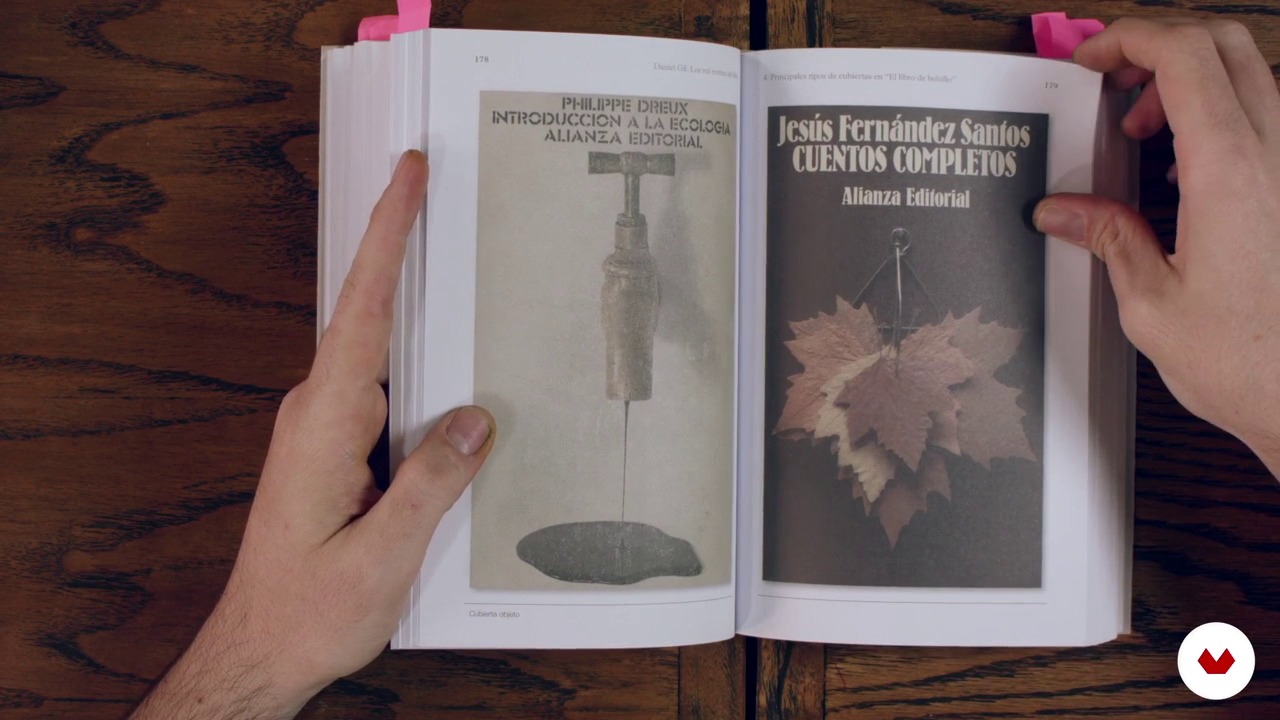
Wonderful Mol!
16 minutes, 39 seconds

Without losing your head
18 minutes, 57 seconds

Without losing your head II
14 minutes, 21 seconds
Without losing your head III
18 minutes, 15 seconds
Without losing your head IV
15 minutes, 23 seconds
Without losing your head V
16 minutes, 8 seconds
What's included in this course?
You will begin knowing a little better the work of Carla Berrocal and Mol and their influences.
Next, you will hear the testimony of several professional illustrators to understand the way they face each new project and the guidelines of a psychologist that will help you overcome the obstacles of blank paper.
Then, once overcome the fears, you will see with Carla the process of creating an illustration from the sketch, the preparation of the material, the use of the brush, how to apply contrasts, lights and shadows and solve possible errors.
Then Mol will show you the homemade technique of the Monotype, a printing method with which you can play with the textures and see how the pigments interact. But, if yours is the computer, Mol will also teach you how to bring these same textures to the digital illustration and the keys of digital inking to achieve an artisanal character.
At the end of the course you will have been able to experiment with two different ways of understanding illustration, traditional and digital, and decide which one you want to use.
WHAT IS THE FINAL PROJECT OF THE COURSE?
Make an illustration about your favorite book or movie.

Recommended software & tools for this course
Who is this online course for?
Professional illustrators who are looking for their own identity or voice, students of Design and Illustration with technical concerns, fans of drawing and in general, anyone who wants to learn a little of these two techniques.
Requirements and materials
For the traditional illustration you will need paper, rubber, pencil, markers, kitchen paper, rulers, paintbrushes, bodybuilder's tape, spatula, gouache, ink and a glass of water.
For the second part of the course (the Monotype) you will need a roller, watercolor, cutter, eraser and paper.
In the digital part you will need a computer, tablet, keyboard and mouse.
Ah! And you want to have fun.

Reviews
- 2 years ago
Muy interesante y creativo, con un abanico de técnicas mixtas interesantes y útiles.
- 4 years ago
excellent
- 4 years ago
genial, muy recomendable
- 4 years ago
Excelente curso. Aprendi nuevas técnicas. :)
- 5 years ago
Genial! Merece mucho la pena. Dos grandes maestros. Muy práctico y útil

He was born in Madrid (Carabanchel). During his childhood, drawing was one of his greatest enjoyments. He studied Delineation, Public Works Engineering, but left it to be trained in the DC_Studio Comic School and in the Arte Diez School in Madrid where he studied Illustration.
In 2007 he made comic works, then animation and in 2009 he began his work in Ediciones SM where he began his career as an illustrator.
In 2014 he divested his career as a designer of the publishing house SM and set up his own studio working for brands such as: BBVA, Telefonica, Banco Popular, Vodafone, Santillana, El Corte Inglés, Saffron, The brand Union among others.
---------
CARLA BERROCAL
Illustrator of comics by devotion and pintamonas by profession, Carla Berrocal combines her work as an illustrator for advertising agencies and publishers with teaching.
He has published several comics and participated in numerous anthologies for Spain and the world, such as Hundlebert Syndrome (Ultrarradio), Fierro Magazine, Chimera, Monographic or No Brow.
His last solo work has been El Brujo, edited by Edicions de Ponent (2011).
As a teacher he has done courses, talks and workshops in Universities such as the University of Murcia, Complutense University of Madrid, International University of Andalusia, University of Granada, School of Art 10, European Institute Di Design or the School of Arts of Tomelloso among others.
Content
- U1
Introduction
- Ü Studio - These are us, Mol and Carla
- Wonderful Carla!
- Wonderful Mol!
- U2
Physical and psychic
- Without losing your head
- Without losing your head II
- Without losing your head III
- Without losing your head IV
- Without losing your head V
- In case you lose it, a psychologist advises you
- In case you lose it, a psychologist advises you II
- U3
Analog view
- Zen mode. Some tips before inking your illustration
- What materials do you need?
- How to use a brush
- Inking Where to start?
- Inking Where to start? II
- Inking Where to start? III
- U4
Digital vision
- Textures Playing non-stop
- Digital Materials
- Before starting with the computer
- Where we come from where we are going
- Where we come from where we are going II
- Some tricks for your digital inking
- Graphic conclusions
- FP
Final project
- Traditional and digital illustration: from sketch to print
What to expect from a Domestika course
Learn at your own pace
Enjoy learning from home without a set schedule and with an easy-to-follow method. You set your own pace.
Learn from the best professionals
Learn valuable methods and techniques explained by top experts in the creative sector.
Meet expert teachers
Each expert teaches what they do best, with clear guidelines, true passion, and professional insight in every lesson.
Certificates
PLUSIf you're a Plus member, get a custom certificate signed by your teacher for every course. Share it on your portfolio, social media, or wherever you like.
Get front-row seats
Videos of the highest quality, so you don't miss a single detail. With unlimited access, you can watch them as many times as you need to perfect your technique.
Share knowledge and ideas
Ask questions, request feedback, or offer solutions. Share your learning experience with other students in the community who are as passionate about creativity as you are.
Connect with a global creative community
The community is home to millions of people from around the world who are curious and passionate about exploring and expressing their creativity.
Watch professionally produced courses
Domestika curates its teacher roster and produces every course in-house to ensure a high-quality online learning experience.
FAQs
Yes, this course is designed for people with basic prior knowledge in illustration or comics who want to deepen their skills in techniques, creative processes, and emotional management applied to visual art.
You’ll need paper, pencils, brushes, ink, gouache, collage materials, a graphics tablet (optional), access to Photoshop or Illustrator, and tools to digitize your work like a scanner or camera.
You’ll learn realism techniques, visual synthesis, composition, inking, experimental collage, cover design, managing creative blocks, self-critique, emotional management, and skills for both personal and professional projects.
The course covers manga storytelling styles, black-and-white composition, visual metaphor, typography in posters, mixed media techniques, handling frustration, creative discipline, and strategies to overcome artistic blocks.
Basic drawing or illustration knowledge is recommended, as this course is intermediate level and dives into advanced techniques and processes.
Yes, traditional techniques like brushwork, gouache, and collage are taught alongside digital processes using Photoshop, Illustrator, and creating custom brushes.
Yes, there are modules focused on emotional management, constructive self-criticism, resilience, handling frustration, and techniques to beat the fear of the blank page.