
Bird Among the Flowers: A Detailed Papercut Illustration
by Marina Polovinchuk @marina_papercuts
- 427
- 48
- 1
Introduction
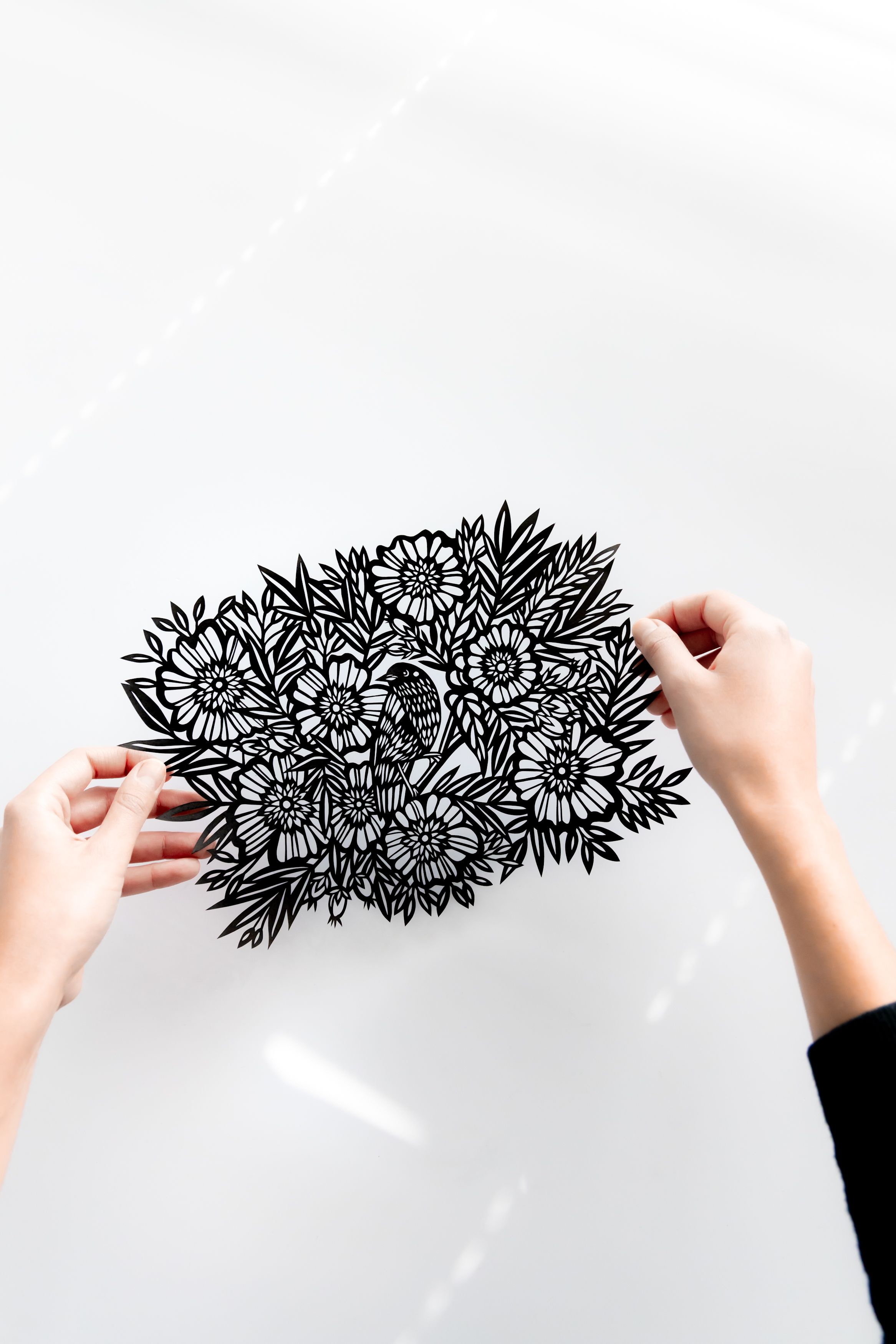
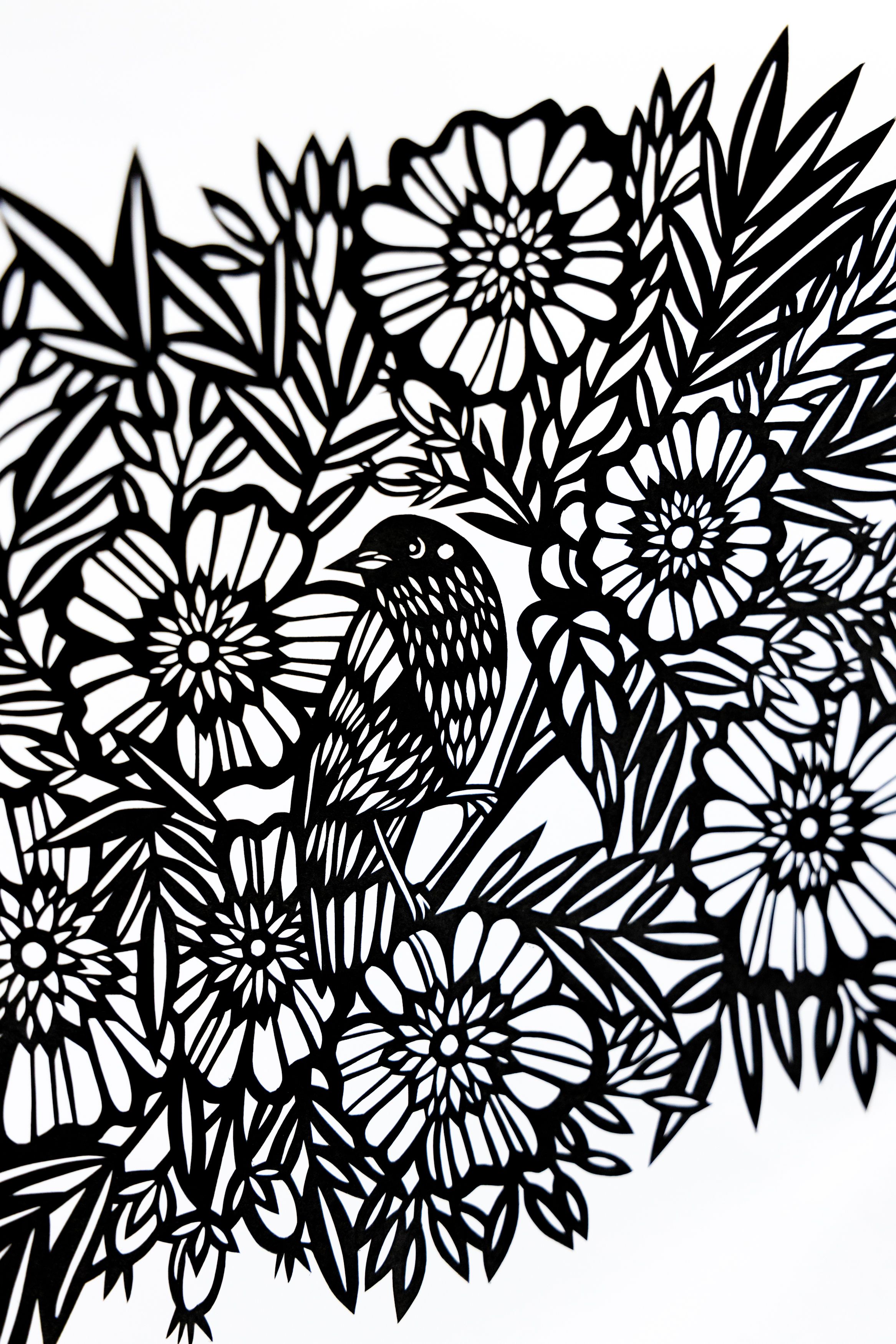
For this project, I created a papercut illustration of a small bird surrounded by flowers and leaves. Much of my inspiration comes from my garden. I’m lucky to have a big garden at home, and after a busy day of work I often spend some time outside. Watching the birds move between the trees and flowers always gives me ideas for new artworks.
For this piece, I wanted to capture a quiet moment - a bird sitting on a flower branch for just a short time. I started sketching and slowly developed the drawing into a composition that would work well as a papercut. I wanted it to feel rich in detail, with lots of leaves and flowers surrounding the bird.
Supplies
120 gsm white/grey paper
Craft knife
Cutting mat
Pencil
Black spray paint
Step 1: Transfer the Sketch
The first step is transferring my sketch onto the final sheet of paper. During this stage I refine the composition and make sure everything is placed correctly.
I also think carefully about how the papercut will work structurally. I decide where the connections between shapes will be, how thick certain lines should be, and which areas will become negative space. Planning these details early makes the cutting process much easier later.
Step 2: Refine the Drawing
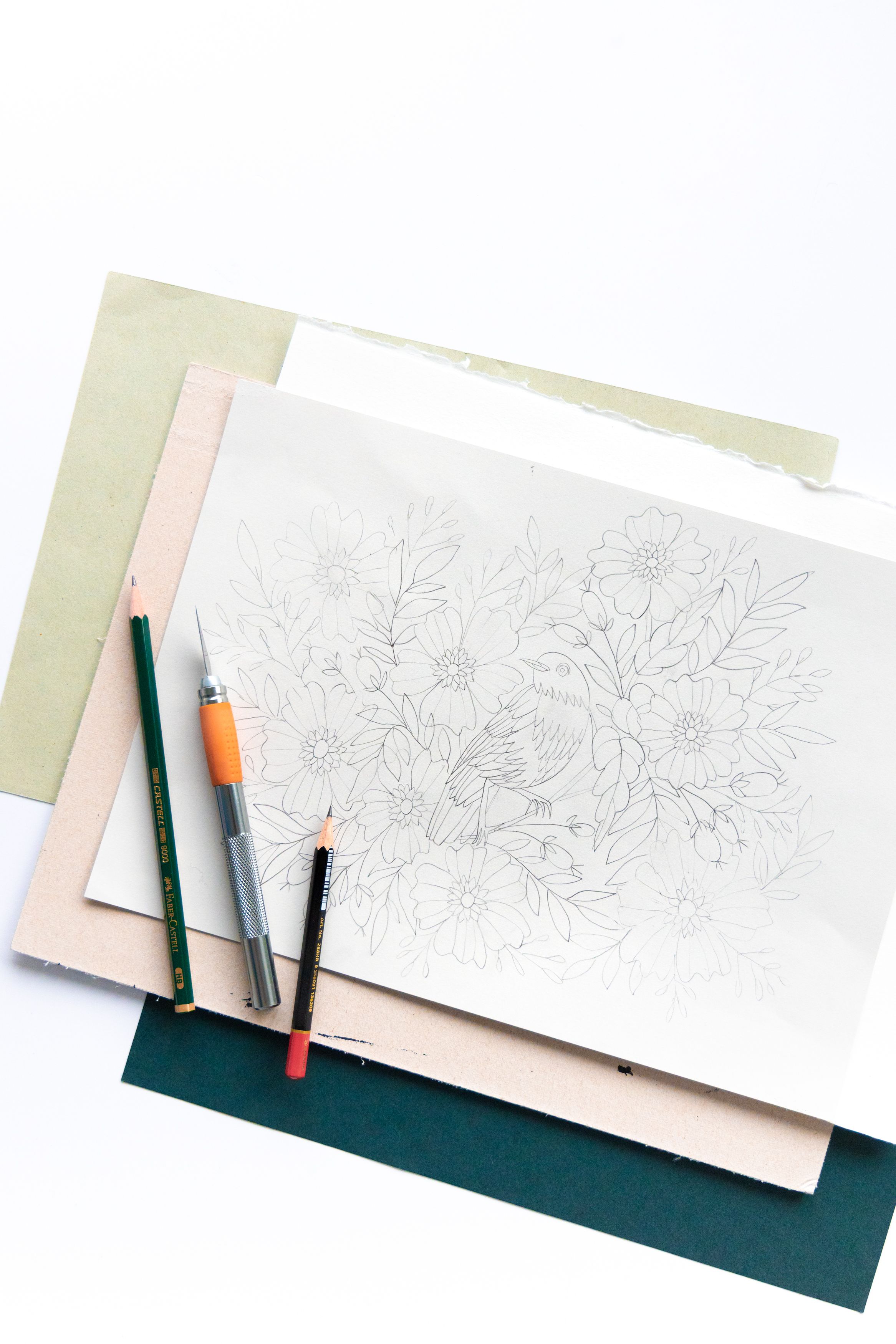
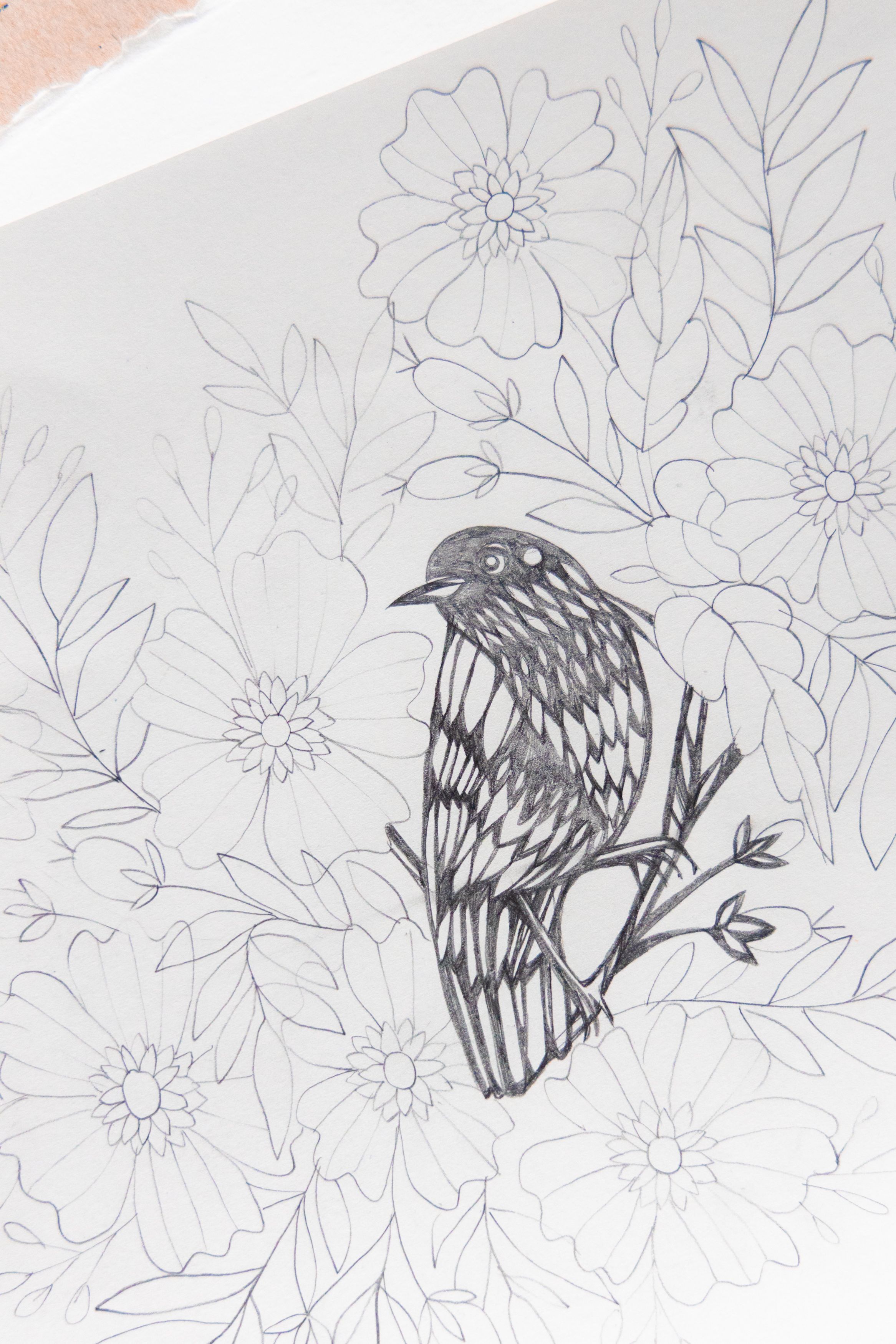
In this project I created a very detailed pencil drawing before starting to cut. This step is optional in my practice, but it can be very helpful for complex papercuts.
Using a pencil, I carefully define each line and shape. I work out the thickness of branches, the curves of leaves, and the small details of the flowers and the bird. At this point the drawing becomes almost a final blueprint for the papercut.
Taking the time to do this makes the cutting stage much more predictable, because all the important decisions have already been made.
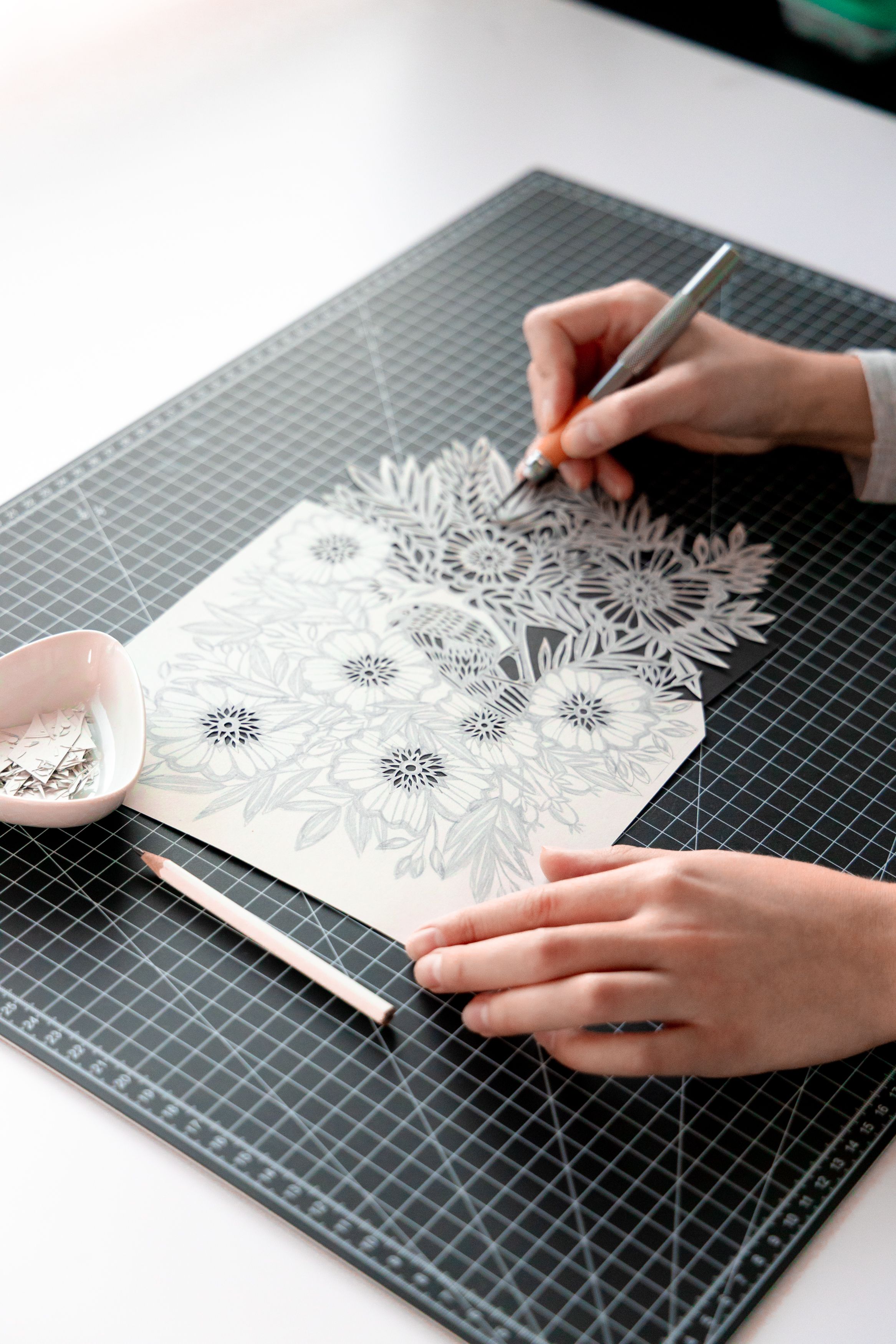
Step 3: Cut the Design
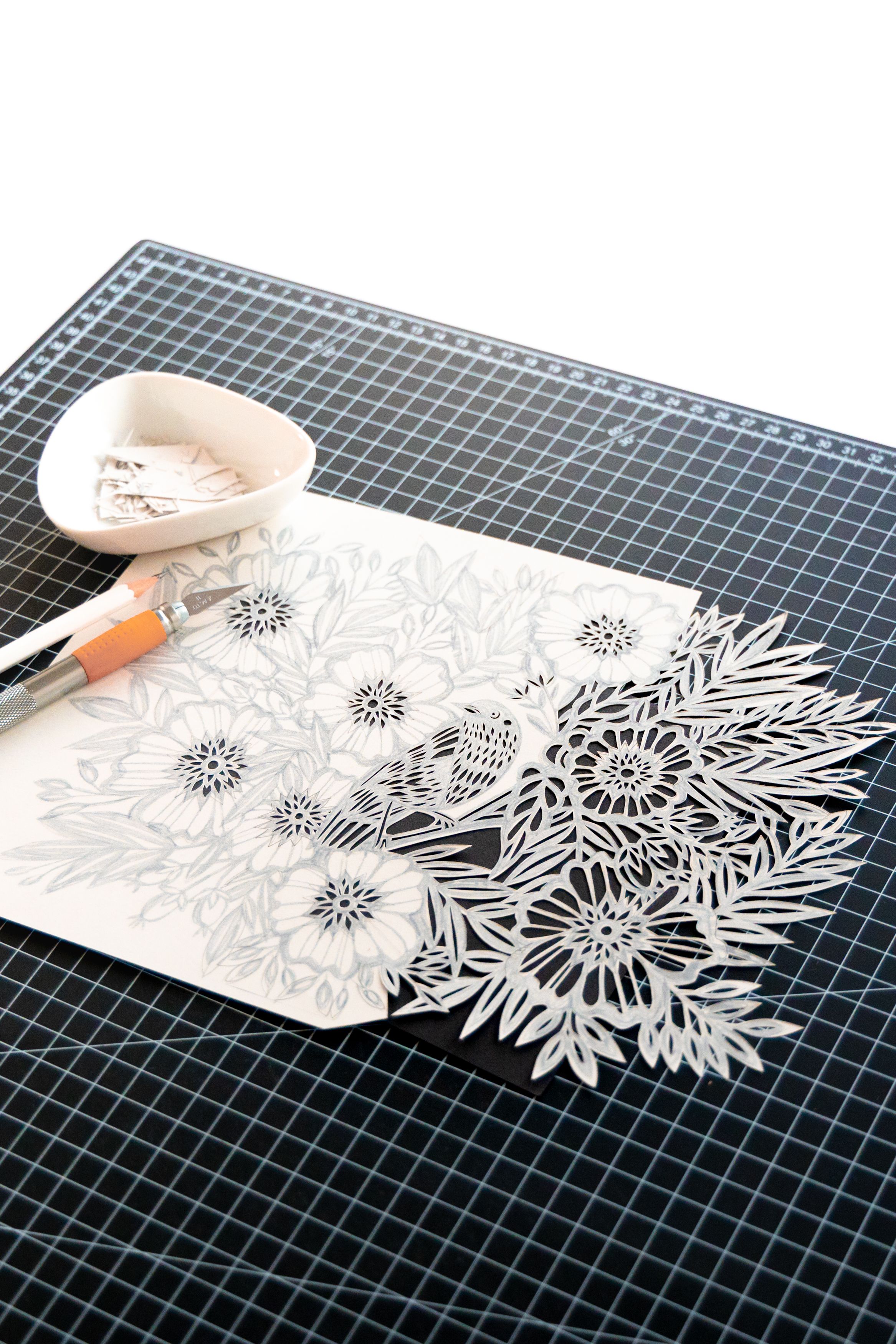
Once the drawing is ready, I begin cutting using a craft knife and a cutting mat. I carefully follow the lines of the drawing and work through the design step by step.
Papercutting is a slow and meditative process. Because the design is already planned, I can simply focus on cutting each shape with patience and precision. Often I like to listen to an audiobook or a podcast while I work.
This step takes time, but cutting slowly helps keep the shapes clean and sharp.
Step 4: Add Contrast with Paint
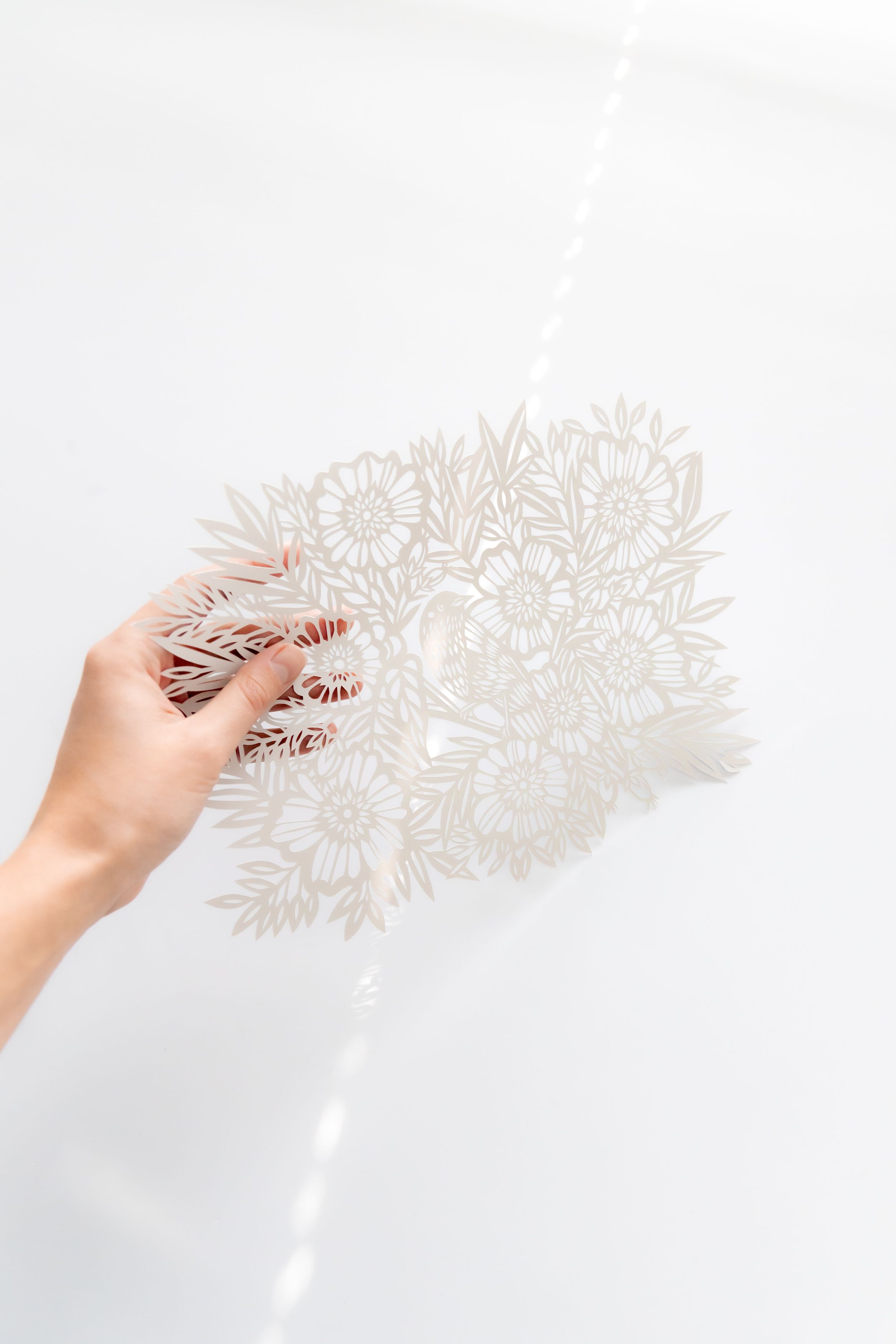
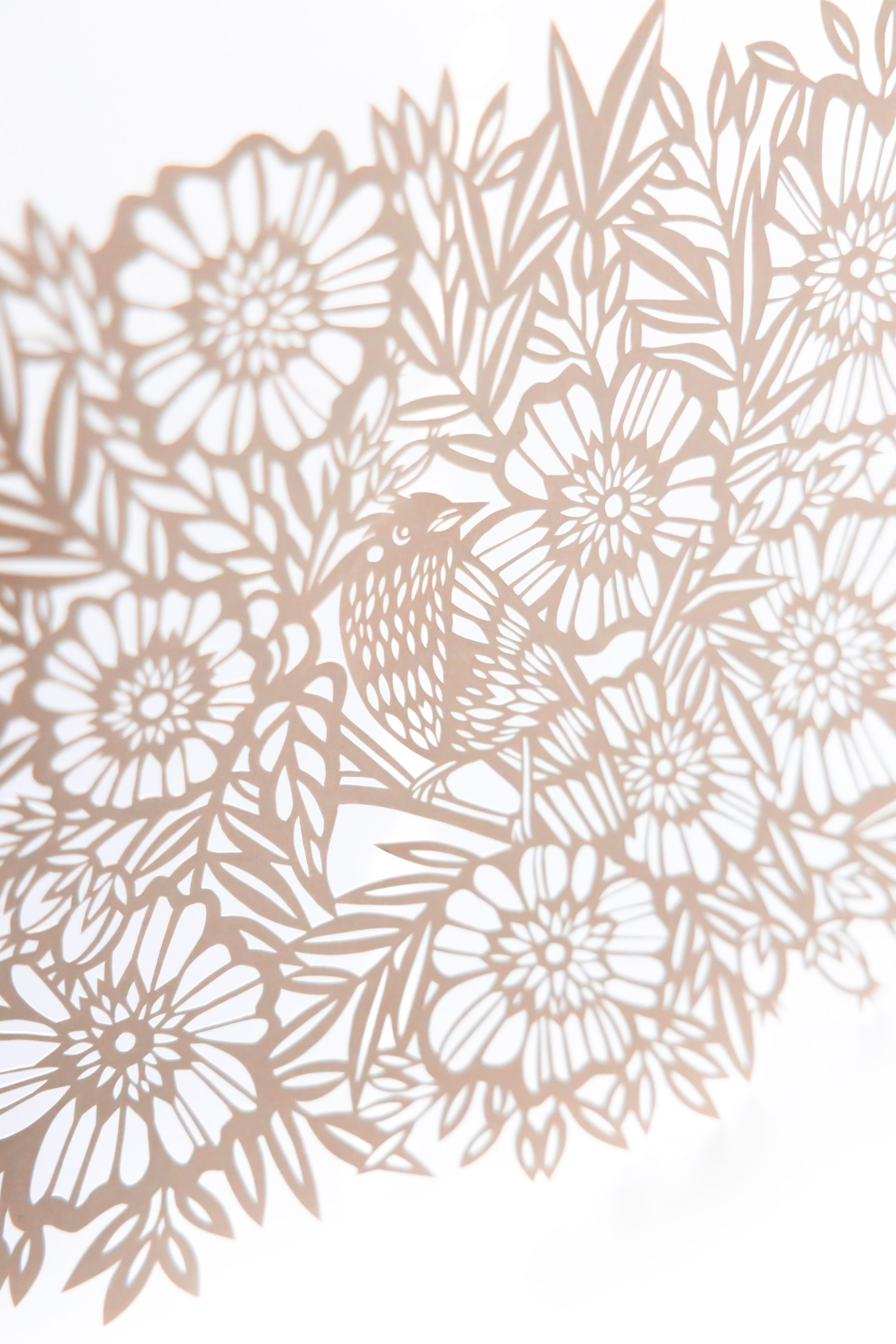
After finishing the papercut, I was very happy with how the details turned out. The composition looked exactly as I designed it.
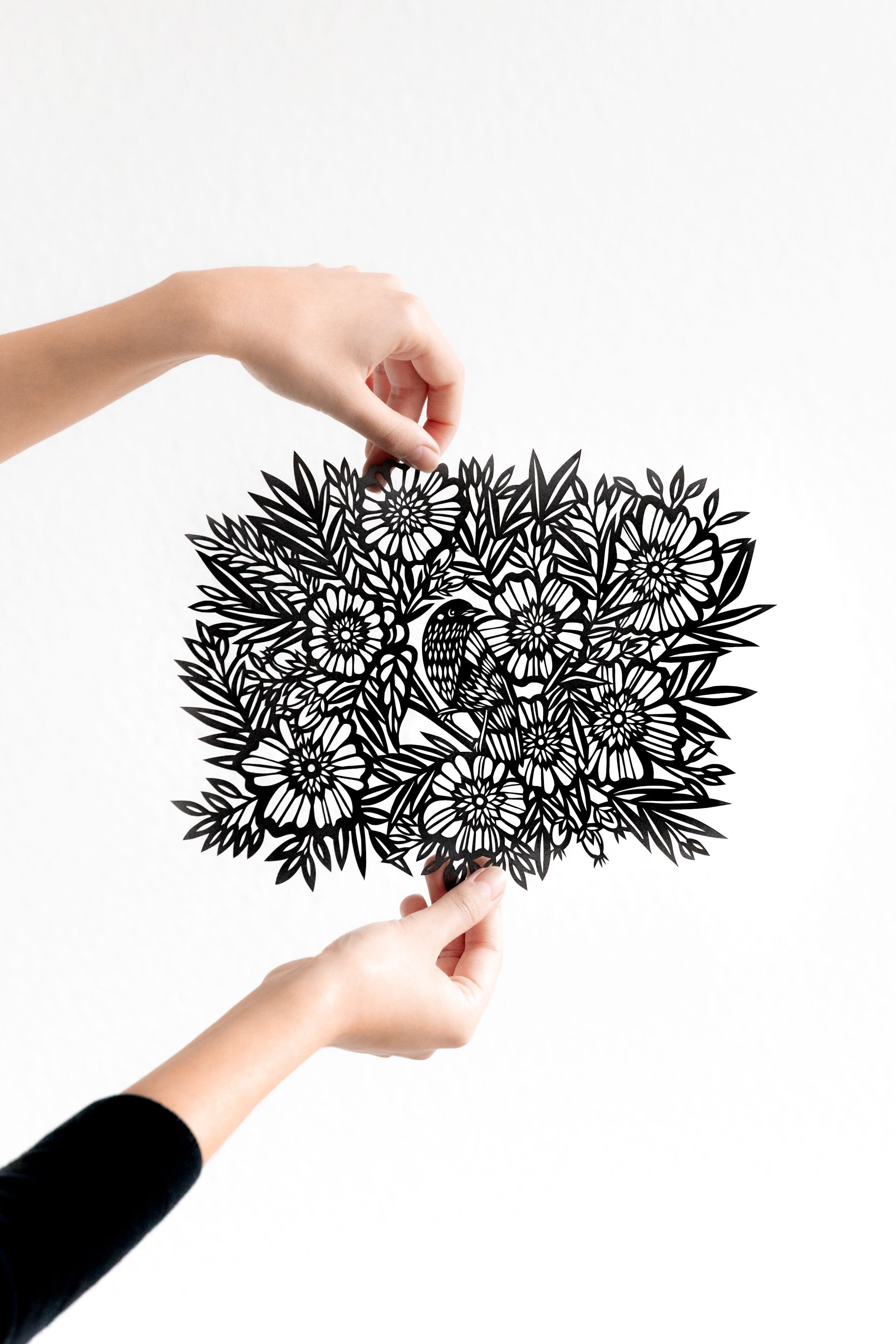
However, I wanted to add more contrast to the final piece. To achieve this, I used black spray paint and carefully painted the papercut from both sides. This step transforms the white paper into a bold black silhouette and makes the shapes stand out much more clearly.
Final Result
This papercut took a few evenings to complete, but I think the time spent was worth it. The piece is full of small details, with flowers, leaves, and the bird all woven together in the composition.
I especially like how the bird blends into the design. At first glance you mainly see the flowers and branches, but after a moment you notice the bird quietly sitting among them. In a way, this reflects how birds appear in nature - often hidden between leaves and branches until you suddenly notice them.
It reminds me of those calm moments in the garden, when you sit with a cup of coffee and suddenly spot a bird resting in the trees.


1 comment
A really peaceful and detailed piece—reading it feels just as satisfying as discovering creative moments in hot games.
Log in or join for Free to comment