Introduction to Kintsugi: Repair Your Pottery with Gold
Course final project
A course by Clara Graziolino, Ceramic Artist and Kintsugi Expert



About the final project for: Introduction to Kintsugi: Repair Your Pottery with Gold
Introduction to Kintsugi: Repair Your Pottery with Gold
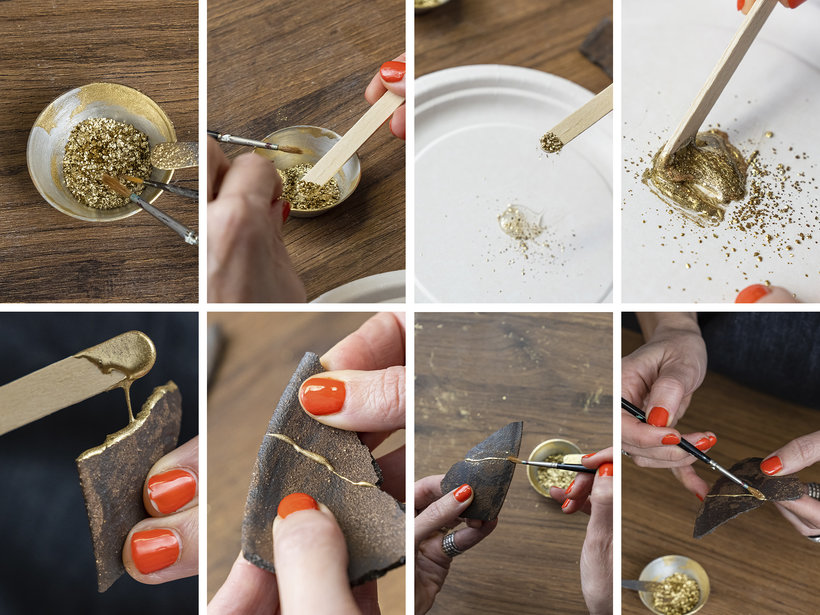
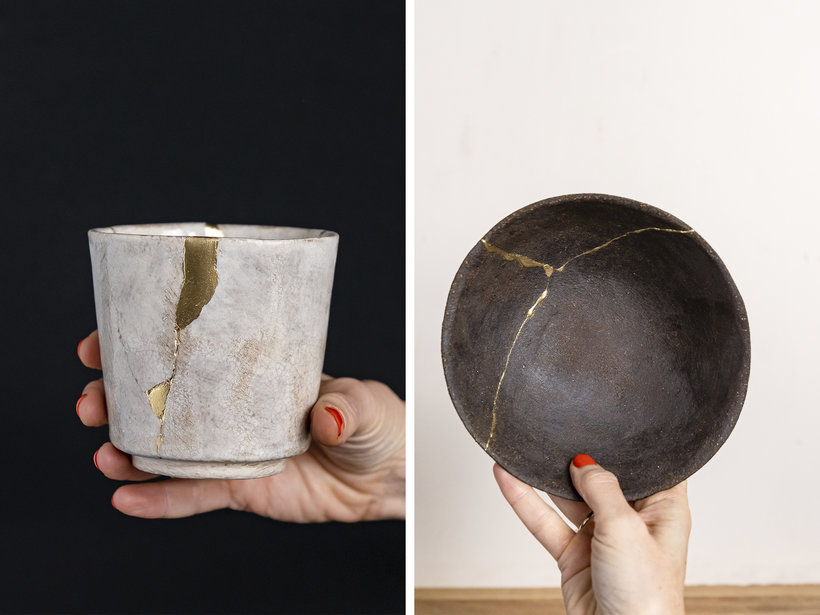
“We have reached the end of this Domestika course. I hope you have learned all the steps to restore your bowls using the kintsugi technique. I also hope that I have given you many ideas and pointers to apply in your projects. If you follow the lessons and the step-by-step process, you will see that you can come a long way with this ancient and mindful art of repairing broken pottery. This technique will help you produce unique works of art as every ceramic object breaks differently, and the gold lines follow the fractures. Start by breaking your bowl into 3 or 4 pieces. You can also use one already broken, but make sure that you deal with no more than four pieces. As you get more skilled, you will be able to deal with bowls that are shattered into more pieces, but four or less is a good starting point. Now that you have your bowls, take ahold of your kintsugi diary. That's where you will log your progress, thoughts, and tips to yourself. Take an overhead photo of the bowls and write down the materials and the number of pieces, as well as the techniques you will use to restore the bowls. Don't forget to jot down the steps you take. Clean the bowls with cotton and alcohol. Do not scrape the cracks with the cotton, as you might leave residue inside them. That would difficult the assembly. Use masking tape to work out the order of gluing. Remember to put on your gloves and mix the epoxy glue very well and equally. If not, your pieces will come off. When working with the gold relief technique, use a disposable plate to add the gold to the glue. Be quick, because glue hardens within 10 minutes. When adding the glue onto the fractures, apply the same amount evenly, but only on one of the two pieces and only on the parts you will assemble. The gold flush technique calls for small amounts of glue on the fractured surface. We do not want to create relief with the glue. Stay still for 10 minutes after gluing two pieces together, and always do no more than two at a time. To know if it dried up, you can check the plate. To rebuild gaps through this technique, you have to use plasticine on the outer part of the bowl before applying the plaster. By doing so, you prevent any leaking through the hole. Stay at least 1mm above the level of the ceramic when filling the hole with plaster. Keep in mind again that glue becomes hard within 10 minutes, so you have to hurry up. Also, do not use it if it isn't wet anymore. Sand the plaster in a gentle circular manner making sure you don't scratch the ceramic surface. Afterward, clean it with cotton and alcohol. I suggest that you use a lamp when covering the plaster surfaces with the filler so that you can get a good visual of where you are putting the filler. Before applying gold paint, do some lines on a piece of paper. This little exercise will get you loose. At the same time, you can take this preparatory work to check if you need to adjust your varnish and gold mix. Shoot for a liquid metal density. Once the mixture density is where you want it to be and that painting hand is all warmed up, you can start painting. Paint from the inside out. This way, you won't stain your bowl with your fingers.
Partial transcription of the video
“We've reached the end of this Domestika course. I hope you have learned all the steps to restore your own bowls using the kintsugi technique. I also hope that I've given you many ideas and pointers to apply in your own projects. If you follow the lesson and the step-by-step of the process, you can see that you can come a long way with this ancient and mindful art. of repairing broken pottery. This technique will help you produce unique works of art. as Every ceramic object breaks differently and the goal lines follow the fractures. Start with breaking your bowl into three or four pieces. Yo...”
This transcript is automatically generated, so it may contain mistakes.
Course summary for: Introduction to Kintsugi: Repair Your Pottery with Gold
-
Category
Craft -
Areas
Arts & Crafts, Ceramics, DIY, Fine Arts

Clara Graziolino
A course by Clara Graziolino
Clara Graziolino is a contemporary history graduate from Turin University, with a degree from the Art and Restoration Institute in Florence, Italy. She began her career by restoring Etruscan ceramics for an archaeological museum in Pisa and Roman sculptures for the Uffizi Museum in Florence.
In 2003, she moved to Madrid to deepen her knowledge of ceramic sculptures. She eventually started making her own sculpture artwork, and in 2016 she was awarded first prize at Magrama International Ceramics contest. Alongside a Japanese restoration teacher, she learned the traditional techniques of kintsugi and has since collaborated in advertisements and events with brands such as Shiseido and Acciona. She currently works with international galleries and interior designers creating sculptures, murals, and installations.
- 98% positive reviews (516)
- 22,747 students
- 15 lessons (2h 0m)
- 22 additional resources (7 files)
- Online and at your own pace
- Available on the app
- Audio: English, Spanish, French, Italian, Portuguese, Turkish
- English · Spanish · Portuguese · German · French · Italian · Polish · Dutch · Turkish
- Level: Beginner
- Unlimited access forever
Category
Areas