



Specialization

Product Design Specialization: From Concept to Market Success

Master product design by transforming creative ideas into innovative, market-ready products through strategic techniques and storytelling

Specialization · 6 modules

Embark on a transformative journey in product design, where creativity meets strategy. This specialization guides you through the intricate process of turning an idea into a market-ready product. Begin with foundational principles, exploring methodologies and creative processes essential for innovative design. Dive deep into the influence of colors, materials, and forms, understanding how these elements shape perception and enhance your product's value. Learn to create products that tell compelling stories, connecting emotionally with users through the art of storytelling.

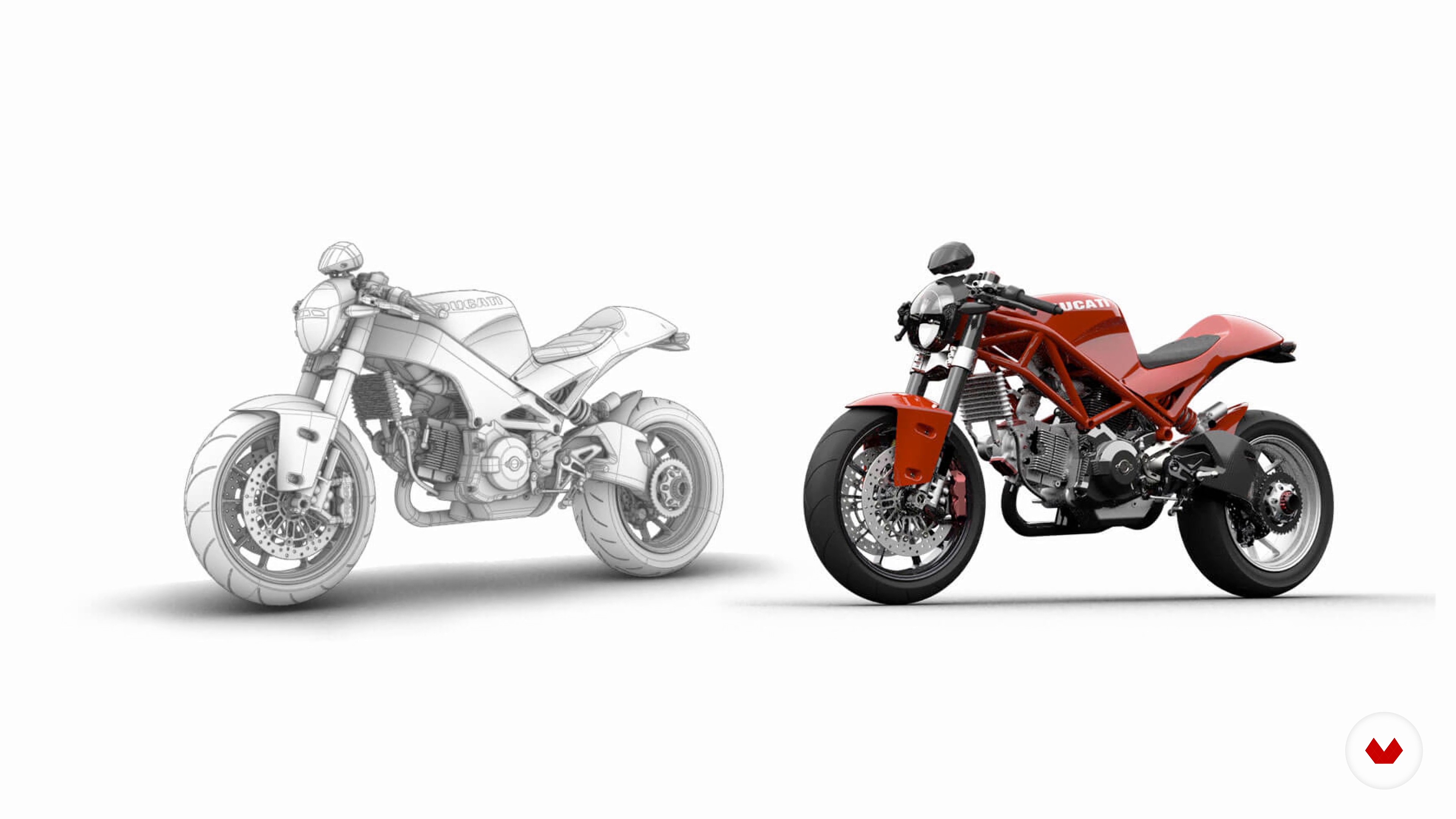
Move from 2D sketches to 3D prototypes, blending traditional and digital techniques to bring your concepts to life. Gain insights into the financial aspects of product design, from calculating production costs to establishing pricing strategies that ensure the viability of your creations. This comprehensive journey, led by the expertise of Goula / Figuera, Lex Pott, Fango (Francisco Jaramillo), Reid Schlegel, and Emiliano Godoy, equips you with the skills to present a fully developed product line ready for investors or independent launch. From ideation to market launch, every step is covered, offering a holistic view of product design as a bridge between creativity and commerce.

Read more ↓

What will you learn in this specialization?
A total of 6 modules and 70 lessons
A total of 14h 34m of vídeo lessons
Taught by 5 selected expert teachers
image
3
What is product design?
At the beginning of this lesson we will review everything you will learn in the course and what the final project will be. Next, we will get into the subject to try to find an answer to the eternal question: what is design? We will see how it came about and what are the different areas of specialization in product design.
18m
image
4
Briefing and budget
In this lesson you will learn that before starting any design project it is very important to have a good design brief or commission. And if you don't have a briefing, don't worry! We will see how to create a self-briefing. In addition, we will talk about what no one talks about: how to make a budget and charge a project.
14m
image
5
Market study and mood board
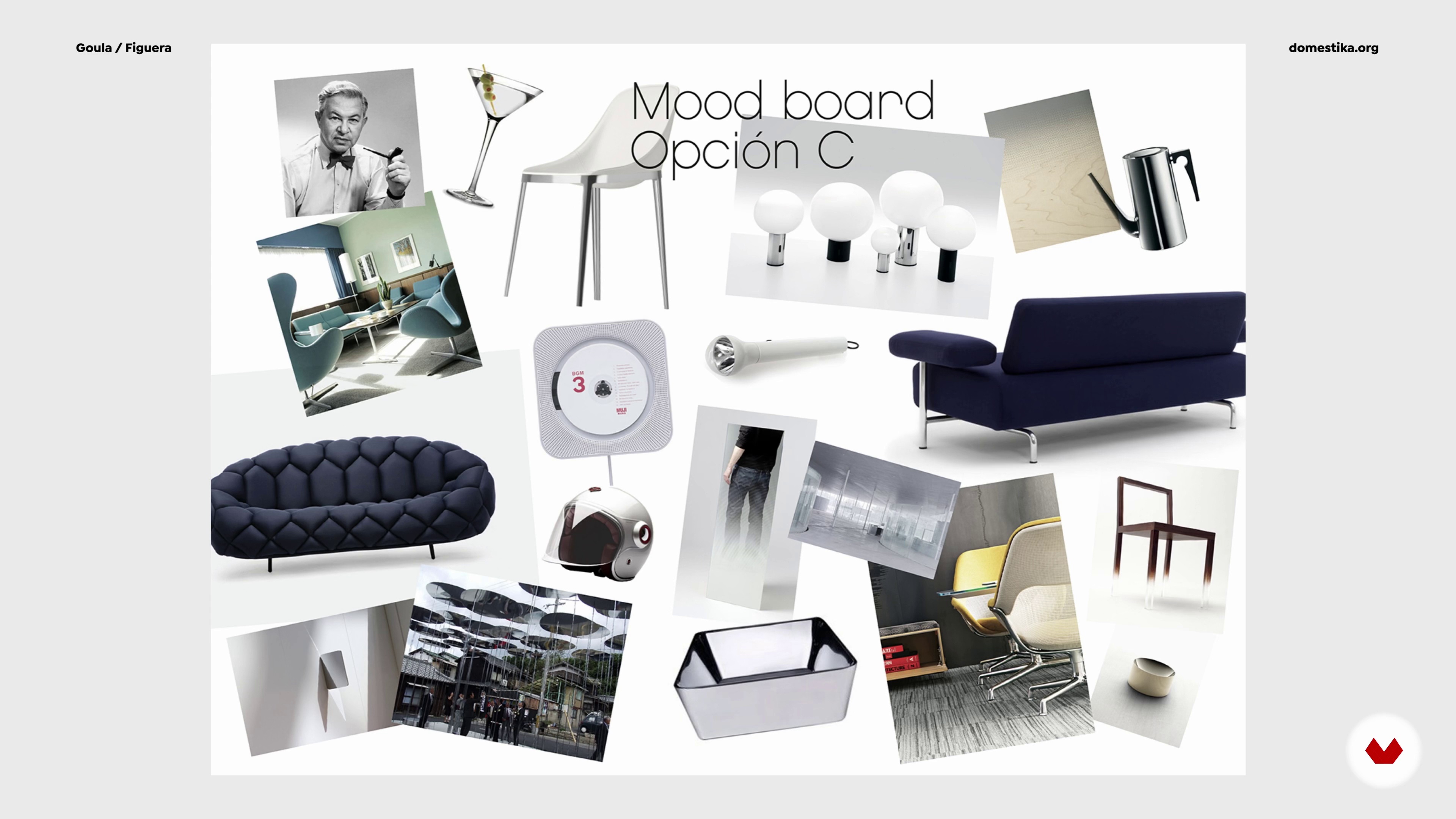
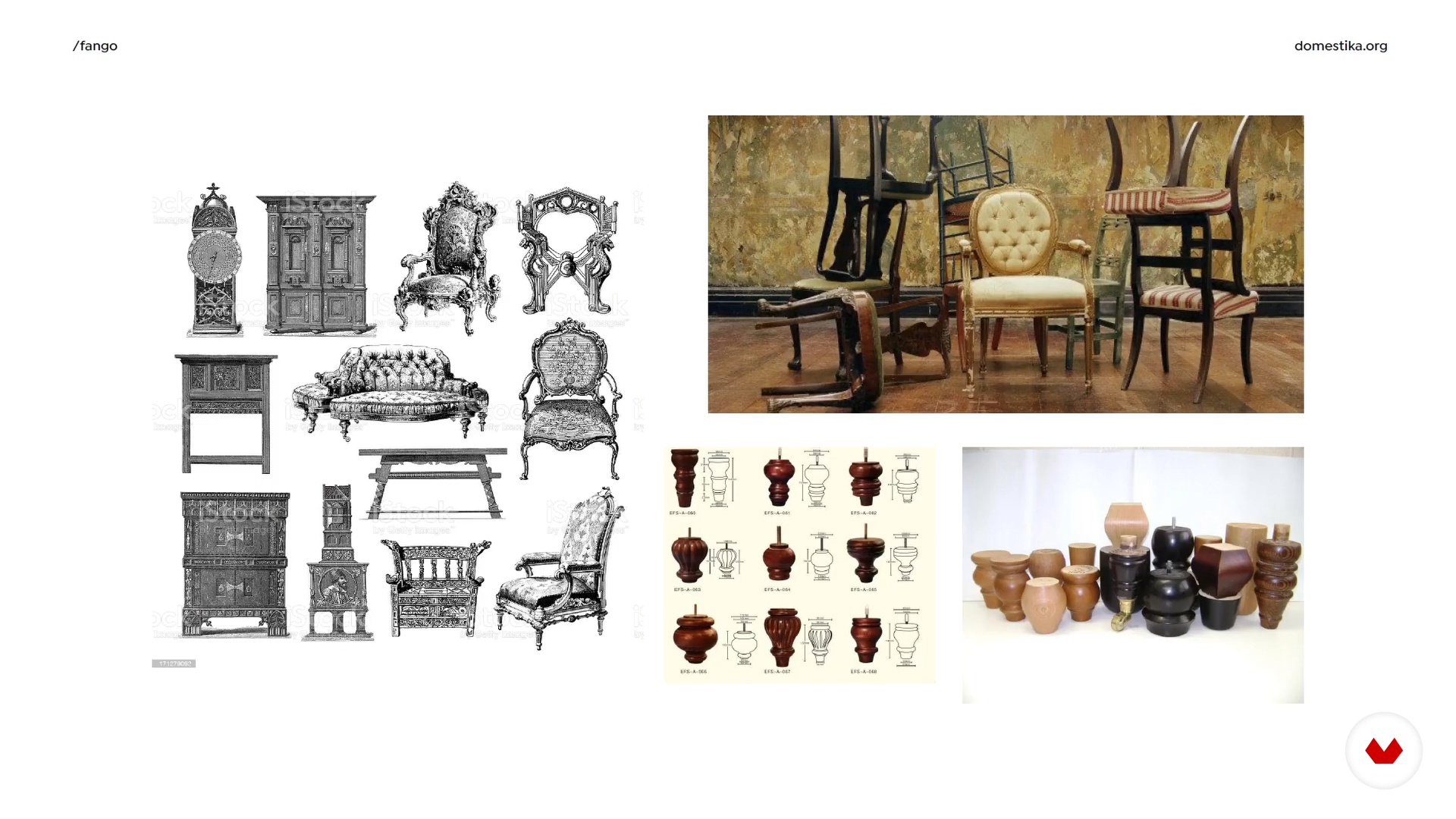
Before starting a project it is important to become a small expert on the subject, so later you can summarize and visualize what will influence the design. Market research and mood boards are used for all this.
15m
image
6
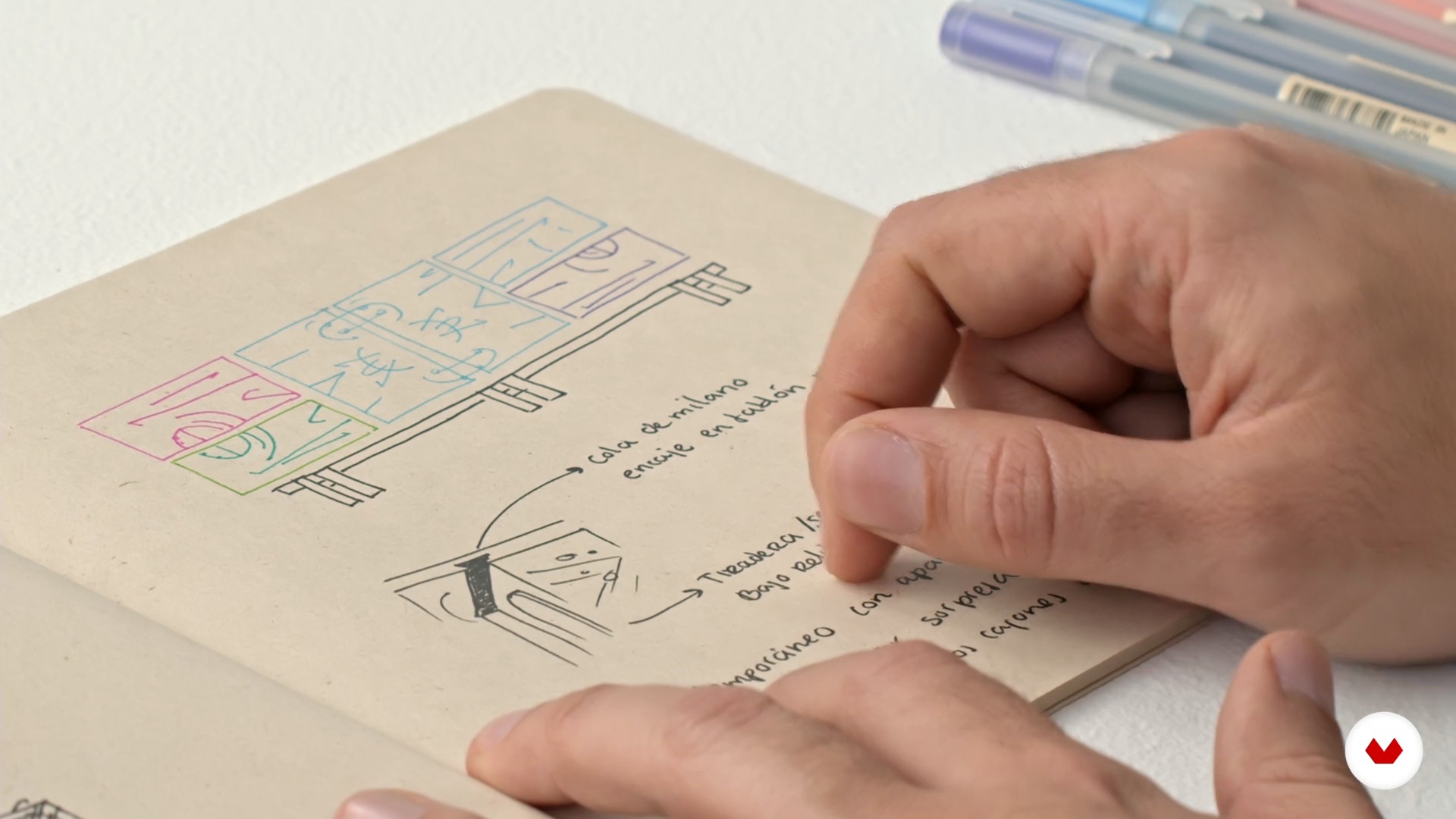
Sketching 1
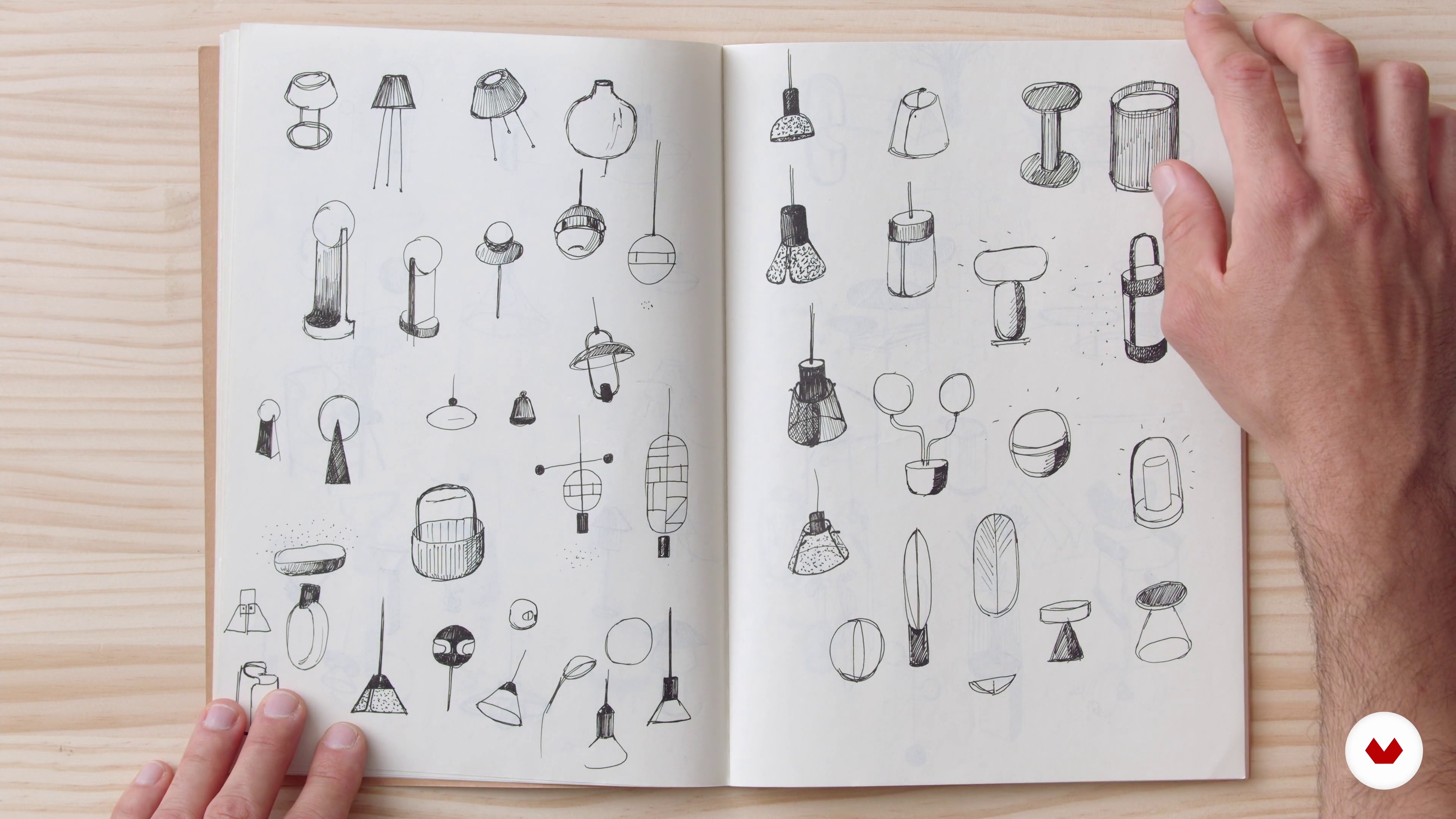
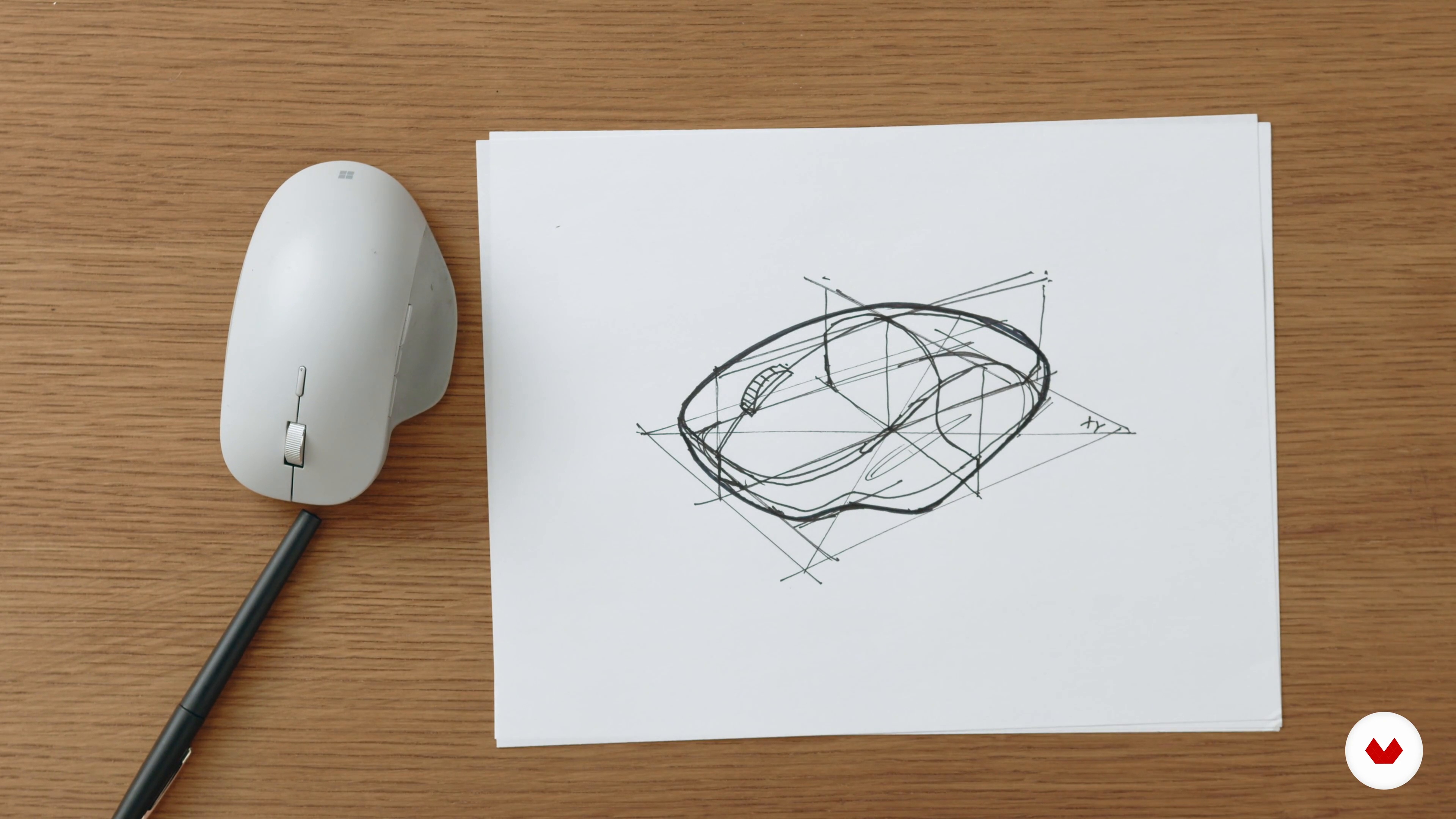
Drawing is the basis of product design, although you don't have to be an expert draftsman to be a good designer. In this lesson you will learn that the most important thing is knowing how to express your ideas.
15m
image
7
Sketching 2
We continue to review the basic concepts to carry out the project sketching.
14m
image
8
Proportion, dimensions and plans
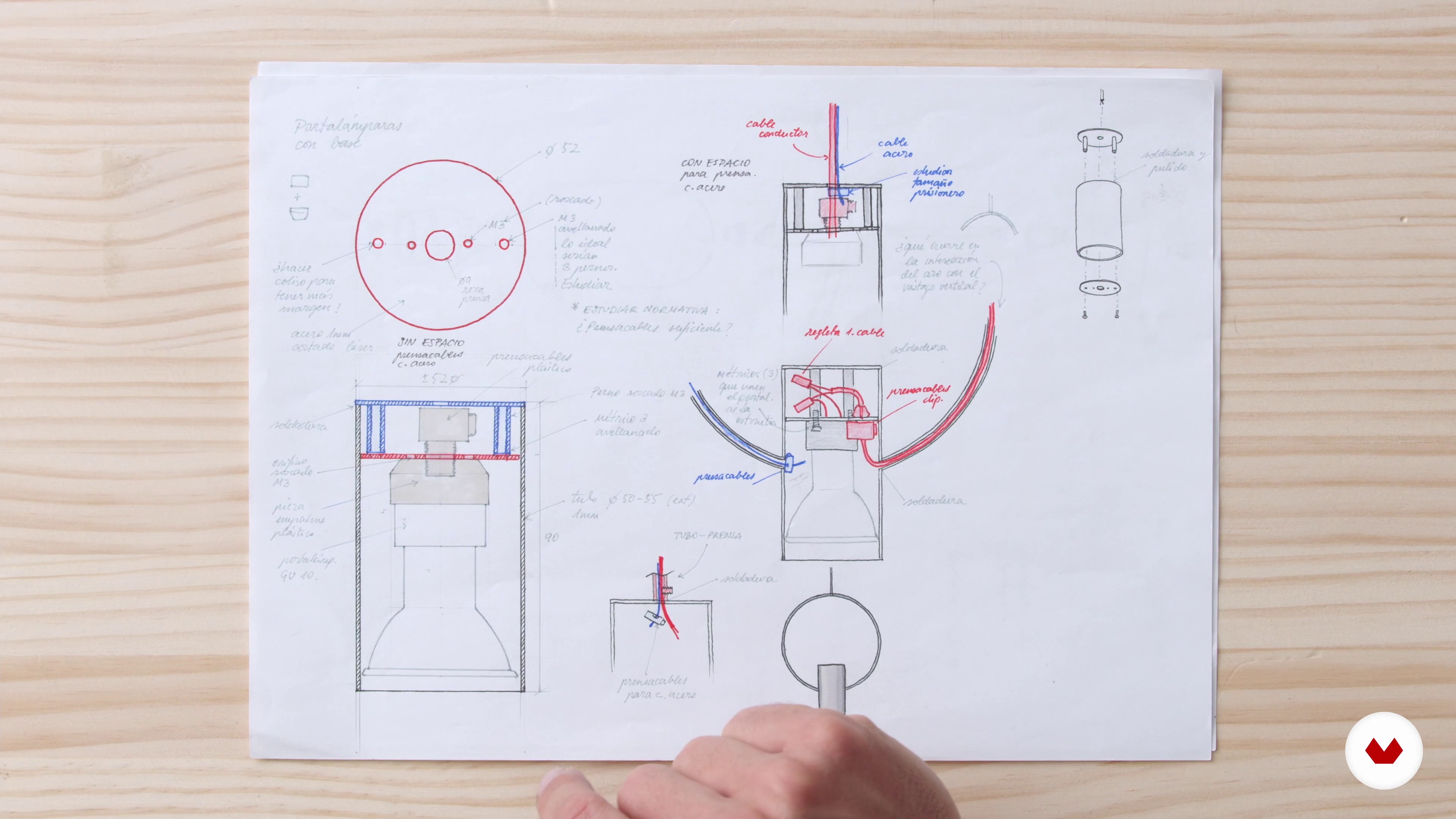
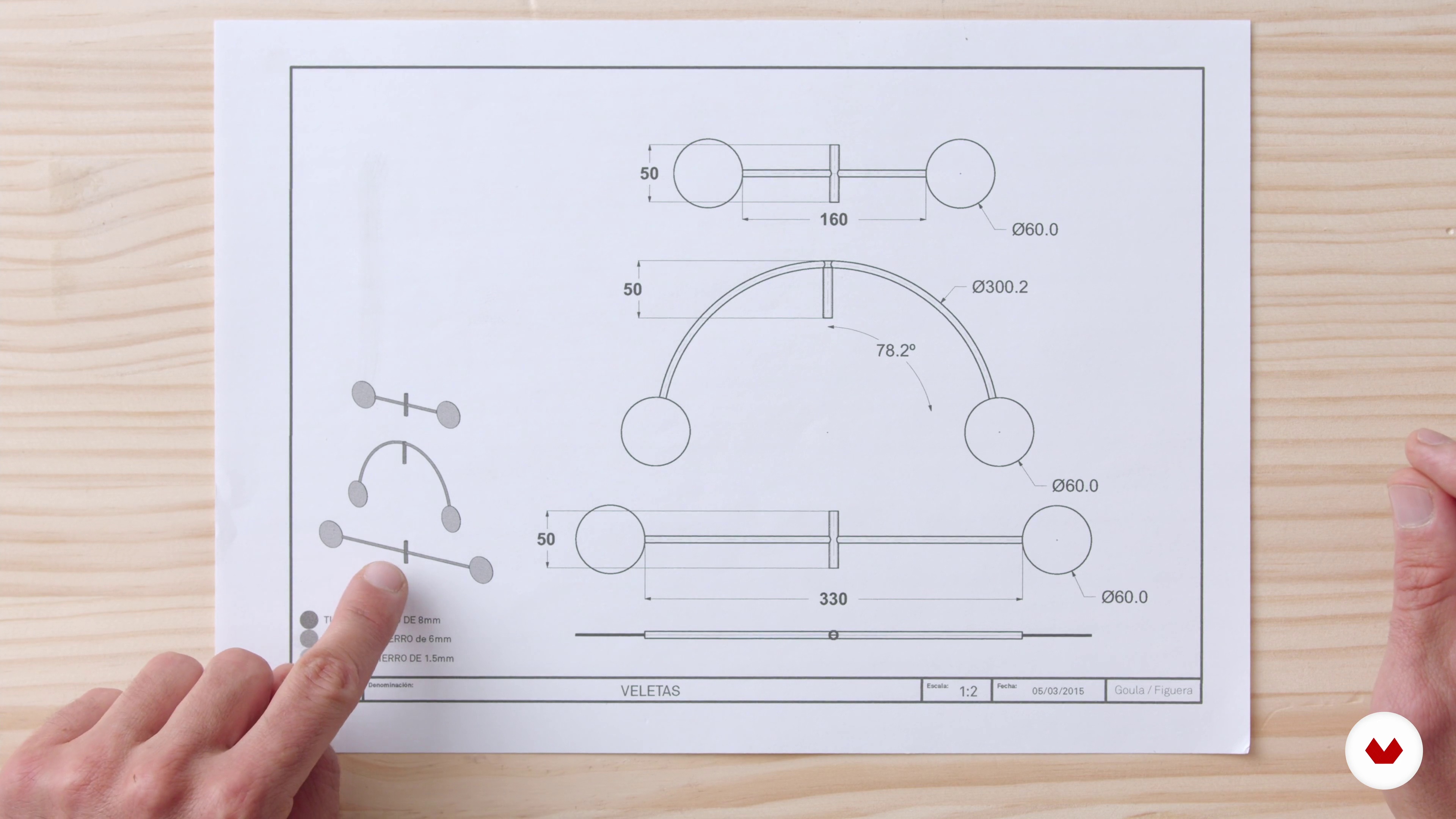
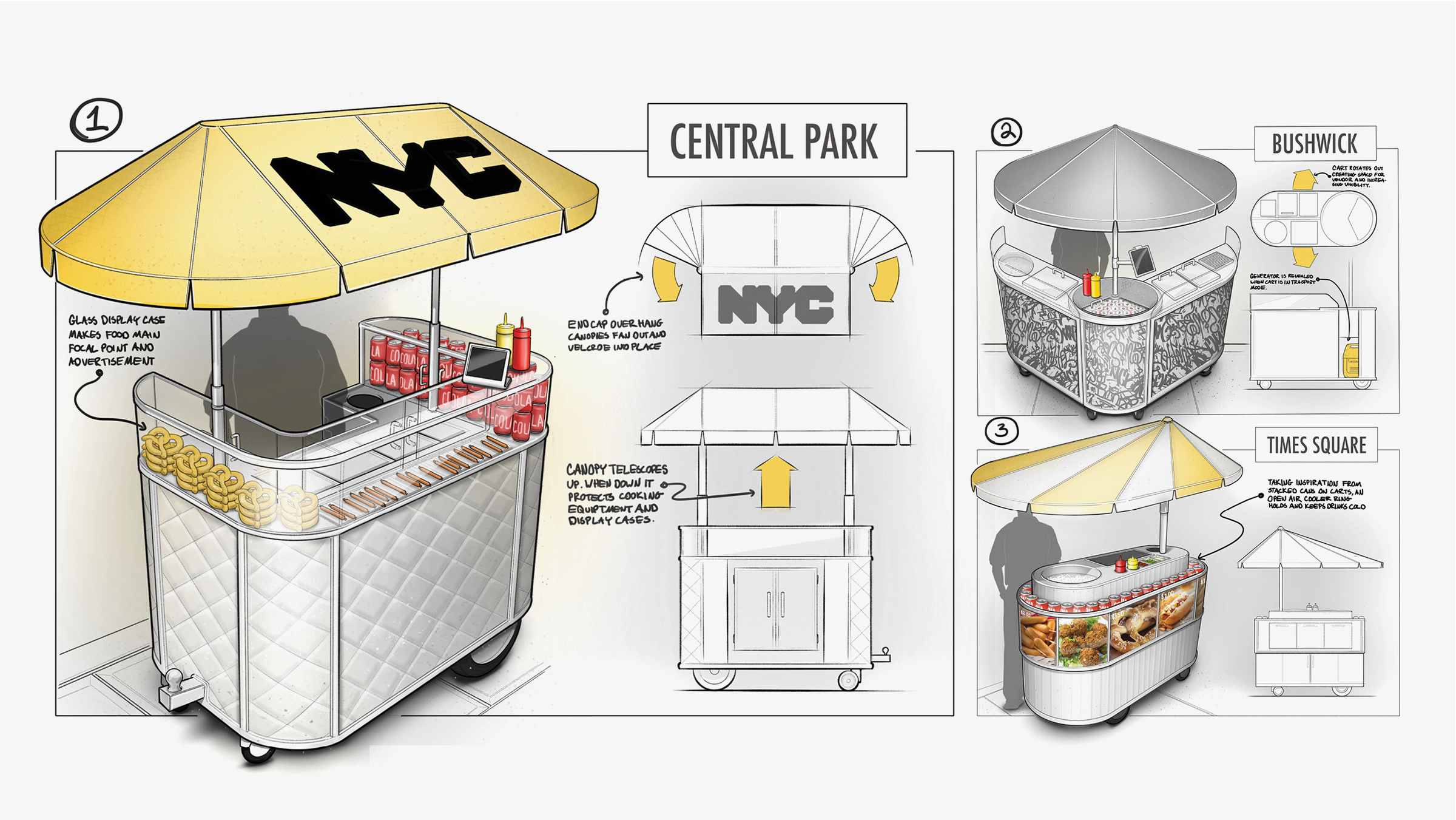
Some products, such as lamps, give us great freedom when choosing their dimensions; but others, such as chairs, have measures that must be respected. And in absolutely all of them there is something that should not fail: the proportion. In this lesson we will see how to provide a design, size it, and represent it on a drawing.
11m
image
9
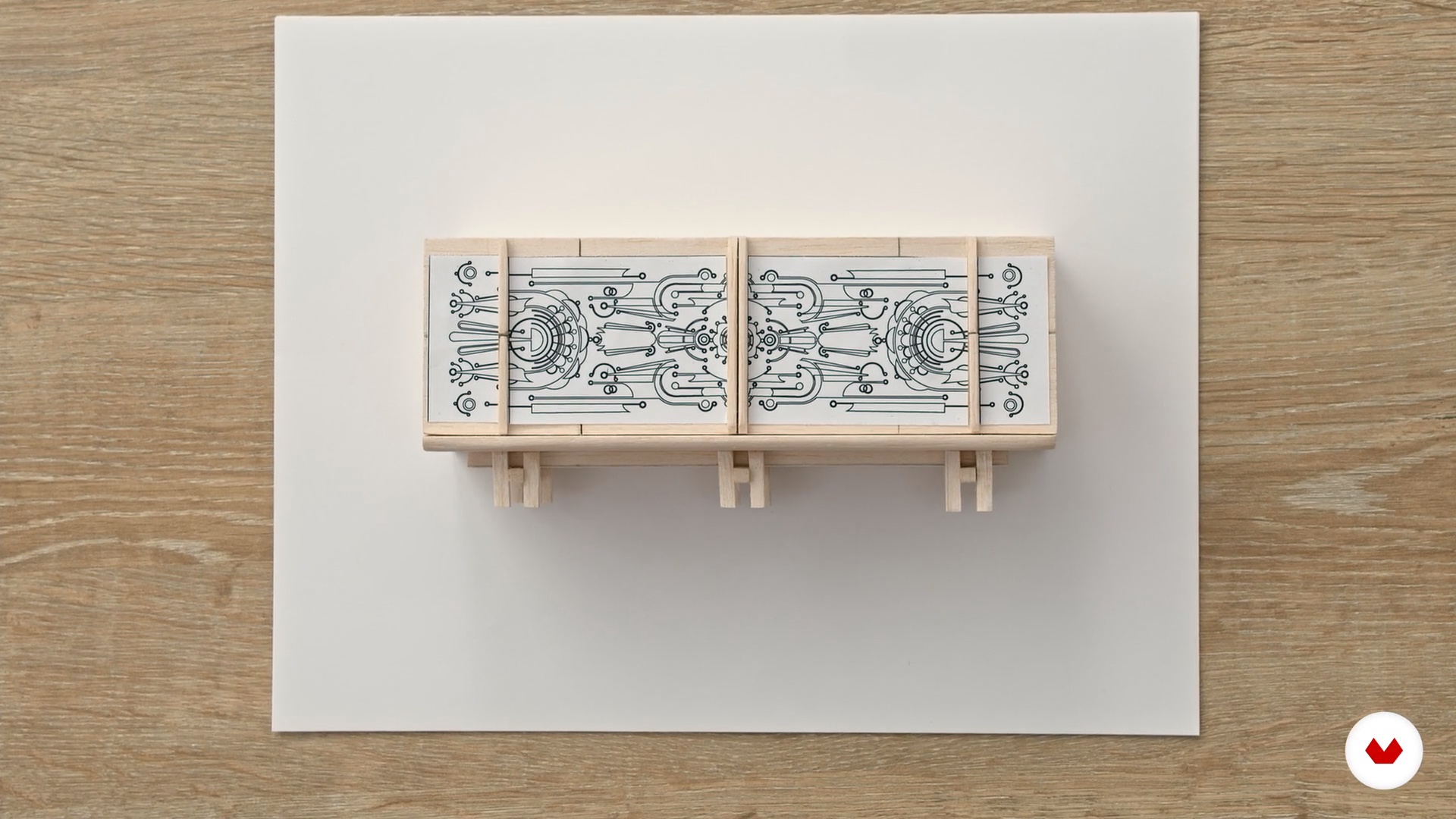
Add volume: the mockup
As we have seen in the previous lesson, sizing correctly is a fundamental part of the project. But no matter how clear we have the measurements of our design, we will not be sure if they are correct until we go from 2D of the plan to 3D of the model.
12m
image
10
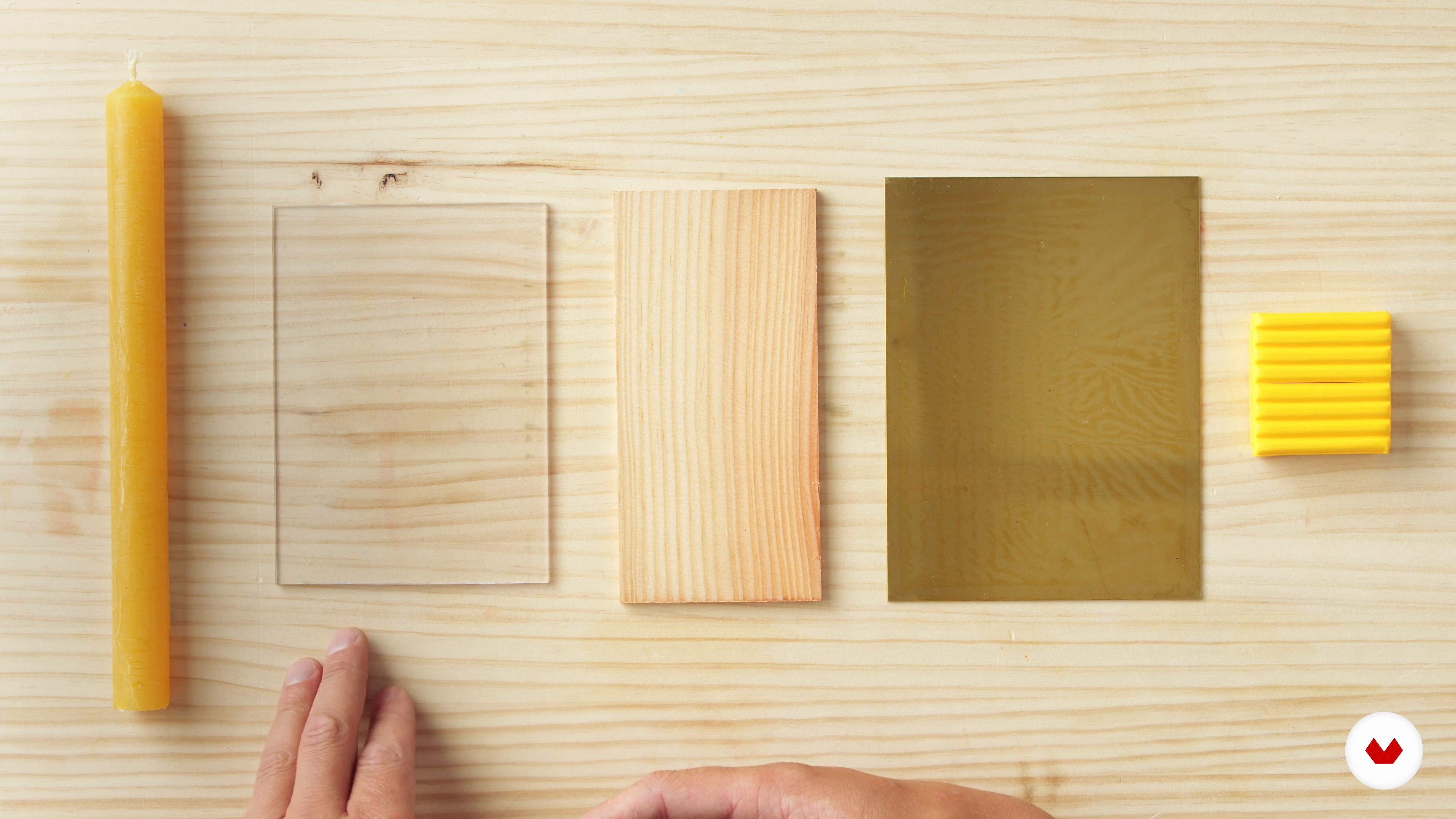
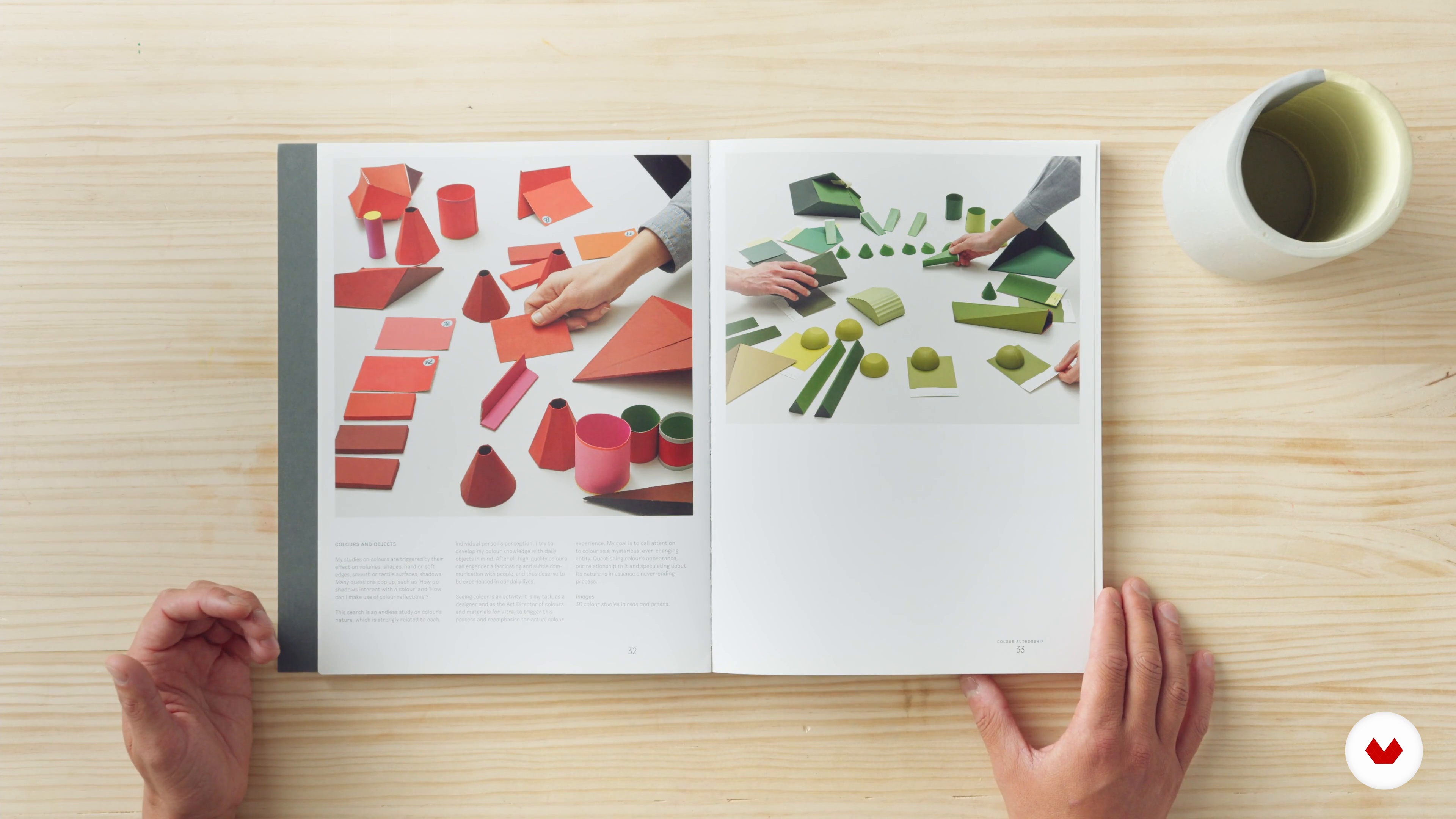
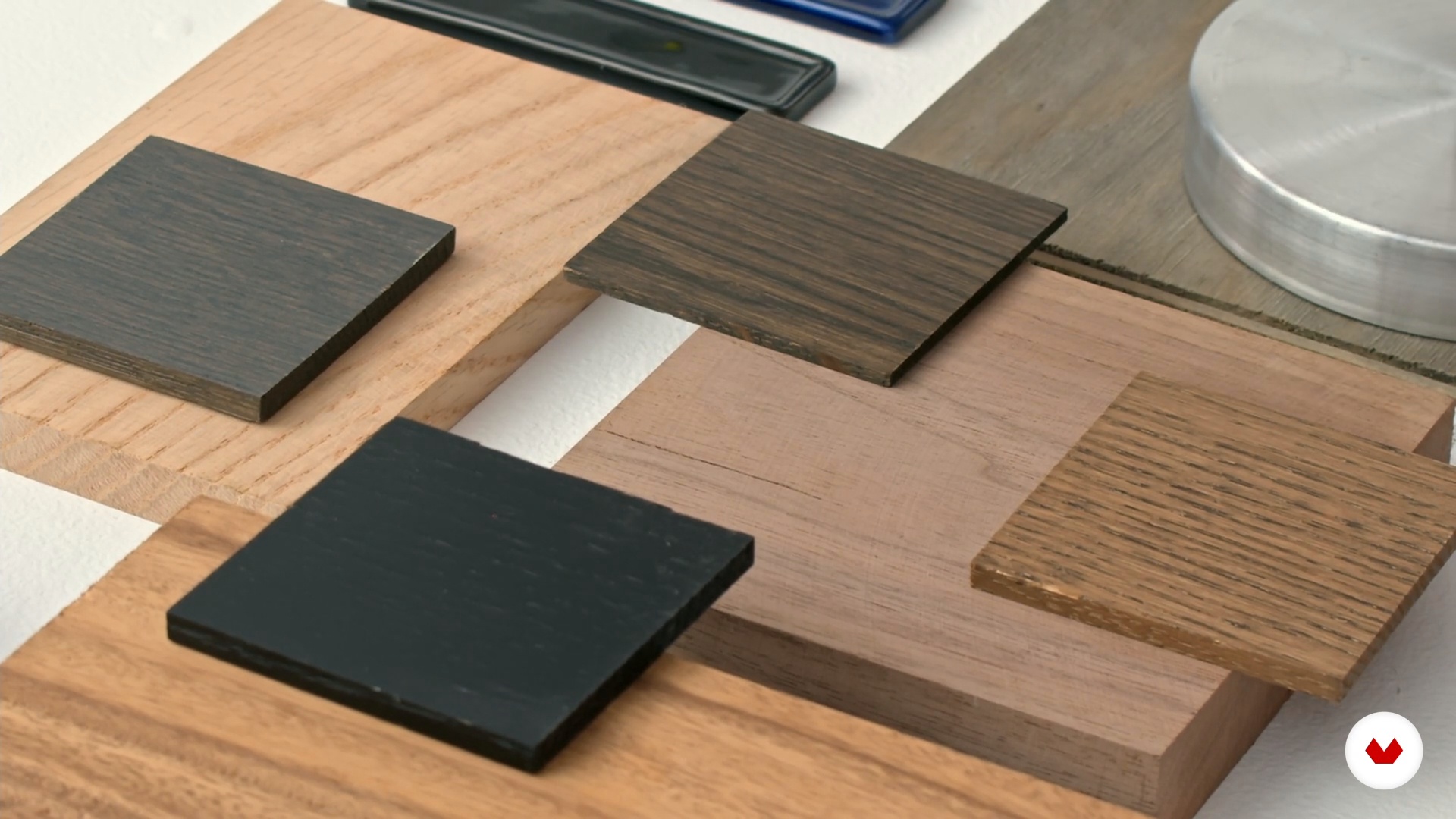
Materials, processes and color
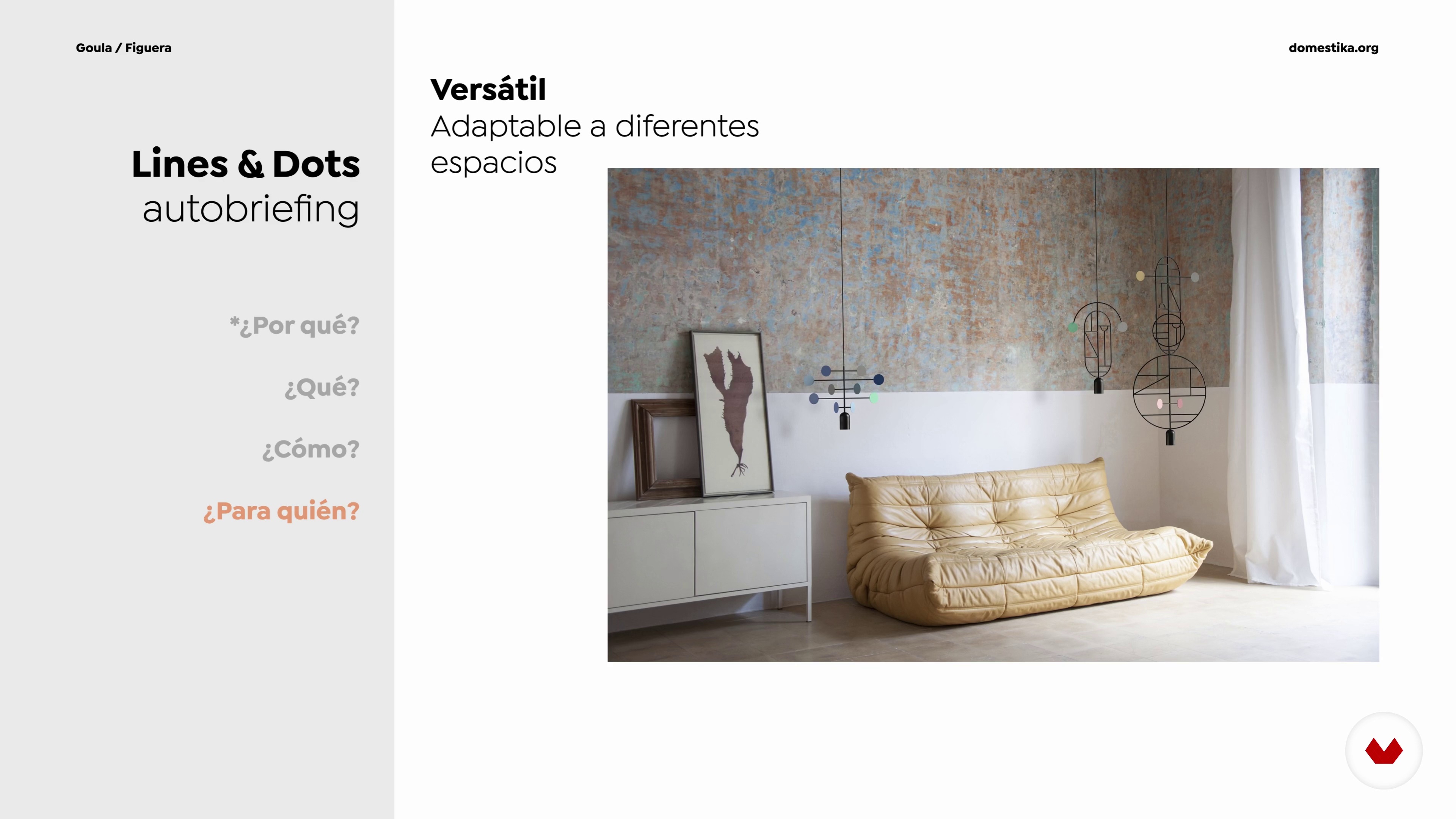
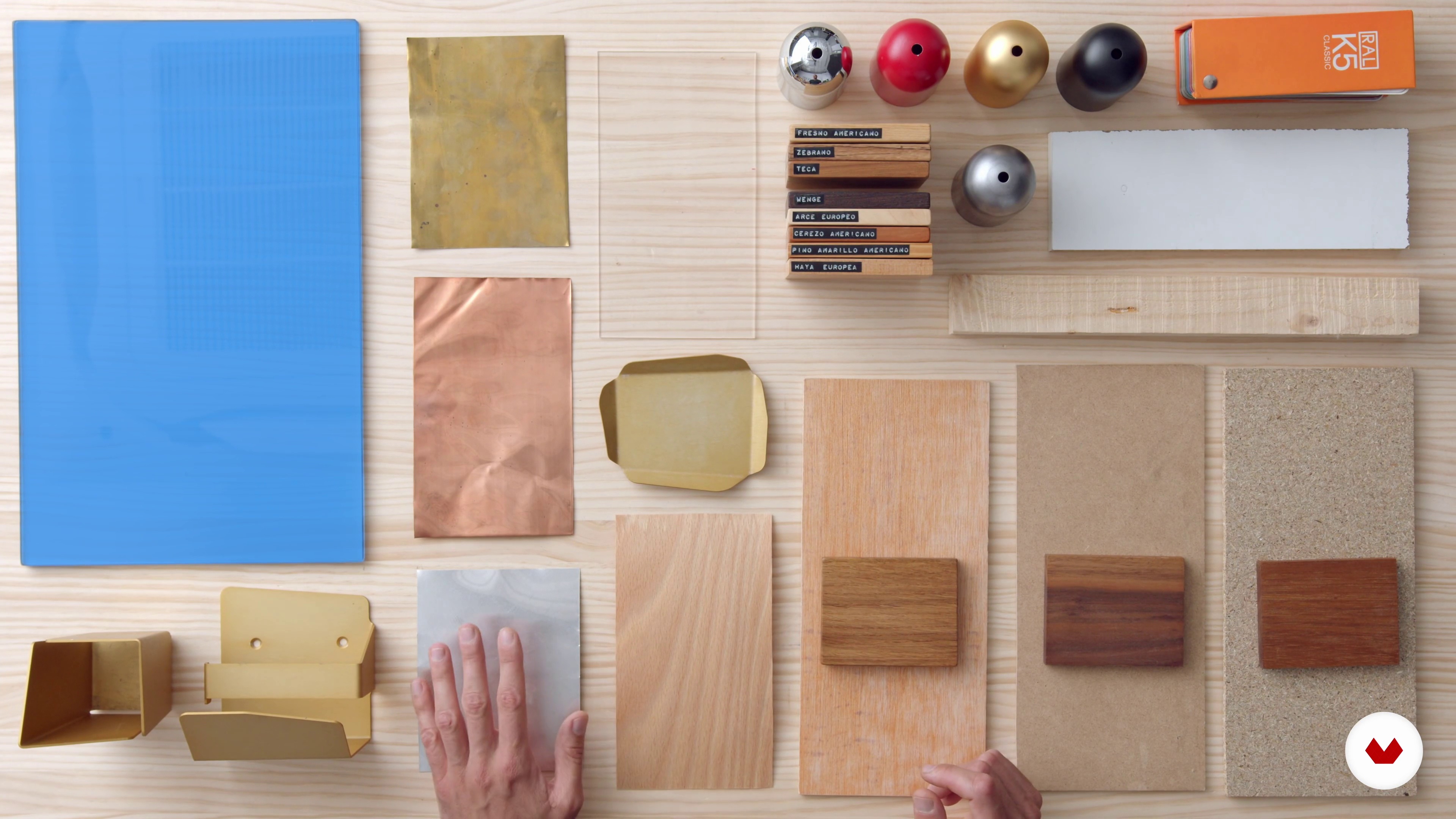
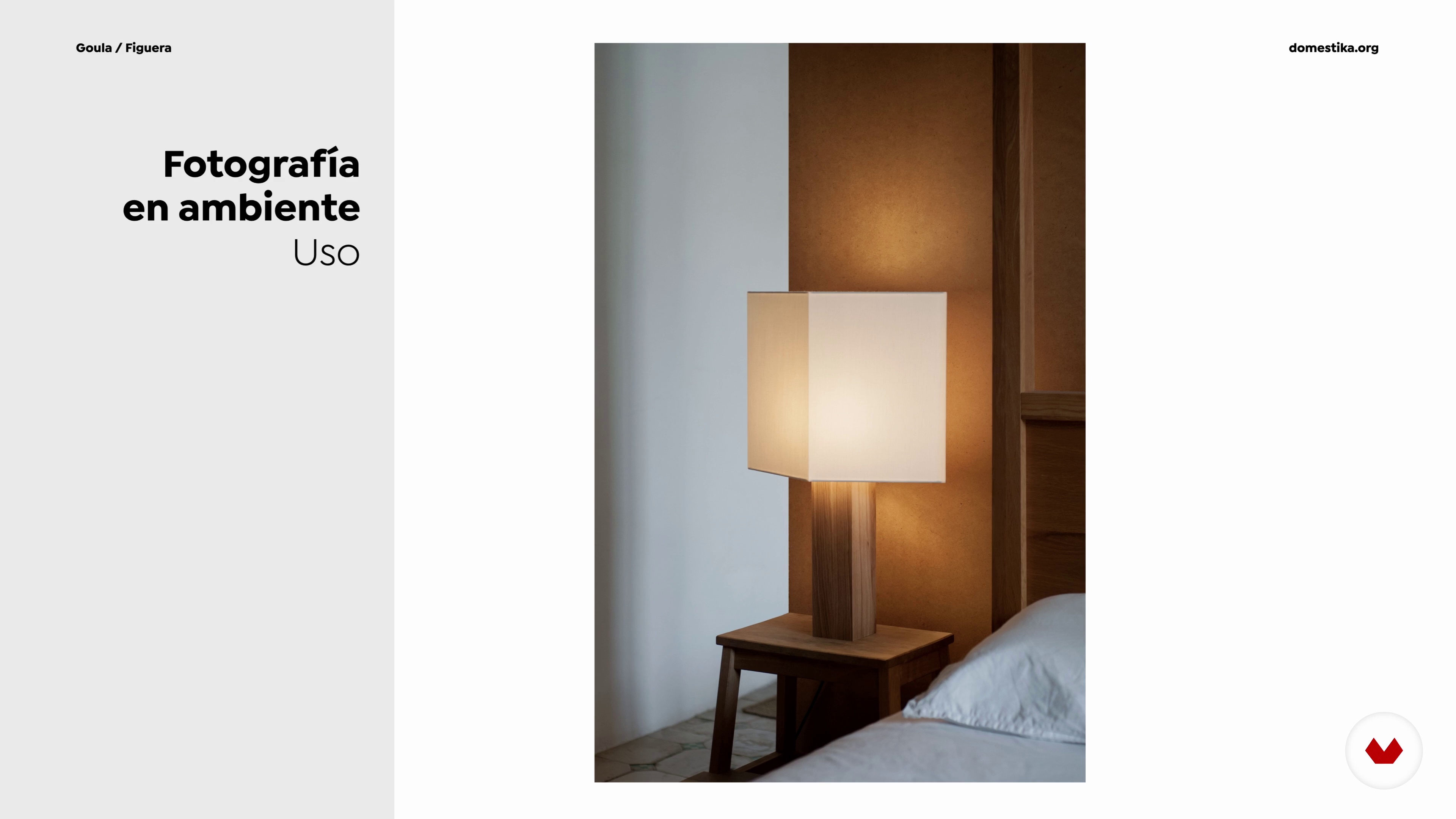
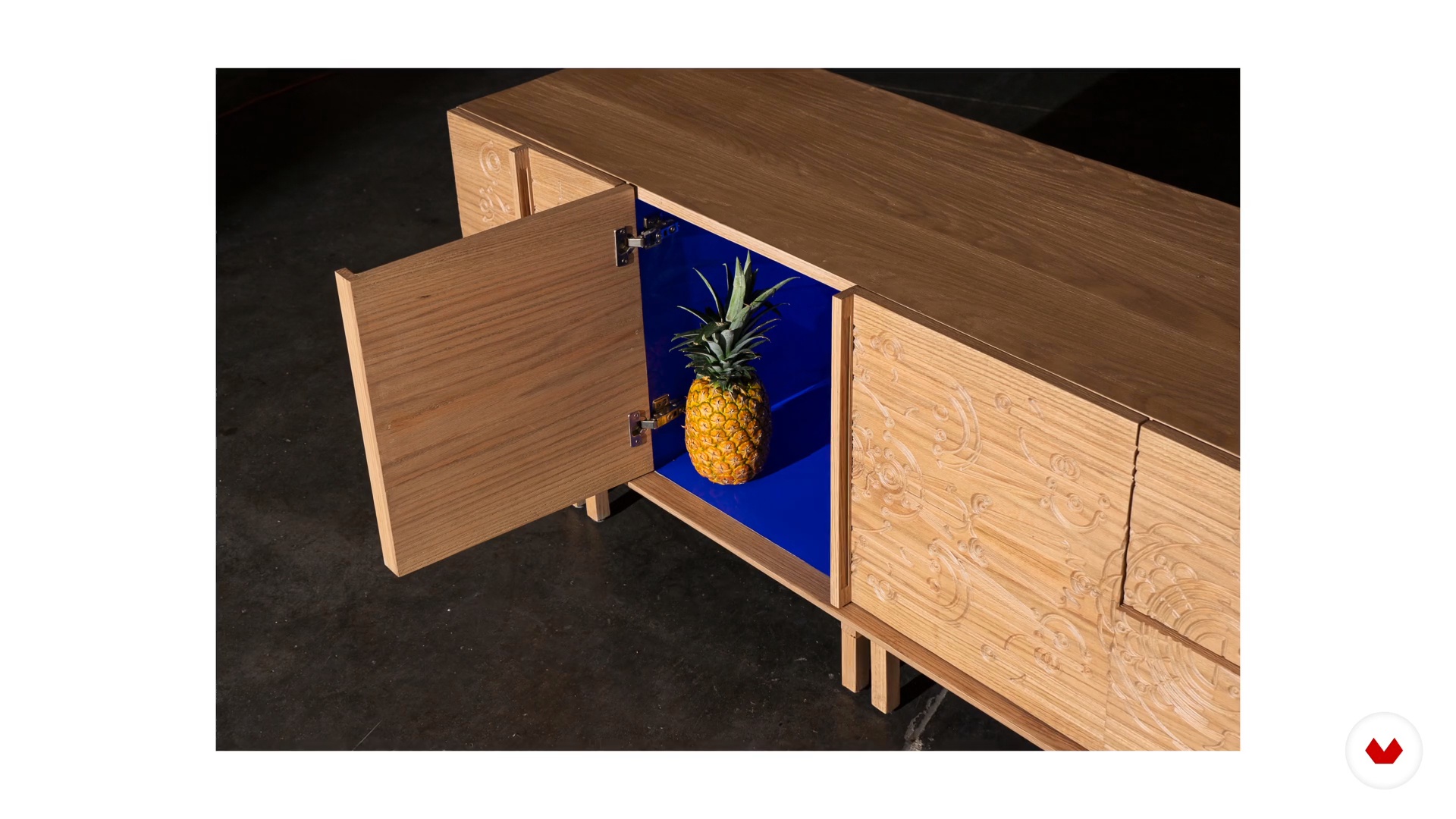
Will you work with wood or metal? With glass or with plastic? What color suits your product? In this lesson we will see how the different materials with which we work at Goula / Figuera condition the design and how color can change everything.
10m
image
11
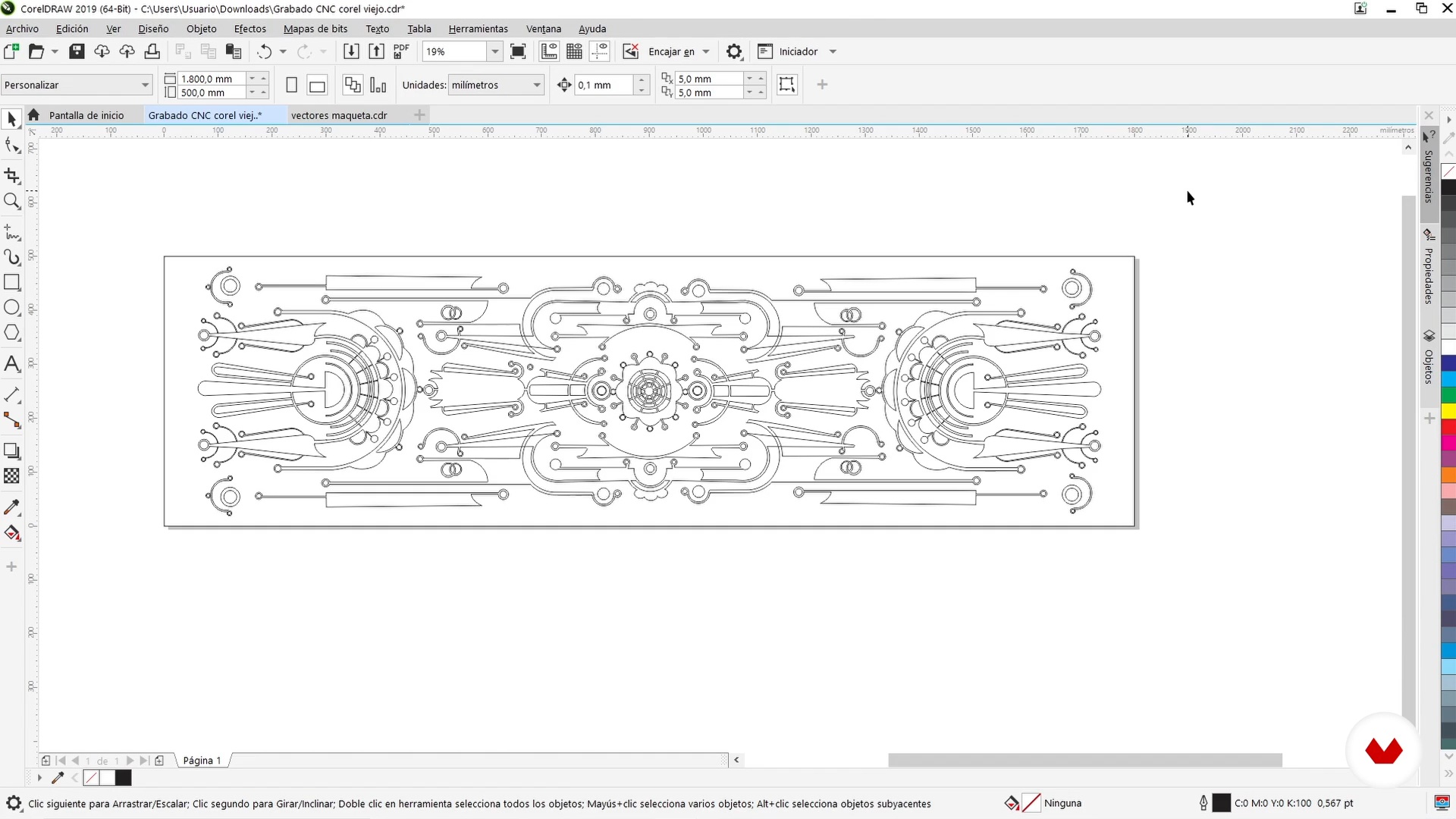
3D modeling and rendering
Although it is not essential, almost all product designers use computer modeling software to adjust the dimensions of their design and to render or print in 3D. I am going to show you briefly what software we use for it.
12m
image
12
The prototype
Whether you are working for a client or a self-project, the prototype is the culmination of the entire design process: it will not only help you to verify dimensions, materials and finishes, but it will also be the most effective tool to communicate your project.
8m
image
13
Product communication
In the world of design, it is not enough to have good ideas, you also have to know how to present them. Whether to show your work to a client, to your followers on the networks or to the press, it is very important to take care of the two key aspects in the communication of a product: storytelling and photography.
12m
image
14
Production or self-production
We have now reached the end of the project: we have a prototype, a name for the product and a story to tell… now what? Whether your client is in charge of manufacturing your design or if you want to embark on the adventure of doing it yourself, in this lesson you will learn what aspects you should take into account.
8m
image
3
Defining the Relation of Color and Materials
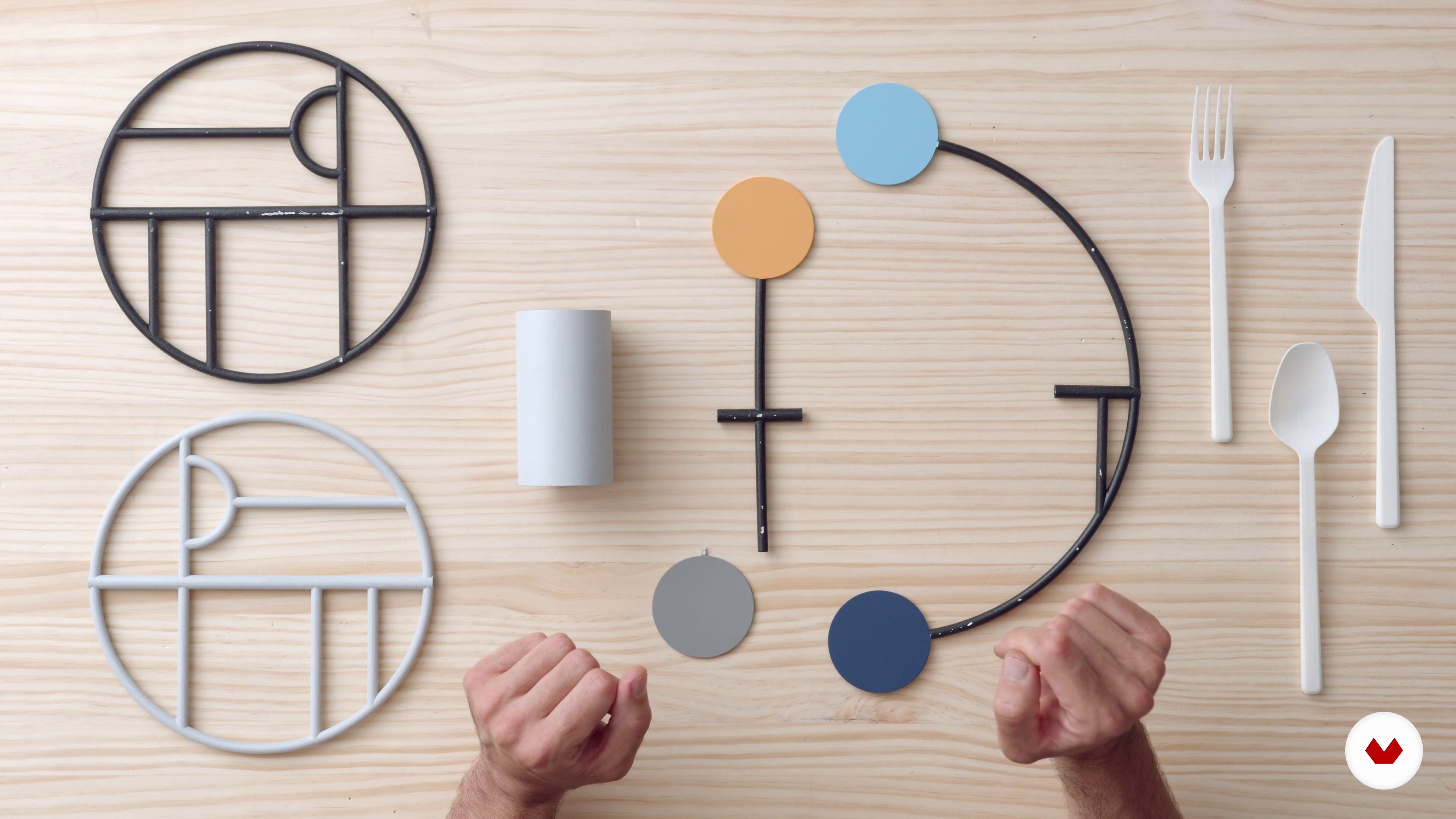
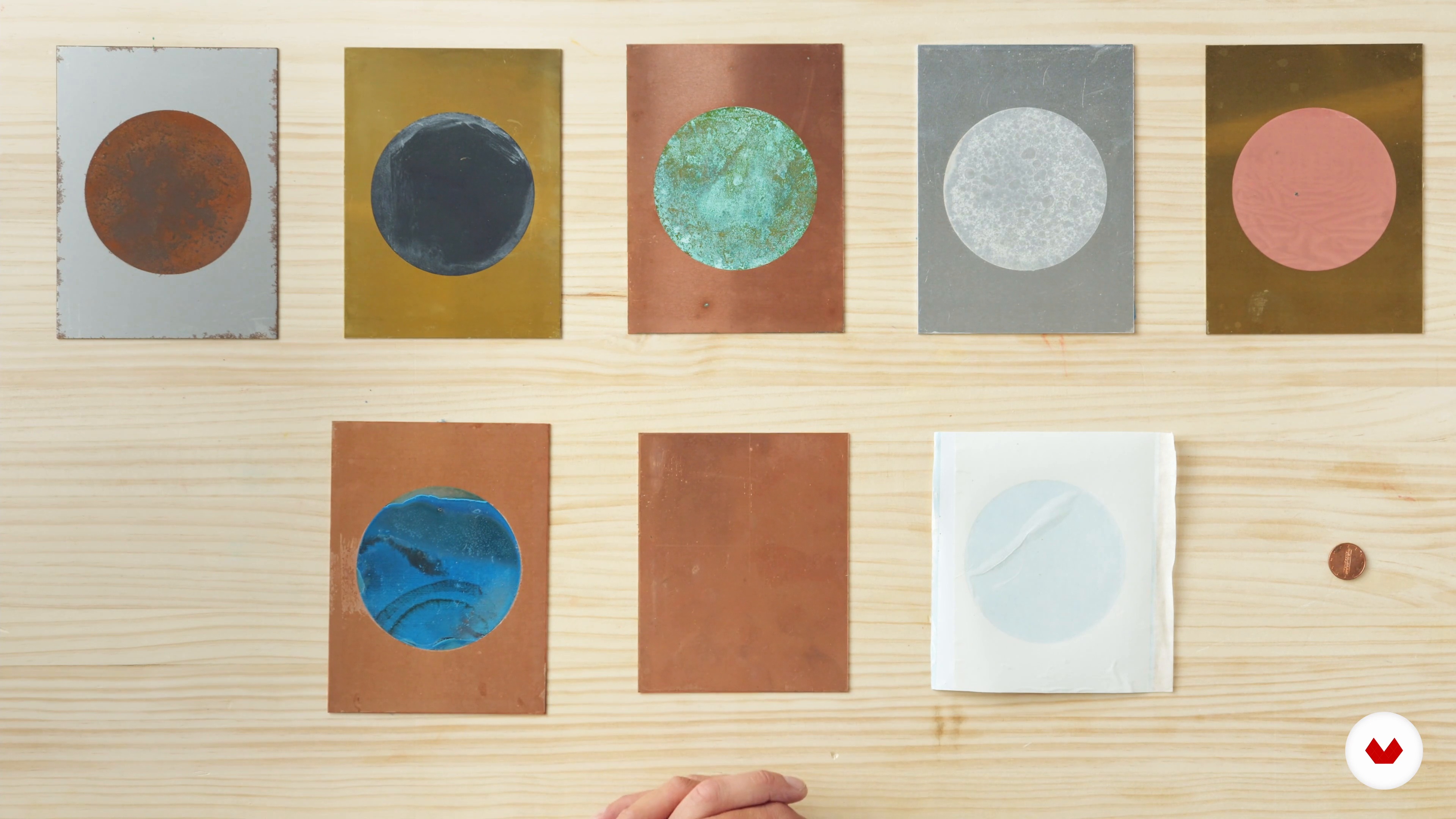
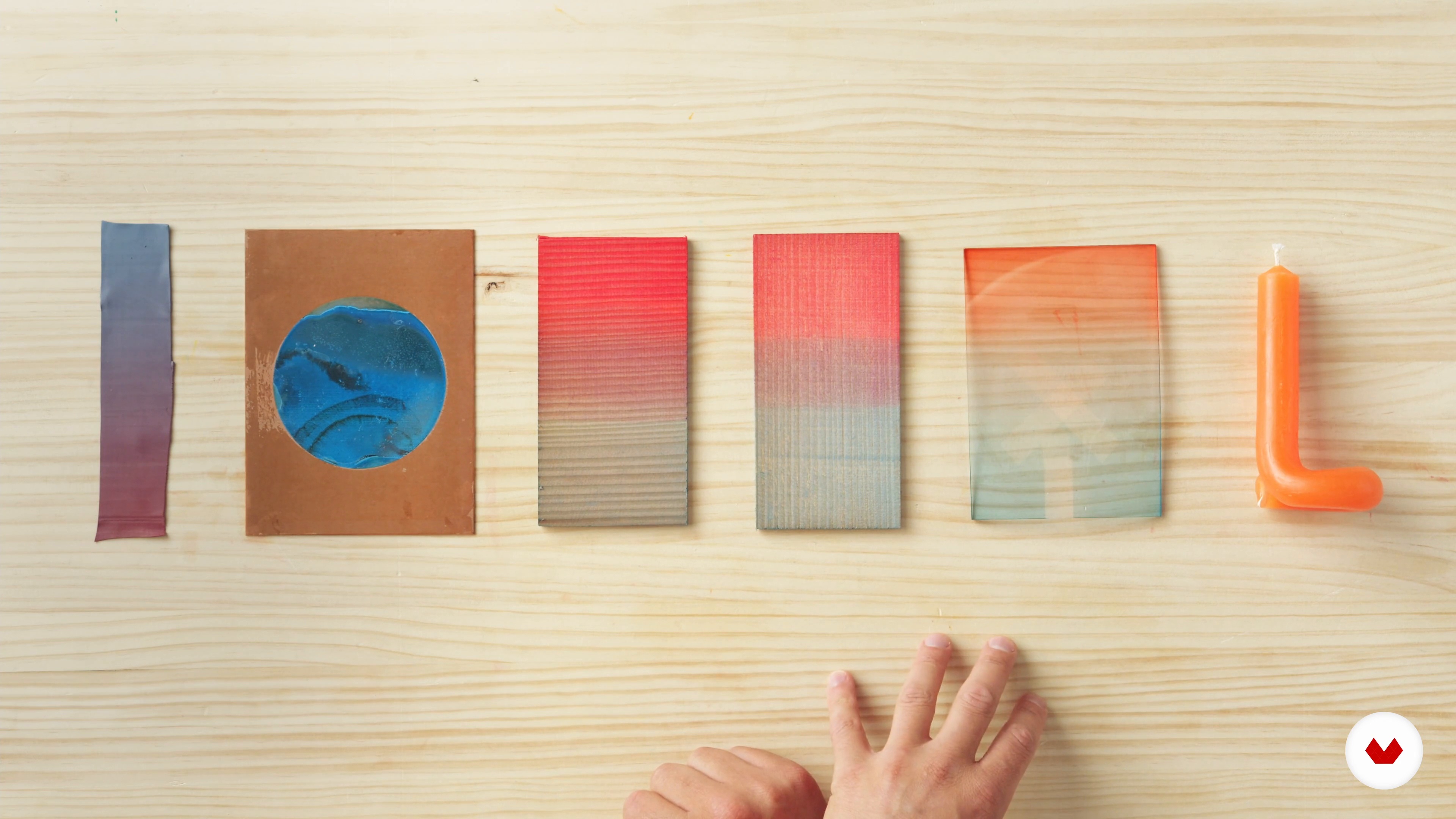
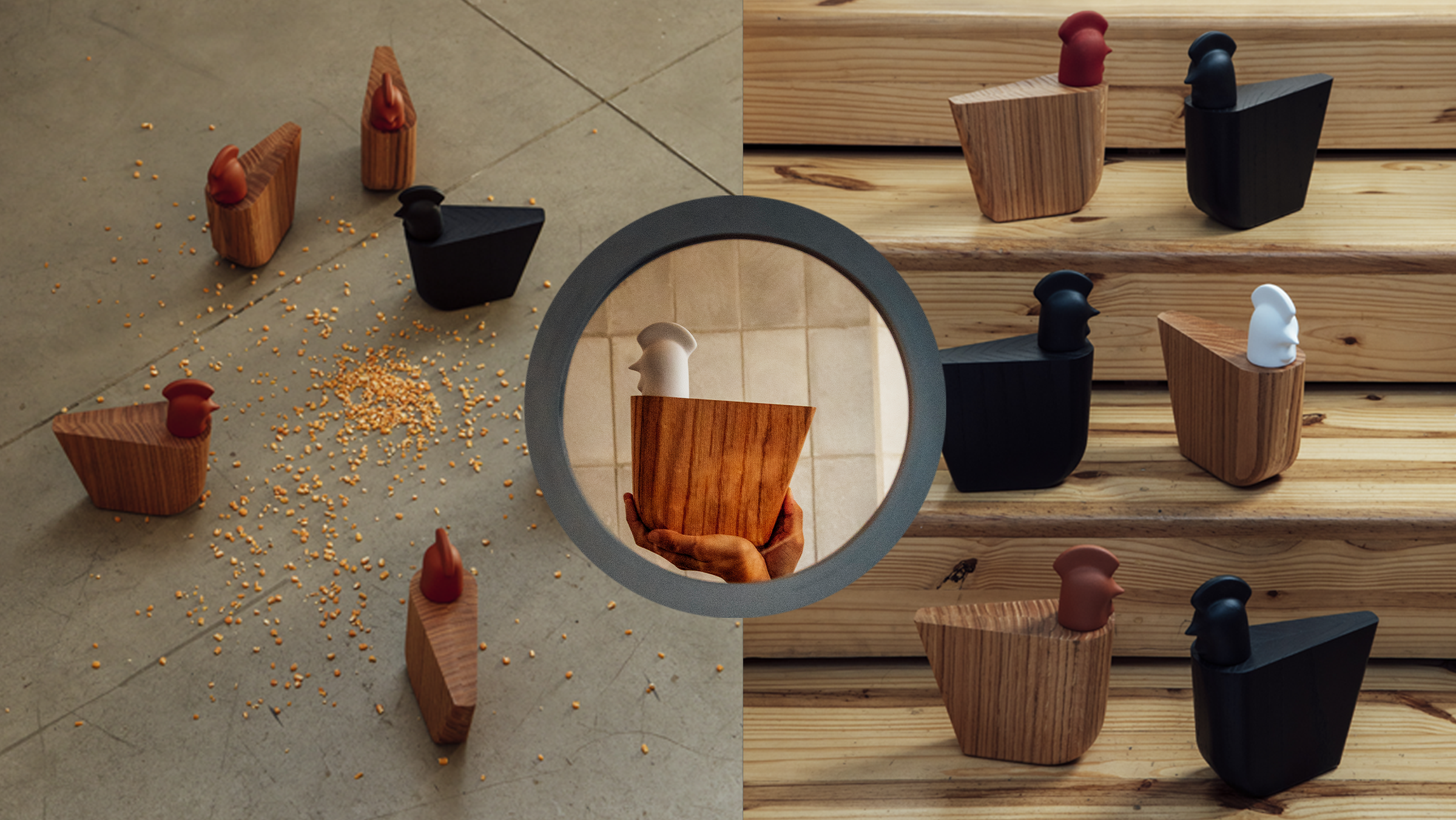
Here we will start investigating the relationship between color and material. Oxide is key, besides tempering and soaking wood. This way we can see the behaviour and color relations. Another key experiment is physically mixing color with fimo or synthetic clay.
5m
image
4
Material Properties
In this lesson we will focus on what happens when we heat, soak or bend materials. This will give us more information to master the experiment and to create new solutions for our designs.
18m
image
5
Tonality, Color Blocking and Color Transitions
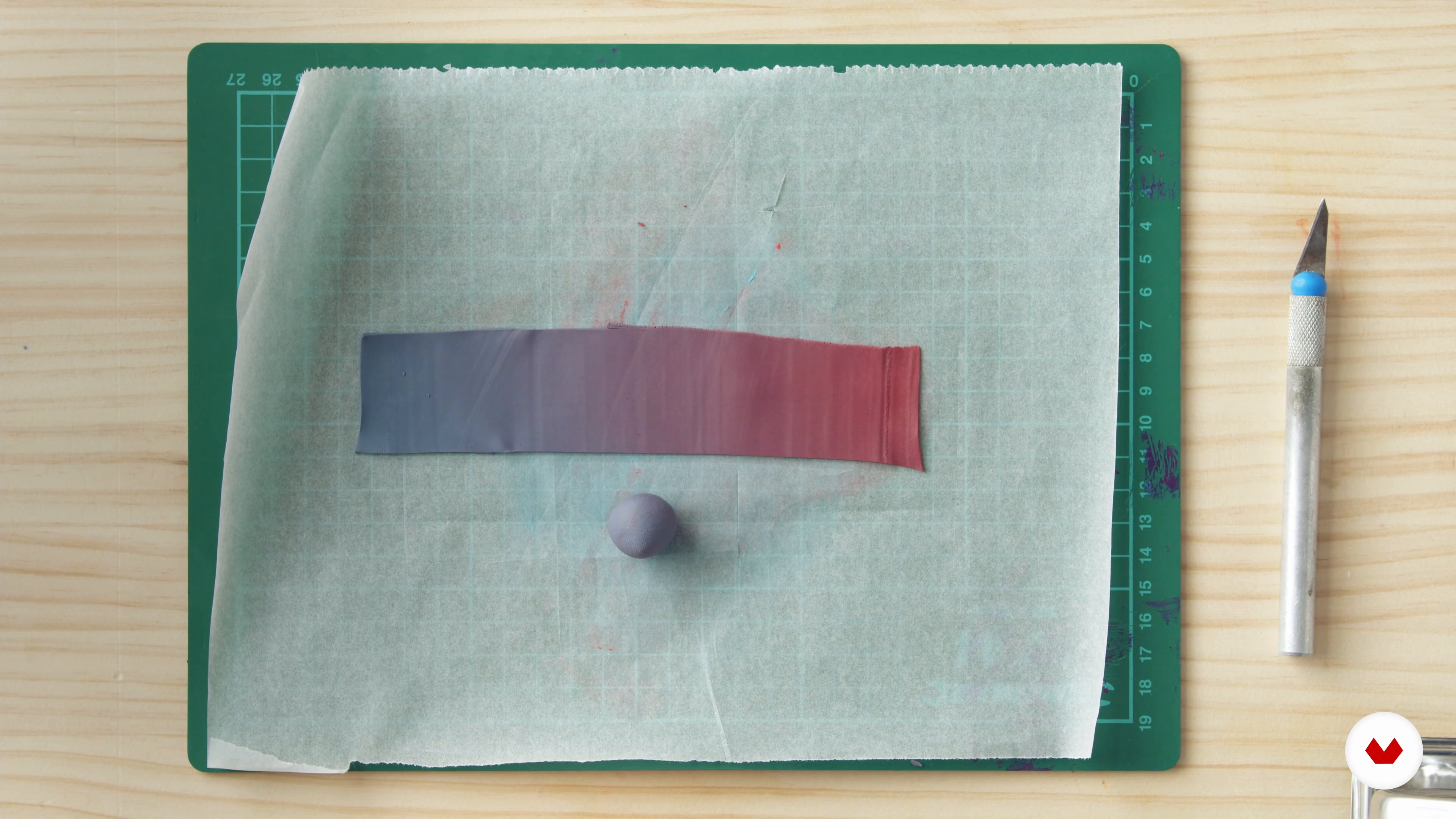
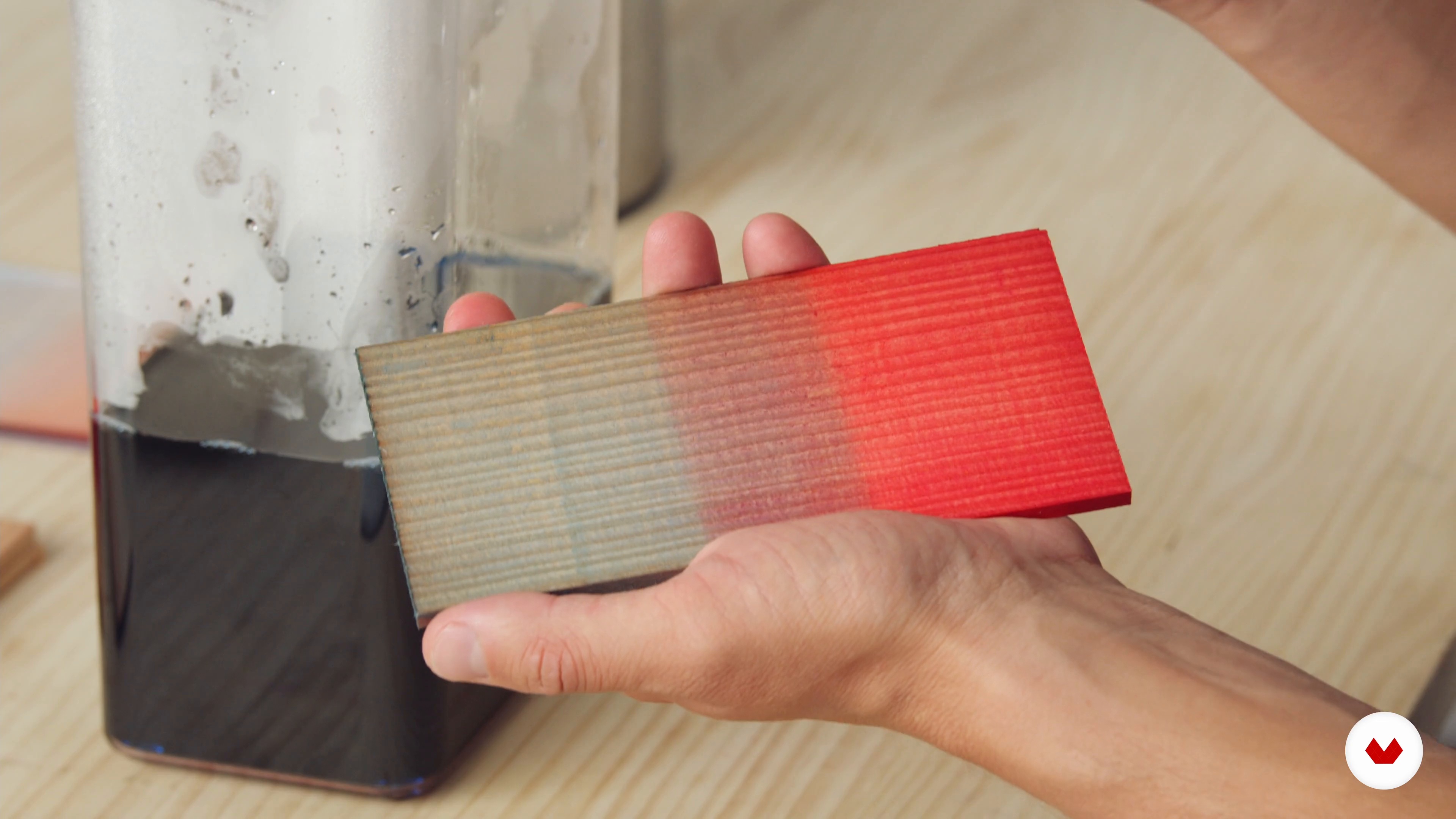
Mixing clay to create tonality and also soaking pigment into wood allows us to blend colors. Various hues and gradations of color can also be achieved by heating metals. The key materials are: synthetic clay, wood and steel.
15m
image
6
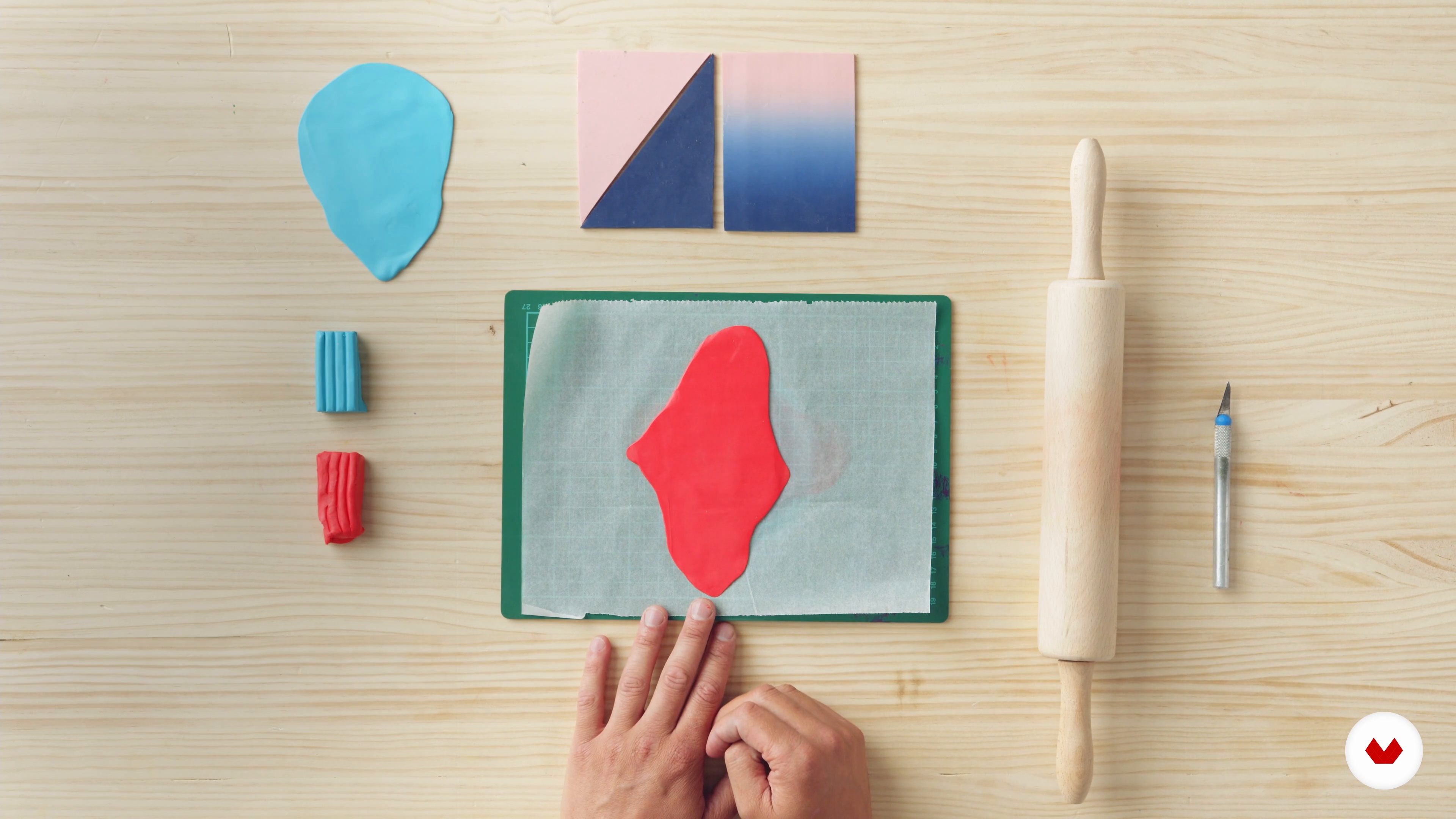
Experiment 1: Clay and Color 1
First we need to collect our materials and tools. We will use various types of synthetic clay or fimo. You could buy these in many shops all over the place. The purpose of this lesson is to build a material library that will function as an archive to keep in your private collection or to translate them later into your own products. Another key element is of course color. I will explain the simple basics.
14m
image
7
Experiment 1: Clay and Color 2
Now that we have the two colors, let's use the pasta machine to blend them together until we achieve the desired result.
13m
image
8
Experiment 2: Metals and Color 1
The experiment based on metals is about natural colors and the relationship between color and material. Here we will focus on metal tempering and oxides.
9m
image
9
Experiment 2: Metals and Color 2
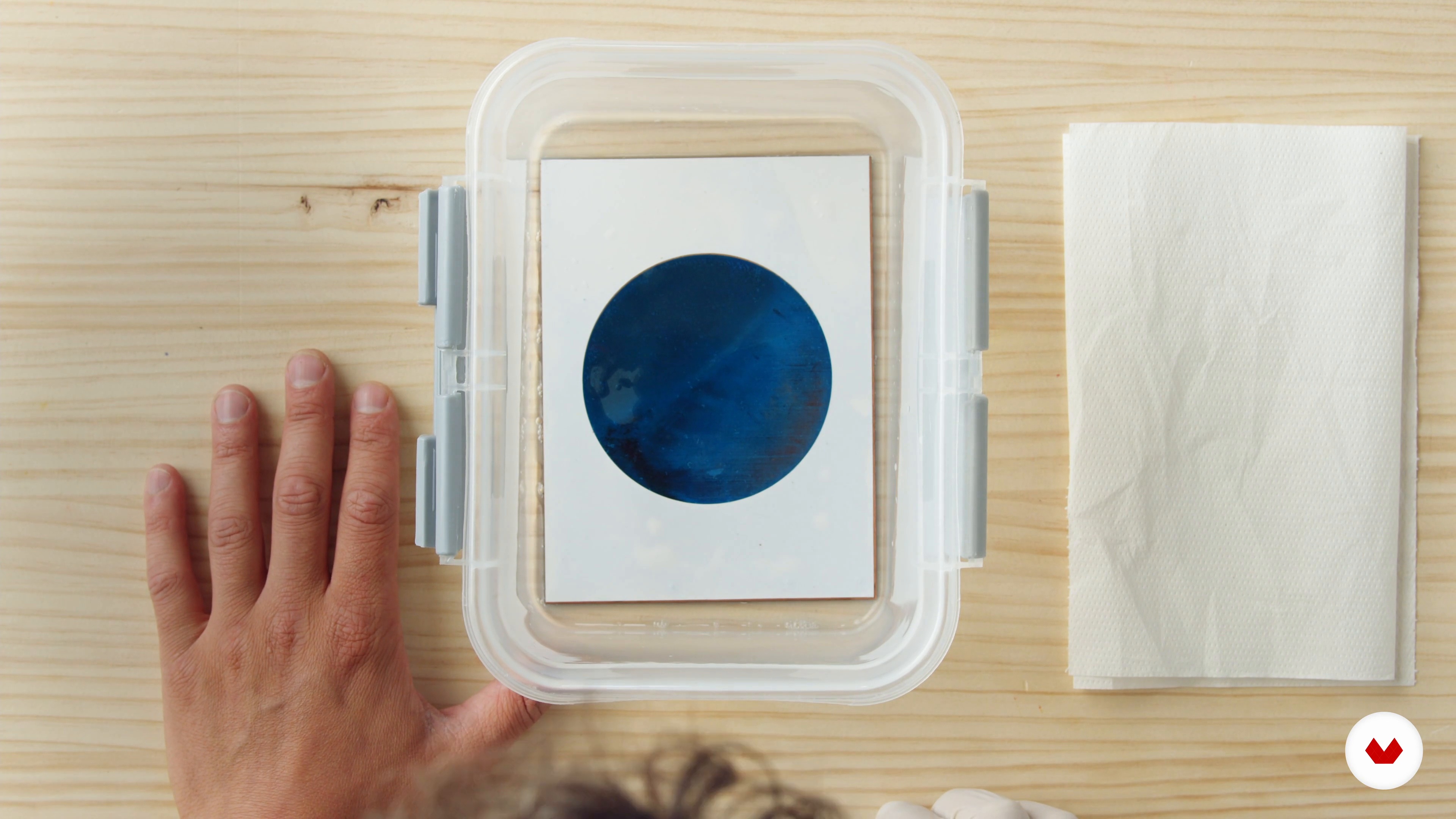
In this second part of the lesson, we will start oxidizing the copper. Make sure the metal is clean and to follow all safety measures.
13m
image
10
Experiment 3: Wood and Polyester 1
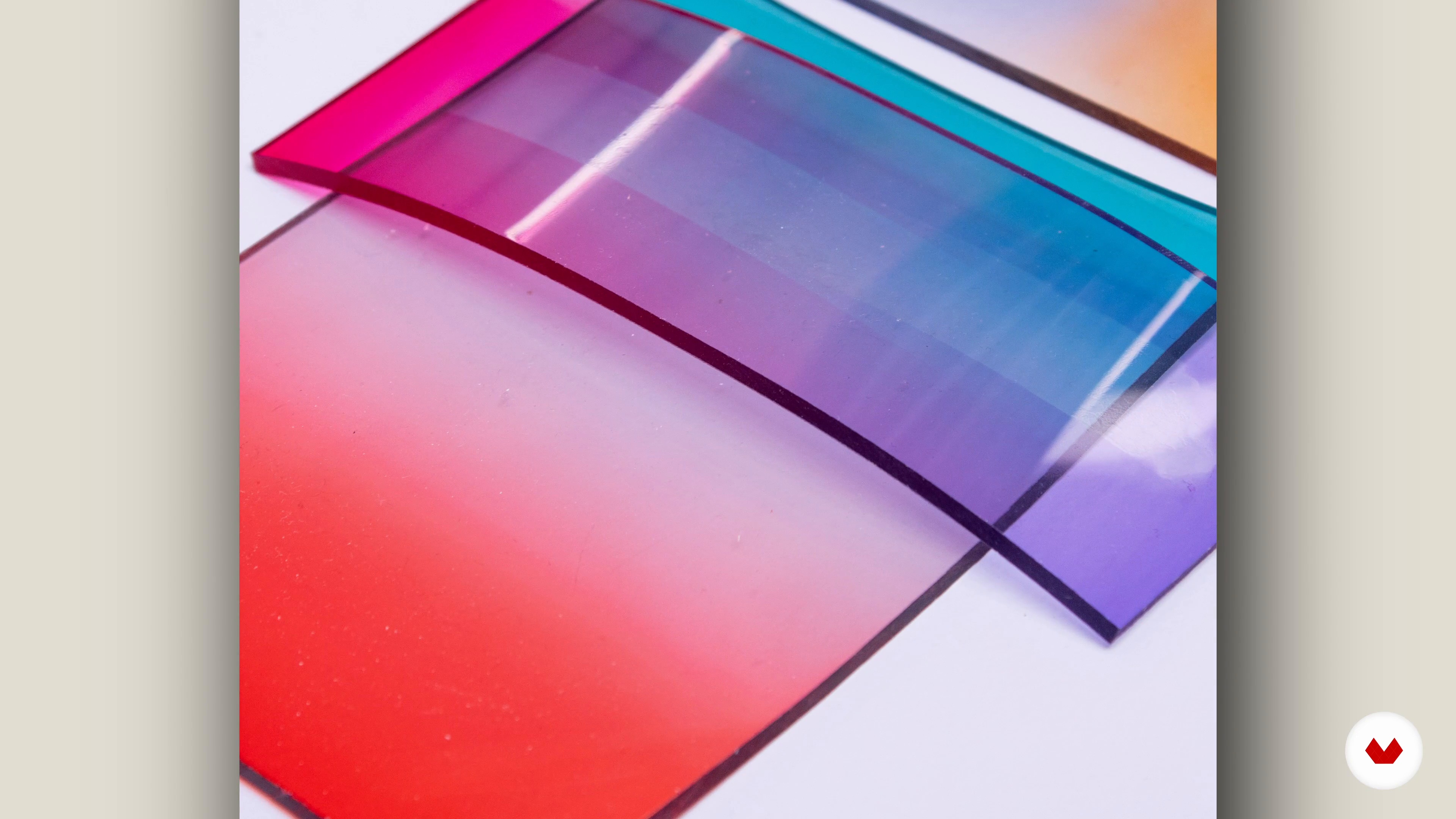
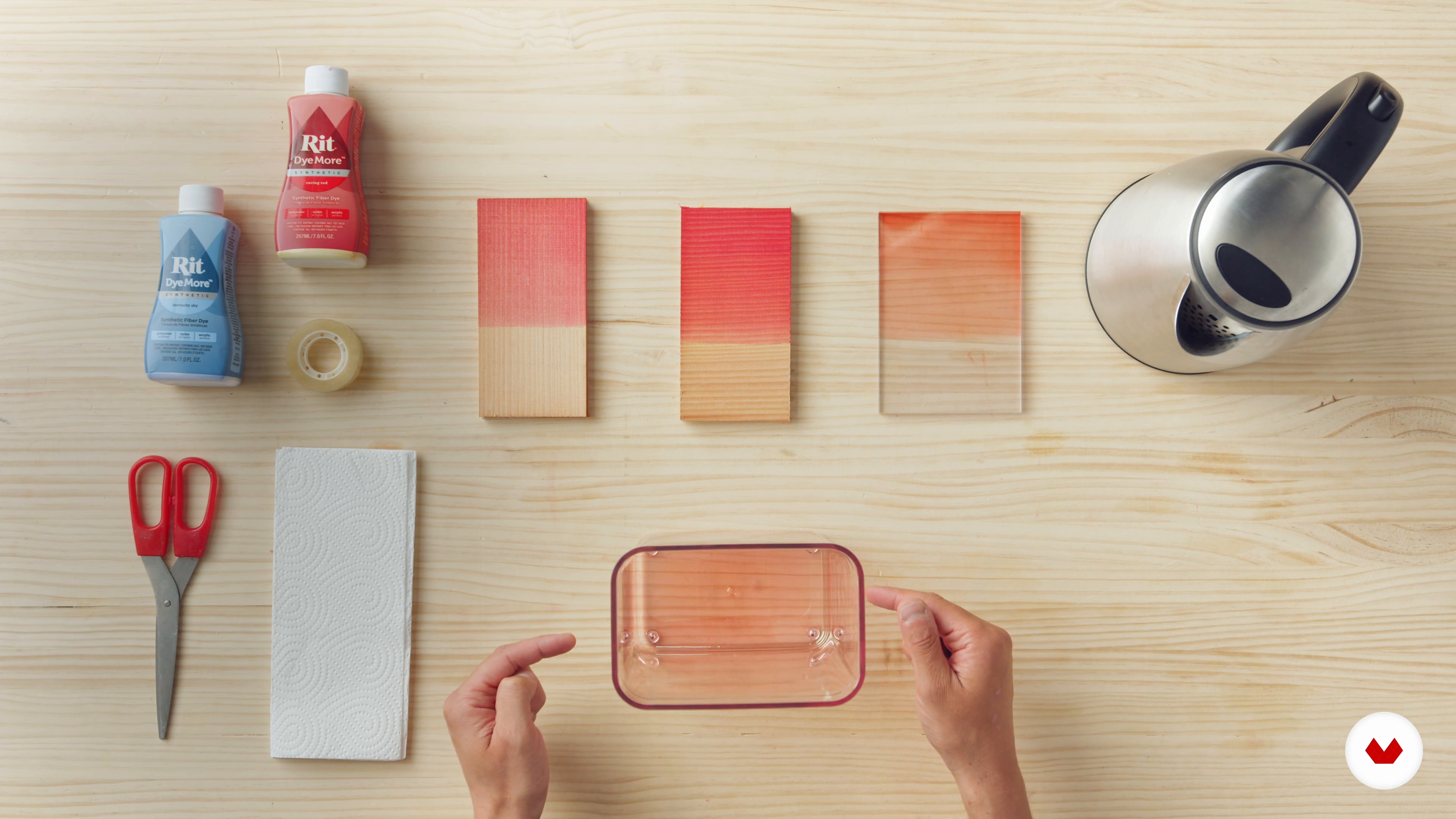
In this experiment we will focus on making color transitions and color gradients. We will also use hot water with synthetic rit dye to color the polyester sheet material. The process will create sky gradients and color mixing.
13m
image
11
Experiment 3: Wood and Polyester 2
Now, let's use blue to dye our pieces of wood and polyester and see the results of our experiment.
15m
image
12
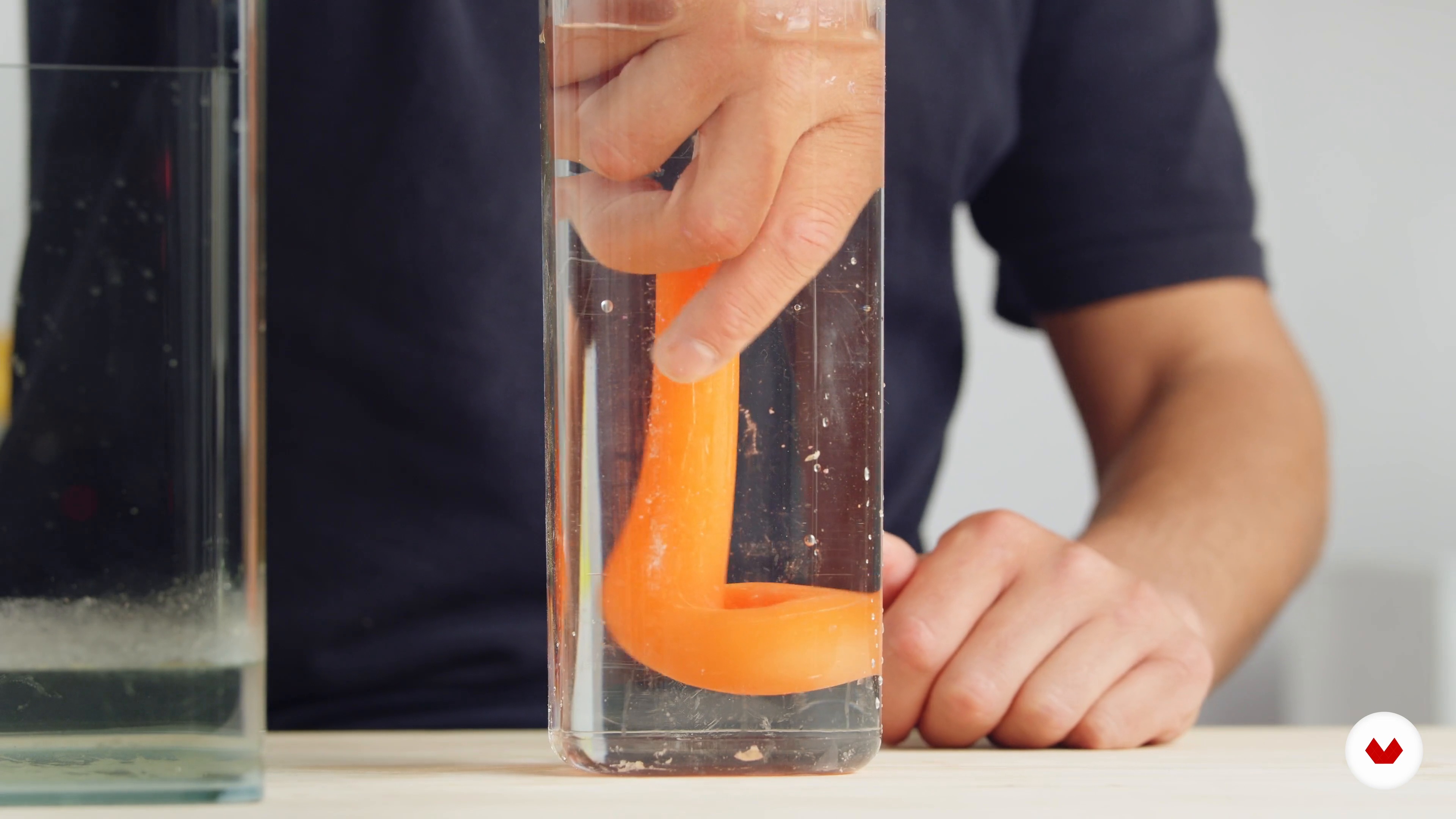
Experiment 4: Wax
I have saved the best for last. Now I will play with wax and bend it. This experiment focuses on the relationship between material, color, form and fun. The goals is to create a library of possibilities so that ultimately we can design a family in one typology and colors that strike as a composition.
11m
image
13
Analyse and Reflect
I will tell you how I see the library of materials and experiments and what I believe the object should be. This is the most important step to go from material towards a design. Sometimes this is a small step and sometimes much bigger and complicated. I will also contextualise what could be a gallery piece, an edition or even mass production or a product for a label. This process will teach us what and for who we want to design. I will also guide you through my own projects and for who it was designed and why.
16m
image
14
Developing Products: Craft vs. Design
After working on ideas for the design, it's time to choose. Will you aim for craft and self-produced work or only a prototype to communicate and ultimately aim for a label or producer to take your design in their collection?
17m
image
15
How to Go Further and Make your Designs Come To Life
It's now time to start making and see if what you have in mind and learned is actually working in reality. You can cheat with a prototype, but if you aim for production you can ask yourself the question of how to solve this problem and if the solution will affect your design. Then prototype and make models. Even think about packaging and ways of making the pieces. Keep it simple and try to think of what you can do instead of what is not possible.
8m
image
16
How to Communicate Your Work
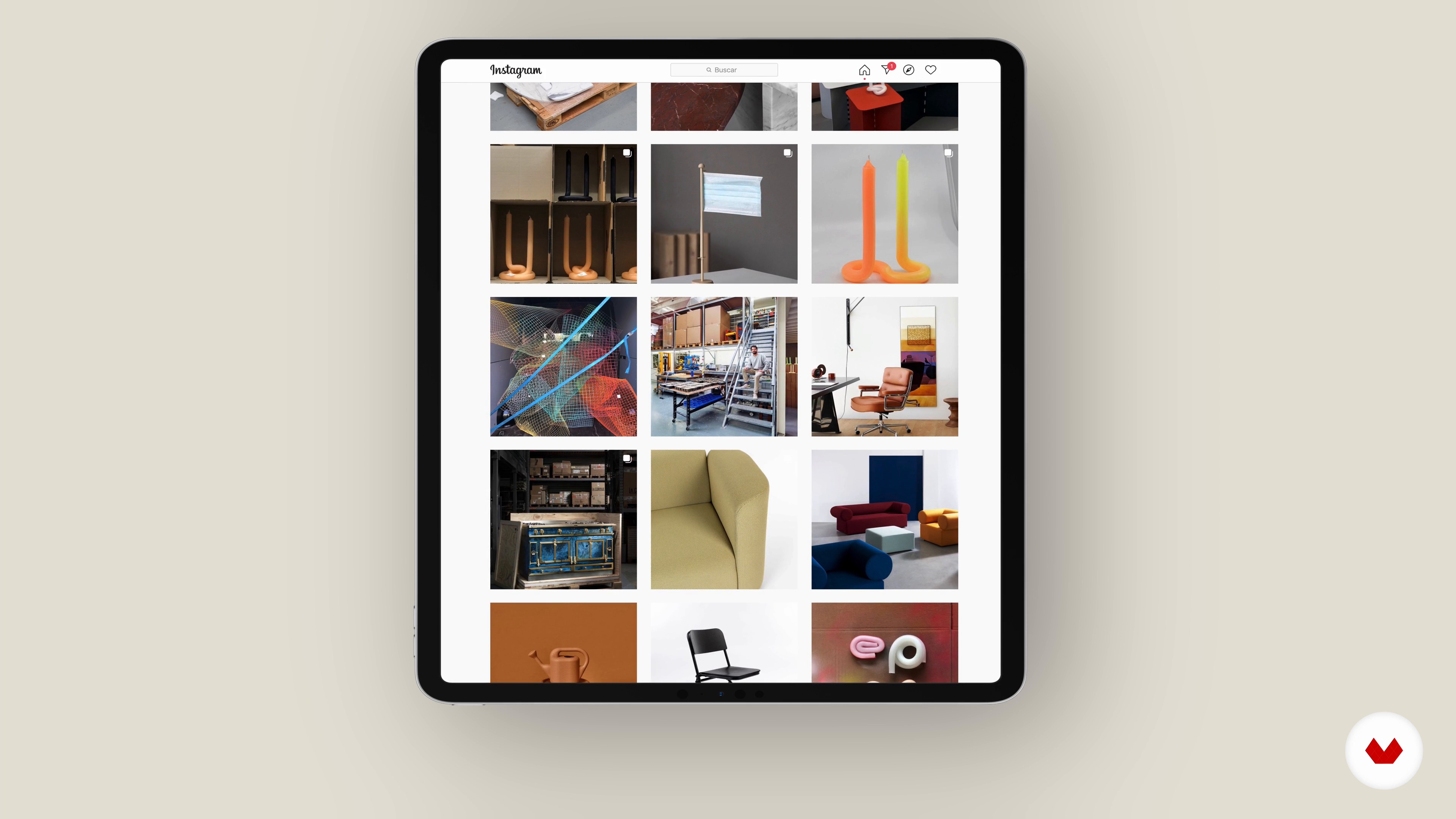
Once we finish the pieces, both the final design and, of course, the library, it's about communication. I will show you how I usually make images and descriptions for showing the work. This is a crucial step since you will present your work to the world. I always prepare all my images before posting. In this lesson I will also tell you my personal experience that relates to presenting in different ways. It can be a fair or an exhibition. Even an online presentation that shows you work on Instagram.
10m
image
3
The importance of stories
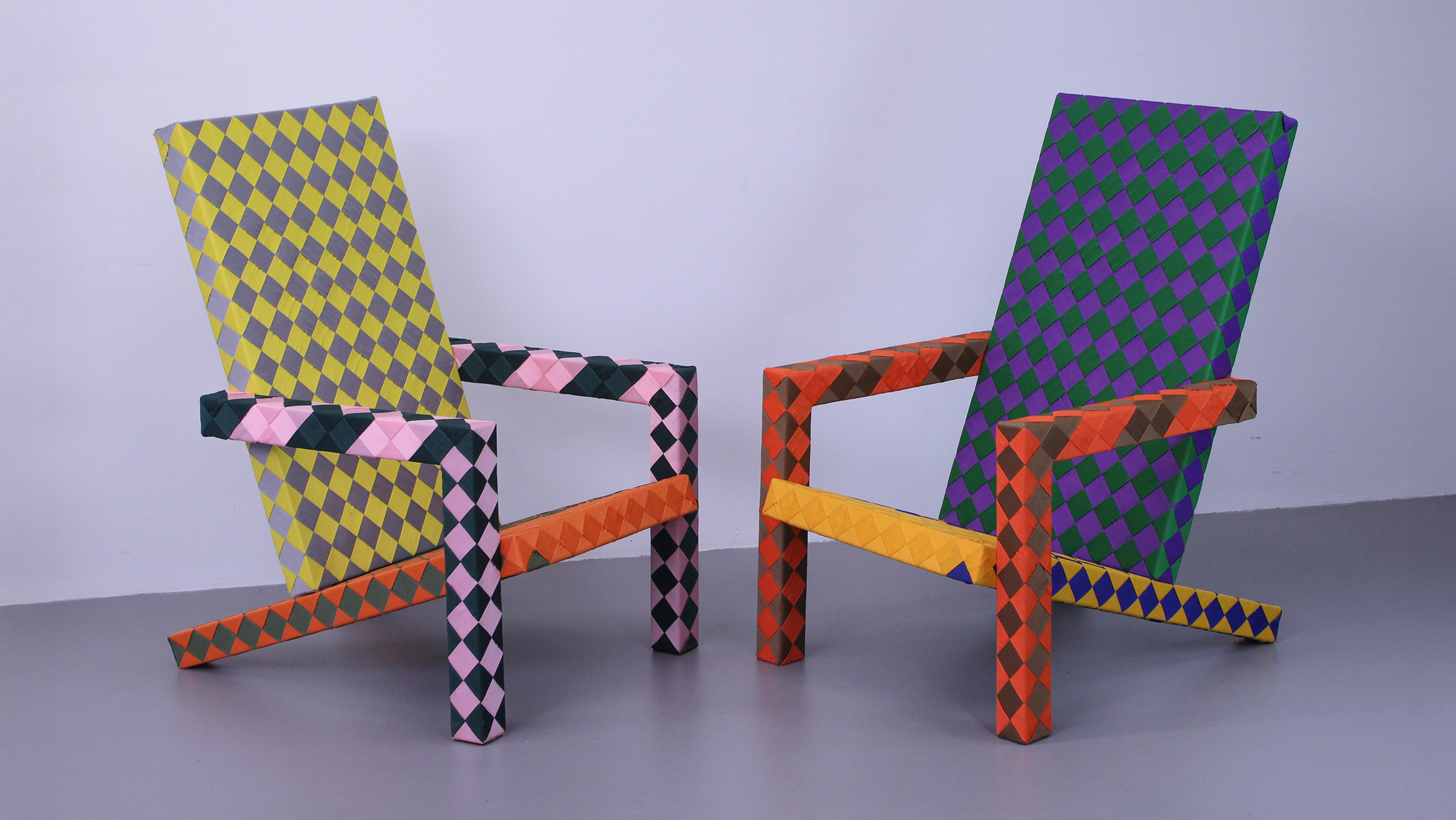
Telling stories captivates all kinds of viewers, from the smallest to the largest. In this lesson we will see the importance of stories when it comes to capturing attention and even making a purchase decision.
7m
image
4
The narrative object
To begin to understand the narrative object, I would like us to take a tour of pieces, designers and companies that are pioneers in this type of design. All this with the aim of identifying certain important characteristics when translating the story into the final piece.
15m
image
5
Creative leisure
Next, I want to share with you a methodology that I have carried out during my projects. Creative leisure makes you emphasize your identity and at the same time helps you find a good story to capture in your pieces.
17m
image
6
Mental maps
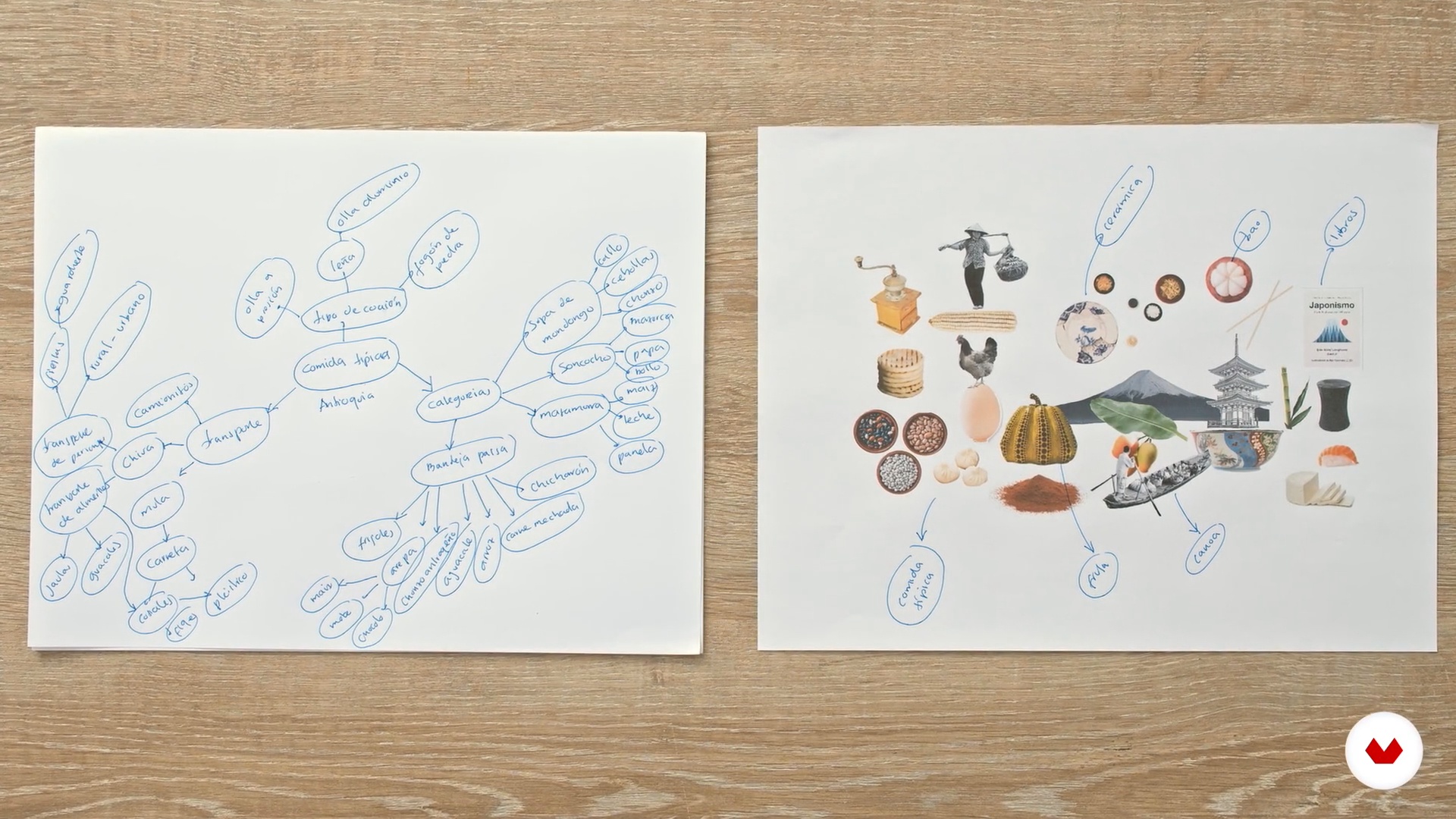
Once you understand how to execute the creative leisure technique, it's time to find a main word to make mental maps that will guide you to find the story.
13m
image
7
Mood boards and selection of the type of object
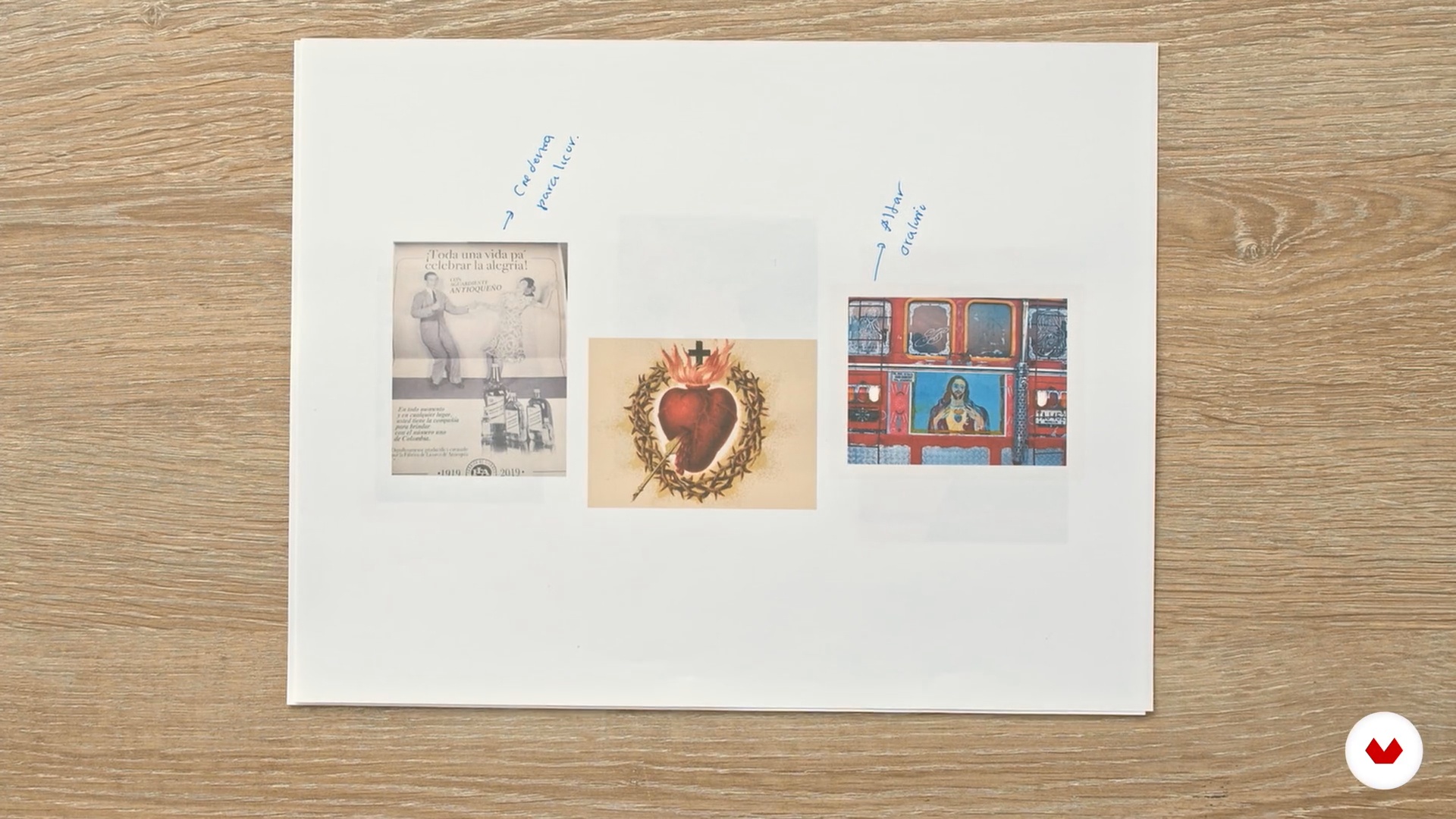
In this lesson, we will begin to collect images that speak of the history found in the mental maps to understand the project in a global way.
16m
image
8
Materiality and color
Next, we will find, from a mood board, the materials and colors that our final piece should have.
11m
image
9
Sketches
We already have history, typology, materiality and color. It's time for us to start sketching, conceptualizing the final shape that our object will have.
12m
image
10
Dimensions and finishes
The final idea is ready, now we will have to go from the sketch idea to make our object more real. This is why it is important that we make decisions about dimensions, materials, finishes and other details.
14m
image
11
Layout and materialization
Once our decisions or design parameters have been made, we will take all this to a model made in the material that you use or consider relevant.
5m
image
12
Communication
One of the most important parts of telling the story is in its communication. The same photography or use of illustrations and referent images will help you to be assertive and reach the final consumer more easily.
4m
image
3
Materials and Tool Collection
The world is your oyster! Learn to see the value in free and purchased materials alike in order to create quick and scrappy design prototypes that allow you to really validate your ideas.
18m
image
4
Digital Tools
Now you will learn about the digital tools and software that I use to bring my creations to life in realistic digital renders.
7m
image
5
Design Process
Catch a glimpse behind the scene of my tried and tested design process that I began developing in undergrad and have continued to hone over the past ten years.
13m
image
6
Thinking with Planes
To begin, I will show you my ideation process. You will also see how to think with planes in order to learn how to fundamentally break an object down in planes.
11m
image
7
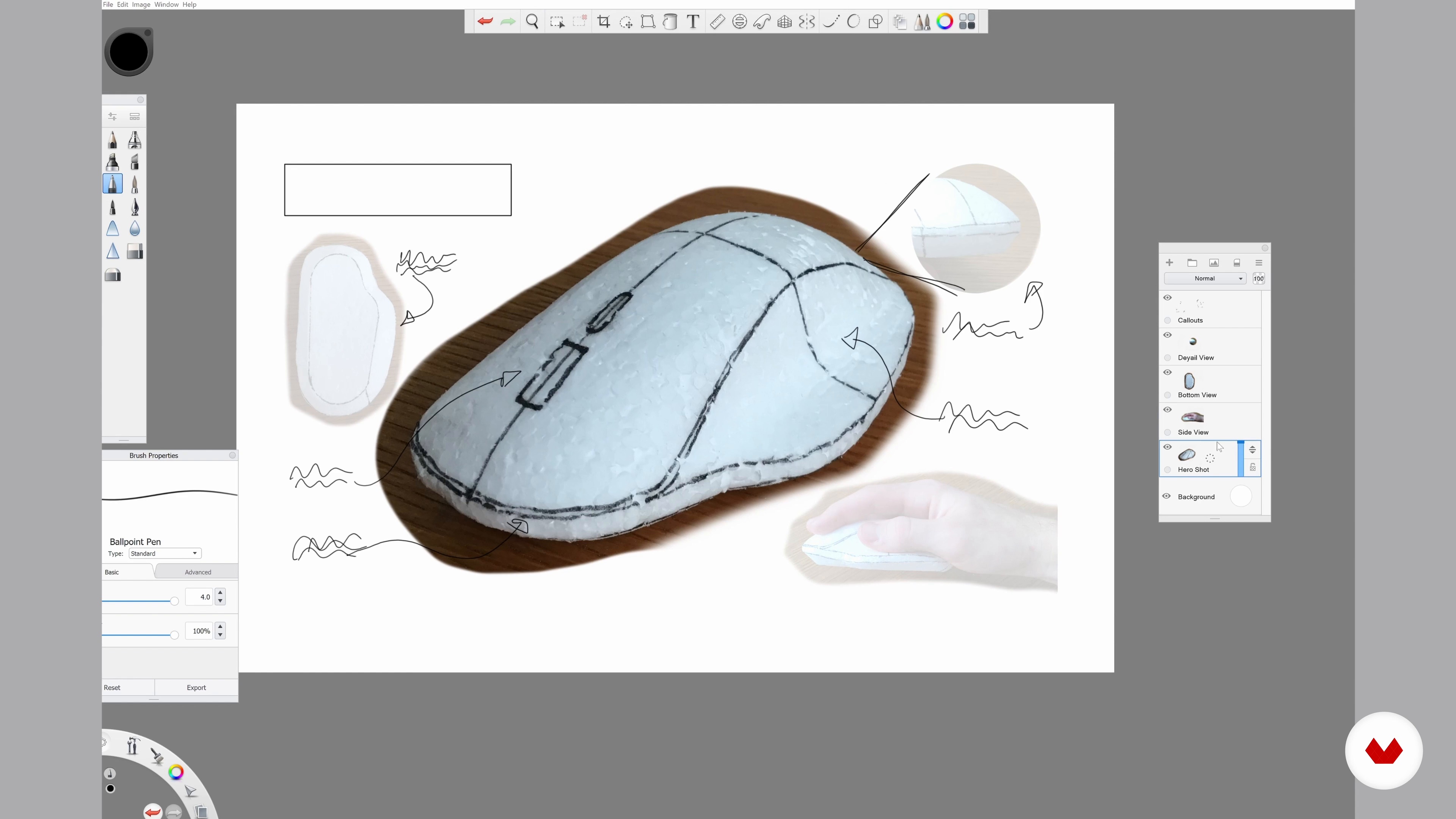
Prototyping with Cardboard and Foamcore 1
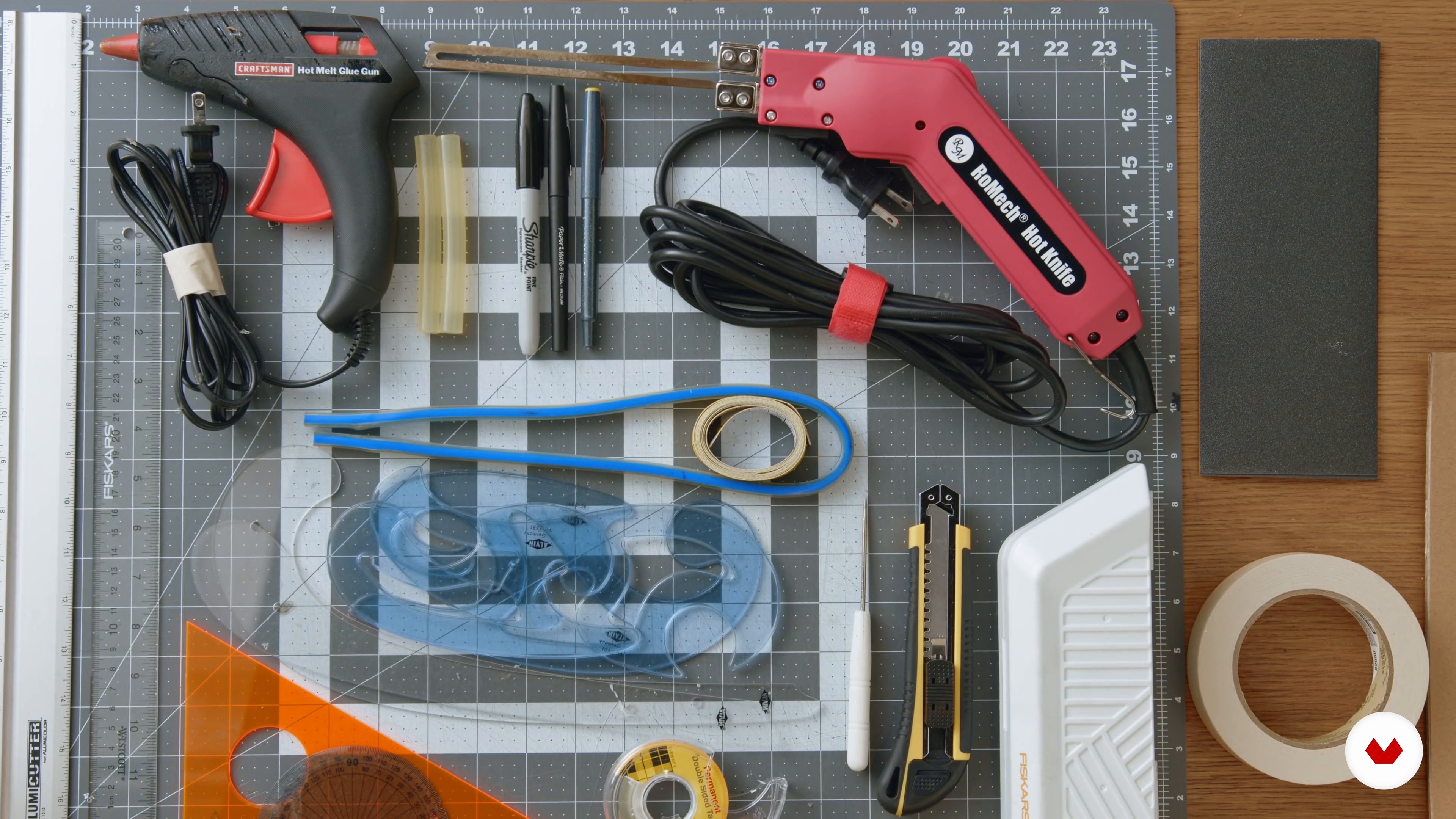
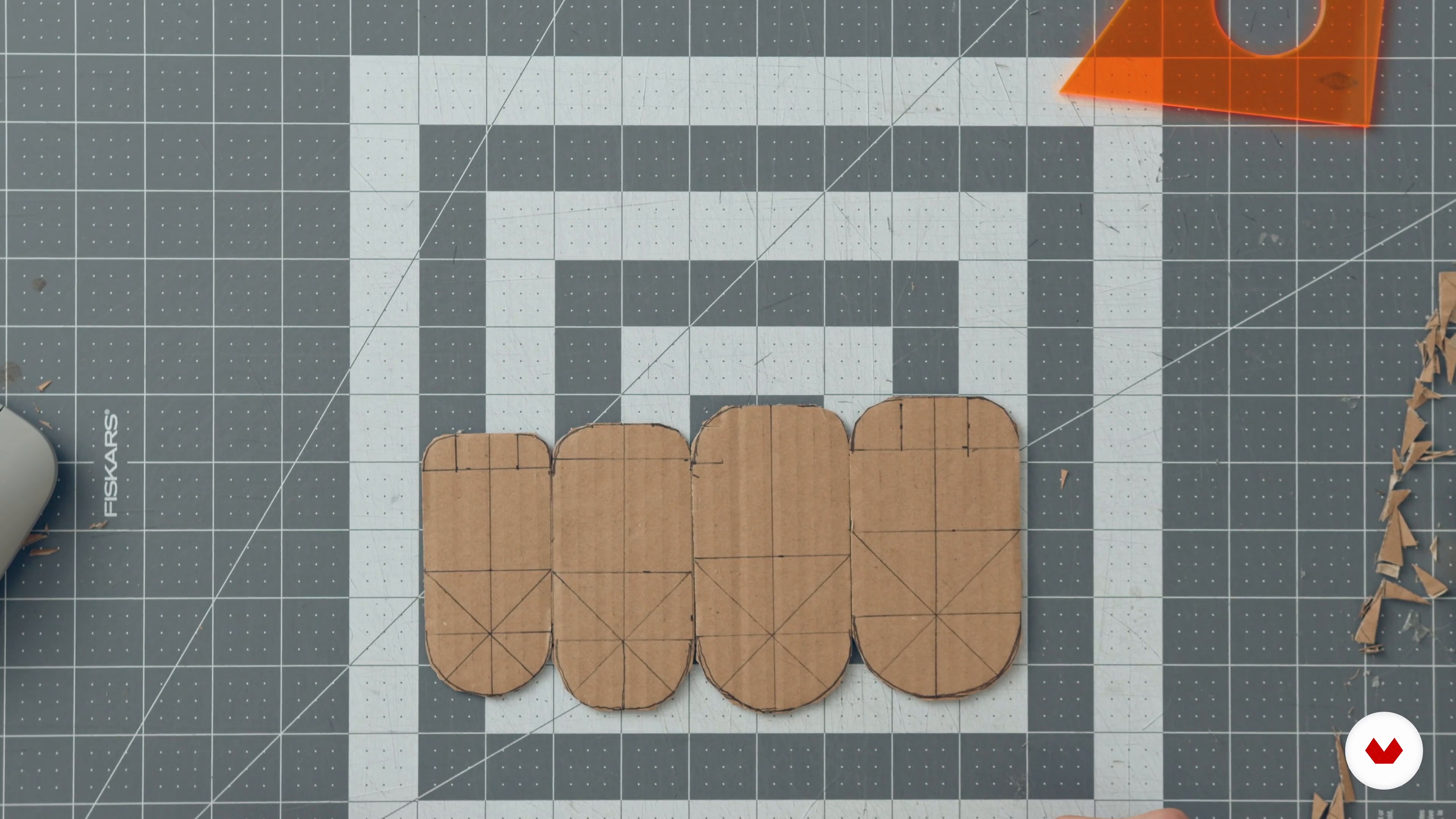
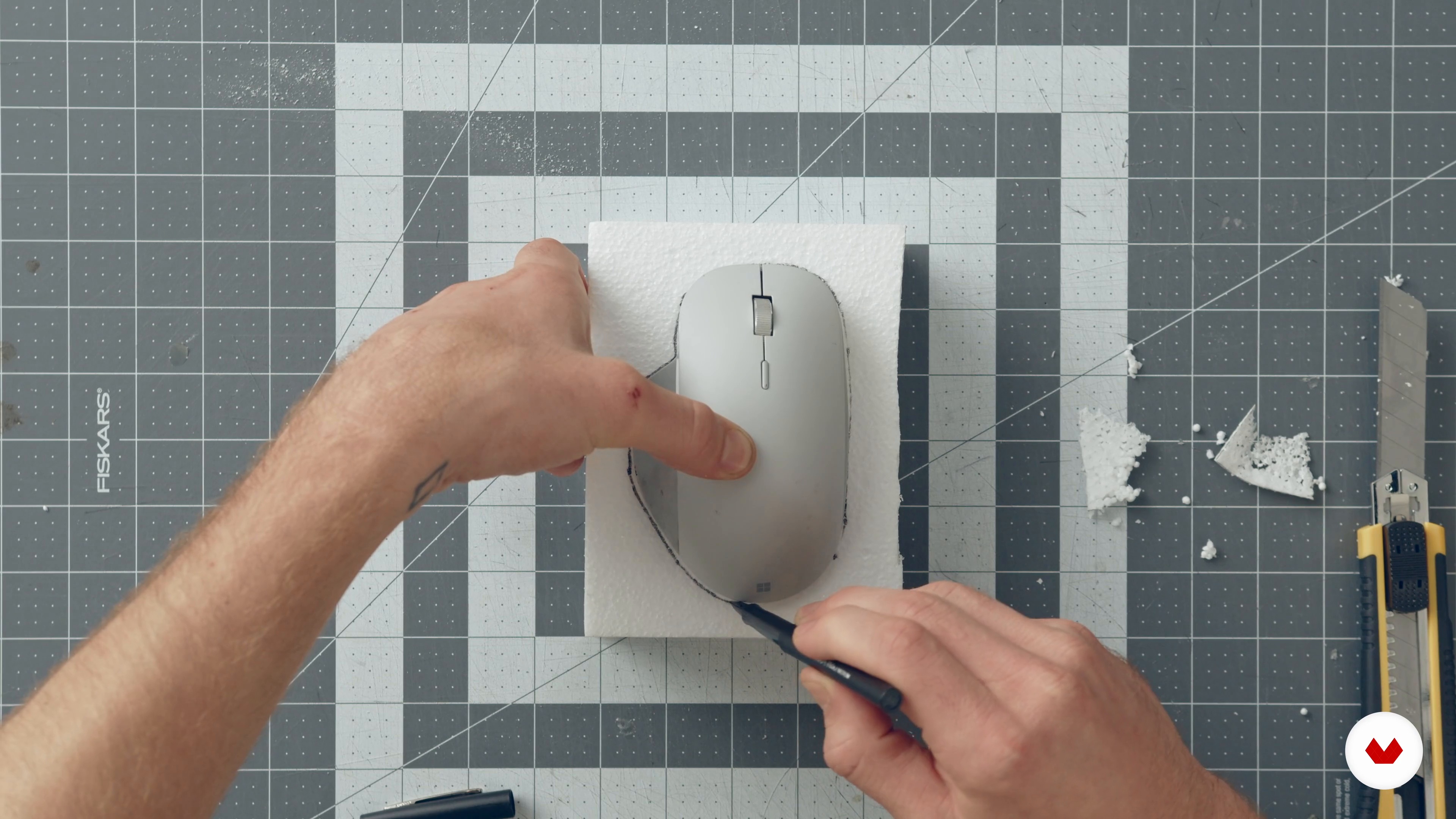
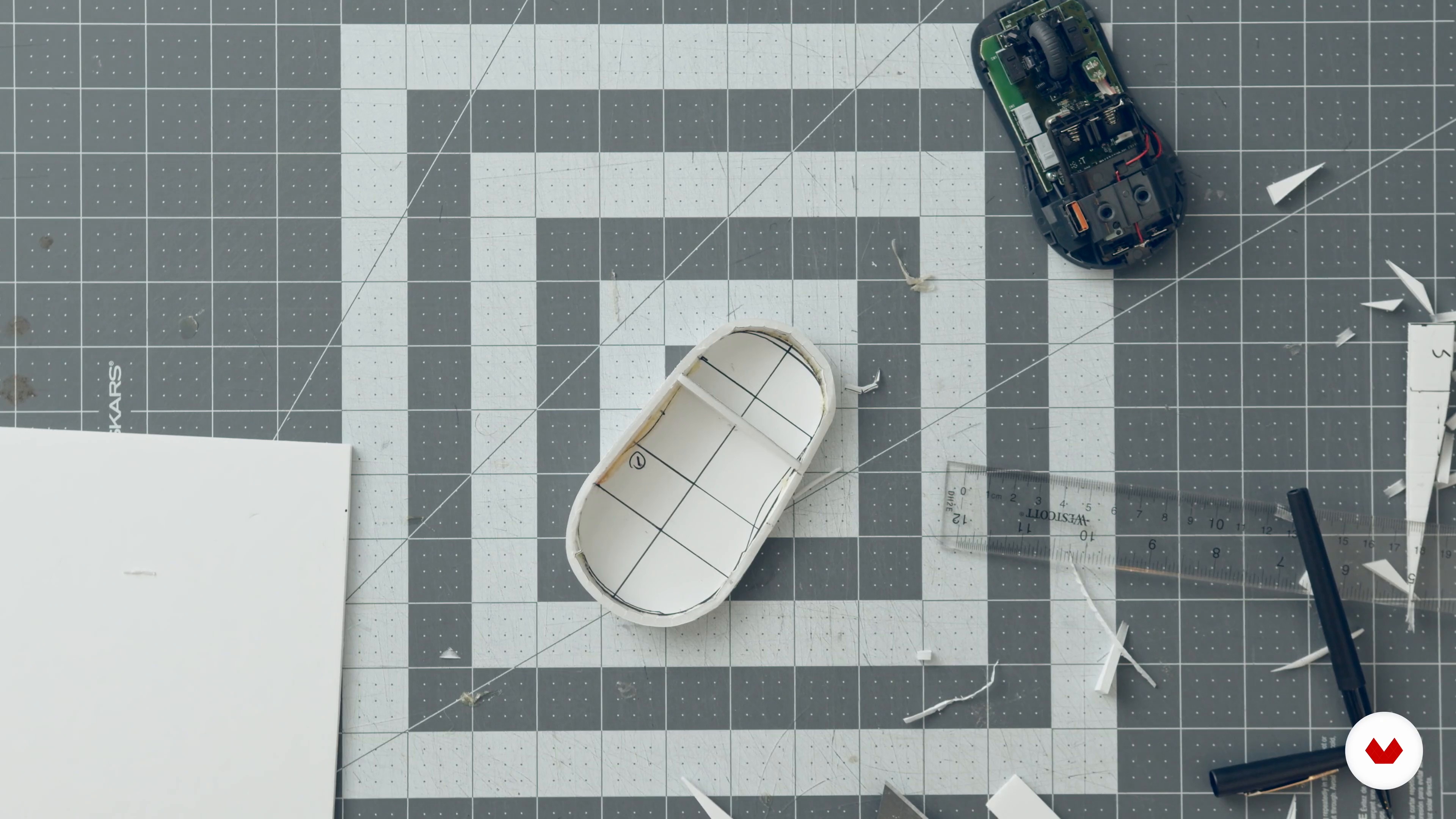
Next, you will see how to get scrappy and prototype on the cheap with minimal tools. Even quick and dirty sketch models can really inform your design decisions and final design.
21m
image
8
Prototyping with Cardboard and Foamcore 2
I will continue showing you how to work on the prototype.
14m
image
9
Prototyping with White Foam 1
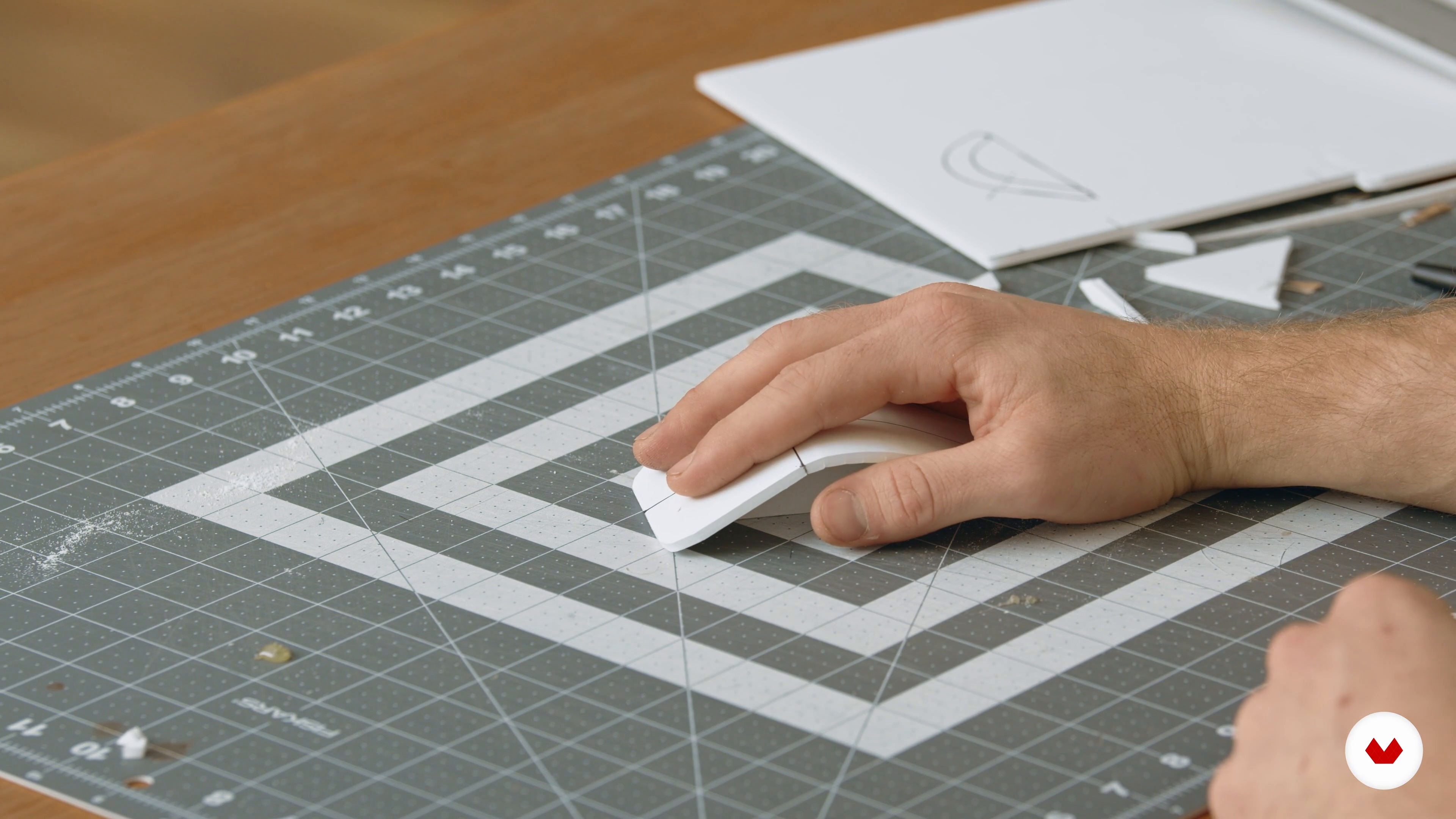
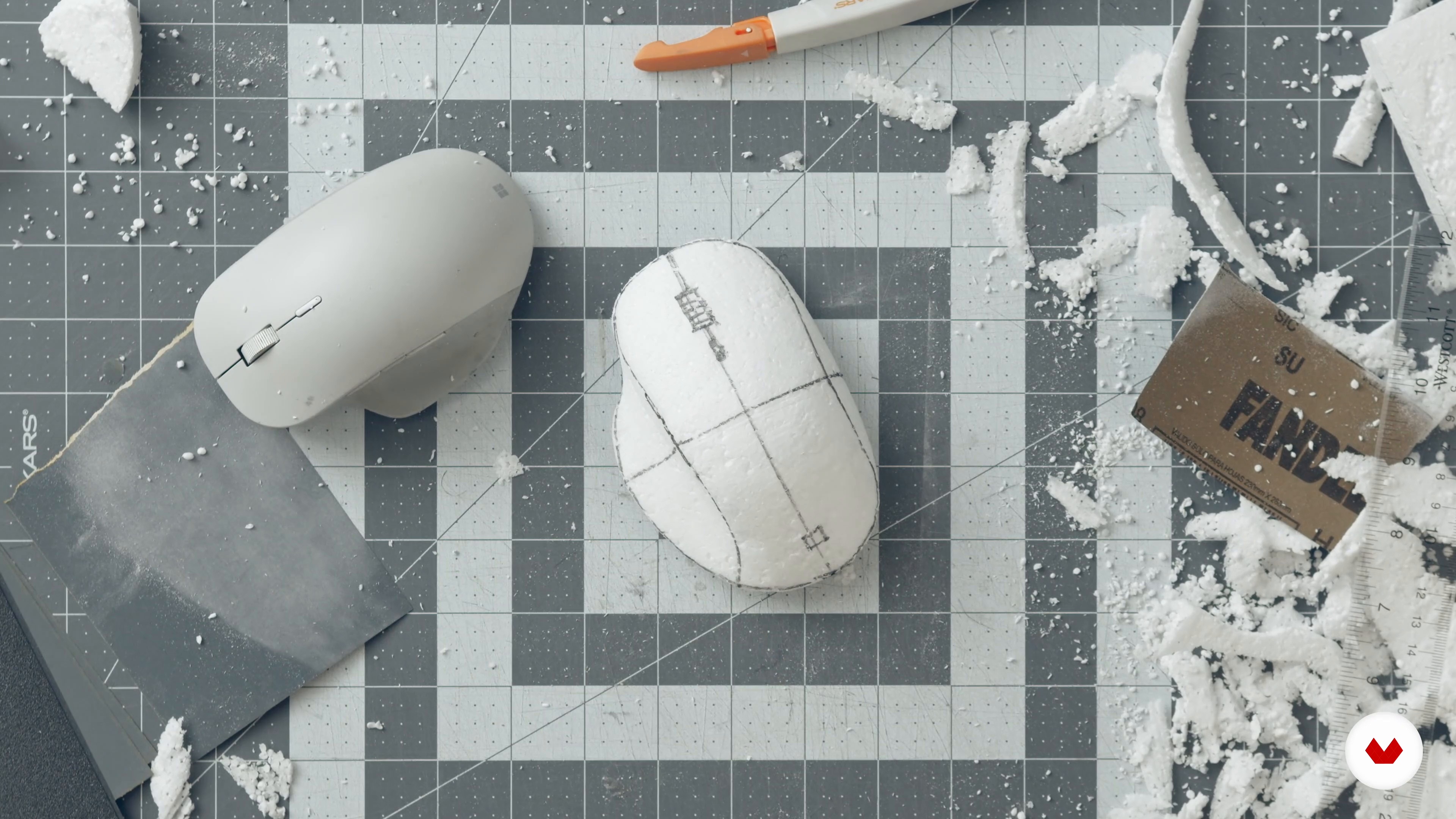
Here, I will show you how to quickly create medium-fidelity prototypes out of low-density white foam. Using this method, you can generate a ton of models, allowing you to test and validate your concepts rapidly.
20m
image
10
Prototyping with White Foam 2
During this second part, you will learn to smooth out and add small details to your prototype.
12m
image
11
Frankenstein Prototypes 1
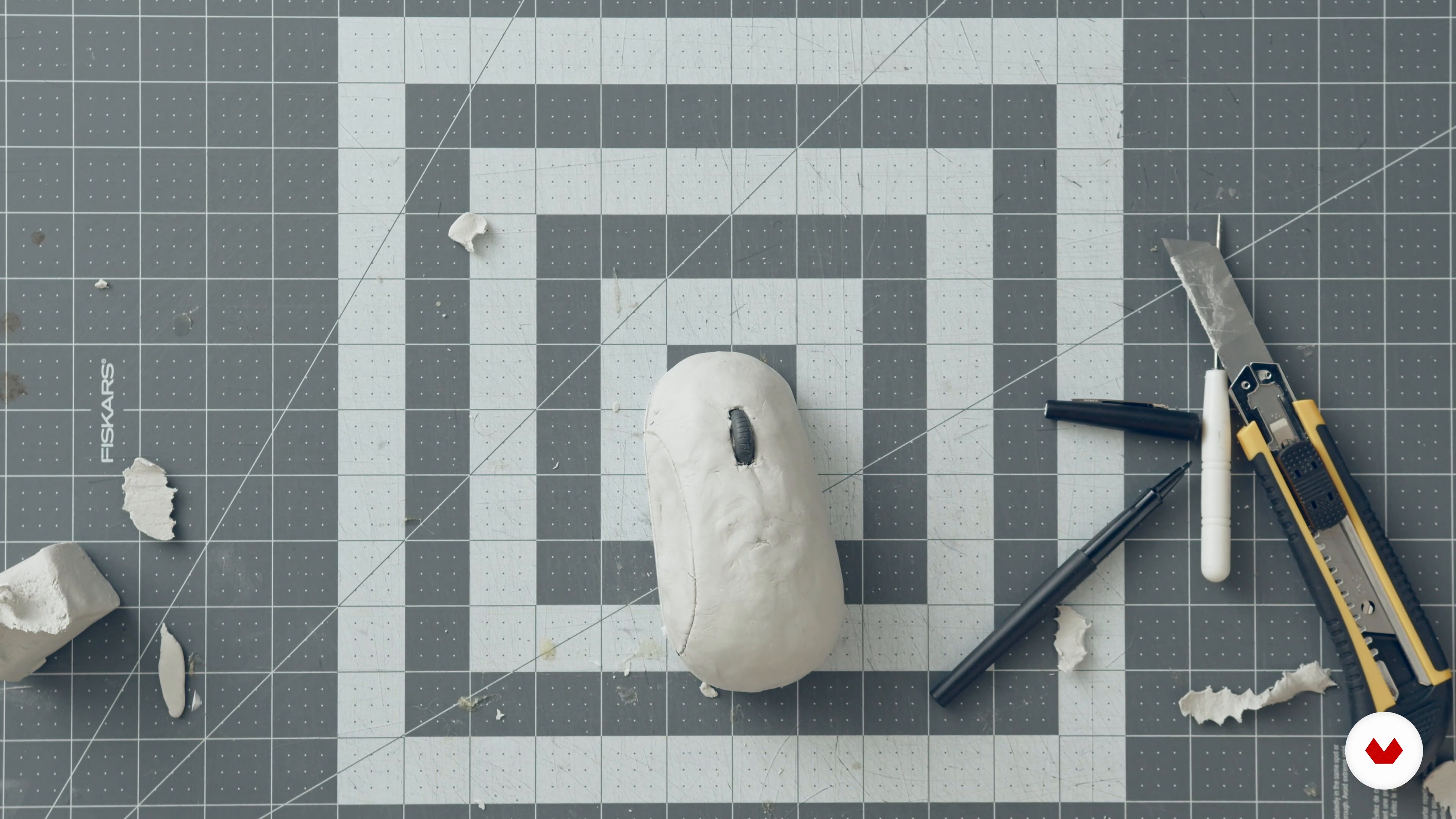
It is always best to work smart, not hard when designing. The more work you can crank out, the further you can explore and refine your ideas. Learn simple methods to combine found objects, add to existing prototypes, and quickly hack together your ideas to use as underlays in digital sketching.
20m
image
12
Frankenstein Prototypes 2
In this lesson, you will continue learning how to add combined cardboard, foam core, and or foam to your final model.
6m
image
13
Photograph Underlays
Using your rough prototypes as underlays, you will begin to create your page composition, focusing on which views are necessary in order to tell the complete story of the concept.
21m
image
14
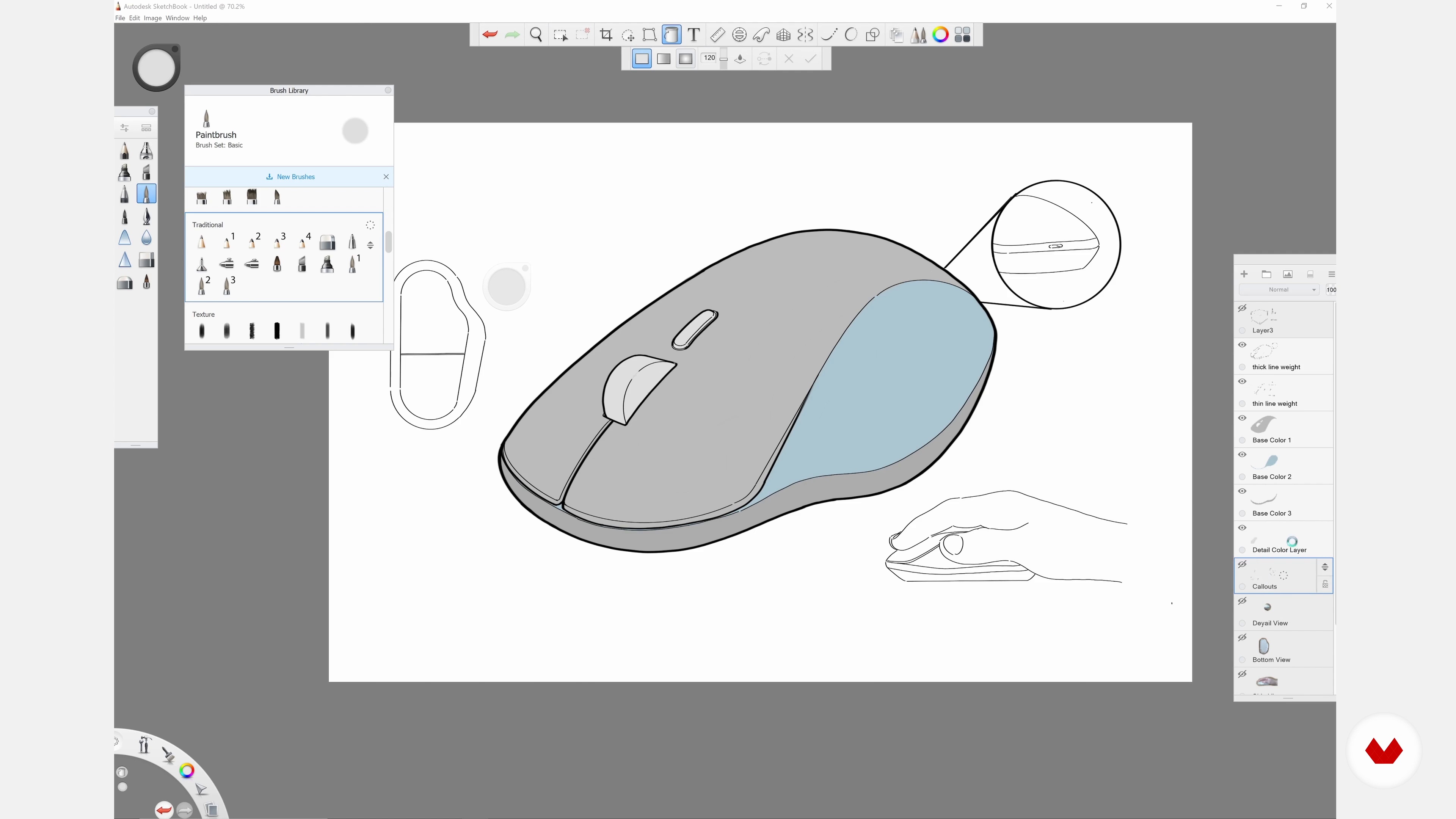
Sketch Foundations
I will teach you how to apply linework to your photo underlay in order to build a solid foundation for color, material and finish the CMF application.
20m
image
15
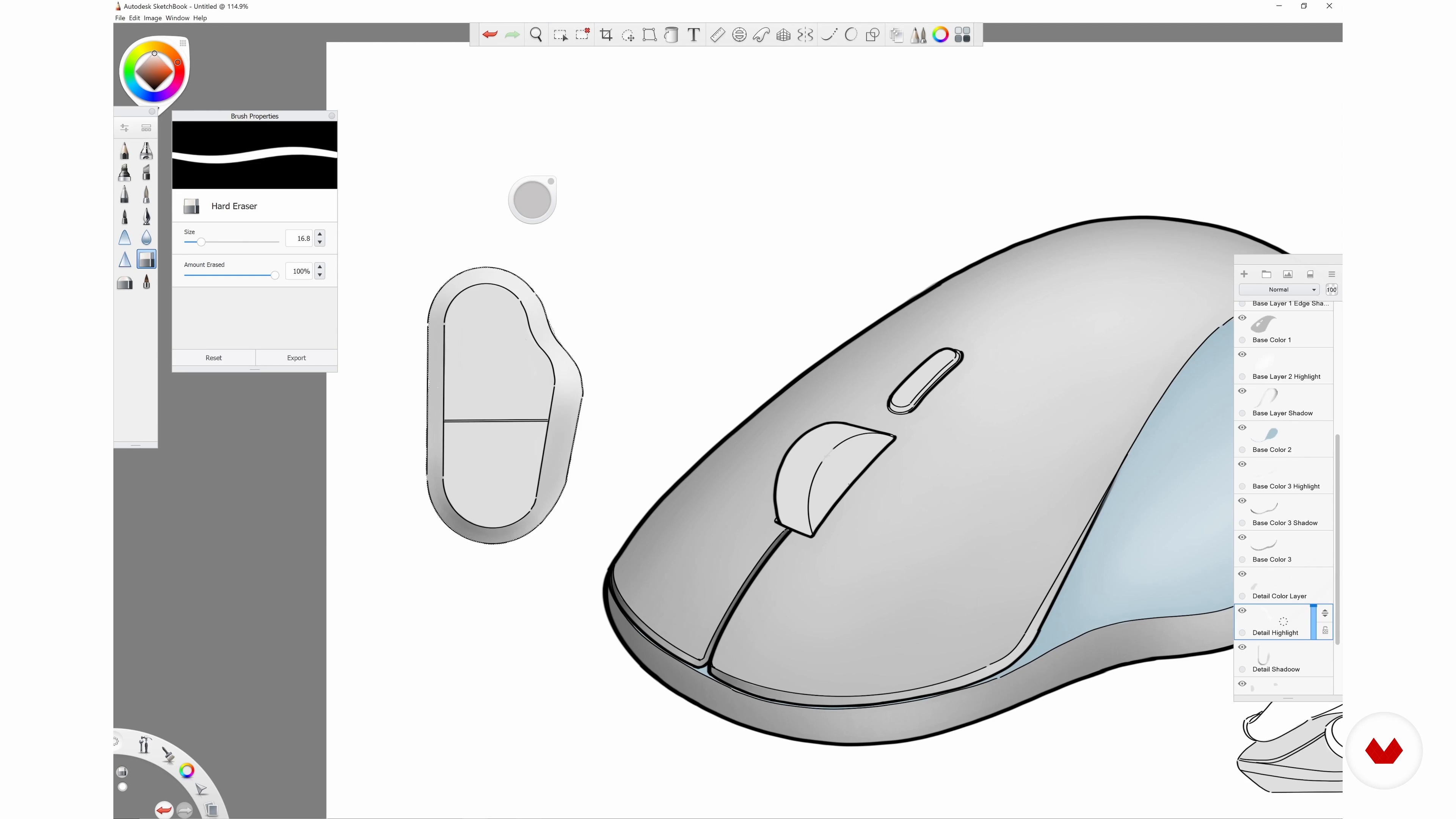
Adding Reality 1
Realism is what really makes a sketch pop! In this lesson, you will learn how to apply value, materiality, and my special tricks to bring the concept to life.
18m
image
16
Adding Reality 2
Here, I will continue showing you my signature approach to adding highlights in order to make the final sketch really pop.
20m
image
17
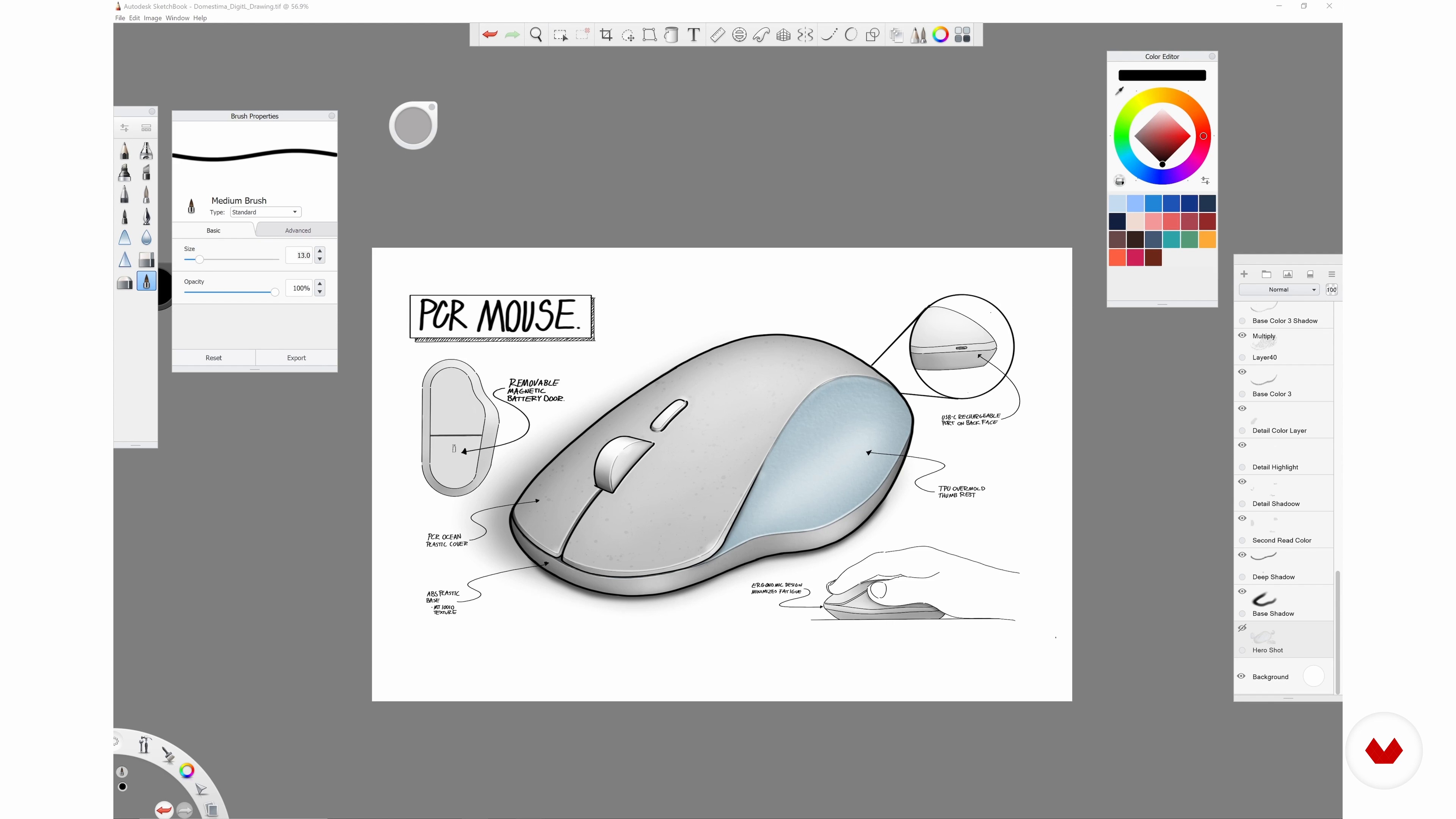
CMF Exploration
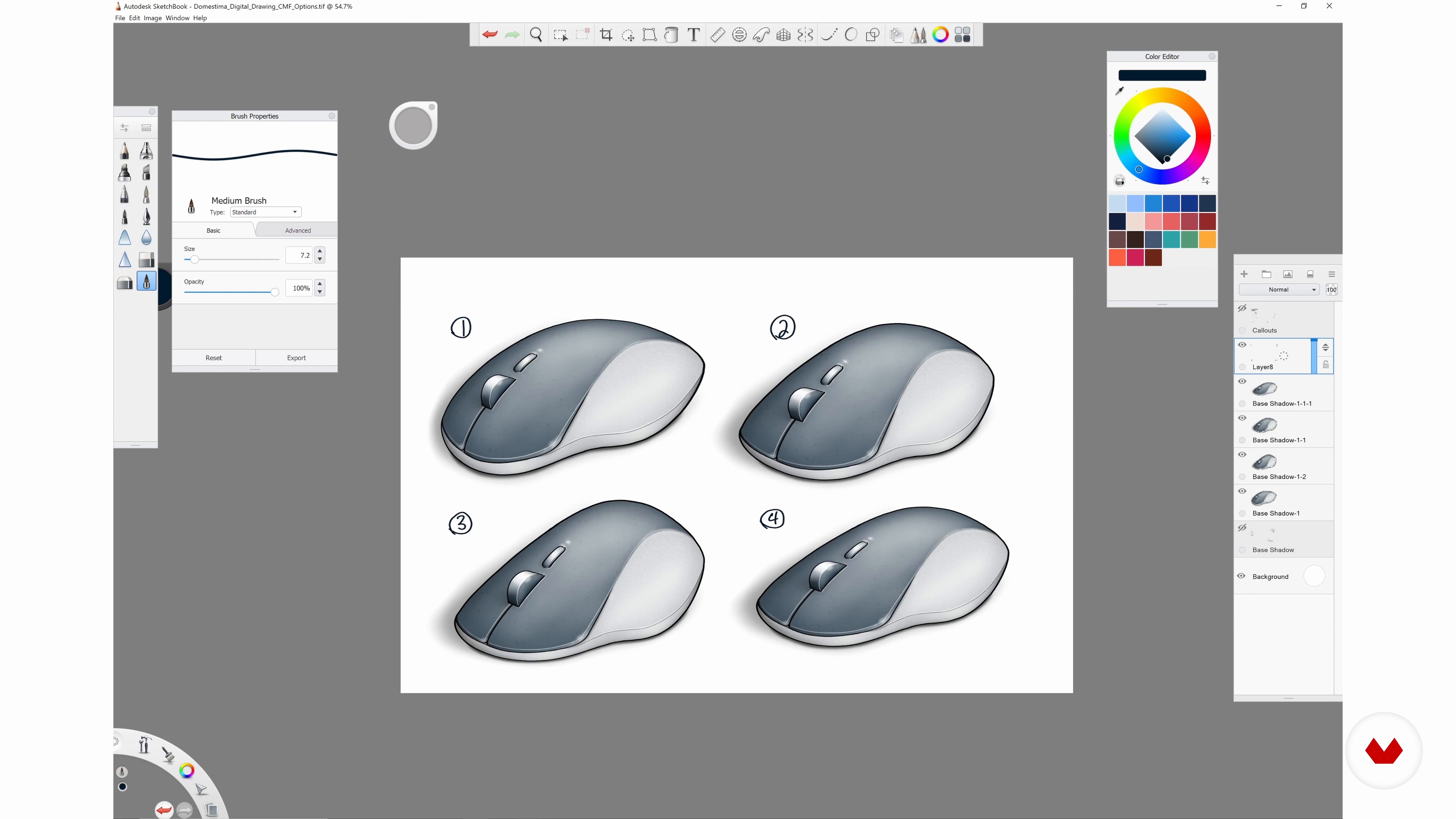
Next, you will see how by using your sketch layers you can add final design updates including new features, CMF changes, and minor form improvements.
15m
image
3
Value chain
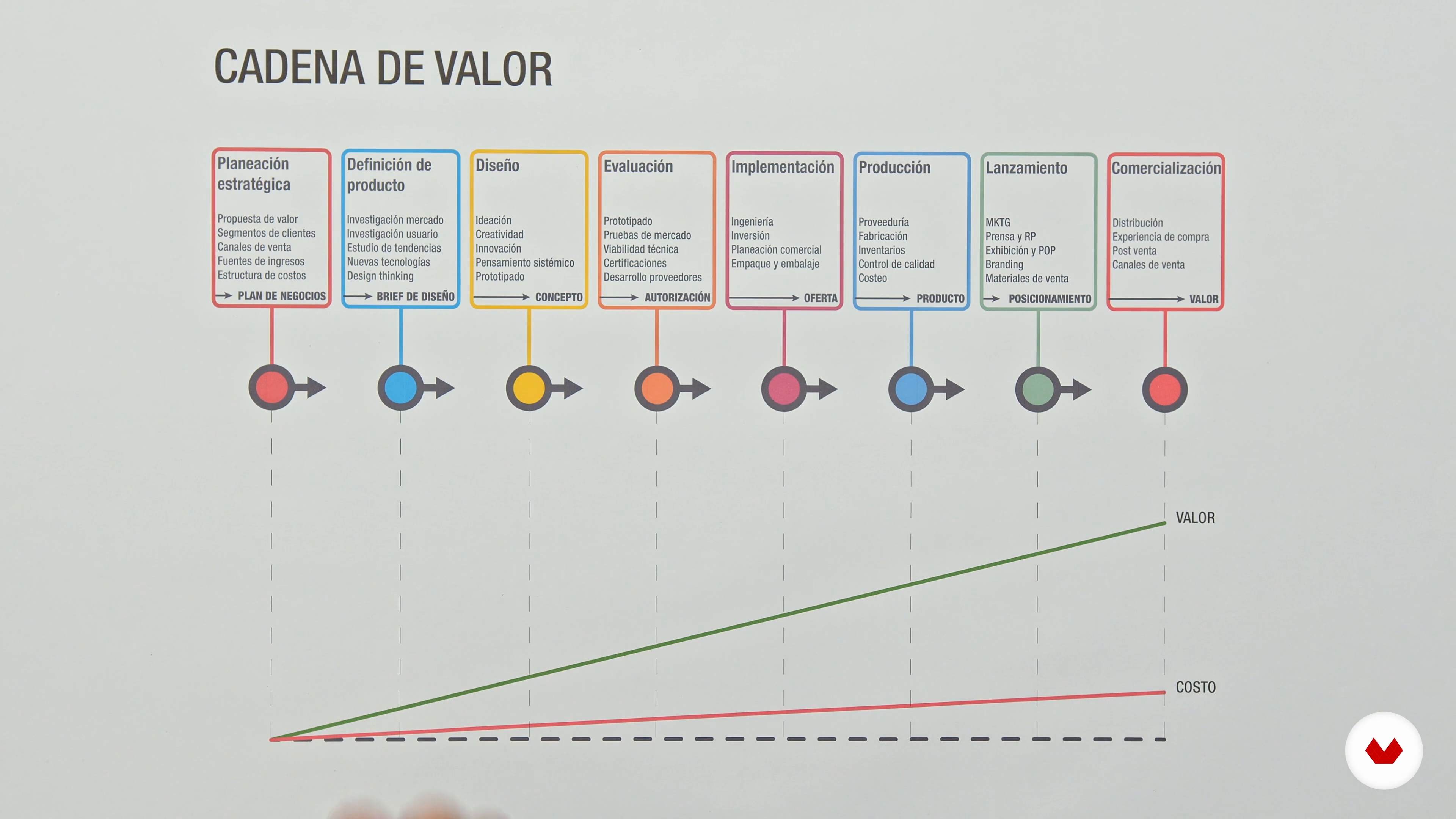
A value chain describes all the stages in the launch of a product, what activities happen in each one, and what actors appear in each one. You as an entrepreneur of a creative industry will surely be present in many stages, but you will play different roles. You will learn in detail what are the appropriate criteria to evaluate each stage.
13m
image
4
Product Matrix
Most of the products are part of a larger collection or family of objects. These families or groups are organized in a matrix that describes the products according to their use or sales category, and explains in which categories there are more than one design option, as well as different options for each one, as they may be different. colors or materials. In other words, it is a matrix that has three axes: category, diversity and depth.
13m
image
5
Benchmarking products
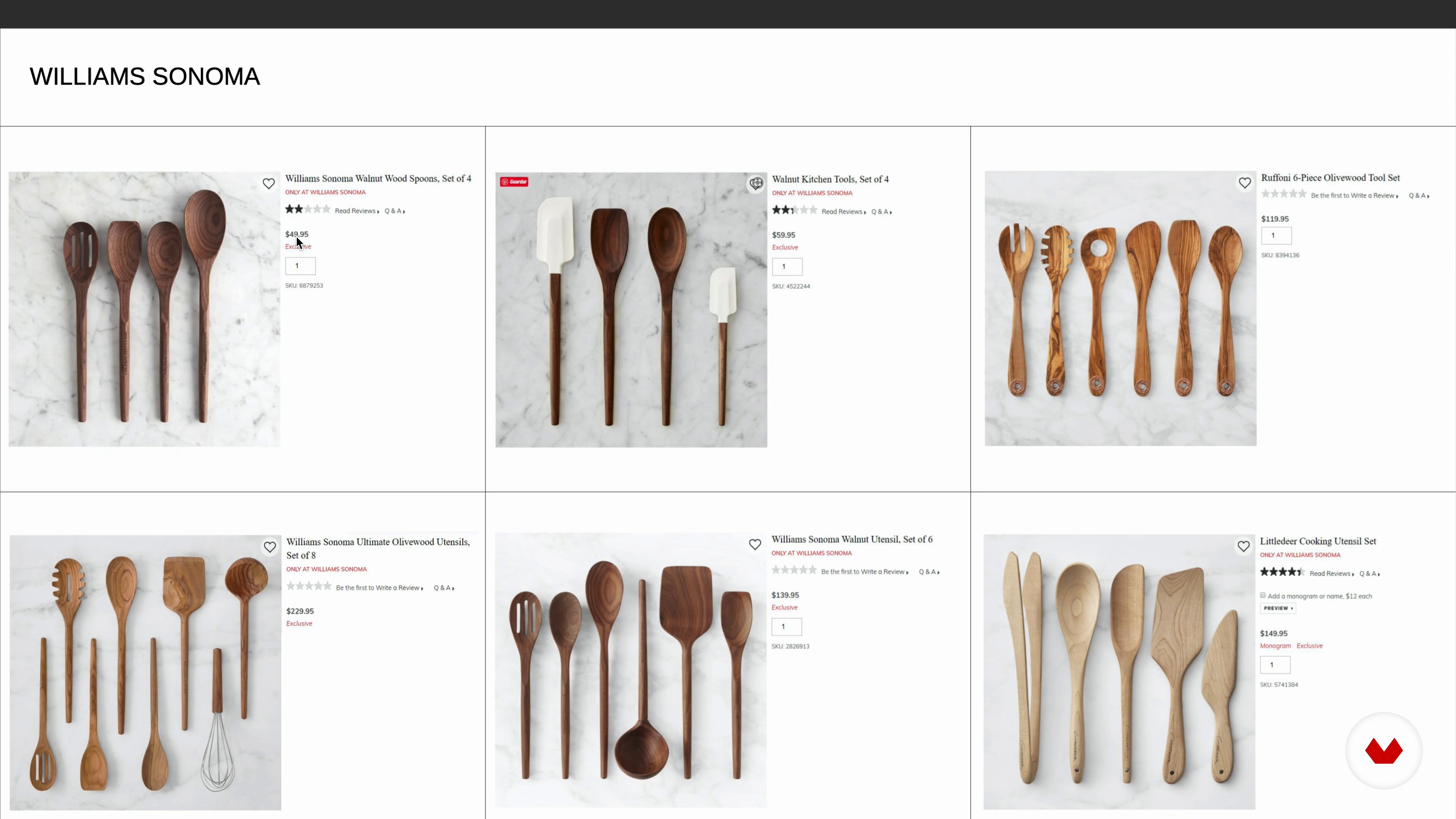
An important point when designing a product is to know at what price we intend to sell it, and how this compares to existing products on the market in the same category and for the same segment. For this, a useful tool is comparative evaluation, or benchmarking. You will see how to do a simple comparative evaluation of products similar to the one you designed in order to determine the sale price at which you should offer it.
12m
image
6
New product development schedule
Each segment has its own seasonality, or rhythm, for new product development. A fashion brand, for example, may have a launch and a new collection each season, with the expectation of replacing it almost entirely each season. The calendar for the development and launch of new products is different for each segment, and it is important to define what pace your brand will follow, since this determines investment amounts, amortization per product, etc. While it is common for a new brand to have a different pace than the industry at the start, it will eventually adjust, in most cases, to the seasonality of its segment.
3m
image
7
Expense categories
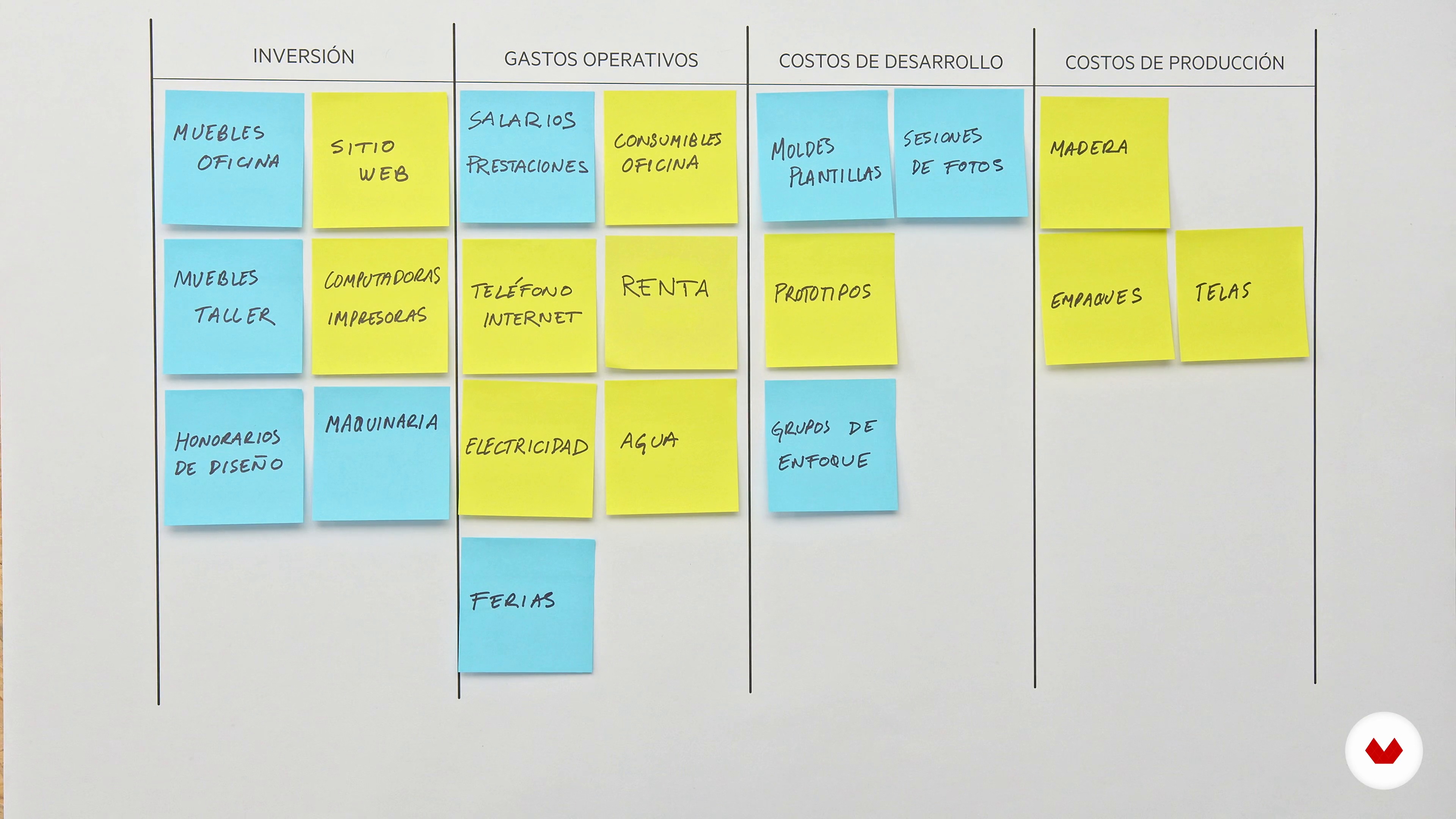
When money leaves a company it is important to define the reason why it leaves in order to be able to categorize it correctly. You will learn how to make a very simple division of only four categories to be able to relate it to the costing of your product.
7m
image
8
Investment
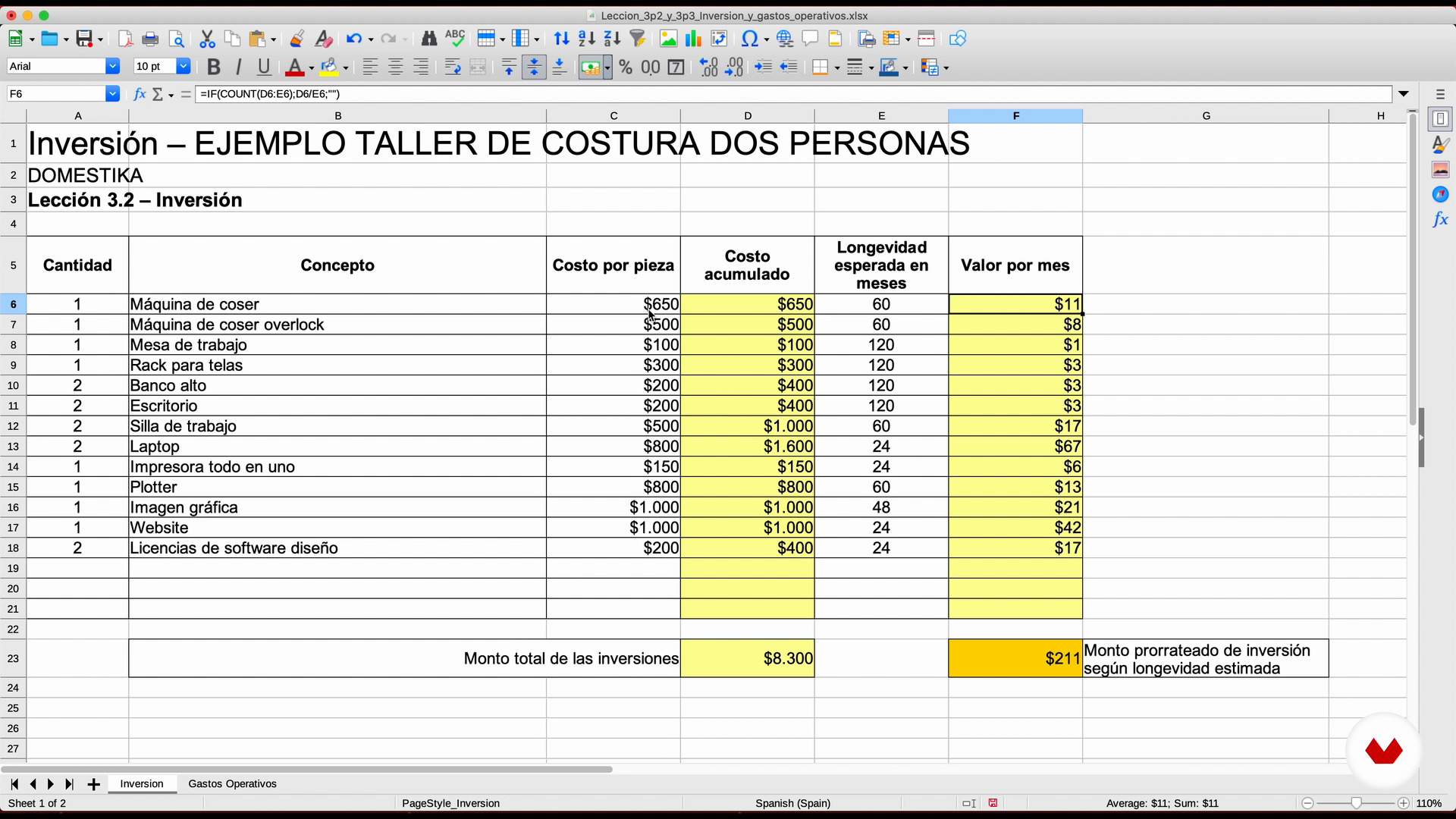
The investment is everything that you spend to operate and that is related to the business as a whole and not to a specific product. This investment has an expiration date and contrary to what is normally assumed, it is not money that goes back to the business. I will explain how to account for this investment and determine an amount that you should consider for future investments. In addition, you will learn some criteria that will help you understand if the expenses you are making are investment, or if they actually belong to another category of expense.
5m
image
9
Operating expenses
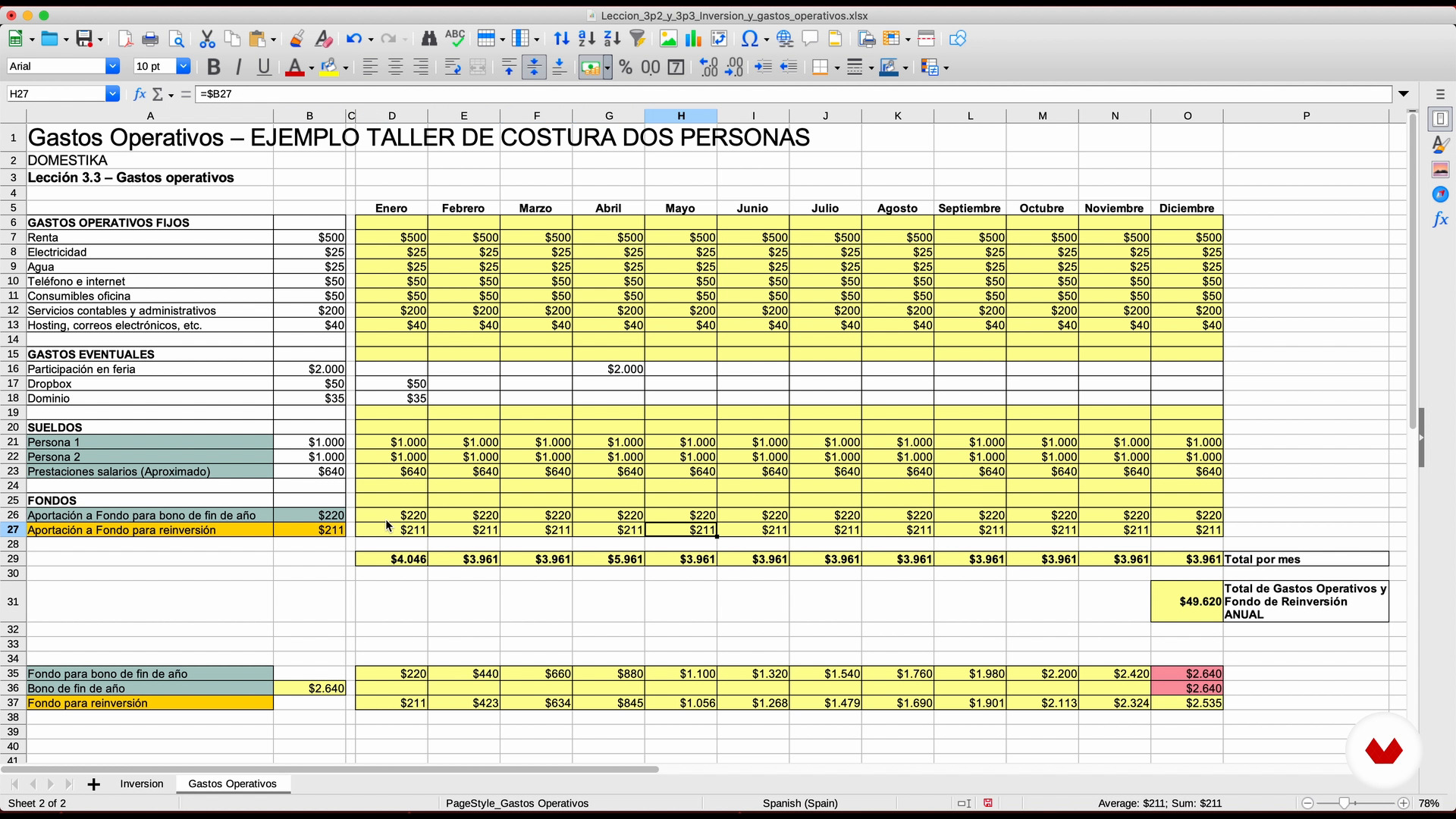
Operating expenses, sometimes called overhead or overhead expenses, are those you will pay to operate your business regardless of whether you are selling or not. These expenses, such as a rent, a salary or an equal, must be covered by specific periodicities and for this reason they are sometimes called fixed expenses. In this lesson you will see how you can make an accounting of these expenses, as well as a projection of how they will be in the future and when there may be important changes or fluctuations.
5m
image
10
Development costs
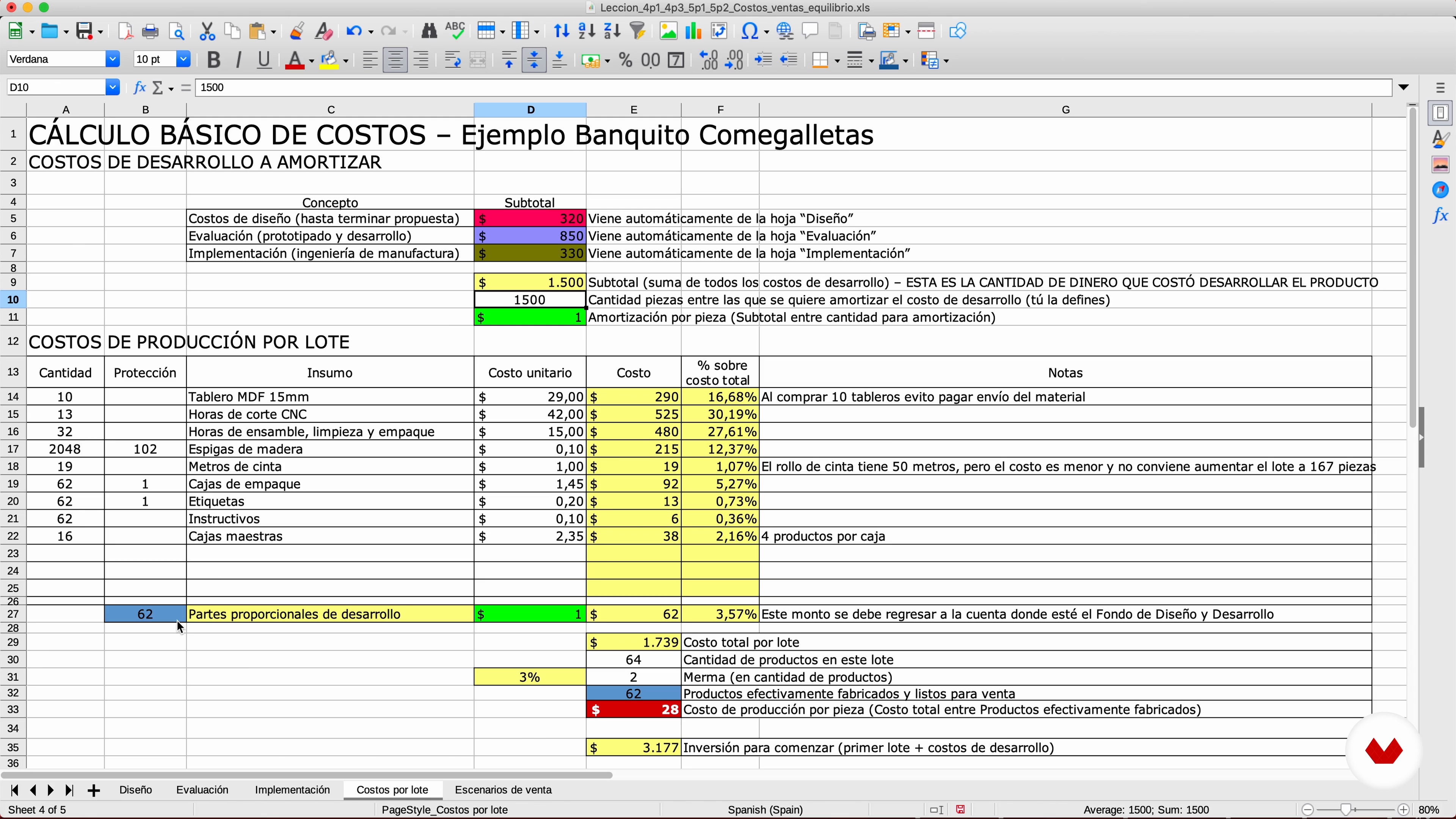
Your product development costs include everything you spent to have the ability to manufacture your product, but before actually starting production. These costs include, for example, design costs, prototyping and testing, molds or templates, laboratory studies, etc. You will learn how to use a simple spreadsheet to keep track of these costs, as well as to establish a number of products between which you must divide this cost for recovery.
11m
image
11
Production batches
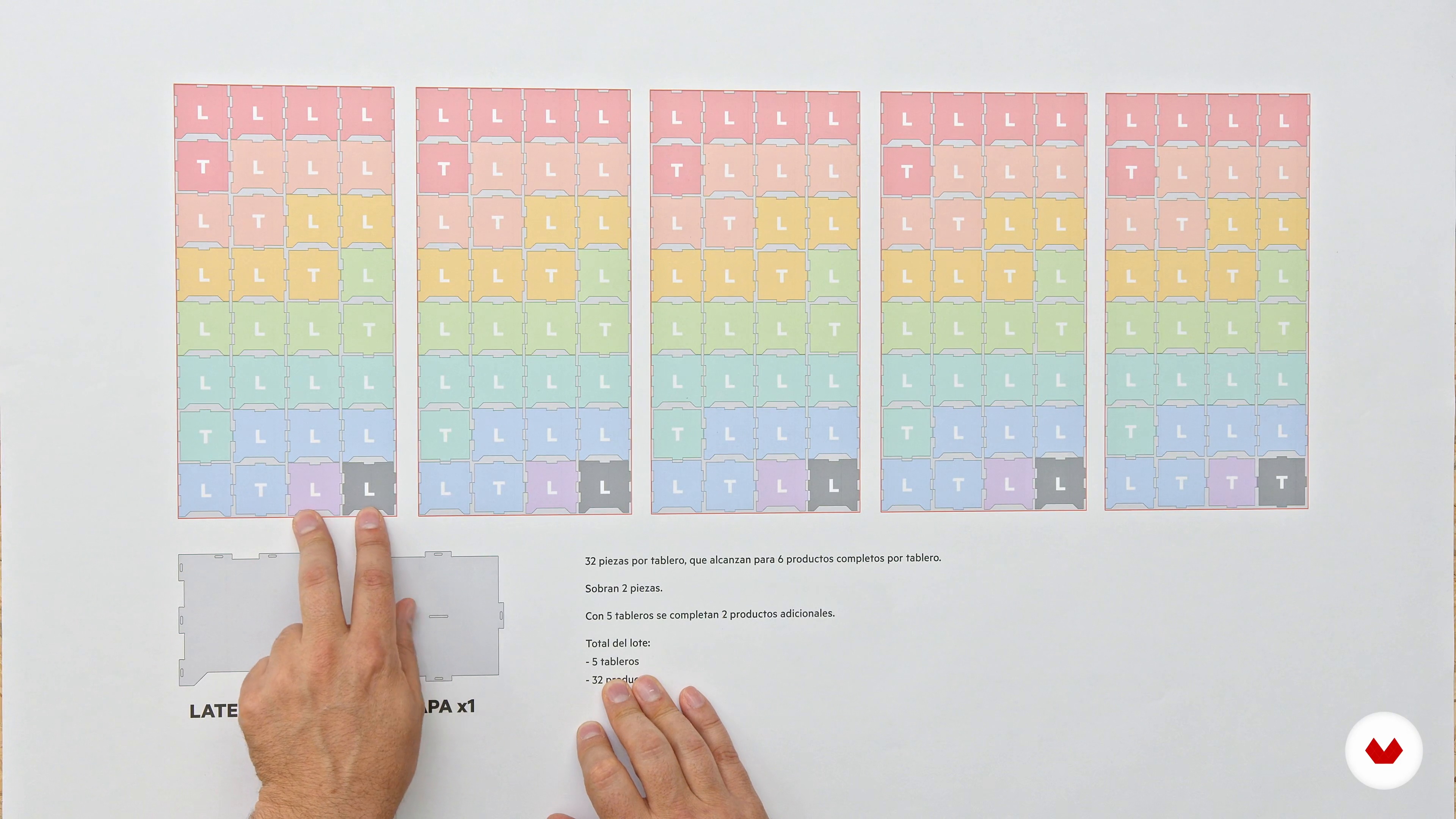
For the manufacture of an object it is important that you know which is the ideal manufacturing batch, that is, the number of products that should be manufactured at the same time. In some cases as one-off or custom-made pieces, this lot will be one piece. I will show you several examples that will allow you to understand the basic criteria to determine the most appropriate number of products in a batch, as well as the percentage of waste that should be integrated into your calculation.
6m
image
12
Manufacturing costs
Manufacturing costs are those that you have to cover when manufacturing a product. That is, they are those that you only do if you are producing. I'll explain how to use a simple spreadsheet that feeds on these costs. In this spreadsheet you will put the batch that you defined earlier.
10m
image
13
Selling Scenarios
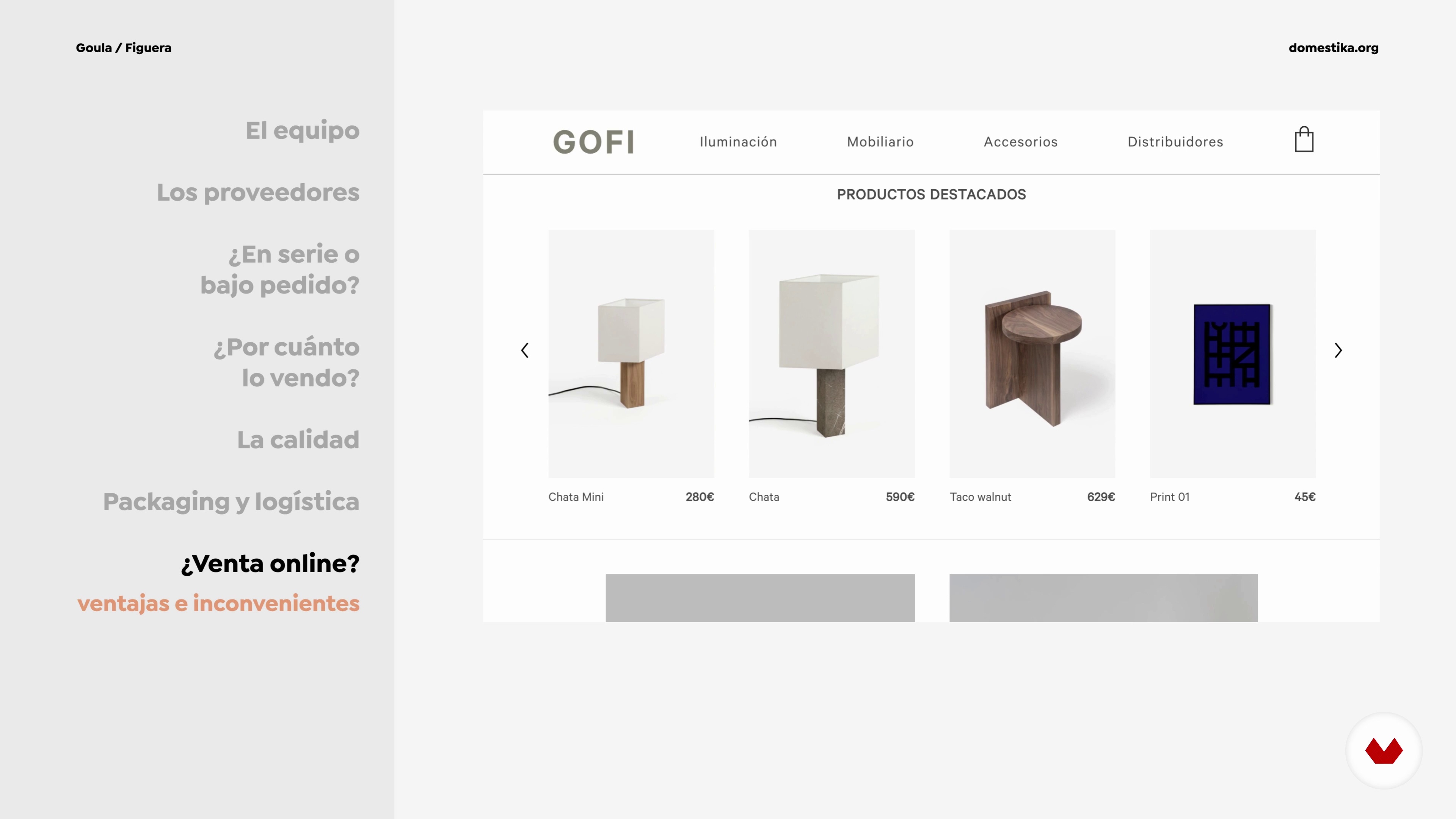
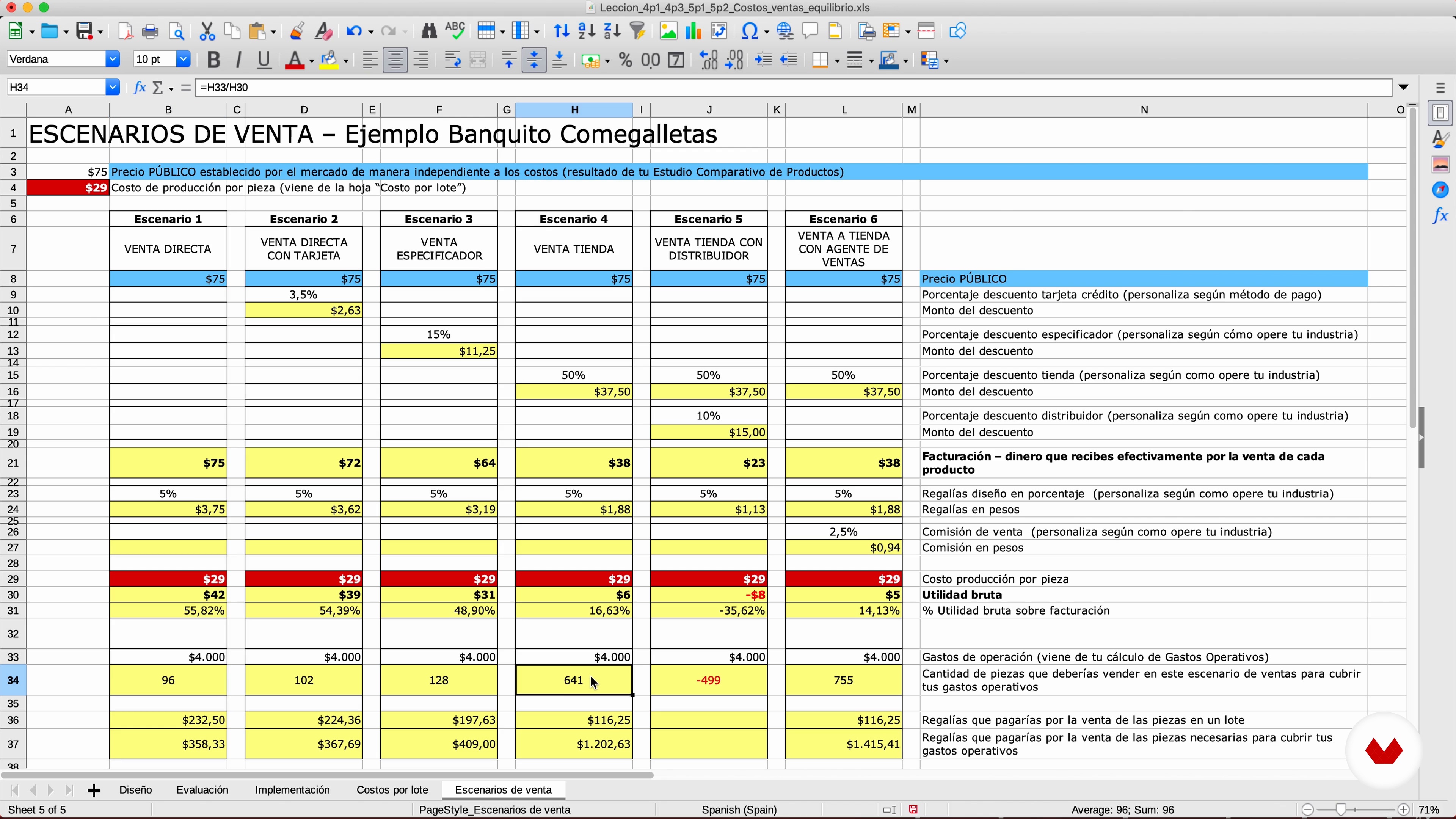
Sales scenarios are the schemes through which you sell your product, from a direct sale in which the end customer buys your product directly from you, to more complex scenarios where there is a distributor or a store, and where the payment is made. it is done by means of a credit card. In this lesson you will understand how to calculate the profitability of the sale in each scenario and in which scenarios it is worth offering your product and in which it is not.
18m
image
14
Money flow
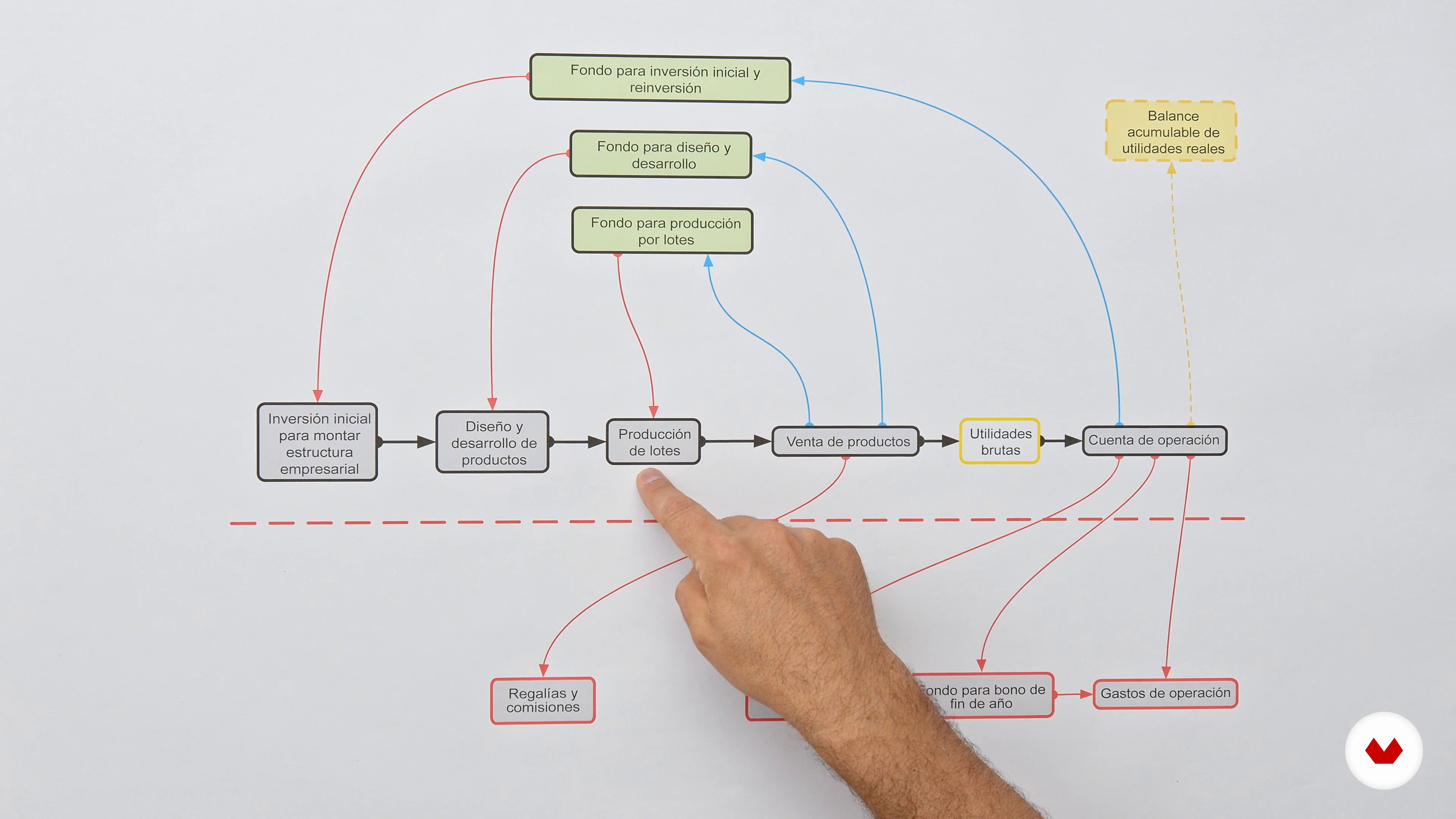
You will see how the expenses and income that you have studied in all the lessons are related, with the help of a very simple diagram that will help you understand when each of the stages happens and what the flow of money is like in the company.
6m
image
15
Price list and conditions of sale
I will explain to you how to analyze a sales document, a price list and how to know if it has everything to include. This document should give the client the assurance that he is talking to someone who knows what he is doing, who has calculated his costs, times, risks and guarantees and who will be able to respond professionally. You will see what are the important points that this document should have so that your client is clear about how you work.
12m
  • 16 students
  • 70 lessons (14h 34m)
  • 85 additional resources (36 files)
  • Online and at your own pace
  • Audio: English, German, Spanish, Spanish (Latam), French, Indonesian, Italian, Dutch, Polish, Portuguese, Romanian, Turkish
  • Spanish · English · Portuguese · German · French · Italian · Polish · Dutch · Turkish · Romanian · Indonesian
  • Level: Beginner
  • Unlimited access forever

What is this course's project?
Develop a comprehensive product line from initial concept to market launch, mastering each design and commercialization phase. Deliverables include market research, visual development, functional prototypes, storytelling strategy, and a market-ready commercialization plan.

Who is this specialization for?

Aspiring product designers and creative entrepreneurs seeking to bring innovative ideas to market will benefit from this course. Those interested in exploring aesthetics, storytelling, prototyping, and pricing strategies will find valuable insights to enhance their design process and business acumen.

Requirements and materials

Discover the essentials of product design effortlessly. Curiosity, some stationery, and basic design software like SketchUp or Photoshop are all you need. Dive into a world of creativity without needing extensive prior expertise, embracing the journey with open-mindedness.


Select to get to know your teachers in this specialization course
Read more ↓

What to expect from this specialization course

  • Learn at your own pace

    Enjoy learning from home without a set schedule and with an easy-to-follow method. You set your own pace.

  • Learn from the best professionals

    Learn valuable methods and techniques explained by top experts in the creative sector.

  • Meet expert teachers

    Each expert teaches what they do best, with clear guidelines, true passion, and professional insight in every lesson.

  • Certificates
    Plus

    If you're a Plus member, get a custom certificate for every specialization course. Share it on your portfolio, social media, or wherever you like.

  • Get front-row seats

    Videos of the highest quality, so you don't miss a single detail. With unlimited access, you can watch them as many times as you need to perfect your technique.

  • Share knowledge and ideas

    Ask questions, request feedback, or offer solutions. Share your learning experience with other students in the community who are as passionate about creativity as you are.

  • Connect with a global creative community

    The community is home to millions of people from around the world who are curious and passionate about exploring and expressing their creativity.

  • Watch professionally produced courses

    Domestika curates its teacher roster and produces every course in-house to ensure a high-quality online learning experience.


FAQs

Domestika courses are online classes that allow you to learn new skills and create incredible projects. All our courses include the opportunity to share your work with other students and/or teachers, creating an active learning community. We offer different formats:
Original Courses: Complete classes that combine videos, texts, and educational materials to complete a specific project from start to finish.
Basics Courses: Specialized training where you master specific software tools step by step.
Specialization Courses: Learning paths with various expert teachers on the same topic, perfect for becoming a specialist by learning from different approaches.
Guided Courses: Practical experiences ideal for directly acquiring specific skills.
Intensive Courses (Deep Dives): New creative processes based on artificial intelligence tools in an accessible format for in-depth and dynamic understanding.

All specialization courses are 100% online, so once they're published, specialization courses start and finish whenever you want. You set the pace of the class. You can go back to review what interests you most and skip what you already know, ask questions, answer questions, share your projects, and more.

The specialization courses are divided into different modules. Each one includes lessons, informational text, tasks, and practice exercises to help you carry out your project step by step, with additional complementary resources and downloads. You'll also have access to an exclusive forum where you can interact with other students, as well as share your work and your final project, creating a community around the specialization courses.

You can redeem the specialization courses you received by accessing the redeeming page and entering your gift code.
If you're a Plus member, when you complete a course you've purchased, you'll instantly get your personalized certificate. You can see all your certificates in the Certificates section of your profile. You can download your certificates as PDFs and share the link online. Learn more about certificates.
Product Design Specialization: From Concept to Market Success. Design course by Domestika

Product Design Specialization: From Concept to Market Success

A specialization by multiple teachers
Berkeley, United States.
Joined April 2002
  • 16 students